
Font size
 Worksheets
MP3 Potential Energy Diagram Analysis/ Rates CL Work
Total questions: 30
Worksheet time: 16mins
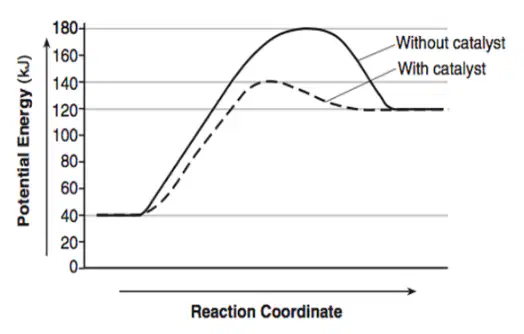
What is the role of a catalyst in a chemical reaction?
It decreases the temperature of the reaction
It increases the concentration of reactants
It speeds up the reaction
It changes the color of the reactants
Lowers the activation energy
What do the double arrows (⇌) in a chemical equation indicate?
The reaction is irreversible
The reaction is reversible
The reaction is complete
The reaction is exothermic
What does ΔH represent in a potential energy diagram?
The change in temperature
The change in mass
The enthalpy change
The change in volume
In an endothermic reaction, how does the total potential energy (PE) of the system change?
It decreases
It remains the same
It increases
It fluctuates
What is the sign of ΔH for an exothermic reaction?
Positive
Negative
Zero
Undefined
How can the change in enthalpy (ΔH) of a reaction be determined?
Energy of reactants minus energy of products
Energy of products minus energy of reactants
Energy of activated complex minus energy of reactants
Energy of reactants plus energy of products
What does a positive ΔH indicate about a reaction?
The reaction is exothermic
The reaction is endothermic
The reaction is at equilibrium
The reaction is spontaneous
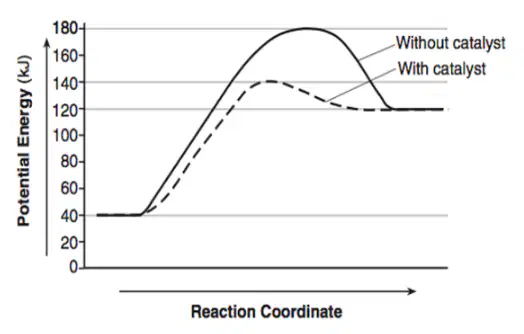
What is the value for ΔH?
10 kJ
120 kJ
30 kJ
40 kJ
80 kJ
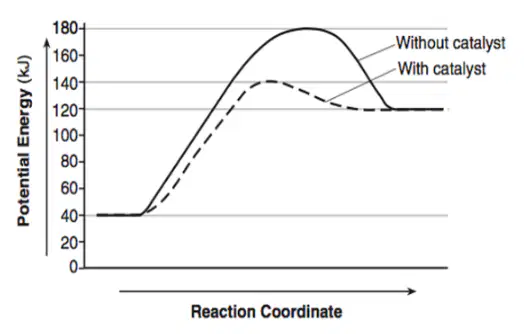
What is the value for the activation energy of the reverse reaction without a catalyst?
15 kJ
25 kJ
60 kJ
45 kJ
What is the value for the activation energy of the reverse reaction with a catalyst?
20 kJ
40 kJ
100 kJ
45 kJ
What is the value for the activation energy of the forward reaction without a catalyst?
15 kJ
180 kJ
60 kJ
140 kJ
What is the value for the activation energy of the forward reaction with a catalyst?
15 kJ
180 kJ
100 kJ
140 kJ
How would the value of ΔH be changed if a catalyst was added?
Increase
Decrease
Remain the same
Double
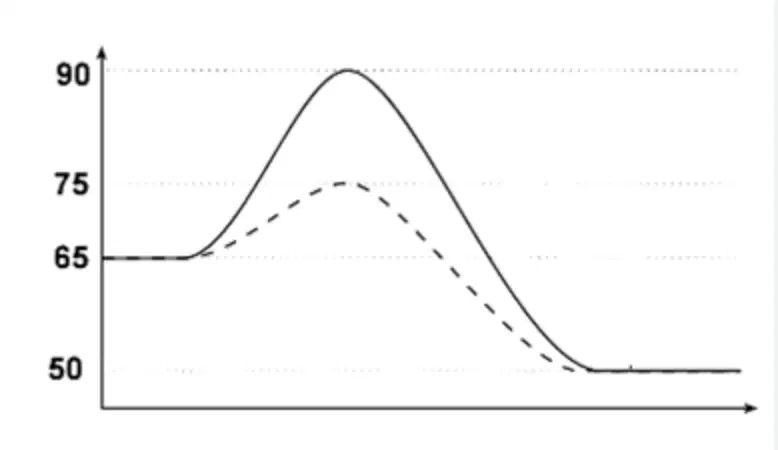
What is the value for the potential energy for the activated complex of the catalyzed reaction?
50 kJ
90 kJ
70 kJ
80 kJ
75KJ
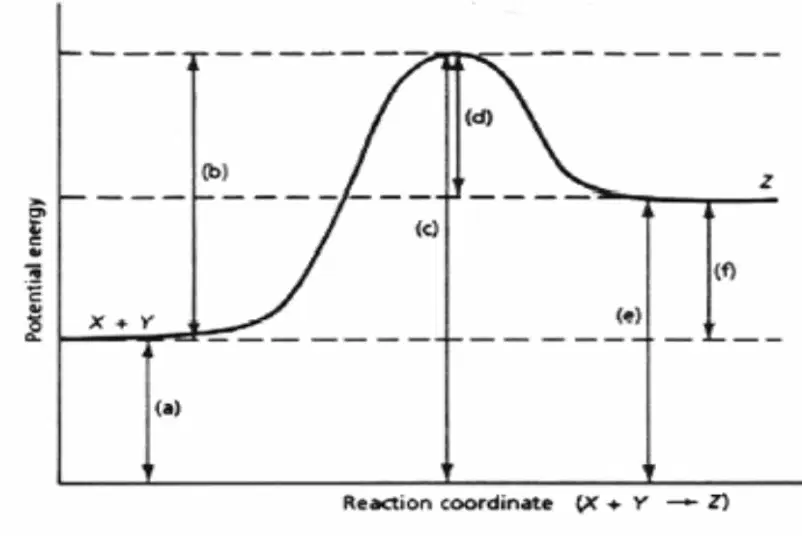
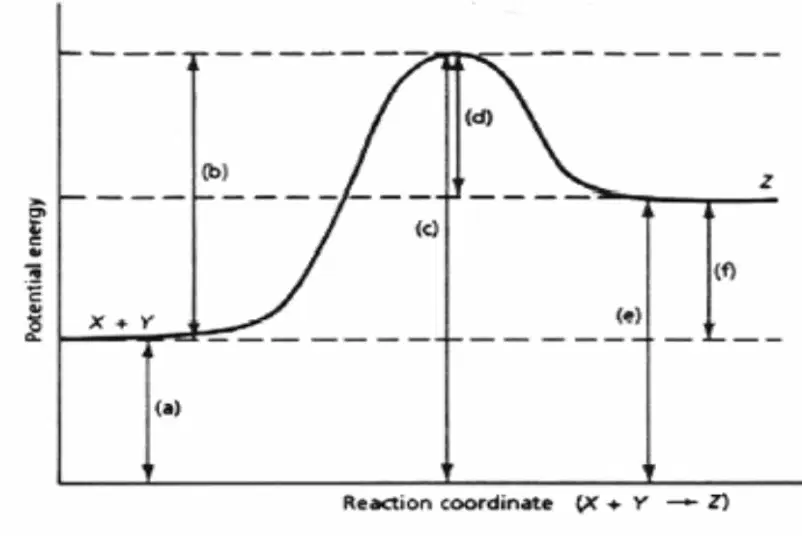
Which of the letters a–f in the diagram represents the potential energy of the products?
a
b
c
d
e
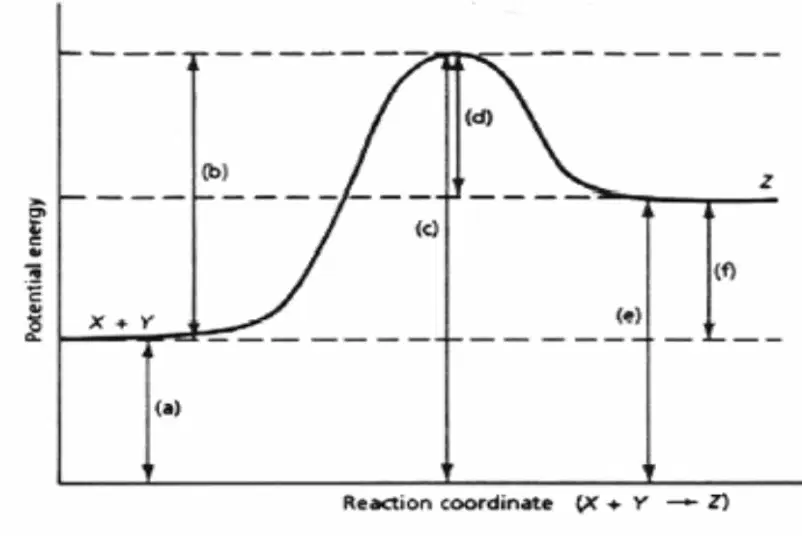
Which letter indicates the potential energy of the activated complex?
A. A
B. B
C. C
D. D

Which letter indicates the potential energy of the reactants?
A. A
B. B
C. C
D. D
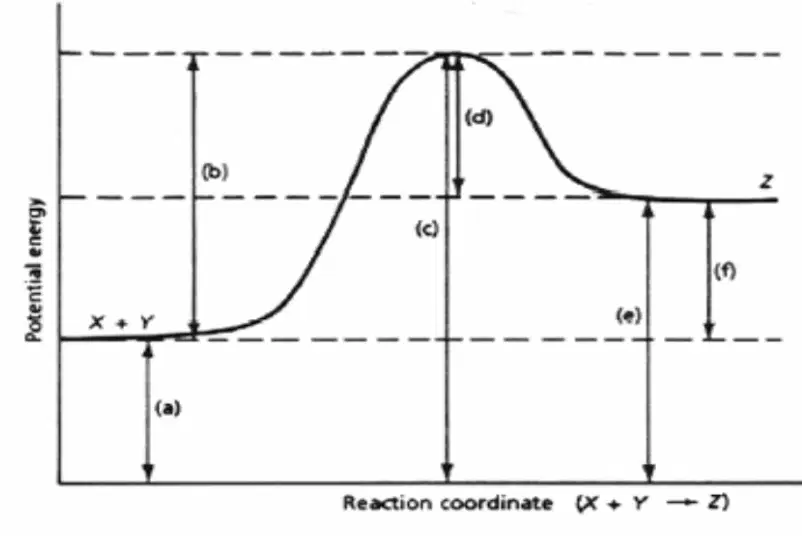
Which letter indicates the activation energy of the forward reaction?
A. A
B. B
C. C
D. D
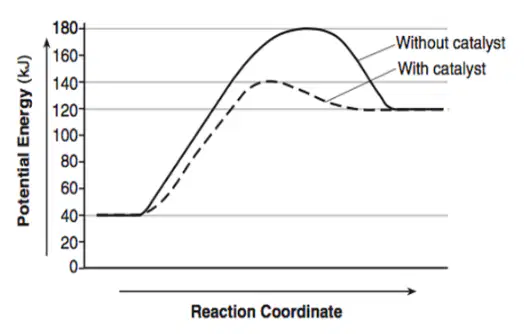
Is the reaction exothermic or endothermic?
A. Exothermic
B. Endothermic
C. Neither
D. Both
Is the reverse reaction exothermic or endothermic?
A. Exothermic
B. Endothermic
C. Neither
D. Both
On an energy diagram for an endothermic reaction, how do the Product energy compare to the Reactant energy?
A. Higher energy level
B. Lower energy level
C. Same energy level
D. Unrelated energy level
Which of the following statements is true?
An endothermic reaction occurs when bonds are formed.
An exothermic reaction occurs when bonds are formed.
Energy is released in an endothermic reaction.
Energy is absorbed in an exothermic reaction.
B and C
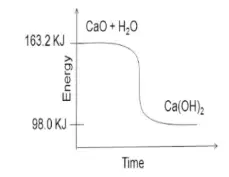
How would you write out the chemical equation to show the ΔH for the following reaction?
CaO + H2O → Ca(OH)2
ΔH = 65.2 KJ
CaO + H2O → Ca(OH)2
ΔH = -65.2 KJ
CaO + H2O + 65.2 KJ → Ca(OH)2
CaO + H2O → Ca(OH)2 - 65.2 KJ
CaO + H2O → Ca(OH)2 +65.2 KJ
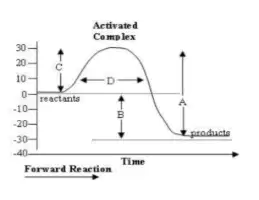
Which letter represents the activation energy of the forward reaction?
A
B
C
D
What is the activation energy of the forward reaction?
10
40
20
30
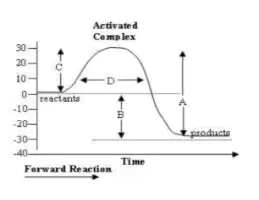
Which letter represents the activation energy of the reversed reaction?
A
B
C
D
What is the value of the activation energy of the reversed reaction?
30
60
90
50
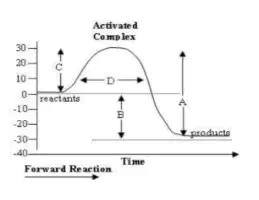
What is the value for ΔH?
-25 kJ/mol
0 kJ/mol
+25 kJ/mol
-30 kJ/mol

According to the potential energy diagram shown above, the chemical reaction in the forward direction is
exothermic because it absorbs energy
exothermic because it releases energy
endothermic because it absorbs energy
endothermic because it releases energy

The potential energy diagram of a reaction is shown. What does circle (#2) represent?
Potential Energy of the Reactants
Potential Energy of the Products
Change of Heat Energy
Activation Energy

