
NEW
Font size
S
M
L
XL
 Worksheets
Wave Quiz
Total questions: 28
Worksheet time: 1hrs 24mins
Name
Class
Date
1.
Which of the following statements about waves are true?
a)
They all require a medium to travel through.
b)
They begin as a disturbance or vibration
c)
All types of waves have the same speed
d)
They all carry equal amounts of energy, its just spread-out differently
2.
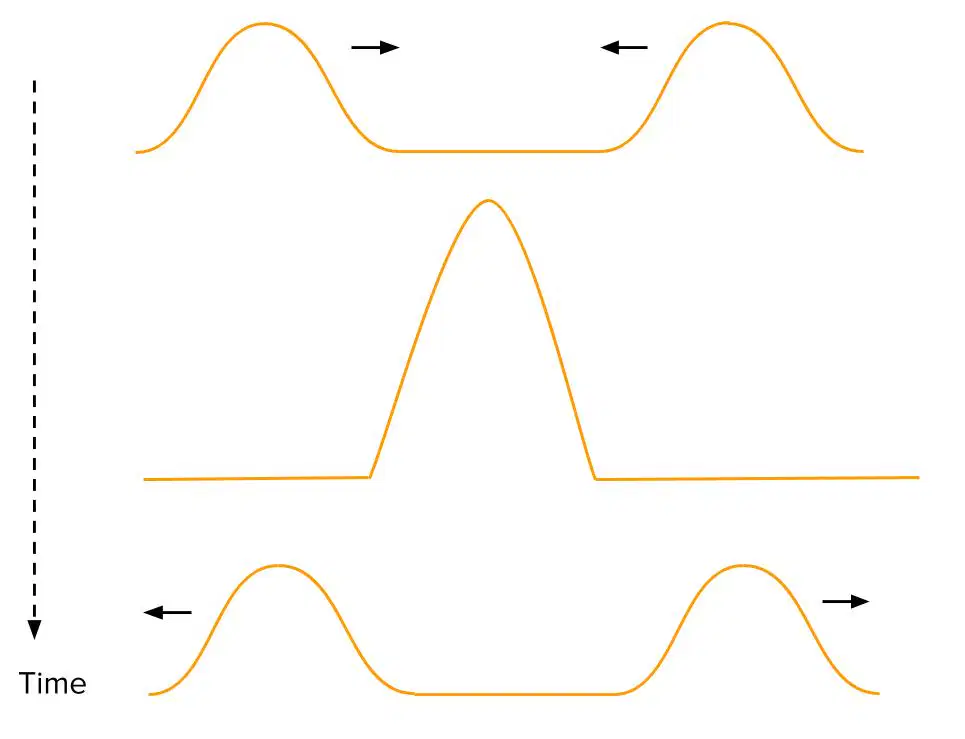
The image below is showing what?
a)
Reflection
b)
Diffraction
c)
Destructive Interference
d)
Constructive Interference
3.
Electromagnetic waves are different from other waves because......
a)
They can be both transverse and longitudinal
b)
They do not require a medium, but can travel through them
c)
Can travel at a constant rate without interference
d)
Move in an elliptical patterns to the surface
4.
A wave that requires a medium to pass through.
a)
Mechanical
b)
Electromagnetic
c)
Light
d)
Radio Waves
5.
In this medium wave particles will move the slowest.
a)
Solid
b)
Liquid
c)
Gas
d)
None of the above, they all move at the same speed
6.
As the energy of the wave increases, which of the following is true?
a)
wavelength increases
b)
frequency decreases
c)
wave speed lowers
d)
frequency increases
7.
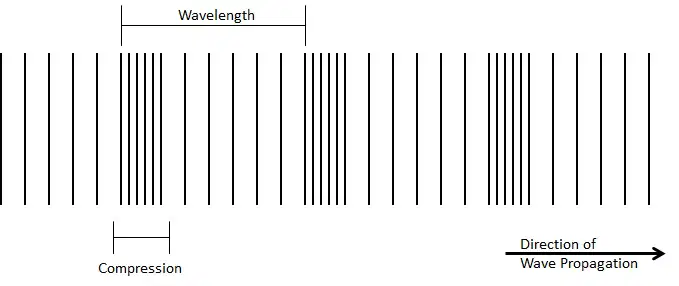
Which type of wave is being displayed below?
a)
Transverse
b)
Electromagnetic
c)
Longitudinal
d)
Destructive Interference
e)
Constructive Interference
8.
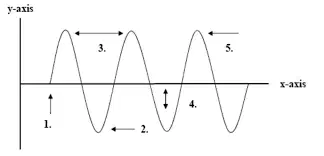
Number 5 in the diagram is indicating the what?
a)
Wavelength
b)
Trough
c)
Crest
d)
Amplitude
9.
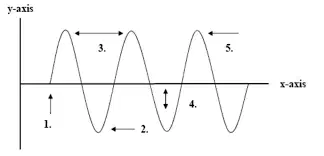
Number 4 in the diagram below is indicating the what?
a)
Crest
b)
Trough
c)
Amplitude
d)
Resting Position
10.
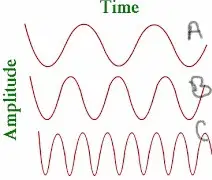
Which graph below has the least amount of energy?
a)
A
b)
B
c)
C
11.
Type of wave where particles move perpendicular to the wave motion.
a)
Transverse
b)
Longitudinal
c)
Sound Waves
12.

Determine the waves amplitude.
a)
3 m
b)
0 m
c)
1 m
d)
6 m
13.
The combination of two or more waves that results in a decrease in a waves amplitude or even zero.
a)
Reflection
b)
Diffraction
c)
Constructive Interference
d)
Destructive Interference
14.
Why can you hear 2 people talking even after they walk around a corner?
a)
The sound waves can travel through all mediums.
b)
Sound waves diffract when they pass an edge or barrier like a wall or doorway, and spread out in medium beyond the barrier.
c)
The sound waves are longitudinal and have a high amount of energy, so the waves can travel far distances.
15.

Referencing the traveling wave below, determine the wavelength.
a)
50 m
b)
25 m
c)
6 m
d)
100 m
e)
75 m
16.
The number of waves that pass in one second.
a)
Period
b)
Wavelength
c)
Frequency
d)
Energy
17.
Which one of the following is an example of an electromagnetic wave?
a)
sound waves
b)
water waves
c)
light waves
d)
mechanical waves
18.
As a wave spreads out from its center point the wave
a)
energy increase
b)
energy is the same but spread out more
c)
energy is decreasing and spread out more
d)
energy is decreasing and more consentrated
19.
Surface waves on water are special because they
a)
move parallel
b)
move perpendicular
c)
move parallel and perpendicular
d)
do not move in any particular direction
20.
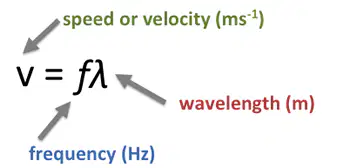
The string of a piano that produces the note middle C vibrates with a frequency of 262 Hz and a wavelength of 1.3 m in the air what is the speed of the wave?
a)
341 m/s
b)
201.5 m/s
c)
.005 m/s
21.
Which of the statements about thunder and lightning is correct.
a)
We hear and see them at the same time because they are mechanical waves.
b)
We hear thunder before we see lightning because sound travels faster than light.
c)
We see lightning before we hear thunder because light travels faster than sound.
d)
We see lightning before we hear thunder because light travels slower than sound.
22.
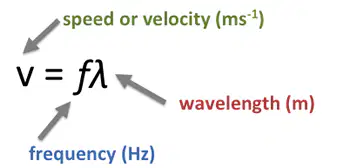
A train of waves is moving at a speed of 30 m/s. The frequency of the waves is 10 Hz. What is the wavelength?
a)
300 m
b)
3 m
c)
30 m
d)
0.1 m
23.
The bouncing back of waves when they meet a surface is called?
a)
Reflection
b)
Rarefraction
c)
Diffraction
d)
Wavelength
24.
The time it takes for a complete wave to travel.
a)
Frequency
b)
Period
c)
Wavelength
d)
Amplitude
25.
What happens to the pitch of the ambulance siren as to approaches you?
a)
Lowers
b)
Increases
c)
Stays the Same
26.
A sound wave is an example of
a)
an electromagnetic wave
b)
a transverse wave
c)
a surface wave
d)
a longitudinal wave
27.
A transverse wave measures 20 cm from the top of one crest to the bottom of the trough. What is the amplitude?
a)
20 cm
b)
10 cm
c)
40 cm
d)
5 cm
28.
When light waves bend from passing between two different mediums, a spoon will appear to be bent in a glass of water. This is called..
a)
Refraction
b)
Interference
c)
Diffraction
d)
Reflection
Reset

