

Wayground logo

Free Printable Worksheets

Font size

S
M
L
XL
Worksheets

AWH Unit 2 Ch. 3+4

Total questions: 65

Worksheet time: 1hrs 4mins

Name
Class
Date
1.

Who introduced the caste system to India?

a)

The Arabs

b)

The British

c)

The Aryans

d)

The Chinese

2.

The Caste System is a...

a)

Form of Religion

b)

Form of Government

c)

Form of Hierarchy, social system

d)

Form of Education system

3.

Which caste is at the top of the system?

a)

Sudras

b)

Dalits

c)

Kshatriyas

d)

Vaisyas

e)

Brahmins

4.

Which religion supported the Caste System?

a)

Buddhism

b)

Hinduism

c)

Jainism

d)

Varnas

5.

Who were referred to as "untouchables" or "outcastes" in the Aryan caste system?

a)

Lawbreakers and grave diggers

b)

Merchants and traders

c)

Priests and scholars

d)

Warriors and kings

6.
Hinduism is polytheistic.  What does that mean?
a)
Hindus believe in one God.
b)
Hindus believe in multiple gods and goddesses that control the universe.
c)
Hindus believe in more than one version of heaven.
d)
Hindus believe in multiple classes of people.
7.
In order to end the cycle of rebirth, one must reach ___________.  
a)
Moksha
b)
Karma
c)
Ahimsa
d)
Shiva
8.
In which country did Hinduism originate?
a)
Myanmar
b)
United States
c)
Japan
d)
India
9.
Who was the founder of Hinduism?
a)
Abraham
b)
Jesus
c)
Siddhartha 
d)
No real founder
10.
What is the term for a person being reborn after a previous life?
a)
maya
b)
reincarnation
c)
recluse
d)
dharma
11.
The material actions resulting from the consequences of previous actions is called... (hint: what comes around goes around)
a)
dharma
b)
Polytheism
c)
karma
d)
Ahimsa
12.
According to Buddhist tradition, what happened to make Prince Siddhartha Gautama walk away from the comforts of princely life?
a)
Siddhartha's father wanted him to be a great religious leader so he encouraged him to leave.
b)
His father kicked him out and said he no longer wanted Siddhartha to be king someday.
c)
Siddhartha left the palace and saw all the joy in the world.  He wanted to be a part of it.
d)
At age 29, he saw the pain and suffering of the world and was shocked.  He left his comfortable life in search of a greater truth.
13.
What are the basic teachings of Buddhism called?
a)
Ten Commandments
b)
Shar'ia Law
c)
The Four Noble Truths
d)
The Five Noble Truths
14.
According to the fourth Noble Truth, what is the way to remove desire in order to achieve enlightenment?
a)
Follow the Ten Commandments
b)
Follow the Eightfold Path
c)
Get as many material possessions as possible.
d)
Follow the 12-step Program
15.
Where did Buddhism originate and where did it spread?
a)
China.  Leading faith in the Americas and Middle East.
b)
China.  Spread to the rest of Asia
c)
India.  Leading religion in the Americas and the Middle East
d)
India.  Leading faith in Southeast Asia, Central Asia, China, Japan & Korea
16.
What are Buddhists in search of?
a)
Truth
b)
Nirvana
c)
Heaven
d)
Paradise
17.
When a Buddhist reaches "enlightenment" it is said they reach a certain state that is translated as "snuffing out" as in blowing out a lamp. What is this state called? 
a)
Oklahoma
b)
Nirvana
c)
bliss
d)
Mumbai
18.
According to Buddha's teaching why do people suffer? 
a)
People suffer because they desire worldly things and self-satisfaction. 
b)
People suffer because they are mean. 
c)
People suffer because they don't go to school. 
d)
People suffer because they want to. 
19.
What is one reason the principles of Buddhism became popular? 
a)
Buddha was a wise person. 
b)
Buddha was an attractive person
c)
Buddhism did not accept the caste system. 
d)
Buddhism was only for smart people. 
20.

In what part of the world does Judaism originate?

a)

Europe

b)

North America

c)

Africa

d)

Middle East

21.

Who is the founder of Judaism?

a)

Moses

b)

Abraham

c)

Guru Nanak

d)

Siddhartha Gautama

22.

Judaism believes in a single god called which of the below?

a)

Allah

b)

Brahman

c)

Yahweh

d)

Waheguru

23.

Followers of Judaism believe themselves to be the _ people of God for receiving the Torah.

a)

Great

b)

Chosen

c)

Honorable

d)

Enlightened

24.

The centerpiece of the Jewish faith is to _.

a)

Obey the Commandments

b)

Obey the laws of Karma

c)

Obey the Guru Granth Sahib

d)

Obey the Eightfold Path

25.

The Jewish people are awaiting an individual who will bring about world peace called the _.

a)

Buddha

b)

Messiah

c)

Guru Granth Sahib

d)

Avatar

26.
______ is the Jewish holy book.
a)
Torah
b)
Synagogue
c)
Monotheism
d)
Entire Christian Bible
27.
What are the Ten Commandments?
a)
They are a list of prayers all Jews are expected to do each night.
b)
They contain teachings Jews believe were handed down by God to Moses
c)
They are the teachings that Jews believe were handed down by God to Abraham.
d)
They are a list of things Jews believe God commanded Jesus to do.
28.
What did the Phoenicians share with other groups they met, which is important to us today?
a)
Stories and legends
b)
Maps and compasses
c)
Shipbuilding and sailing strategies
d)
the alphabet they had invented
29.

The Phoenicians dominated _______ trade across the Mediterranean.

a)

land

b)

all

c)

sea

d)

air

30.

Which group was able to increase trade along rivers and seas, spreading their culture and alphabet?

a)

Babylonians

b)

Egyptians

c)

Phoenicians

d)

Persians

31.
What did the satraps do?
a)
They were Persian leaders
b)
They went around giving out presents
c)
They acted like governors and collected taxes
d)
They collected taxes independently
32.

The central belief of the Zoroastrianism centered around the idea of what?

a)

An eye for an eye

b)

Good versus evil

c)

Karma and the cycle of life

d)

The final judgement

33.

What physical structure connected the satraps of the Persian Empire.

a)

The Silk Road

b)

The Royal Road

c)

The Byzantine Byway

d)

The Persian Passages

34.

Who was the "great" founder of the Persian Empire?

a)

Cyrus

b)

Darius I

c)

Xerxes

d)

Darius III

35.
What was the religion that was practiced by Persians?
a)
Christianity
b)
Judaism
c)
Islam
d)
Zoroastrianism
36.

What type of religion is Zoroastrianism?

a)

Monotheistic (belief in one god)

b)

Polytheistic (belief in many gods)

c)

Belief in the legendary Zoro

d)

Belief in Jesus Christ

37.

How did Persian rulers treat most of the people in lands that were taken into the empire?

a)

They forced the people to assimilate within the Persian culture.

b)

The Persian rulers imprisoned the citizens and sentenced many to death.

c)

They placed the citizens into slavery and worked them for the rest of their lives.

d)

They allowed them to keep their unique cultures, languages, and religions.
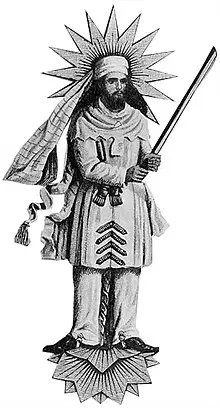
38.

Who was Zoroaster?

a)
Zoroaster was a Greek philosopher
b)
Zoroaster was a Roman emperor
c)

Zoroaster was an ancient Persian prophet

d)
Zoroaster was a Chinese warrior
39.

Who was Hatshepsut?

a)

A queen consort of ancient Egypt

b)

A high priestess in ancient Egyptian religion

c)

A male pharaoh of ancient Egypt

d)

A female ruler of ancient Egypt who declared herself king

40.

What unusual step did Hatshepsut take to be respected as a ruler?

a)

She built a new capital city

b)

She dressed in men's clothing and wore a fake beard

c)

She banned all trade with foreign countries

d)

She declared herself a goddess

41.

What were the royal governors of Persia called?

a)

Satraps

b)

Viziers

c)

Pharoahs

d)

Regents

42.
Confucius said people should know their place in ___________ and _____________.
a)
family, society
b)
town, kingdom
c)
books, magazines
d)
life, death
43.
Confucius' ideas were put into a book called....
a)
The Analects
b)
The Quran
c)
The Bible
d)
The Buddha
44.
According to the Mandate of Heaven, what happened if a ruler governed poorly?
a)
Nothing.  There is nothing anyone can do.
b)
If a ruler governed poorly, heaven withdrew its support and the ruler lost power.
c)
The ruler must undergo a rigorous training course to get better.
d)
The ruler must meditate and ask the heavens for answers.
45.
Laozi (Lao Tzu) was the founder of—
a)
Buddhism
b)

Daoism

c)
Legalism
d)
Confucianism
46.
What's the name of this symbol?
a)
Moksha
b)
Yin-Yang
c)
Nirvana
d)
Eightfold Path 
47.
Believes that peace can be achieved through five basic relationships.
a)
Confucianism
b)

Daoism

c)
Legalism
d)

Zoroastrianism

48.
Respect for elders, good government and social order represent the basic beliefs of
a)
Hinduism
b)
Legalism
c)
Confucianism
d)
Daoism
49.
What philosophy/religion teaches to live in harmony with nature?
a)
Legalism
b)
Hinduism
c)
Confucianism
d)

Daoism

50.

Who is considered to be the founder of Daoism?

a)

Confucius

b)

Lao Tzu

c)

Sun Tzu

d)

Mao Zedong

51.

Daoists emphasized the importance of ____________ and ___________.

a)

peace, harmony

b)

punishment, strictness

c)

rules, restrictions

d)

kings, queens

52.
Which Chinese philosophy taught that people are naturally wicked and must have strict rules and harsh punishments to force them to do the right thing?
a)
Confucianism
b)
Daoism
c)
Legalism
53.
Confucius, Laozi and Hanfeizi are examples of Chinese...
a)
Gods
b)
Philosophers
c)
Prophets
d)
Emperors
54.
The statement below refers to which of the THREE philosophies:
leaders should lead by example and inspire good behavior
a)
Confucianism
b)
Taoism
c)
Legalism
55.

Who pioneered Legalism?

a)

Han Fei

b)

Lao-Tzu

c)

Confucius

d)

Buddha

56.

Match the following founders of religions or philosophies.

a)

Confuciansim

1.

Confucius

b)

Daoism

2.

Laozi

c)

Legalism

3.

Han Fei

d)

Buddhism

4.

Siddartha Gautama

e)

Hinduism

5.

no founder

57.
Which religion is concentrated in the dark shaded area on the map?
a)
Hinduism
b)
Christianity
c)
Judaism
d)
Islam
58.
A rigid social group that is determined at birth and never changes during a person's life is called
a)
the Eightfold Path
b)
the Five Pillars
c)
the Hajj
d)
the Caste System
59.

One of the most prominent features of Jainism is...

a)

Their belief in Karma

b)

Their belief in the cycle of reincarnation

c)

Their commitment to Ahisma, or non-violence

d)

Their belief in Moksha.

60.

What was the primary purpose of the Great Wall of China?

a)

To serve as a trade route

b)

To protect China against invaders

c)

To mark the boundary of the empire

d)

To serve as a tourist attraction

61.

The Torah is ...

a)

The book of history of the Egyptian People

b)

The Book of laws developed by Buddhists

c)

A history of Judaism based on archeological evidence

d)

The Jewish Holy Text

62.

Match the following regions with the religion

a)

Daoism

1.

China

b)

Hinduism

2.

India

c)

Zoroastrianism

3.

Persia

d)

Judaism

4.

Middle East

63.

Match the following texts to the religion or philosophy.

a)

Confucianism

1.

The Analects

b)

Daoism

2.

Tao Te Ching

c)

Judaism

3.

The Torah

d)

Hinduism

4.

Upanishads

e)

Buddhism

5.

the Eight Fold Path

64.

Match the following people to their concept.

a)

Judaism

1.

Abraham

b)

Daoism

2.

Laozi

c)

Legalism

3.

Han Fei

d)

Persian Empire

4.

Cyrus the Great

e)

Egypt

5.

Hapshepsut

65.

Match the following Religions and Symbols

a)

1.

Hinduism

b)

2.

Judaism

c)

3.

Daoism

d)

4.

Zoroastrianism

e)

5.

Buddhism
