
 Worksheets
Unit 3 Review
Total questions: 40
Worksheet time: 20mins
Which of these areas was not one of the first cultural hearths?
Mesoamerica
Zambezi Valley
Andean America
West Africa
Indus Valley
Which of these statements could be attributed to a person with an ethnocentric point of view?
All cultures should be equally valued and celebrated.
This culture will continue to change due to technology.
There is no real difference between cultures.
My culture is better than others in many ways.
All cultures are the result of adaptations over time.
Which term describes the idea that a person’s beliefs and actions should be understood by others through the lens of that individual’s own culture?
Cultural relativism
Cultural cognizance
Cultural discernment
Cultural reciprocity
Cultural impartiality
What can help to explain why Mexican culture has very little influence in Japan?
Presence of trade barriers
Censorship
Distance decay
Time-space convergence
Multiculturalism
Due to their close physical locations and strong political and economic ties, Canada and the United States have similar cultures. What concept best describes this phenomenon?
Assimilation
Cultural convergence
Syncretism
Cultural divergence
Centrifugal forces
Thanks to the Internet and advanced methods of transportation, it is much easier for people to stay on top of trends and purchase the fashion items associated with popular culture today than it was thirty years ago. What phenomenon explains the forces that enable this?
Reverse hierarchical diffusion
Distance decay
Organic theory
Time-space convergence
Cultural divergence
Which of these is not a folk culture?
Inuit
Laotian
Cajun
Maori
Romani
Which of these elements is not considered part of the cultural landscape?
Industry
Architecture
Landscaping
Vehicles
Signs
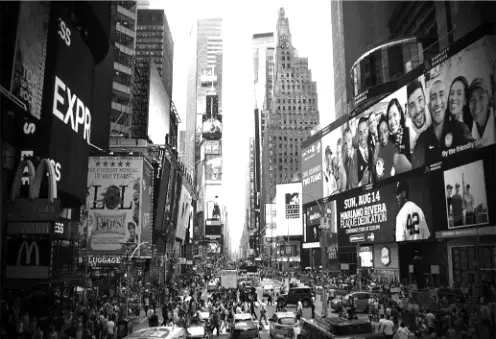
Based on the photograph below, what conclusion might a geographer be able to draw about the society that created this cultural landscape?
They are protective of women and vulnerable groups.
They embrace nativist attitudes.
They believe that history is not important.
They embrace popular culture instead of folk culture.
They are adherents of the Christian faith.
How do centripetal forces influence culture?
They can cause the creation of new folk cultures.
They can help promote the rise of nationalism.
They encourage varied opinions and points of view.
They usually lead to increased environmental issues.
They can help pidgin and creole languages evolve.
Which of these is a centrifugal force?
Shared histories and traditions
Pease and social stability
Racial discrimination
A common language
Religious homogeneity
Which geographic term describes the person or group that is responsible for creating an innovation and initiating the diffusion process?
Diaspora
Innovator
Mastermind
Adopter
Architect
Which type of diffusion does not remain strong at the hearth while also spreading outwards?
Contagious
Relocation
Stimulus
Expansion
Hierarchical
Coffee has been a popular beverage in countries all over the world for centuries. The global popularity of coffee is an example of what kind of diffusion?
Reverse hierarchical
Relocation
Stimulus
Hierarchical
Contagious
The chain of command in the military is an example of what kind of diffusion?
Stimulus
Expansion
Hierarchical
Relocation
Contagious
Which language family is the largest in the world?
Austronesian
Indo-European
Sino-Tibetan
Niger-Congo
Afro-Asiatic
Which of these languages is not part of the Germanic language branch?
English
German
Dutch
Swedish
French
What is the name of the single common language from which linguists believe all European languages must have descended?
Basic-Ante-European
Foremost-Inter-Aegean
Proto-Indo-European
Prime-Inter-Aryan
Initial-Indo-Aryan
What event led to the development of Romance languages?
Alexander the Great’s conquests
The decline of the Roman Empire
The founding of Mesopotamia
The start of the ancient Olympics
The Peloponnesian War
Which of these languages is not spoken by more than 100 million people?
German
Swedish
Portuguese
Russian
Bengali
Which term describes a regional variation of a language distinguished by unique vocabulary, pronunciation, and spelling?
Isogloss
Pidgin language
Dialect
Creole
Isolated language
What allows geographers to visualize divisions between different language dialects?
Subsequent boundaries
Isoglosses
Census data
Acculturation
Language trees
Why might a country choose to have more than one official language?
To facilitate easier trade with their partners
To elevate their reputation on the world stage
To ensure that citizens have better international job opportunities
To be inclusive of significant minority culture groups
Which of these would not be an effective means of preserving an endangered language?
Making written and audio records of the language
Using the language in religious services
Granting the language official protected status
Teaching the language to community elders
Producing TV and radio content in the language
Which pair of religions have hearths in Israel?
Christianity and Judaism
Islam and Hinduism
Sikhism and Buddhism
Islam and Christianity
Judaism and Hinduism
Which of these religions is an ethnic religion?
Christianity
Judaism
Sikhism
Islam
Buddhism
By which kind of diffusion do universalizing religions most commonly tend to spread?
Contagious
Relocation
Reverse Hierarchical
Stimulus
Hierarchical
By which kind of diffusion does Judaism most likely spread?
Contagious
Relocation
Reverse hierarchical
Stimulus
Hierarchical
Which of these religions is the largest?
Buddhism
Islam
Judaism
Hinduism
Which of these religions is polytheistic?
Christianity
Islam
Hinduism
Sikhism
Buddhism
Which of these pairs of religions believe in reincarnation?
Sikhism and Judaism
Hinduism and Christianity
Buddhism and Islam
Buddhism and Sikhism
Hinduism and Judaism
Which term describes the belief commonly found in ethnic African religions that natural objects and events have a spirit?
Secularism
Animism
Theocracy
Fundamentalism
Diaspora
What is the primary reason that new immigrants sometimes choose to live in ethnic enclaves when they move to a new country?
To maintain their traditional diet and protect their physical health
To ensure that their children assimilate into the dominant culture
To secure advantageous marriages
To maintain their cultural traditions and ways of life
To obtain affordable housing and access community services
Which of these people is most likely to undergo acculturation?
Elsa, a seventy-year-old retiree who volunteers at a language center
Jamie, a freshman who just moved from middle to high school
Owen, a fifty-year-old who works for the government’s travel advisory board
Rick, a thirty-year-old newly arrived immigrant who works at a law office
Mei, a twenty year old college student who is majoring in international politics
When assimilation occurs, what happens to minority culture groups?
They are absorbed into the dominant culture.
They are given protected status by the government.
They become socially and economically isolated.
They are usually asked or forced to leave the area.
They resist convergence and form ethnic enclaves.
Which of these is an example of syncretism?
Classical music
Arabic
Modern architecture
Sikhism
Italian food
If a society does not support immigration, they likely embrace this kind of attitude.
Nativism
Communism
Zealotry
Fundamentalism
Partitionism
Tension between which two groups of people in Northern Ireland led to “The Troubles”, a period of political violence in the 1960s-1990s?
Communists and Capitalists
Catholics and Protestants
Liberals and Conservatives
Christians and Muslims
Republicans and Democrats
In which country did tension between the Hutu and Tutsi ethnic groups lead to genocide in 1994?
Sierra Leone
Kenya
Rwanda
Liberia
What is the difference between genocide and ethnic cleansing?
Historically, ethnic cleansing happens rarely and only in extreme circumstances and genocide happens quite often.
Genocide is almost always carried out by a group with a political cause and ethnic cleansing happens for social reasons.
Genocide involves eliminating a group by killing them and ethnic cleansing involves forced removal of a group.
Ethnic cleansing results in a higher degree of cultural destruction than is the case with instances of genocide.
When genocide happens, a group can recover and rebuild but when ethnic cleansing happens such things cannot occur.

