
 Worksheets
Tradition in a Modernizing World: East and Southeast Asia
Total questions: 97
Worksheet time: 1hrs 12mins
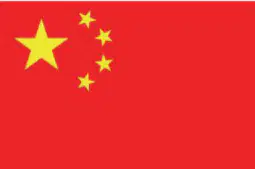
Which country's flag is shown with a red background and five yellow stars?
A) China
B) Japan
C) South Korea
D) Mongolia
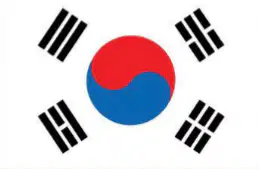
Which country's flag is shown with a red and blue circle in the center and black stripes on the sides?
North Korea
South Korea
Japan
Taiwan
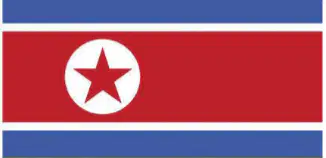
Which country's flag is shown with a red star on a blue and red background?
North Korea
South Korea
China
Japan
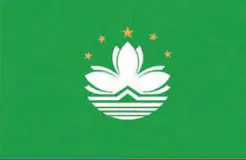
Which region's flag is shown with a green background and a white lotus flower?
Hong Kong
Macau
Taiwan
Tibet
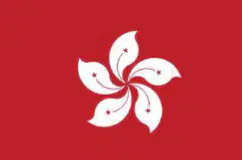
Which region's flag is shown with a red background and a white flower?
Hong Kong
Macau
Taiwan
Tibet
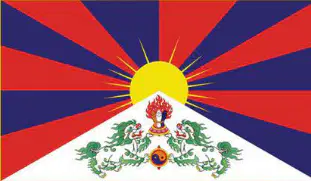
Which region's flag is shown with a blue and red background and a sun with rays?
Tibet
Mongolia
Taiwan
Japan
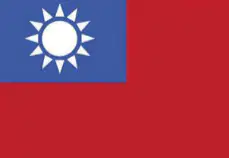
Which country's flag is shown with a blue background and a white sun?
Taiwan
Japan
South Korea
Mongolia
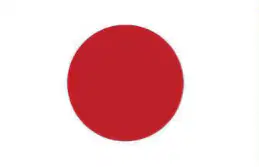
Which country's flag is shown with a red circle on a white background?
China
Japan
South Korea
Mongolia
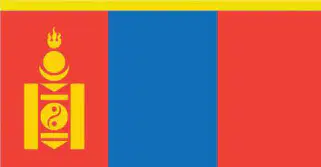
Which country's flag is shown with a red background and a yellow symbol?
A) China
B) Japan
C) South Korea
D) Mongolia
Define 'mixed economy' as an economic system that combines elements of both market and planned economies.
An economic system that combines elements of both market and planned economies.
An economic system that is solely based on free market principles.
An economic system that operates entirely under government control.
An economic system based on barter and trade only.
Definition of 'city-state'.
A sovereign city that functions as an independent state
A city that is subordinate to a larger state
A region governed by a city
A metropolitan area within a state
Archipelago is defined as a group of islands.
A group of mountains
A group of islands
A group of rivers
A group of deserts
Select the correct definition of 'Ring of Fire'.
A training ring used in fire safety drills.
A region in the Pacific Ocean known for a high number of earthquakes and volcanic eruptions.
A type of jewelry worn in the ear.
A popular animated series on children's television.
Globalization is defined as the process of increasing integration and interaction among people, companies, and governments worldwide.
It is the process of isolating national economies.
It is the process of increasing integration and interaction among people, companies, and governments worldwide.
It is the practice of enforcing strict trade barriers between nations.
It is the development of local cultures without global influence.
Definition of 'totalitarian government':
A government with absolute control over every aspect of public and private life that suppresses opposition
A government that promotes individual liberty and manages a free market
A decentralized government emphasizing local governance and limited central authority
A government where power is constitutionally divided among branches and checks and balances are maintained
Fill in the blank: A _______ is an economy that allows for both public and private ownership of businesses.
mixed economy
command economy
traditional economy
market economy
Fill in the blank: A _______ is a political division made up of a city and surrounding area.
city
country
state
county
Fill in the blank: An _______ is a chain of islands.
archipelago
isthmus
continent
delta
Fill in the blank: The _______ is an area where large numbers of earthquakes and volcanic eruptions occur in the basin of the Pacific Ocean.
Ring of Fire
Pacific Rim
Circum-Pacific Belt
Earth's Anvil
Fill in the blank: _______ is the growing connectedness of different regions of the world resulting in the spread of culture, ideas, disease, goods, and technologies.
globalization
modernization
localization
commercialization
Fill in the blank: A _______ is a centralized governmental control of all aspects of society through the suppression of rights and propaganda.
totalitarian regime
democratic republic
liberal democracy
constitutional monarchy
Cultural landscape refers to the combined interaction of human culture and the natural environment.
The natural environment in its untouched state.
The combined imprint of human culture on nature.
Only the architectural monuments in a region.
Exclusive cultural events without nature.
Tsunami is a series of large ocean waves.
A series of large ocean waves
A type of storm
A volcanic eruption phenomenon
A meteorite impact event
A 'monsoon' is a seasonal wind accompanied by changes in precipitation.
A seasonal wind accompanied by changes in precipitation.
A strong, short-lived storm.
A permanent wind that blows all year.
A daily weather event.
Determine the meaning of a 'command economy' as an economic system where the government dictates production and distribution.
An economic system where the government controls production and distribution
An economic system based on free competition among private firms
An economic system with minimal government intervention
An economic system dominated by market forces
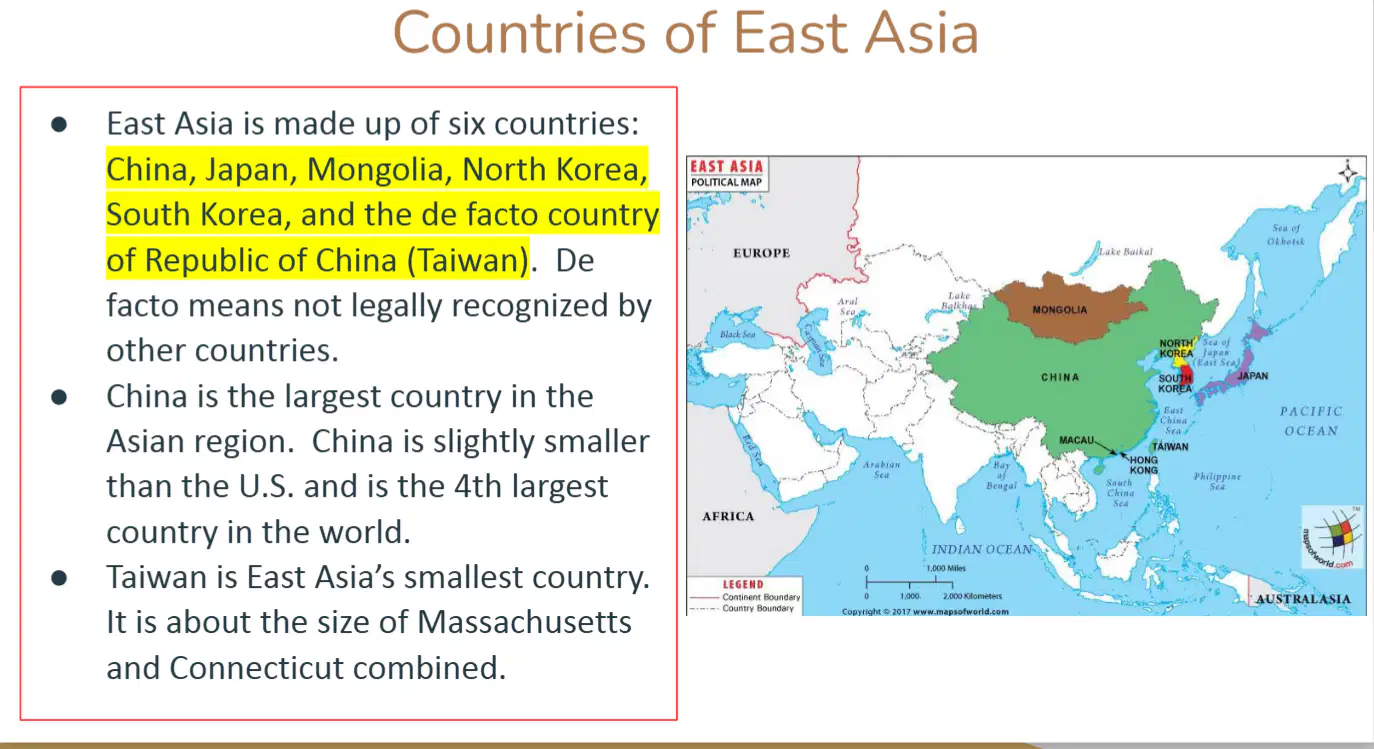
Which countries make up East Asia?
A) China, Japan, Mongolia, North Korea, South Korea, Taiwan
B) India, Pakistan, Bangladesh, Nepal, Bhutan
C) Russia, Ukraine, Belarus, Poland, Lithuania

Fill in the blank: China is the largest country in the Asian region and is the 4th largest country in the world. It is slightly smaller than the ____.
U.S.
Russia
India
Canada

'de facto' means that Taiwan is practically recognized rather than officially or legally recognized.
Practically recognized
Officially recognized
Legally recognized
Hypothetically recognized
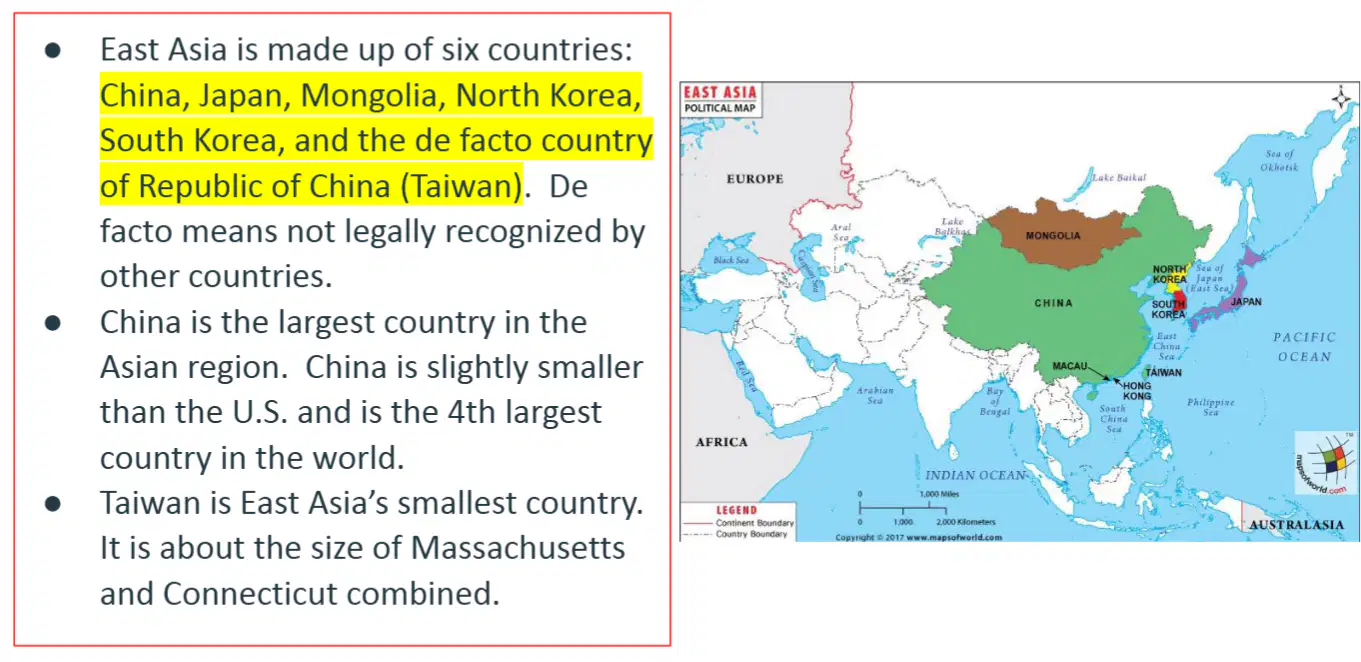
How does the size of Taiwan compare to U.S. states? Choose the correct description.
It is larger than many U.S. states.
It is similar in size to many U.S. states.
It is smaller than many U.S. states.
It is exactly the same size as one particular U.S. state.

What is the highest step in the geographic subregions of China and Mongolia?
The Himalayas
The Plateau of Tibet
The Gobi Desert
The Yellow River

Fill in the blank: The Kunlun Shan range runs along the _______ edge of the Plateau of Tibet, and the Himalaya run along the southern edge.
northern
southern
eastern
western

Located north and east of Tibet lie the mountains and plateaus of which step?
Mongolian Step
Himalayan Step
Siberian Step
Andean Step

Much of the land in the northern part of the subregion is desert or near desert, with little or no vegetation.
True
False

What are the main landforms in this subregion?
The third step covers most of the eastern third of China.
The high mountains dominate most of the subregion.
Vast plains extend across the central area.
Coastal regions and deltas characterize the landscape.
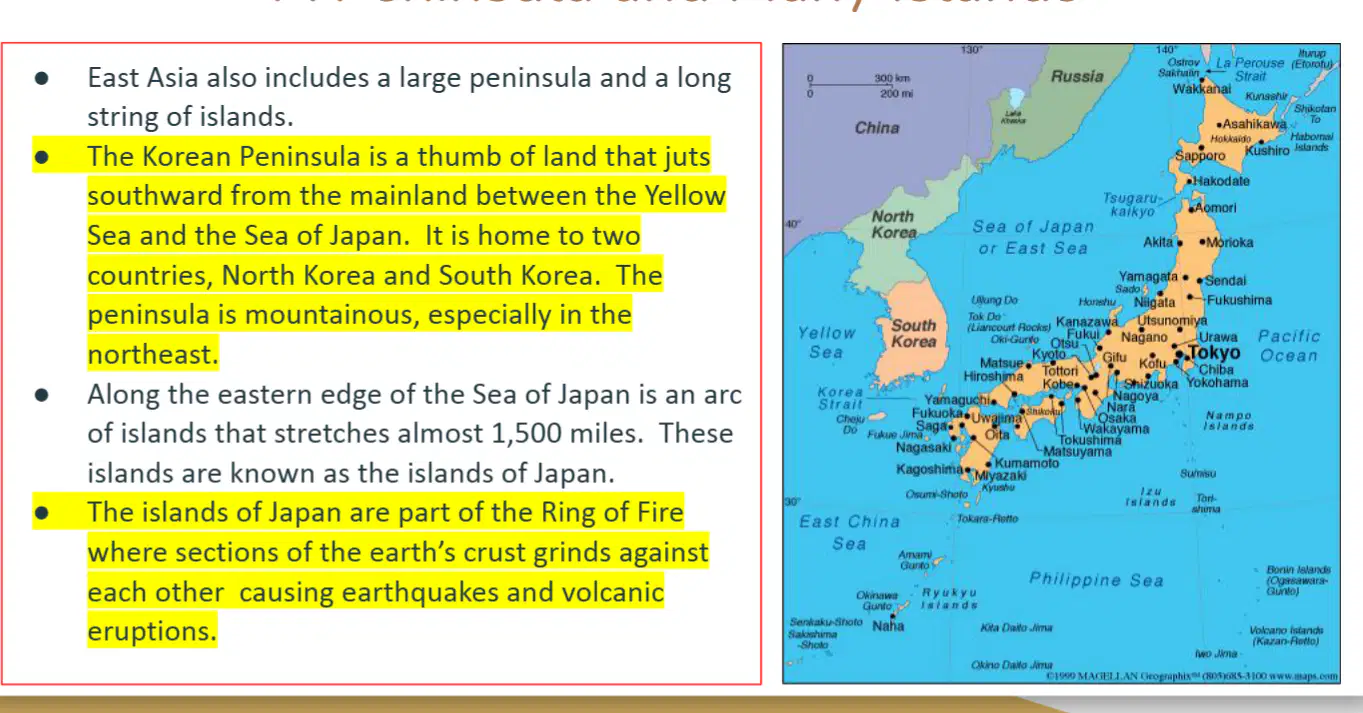
The Korean Peninsula is a peninsula located in East Asia, between the Sea of Japan and the Yellow Sea.
A peninsula located in East Asia, between the Sea of Japan and the Yellow Sea.
An island in Southeast Asia.
A bay in Eastern Europe.
A mountain range in Central Asia.

Which two countries are located on the Korean Peninsula?
North Korea
South Korea
China
Japan

The islands of Japan are part of which geological feature?
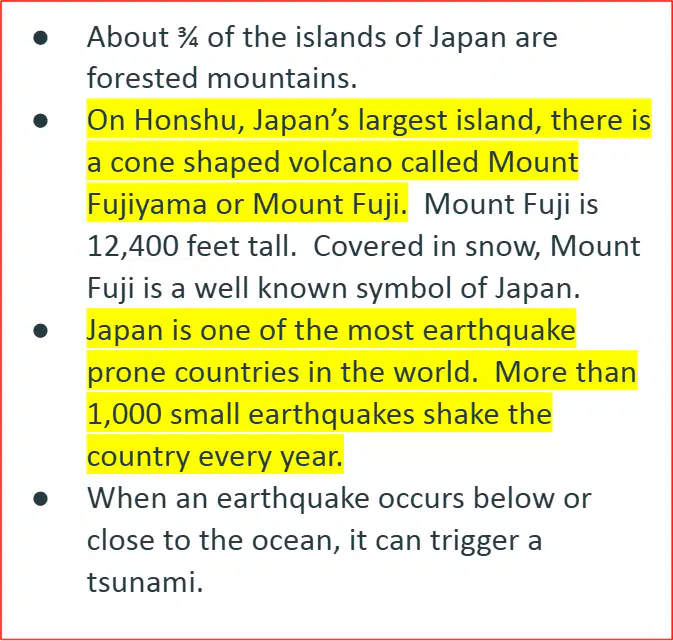
What fraction of the islands of Japan are forested mountains?
70%
50%
30%
60%
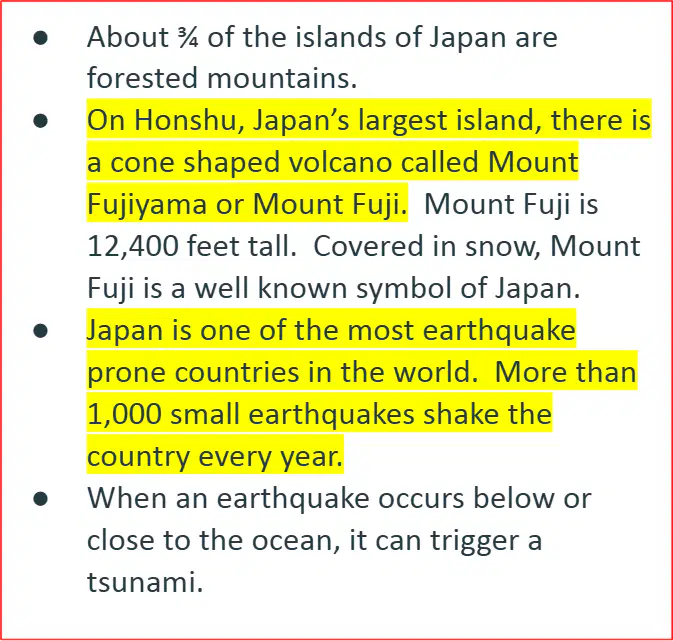
On which island is Mount Fuji located?
Honshu
Hokkaido
Kyushu
Shikoku
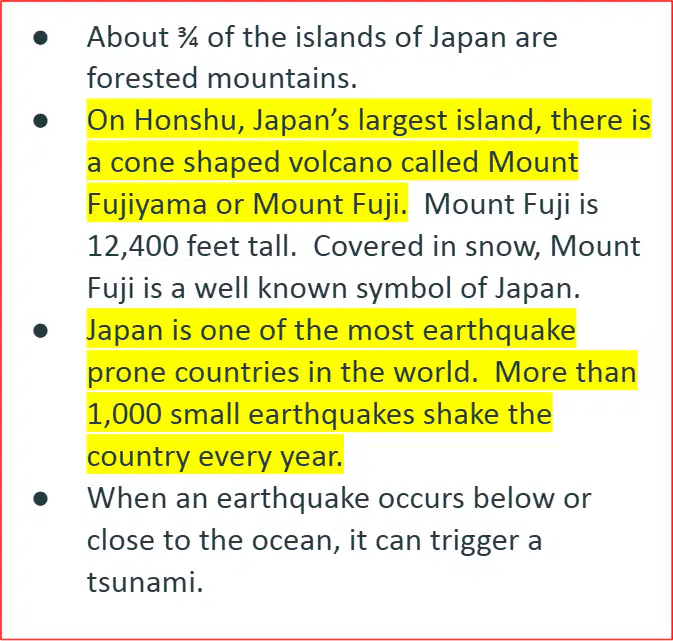
How tall is Mount Fuji?
3,776 m
2,500 m
4,200 m
3,000 m
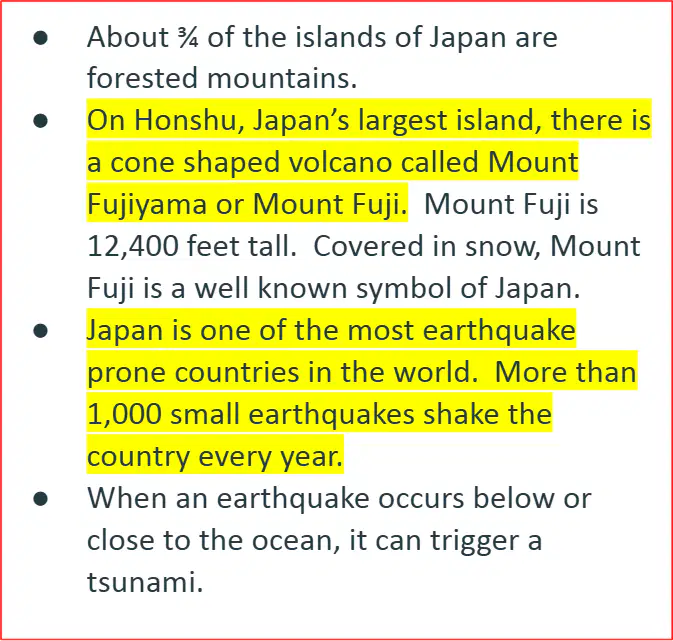
How many small earthquakes shake the country every year?
0
5
10
15

What is the largest sea along East Asia's eastern edge?
East China Sea
South China Sea
Yellow Sea
Sea of Japan

Which sea lies between China and Japan's Ryukyu Islands?
South China Sea
Yellow Sea
East China Sea
Sea of Japan

The East China Sea meets the _______ in the north.
Yellow Sea.
East Sea.
South Sea.
North Sea.

The Sea of Japan is the furthest north between which two countries?
A) China and South Korea
B) China and Japan
C) Japan and Russia
D) China and Vietnam

Identify the two most important rivers in East Asia that run through China.
Yangtze River and Yellow River
Mekong River and Amur River
Ganges River and Indus River
Nile River and Amazon River

Which river is the longest in Asia and the third longest in the world behind the Nile and the Amazon?
Huang He (Yellow River)
Chang Jiang (Yangtze River)
Mekong River
Ganges River

What type of climate does Southeastern China have most of the year?
Cold and dry
Hot and rainy
Mild and wet
Bitterly cold
Which countries are surrounded by water and tend to have wetter climates and milder temperatures?
Mongolia
Japan, North and South Korea, and Taiwan
Southeastern China
Northern China

Mongolia has ________ winters.
bitterly cold.
mild and rainy.
warm.
scorching.
Northern China experiences more of the four seasons. True or False?
True
False
China is a world leader in the mining of which minerals?
A) Tin, lead, zinc, iron ore, tungsten
B) Gold, silver, copper
C) Coal, petroleum, natural gas.
Two important resources in Taiwan are:
Natural resources and human resources
Mineral resources and fuel reserves
Renewable and non-renewable resources
History and culture

Where is most of the coal in the region located?
What is the largest country of Southeast Asia ?
China
Vietnam
Indonesia
Malaysia
How was Thailand different than other South East Asian countries ?
Thailand was the only nation in the area with colonies of its own .
Thailand was only a colony of Japan.
It was never conquered by a western nation .
The United States in the only country to conquer Thailand .
French Indo-China is made up of what countries ?
Vietnam
Laos
Cambodia
Myanmar
Why did the Dutch need to find another route to the Spice Islands ?
Because they were not prepared for altercations with other Western nations .
They wanted to make the voyage shorter .
Because the Spanish and British were having a war over the area.
Because the Portuguese controlled the Strait of Malacca .
What is the difference between a river on the mainland and a river on an island ?
The rivers on islands are full of brackish water .
The rivers on islands are shorter
Island rivers are full of saltwater
The rivers on mainland are longer
How does Singapore benefit from the straight of malacca?
Fishing is Singapore's main industry .
Because if is a major port city .
Singapore is a major technological hub .
The strait blocks some natural disasters.
The People's Republic of China is what type of government ?
Socialist
Communist
Nationalist
Democratic
The Republic of China ( Taiwan ) is what type of government ?
Democratic
Communist
Nationalist
Socialist
How does The Peoples Republic of China effect the right of citizens ?
It lets citizens have equal choice
Limits the rights of citizens
Makes democratic reforms
The citizens have no rights
How does The Republic of China effect the right of citizens ?
It is left up to the people's choice
Limits the rights of citizens
Made democratic reforms
The citizens have no rights
What is Chinas main water source?
Han River
The Yangtze
Huang He
The Mekong River
Who had the most power in fudel Japan ?
Daimyo
Samurai
The Emperor
The Shogunate
Which population policy is most accurate for Japan ?
Japan provides funds to encourage couples to have three to four children .
Japan has had a one child policy since 1979 .
Japan welcomes foreign immigration to increase child birth.
Japan provides child care programs to encourage more births .
Which country introduced Buddhism to China ?
India
Mongolia
Bhutan
Nepal
What type of government is People's Republic of China
Theocratic Totalitarian
Totalitarian Communist
Representative Democracy
Constitutional Monarchy
What natural disaster occurred in Indonesia in 2004 that killed and estimated 167,000 - 230,000 people ?
Typhoon
Tsunami
Hurricane
Volcanic eruption
What group is most likely to practice animism ?
Miners in the Philipines
Farmers in Vietnam
People in remote areas of Malaysia
People in urban areas of Signapore
In the early 1900s , how did Chinese respond to the growing western influence ?
They adopted western manners and customs .
They allowed the Western powers to take control of the government .
The had rebellions . ( I.e Boxer Rebellion )
They welcomed the westerners to create a multicultural society .
Which is the most accurate statement about the Qing dynasty ?
Paper money was first invented during this dynasty .
Construction of the great wall was completed during this dynasty .
They were the last dynasty in china .
The Qing are related to the Mongol Empire .
In the 1960s what were some ways that Mao Zedong tried to get rid of cultural elements that did not support his idea of communism ?
He insisted students become engineers .
He made farmers work in factories .
He had doctors and teachers work on farms .
He gave farmers their own land .
True or False : A Monsoon is created when the sun creates an area of low pressure that draws wind and moisture .
True
False
76-90.
Answer the questions below after watching the video
Which region is known for its significant early civilizations?
East and Southeast Asia
Central Asia
Europe
Southwest Asia
What major invention is attributed to East Asia?
The wheel
The steam engine
Gunpowder
The printing press
Which region includes the countries of Laos, Thailand, and Vietnam?
East Asia
Southeast Asia
South Asia
Central Asia
Which of the following is not a part of East Asia?
Singapore
Taiwan
Japan
Mongolia
Which country is divided into two with different political systems?
Korea
Vietnam
China
Malaysia
What major trade route connected East Asia to the rest of the world?
The Amber Road
The Trans-Saharan Trade Route
The Spice Route
The Silk Road
Which country has experienced rapid economic growth since the mid-1900s?
Indonesia
Thailand
Japan
Singapore
What is a common crop farmed in terraces in East and Southeast Asia?
Corn
Soybeans
Rice
Wheat
What natural disaster is relatively frequent in East and Southeast Asia?
Hurricanes
Tsunamis
Tornadoes
Blizzards
What is the world's highest and largest plateau?
The Colorado Plateau
The Andean Plateau
The Tibetan Plateau
The Deccan Plateau
Which ecosystem is dominant in East Asia?
Deserts
Tundra
Grasslands
Forests
What is the primary climate impact in East Asia due to summer monsoons?
Drought
Heavy rainfall
Mild temperatures
Snow
What is the primary religion in most of Southeast Asia?
Christianity
Buddhism
Islam
Hinduism
Which country is home to the world's largest population?
India
Indonesia
China
United States
Which country is known for its mixture of Buddhism and Shinto?
China
Vietnam
Japan
South Korea
What is the largest country of Southeast Asia ?
China
Vietnam
Indonesia
Malaysia
How was Thailand different than other South East Asian countries ?
Thailand was the only nation in the area with colonies of its own .
Thailand was only a colony of Japan.
It was never conquered by a western nation .
The United States in the only country to conquer Thailand .
French Indo-China is made up of what countries ?
Vietnam
Laos
Cambodia
Myanmar
Why did the Dutch need to find another route to the Spice Islands ?
Because they were not prepared for altercations with other Western nations .
They wanted to make the voyage shorter .
Because the Spanish and British were having a war over the area.
Because the Portuguese controlled the Strait of Malacca .
What is the difference between a river on the mainland and a river on an island ?
The rivers on islands are full of brackish water .
The rivers on islands are shorter
Island rivers are full of saltwater
The rivers on mainland are longer
How does Singapore benefit from the straight of malacca?
Fishing is Singapore's main industry .
Because if is a major port city .
Singapore is a major technological hub .
The strait blocks some natural disasters.
The People's Republic of China is what type of government ?
Socialist
Communist
Nationalist
Democratic
The Republic of China ( Taiwan ) is what type of government ?
Democratic
Communist
Nationalist
Socialist
How does The Peoples Republic of China effect the right of citizens ?
It lets citizens have equal choice
Limits the rights of citizens
Makes democratic reforms
The citizens have no rights
How does The Republic of China effect the right of citizens ?
It is left up to the people's choice
Limits the rights of citizens
Made democratic reforms
The citizens have no rights
What is Chinas main water source?
Han River
The Yangtze
Huang He
The Mekong River
Who had the most power in fudel Japan ?
Daimyo
Samurai
The Emperor
The Shogunate
Which population policy is most accurate for Japan ?
Japan provides funds to encourage couples to have three to four children .
Japan has had a one child policy since 1979 .
Japan welcomes foreign immigration to increase child birth.
Japan provides child care programs to encourage more births .
Which country introduced Buddhism to China ?
India
Mongolia
Bhutan
Nepal
What type of government is People's Republic of China
Theocratic Totalitarian
Totalitarian Communist
Representative Democracy
Constitutional Monarchy
What natural disaster occurred in Indonesia in 2004 that killed and estimated 167,000 - 230,000 people ?
Typhoon
Tsunami
Hurricane
Volcanic eruption
What group is most likely to practice animism ?
Miners in the Philipines
Farmers in Vietnam
People in remote areas of Malaysia
People in urban areas of Signapore
In the early 1900s , how did Chinese respond to the growing western influence ?
They adopted western manners and customs .
They allowed the Western powers to take control of the government .
The had rebellions . ( I.e Boxer Rebellion )
They welcomed the westerners to create a multicultural society .
Which is the most accurate statement about the Qing dynasty ?
Paper money was first invented during this dynasty .
Construction of the great wall was completed during this dynasty .
They were the last dynasty in china .
The Qing are related to the Mongol Empire .
In the 1960s what were some ways that Mao Zedong tried to get rid of cultural elements that did not support his idea of communism ?
He insisted students become engineers .
He made farmers work in factories .
He had doctors and teachers work on farms .
He gave farmers their own land .
True or False : A Monsoon is created when the sun creates an area of low pressure that draws wind and moisture .
True
False

