
 Worksheets
Managing Credit Bell Ringer 3
Total questions: 11
Worksheet time: 6mins
Which of the following categories make up most of your credit score?
Number of recent hard inquiries
Average length of your credit history
Number of active credit accounts
Payment history and credit utilization
It is best to avoid these in order to improve your payment history…
Credit cards without a rewards program
Late payments
Banks that only offer one type of credit card
Payments greater than the minimum required
It’s beneficial to use some of your available credit because…
The interest you’ll be charged goes up for every month you don’t use any credit
Banks require you to use some form of credit in order to have an account with them
It shows you can responsibly use credit and builds your credit history
Employers are less likely to hire you if you don’t have a balance on your credit card
What are the two most important factors in calculating your credit score?
Payment history and types of accounts
Amounts owed and length of credit history
Payment history and total debt
Length of credit history and new credit inquiries
Which of the following methods of getting your credit score would involve paying a fee?
Checking your credit card or loan statement
Talking to a non-profit counselor
Checking creditkarma.com
Getting a score from myFICO.com
Your friend confides in you that he has a low credit score. What is the single best way for him to improve his score?
Cancel his credit cards
Make on-time payments
Get a car loan
Check his credit score
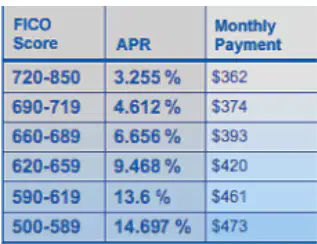
Frank and Jasmere are each shopping for a new car for themselves. Each will need a $20,000 loan that they will pay back over a five year period. Frank has a credit score of 730 and Jasmere has a score of 600. Which of the following statements is TRUE?
Over the five year period, Jasmere and Frank will pay the same amount for the car loan
Frank's monthly payment on the auto loan will be about $100 more than Jasmere's payment
Jasmere's monthly payment on the loan will be about $100 more than Frank's payment
Lenders are not allowed to charge people different interest rates based on their credit scores
You have a credit card that you use regularly for small purchases with the goal of improving your credit score. Which strategy would have the GREATEST positive impact?
Use less than 30% of the credit limit and pay it off in full every month by the due date
Always carry a balance from month to month
Regardless of how much your balance is, make the minimum payment required on your credit card every month by the due date
Put the credit card in a drawer instead and don't ever use it
Which of the following could have a NEGATIVE impact on your credit score if done in a short period of time?
Paying your bills on-time
Paying down balances on your credit card accounts
Decreasing your utilization of credit
Applying for multiple credit cards
You're paying your credit card bill and your student loan payment each month, but you're falling behind on your auto loan payment. Which friend's advice could have a NEGATIVE impact on your credit score?
Joanie says, "Call the auto lender and see if you can negotiate a lower monthly payment or some other deal."
Debbie says, "Stop making the credit card payment for a few months until you're caught up on the auto loan."
Angie says, "Pick up a second job for as long as it takes to accumulate enough money to make all your payments, even if it means losing time with friends and family."
Betty says, "Cut down to a bare bones budget, where your necessities and your debt repayments take first priority. Cut everything non-essential."
How can your credit score impact your financial well-being?
Only consumers with high scores are approved for credit
Consumers with low scores get lower interest rates on loans than those with high scores
Your credit score can determine whether you are approved for a loan and what the interest rate on that loan will be
It generally has no impact on your financial situation

