
 Worksheets
Rhythm Practice all rhythms
Total questions: 56
Worksheet time: 2hrs 7mins

What rhythm is this?
Idioventricular
Pacemaker
Junctional
V-Tach

What rhythm is this?
V-Fib
Artifact
V-Tach
Torsade De Pointe

What rhythm is this?
NSR w/ unifocal PVC
Accelerated Junctional
NSR w/ multifocal PVC
Couplet PVCs

What rhythm is this?
Fine V-Fib
Asystole
Sinus Arrest
None of the above

What rhythm is this?
Sinus Rhythm
V-Tach
A-Fib
Pacemaker

What rhythm is this?
V-Tach
Idioventricular
Sinus Rhythm
A-Tach

What rhythm is this?
A-Flutter
Normal Sinus Rhythm
Sinus Brady
Sinus Tach

What rhythm is this?
A-Flutter
Normal Sinus Rhythm
Sinus Brady
Sinus Tachycardia

What rhythm is this?
A-Flutter
Normal Sinus Rhythm
Sinus Bradycardia
Sinus Tachycardia

What rhythm is this?
Normal Sinus
1st Degree
2nd Degree type I
Sinus Arrest

What rhythm is this?
None of These
3rd Degree
2nd Degree Type II
2nd Degree Type I

What rhythm is this?
NSR PVC
NSR PJC
NSR PAC
Junctional

What rhythm is this?
None of These
3rd Degree
2nd Degree Type II
2nd Degree Type I

What rhythm is this?
A-Fib
A-Flutter
Sinus Fib
Sinus Rhythm

What rhythm is this?
Sinus Tachycardia
Supraventricular Tachycardia
Ventricular Tachycardia
Catch me if you can!

What rhythm is this?
Sinus Arrest
NSR PAC
NSR PJC
A-Fib
Rate: 150 – 250 bpm
Rhythm: regular
Accelerated Junctional Rhythm
ST
Accelerated IVR
SVT
ST Elevation
NSTEMI
STEMI

The nurse sees the above rhythm on the monitor. What should the nurse do first?
Defibrillate the patient
Initiate chest compressions
Check for the presence of a pulse
Advise the patient not to get out of bed

Identify this rhythm
Sinus tachycardia
Normal Sinus Rhythm
Supraventricular Tachycardia
Atrial fibrillation

Identify this rhythm
Sinus bradycardia
1 degree heart block
Normal Sinus Rhythm
2nd Degree Type I heart block

Identify this rhythm
Sinus Tachycardia
Atrial fibrillation
Atrial flutter
Normal Sinus Rhythm

Identify this rhythm
Supraventricular tachycardia
Sinus tachycardia
Atrial fibrillation
Normal Sinus Rhythm

The nurse notes this rhythm on the monitor. What action should she take first?
Perform CPR
Prepare for Synchronized Cardioversion
Prepare for Defibrillation
Check for a pulse

A nurse is caring for a patient who has no pulse but this rhythm is shown on the monitor. What action should she take next?
Continue to monitor
Begin CPR
Prepare for defibrillation
Prepare for external pacing


What is the reading of the ECG?
Supraventricular Tachycardia
Ventricular Tachycardia
Ventricular Fibrillation
Torsades des Pointes

Name that rhythm
Sinus Rythm with PACs
Sinus Rhythm with PVCs
Atrial Flutter with PVCs
Atrial Fibrillation with PACs

Name that rhythm
Atrial Tachycardia
Atrial Fibrillation
Ventricular Tachycardia
Ventricular Fibrillation

Name that rhythm
A Fib
A Flutter
V Fib
SVT

Name that rhythm
Asystole
V Fib
A Flutter
V Tach

Name that ectopy
PAC
PVC
Junctional
Asystole

The EKG strip seen above exhibits :
Premature ventricular tachycardia
Normal sinus rhythm
Asystole
Ventricular tachycardia
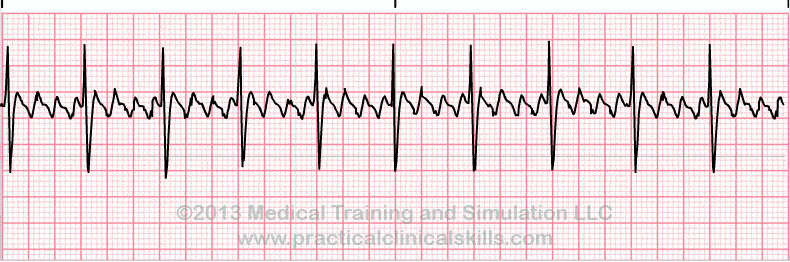
This strip is interpreted as:
Atrial fibrillation
Normal Sinus Rhythm
Atrial Flutter
Ventricular Fibrillation
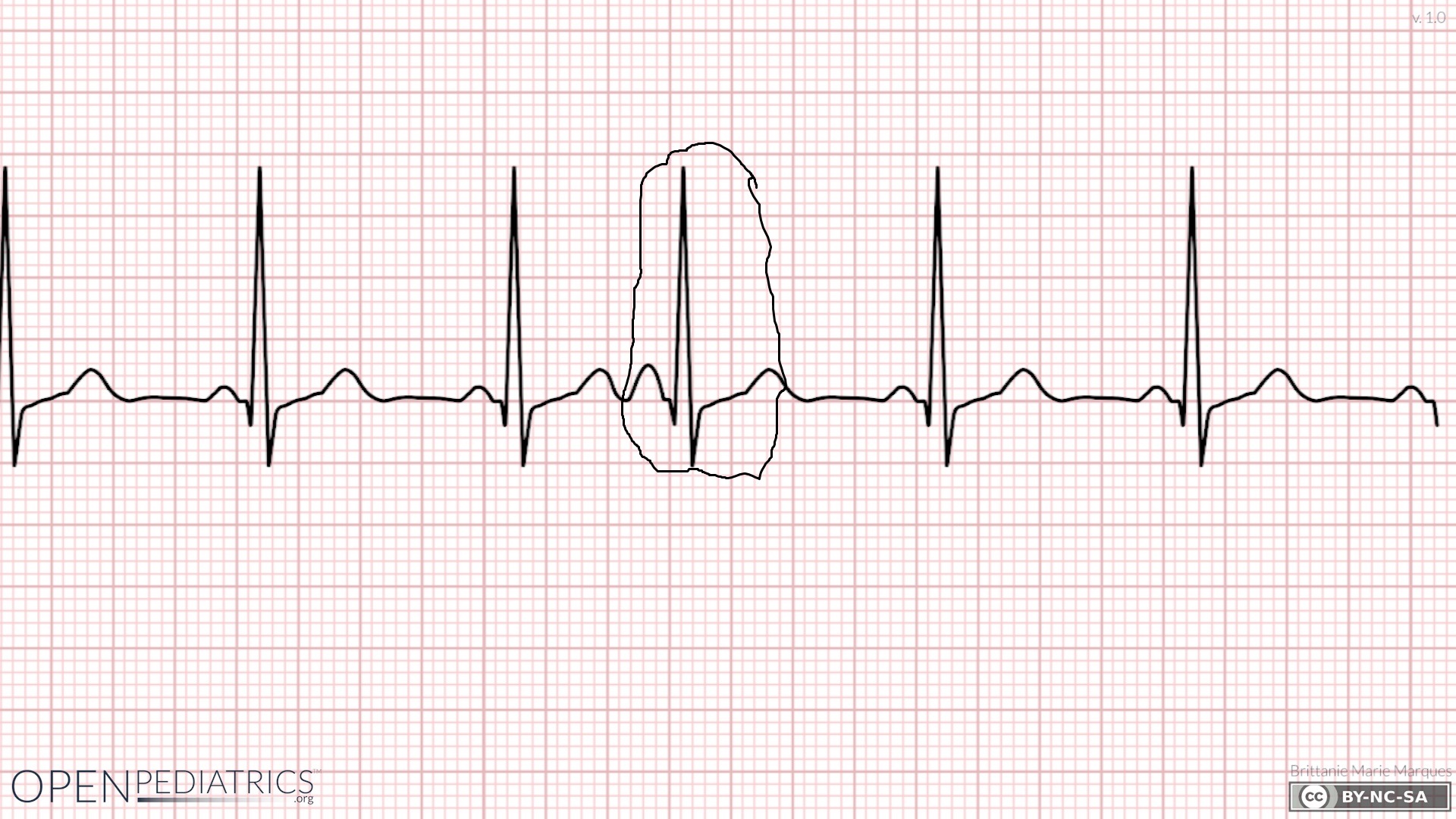
Identify what the waveform that is circled?
Premature atrial contraction
Premature ventricular contraction
Sinus bradycardia
Sinus tachycardia

Identify the waveform after the second heartbeat?
Premature atrial contraction
Sinus Tachycardia
Premature Ventricular Contraction
Asystole

Identify what occurs after the 3rd heartbeat seen on this strip?
Asystole
Ventricular Tachycardia
Premature Ventricular Contraction
Premature Atrial Contraction

Identify the cardiac rhythm seen above
Normal Sinus Rhythm
Atrial Flutter
Atrial Fibrillation
Ventricular Tachycardia

Identify the cardiac rhythm strip pictured above
Atrial Fibrillation
Asystole
Normal Sinus Rhythm
Ventricular Fibrillation

Identify the cardiac rhythm strip pictured above
Ventricular Tachycardia
Normal Sinus Rhythm
Atrial Fibrillation
Sinus Tachycardia
How would you interpret an EKG with a regular rhythm but with a rate of 120 beats per minute?
Bradycardia
Normal sinus rhythm
Tachycardia
Atrial fibrillation
What condition is characterized by a sawtooth pattern on an EKG?
Ventricular fibrillation
Atrial flutter
Ventricular tachycardia
Atrial fibrillation
In the context of EKGs, what does ST elevation indicate?
Myocardial infarction
Hypokalemia
Hyperkalemia
First-degree heart block
Analyze an EKG strip that shows a regular rhythm with a rate of 75 bpm, a normal P wave before each QRS complex, and a QRS duration of 100 milliseconds. What is the most likely interpretation?
Atrial fibrillation
Ventricular tachycardia
Normal sinus rhythm
First-degree heart block

Identify the rhythm.
junctional escape
sinus bradycardia
3rd degree heart block
Mobitz type 2

Identify the AV block.
1st degree
Mobitz type 1
Mobitz type 2
3rd degree

Identify the rhythm.
atrial fibrillation
sinus tachycardia
MAT
SVT

Identify the AV block.
1st degree
Mobitz type 1
Mobitz type 2
3rd degree

Identify the rhythm.
wandering pacemaker
sinus arrhythmia
sinus bradycardia
atrial escape rhythm

Identify the rhythm.
atrial fibrillation
atrial flutter
wandering pacemaker
multifocal atrial tachycardia

Identify the AV block.
1st degree
Mobitz type 1
Mobitz type 2
3rd degree

Identify the rhythm
WPW
Ventircular tachycardia
SVT
Atrial flutter



