
 Worksheets
Unit 6: Habitats
Total questions: 16
Worksheet time: 1hrs 16mins
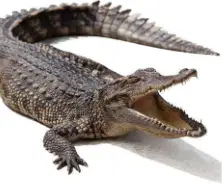
2. Kevin was given the picture below and asked to determine what habitat this organism is most likely to survive in.
Desert
Temperate Forest
Tropical Rainforest
Wetlands
From the list below, what is the best question that Kevin should ask about an organism to help him determine the habitat they are most likely to be found in?
Does this organism have a long lifespan?
What does this organism eat in order to survive?
What does this organism like to do during the day?
How many teeth does this organism have in its mouth?
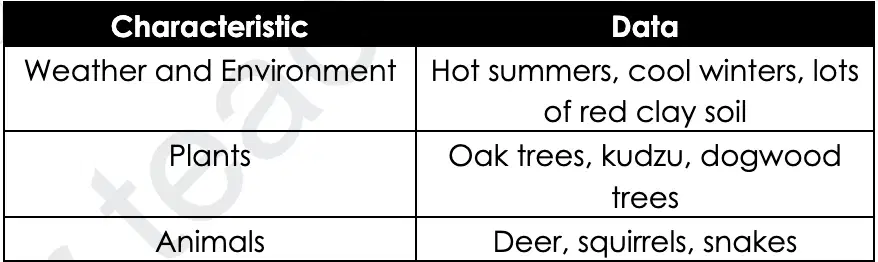
You are working with your class to identify habitats within Georgia’s geographic regions. The table represents data for one type of habitat in Georgia.
What further question can you ask to further identify if the habitat is in the Piedmont region?
Is this habitat located in the central region of Georgia?
Are there farms and businesses located in this region?
Is this habitat found in Georgia?
Does it rain a lot in this region?

A heron is a bird that has a long, skinny beak that it uses to hunt fish, insects, and crustaceans while standing in shallow water. What question could a student ask to figure out where the heron would BEST survive in which habitat?
Would herons best survive in the Atlantic Ocean since they eat crustaceans?
Would herons best survive in the Piedmont region since it has a long, skinny beak?
Would herons best survive in the mountains since they need to hunt fish and insects?
Would herons best survive in the marsh since there is shallow water with plenty of food?

The letter X is most likely which type of habitat?
Ocean
Marsh
Mountain
Plains

Which animals most likely live in this habitat?
turtles, sharks, and trout
alligators, otters, and frogs
geese, owls, and opossums
black bears, deer, and raccoons
Emily's family is moving to a different region in Georgia. She hopes to move some of her plants to a garden at her new home.
Answering which question would best help predict if her plants will survive in the new environment?
How many plants is Emily moving to her new home?
How many miles away is Emily moving from her old home?
How much will it cost to get water and plant food at her new home?
How similar is the weather at her new home to the weather at her old home?
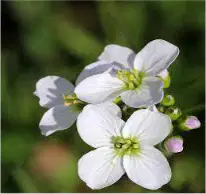
Your class takes a field trip to the local park and you identify a pretty flower.
From the list provided, what is the best question you could ask to determine why the flower you’ve seen grows so well in this habitat?
Why is the flower so tall?
Does the flower need sunlight to grow?
How much water does the flower need to grow best?
If I cut the flower and put it in a vase, how long would it live?

The mountain laurel plant only grows in the mountain habitat of Georgia. This plant grows on rocky slopes in forested areas. A student wants to know if this plant could survive in the marsh and swamp habitat.
What question should the student ask and why?
Does the marsh and swamp habitat have rocky soil? No, the mountain laurel could not survive since the marsh ground is very soft and does not contain the type of rocky soil that it needs to grow.
Does the marsh and swamp habitat have hot temperatures? Yes, it can survive in the marsh and swamp habitat since it is a very hot and humid climate.
Does the marsh and swamp habitat have rocky soil? Yes, even though the ground is soft, the mountain laurel would still get the water it needs to survive.
Does the marsh and swamp habitat have a rainy climate? No, the mountain laurel could not survive since the marsh and swamp habitat never gets rain.

Pine trees are able to live in many habitats in Georgia, including the Piedmont habitat that has dense clay soil.
What is the best question that scientists should ask to help them learn more about the other types of habitats that pine trees can live in?
Do pine trees provide shelter to other organisms?
What are other plants and trees that can live in clay soil?
How much water and nutrients do pine trees need in order to live?
Why do pine trees have needles on their branches and not leaves?
Bob went on a trip with his family to learn more about plants in Georgia. He took a picture of an interesting plant that he found. He told his friends to ask questions about the plant’s features that would help them identify which plant it is and how its features help it survive.
Which of the following TWO questions would be best to ask to prove they understand how a plant’s features help it survive?
Does it have a way to capture insects because it lives in a place with few nutrients in the soil?
Does it have waxy leaves to help it lose less water during times of drought?
Does it float freely in the water because it doesn’t have roots?
Does it have flowers that release a sugary scent?
You are playing a game with your classmates. In this game, someone chooses a Georgia plant and answers questions from others to help them figure out which plant has been chosen.
You must ask questions about the features of the plant that help it survive (adaptations!). Which of the following questions could be asked?
What type of soil do the plants live in in order to survive?
What is the most commonly found plant in Georgia?
Does the plant grow over 10 feet tall?
What is the color of the plant?
In a forest habitat with limited (little/small amount of) sunlight, what adaptations do plants develop to reach for sunlight?
Short roots
Wide leaves
Long stems
Small flowers
How do plants in a marshy habitat adapt to having their roots submerged in water?
Air-filled roots
Long thorns
Bright colored petals
Insect-attracting scents
Which feature helps plants in a windy coastal habitat to survive the harsh weather?
Tiny roots
Hairy leaves
Round flowers
Flexible stems
Noah is playing a guessing game, trying to figure out which Georgia habitat a hooded pitcher plant lives in. He gets to ask two questions before he guesses. Below is a list of questions Noah has made.
1. In what type of soil does it grow best?
2. Does it need sunlight?
3. Can it survive in hot humid conditions?
4. What color is it?
Which two questions will best help Noah decide which habitat a hooded pitcher plant grows in?
Questions 1 and 2
Questions 1 and 3
Questions 2 and 3
Questions 1 and 4

