
NEW
Font size
 Worksheets
Fabric Care and Maintenance
Total questions: 20
Worksheet time: 10mins

Machine Drying
Using a dryer to dry clothes.
Hanging clothes outside to dry.
Using a washing machine to dry clothes.
Ironing clothes to remove moisture.

Air Drying
A method of drying clothes naturally without a machine.
A technique that uses high heat to dry clothes quickly.
A process that involves using a tumble dryer for efficiency.
A method that requires the use of chemical agents to dry fabrics.

Synthetic Fibers
Natural fibers like cotton and wool
Man-made fibers (e.g., polyester, nylon, acrylic)
Fibers derived from animal sources
Fibers that are biodegradable

Mindful Consumption
The practice of purchasing quality items rather than quantity.
Buying as many items as possible regardless of quality.
Focusing on brand names over product functionality.
Purchasing items based solely on price.

Natural Fibers
Fibers derived from synthetic materials (e.g., polyester, nylon).
Fibers derived from plants or animals (e.g., cotton, wool, silk, linen).
Fibers that are exclusively man-made (e.g., acrylic, rayon).
Fibers that do not have any natural origin.
Blended Fabrics
Fabrics made from a mix of natural and synthetic fibers (e.g., poly-cotton blends).
Fabrics made entirely from natural fibers like cotton and wool.
Fabrics that are only synthetic, such as polyester and nylon.
Fabrics that are woven without any blending of materials.

Storage
Techniques for keeping clothes in good condition when not in use.
Methods for washing clothes effectively.
Ways to fold clothes neatly.
Tips for organizing a closet.

Stain Removal
Techniques for removing different types of stains from fabrics.
Methods for enhancing fabric durability.
Ways to increase fabric color vibrancy.
Processes for fabric recycling.

Detergent
A cleaning agent used for washing clothes.
A type of fabric softener.
A chemical used for bleaching fabrics.
A product used for ironing clothes.

Repair & Repurpose
Strategies for fixing and reusing items instead of discarding them.
A method of recycling materials into new products.
A technique for creating new items from scratch.
A process of throwing away old items responsibly.

Energy-Efficient Drying
Methods that conserve energy during the drying process.
Techniques that increase drying time.
Processes that require high energy consumption.
Ways to enhance moisture retention.

Fabric Care
Techniques to maintain and extend the life of garments.
Methods to enhance the color of fabrics.
Ways to reduce fabric shrinkage during washing.
Tips for quick drying of clothes.

Drying Symbols
Icons showing drying instructions and heat levels.
Symbols indicating washing temperatures.
Icons representing fabric types.
Signs for ironing settings.

Sustainable Washing
Eco-friendly practices while washing clothes.
Using hot water for washing clothes.
Washing clothes with bleach for better cleaning.
Using a dryer instead of air drying.

Care Labels
Tags on clothing that provide washing and care instructions.
Labels that indicate the brand of the clothing.
Tags that show the price of the clothing.
Labels that provide information about the fabric type.
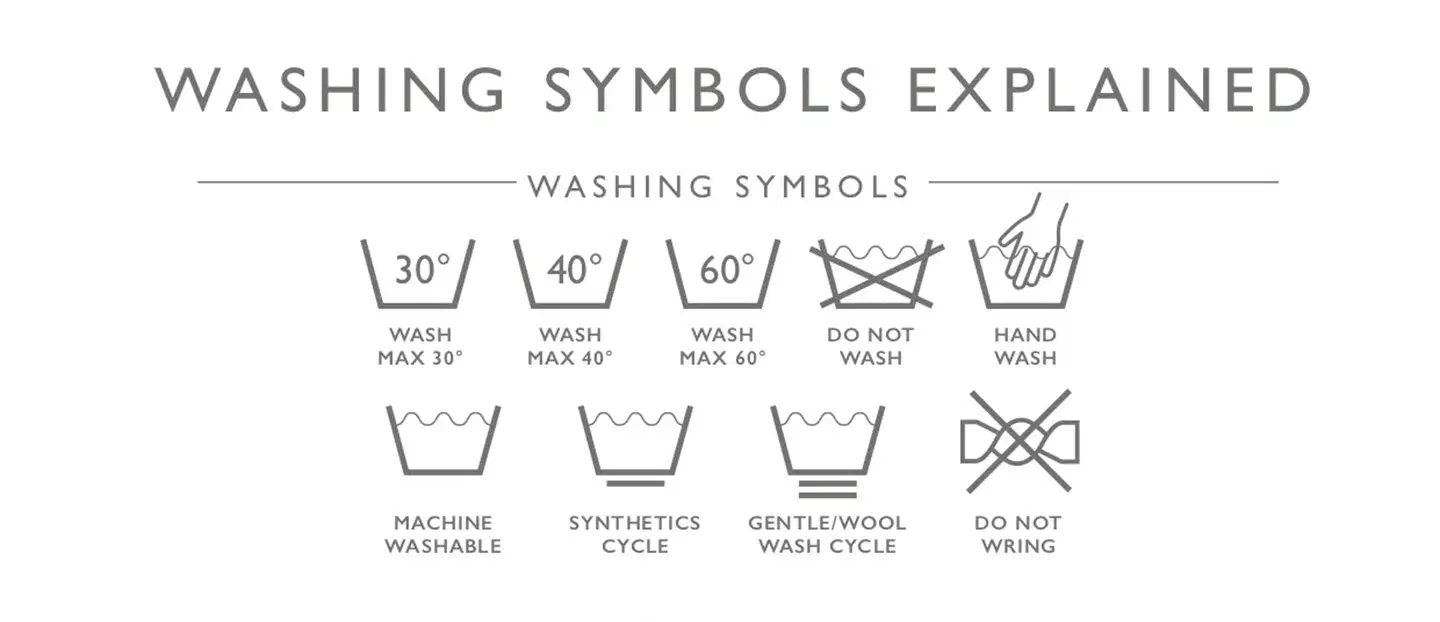
Washing Symbols
Icons indicating washing methods, cycle types, and temperature.
Symbols used for fabric care instructions.
Icons representing laundry detergents and their uses.
Graphics showing the history of washing machines.

Ironing
The process of using heat to remove wrinkles from fabrics.
A method of sewing fabrics together.
A technique for dyeing fabrics.
A way to fold clothes neatly.

Sorting
The process of separating clothes by color and fabric type before washing.
The method of folding clothes neatly after washing.
The technique of drying clothes in direct sunlight.
The practice of organizing clothes by size and season.

Steaming
Using steam to relax fabric fibers and remove wrinkles.
A method of drying clothes quickly.
A technique for dyeing fabrics.
A process of ironing clothes with heat.

Microplastic Prevention
Techniques to reduce the release of microplastics during washing.
Methods to increase plastic production efficiency.
Ways to enhance plastic recycling processes.
Strategies to promote single-use plastics.

