
 Worksheets
Ch.2-3 Chemical Reactions TEST
Total questions: 25
Worksheet time: 13mins
Name
Class
Date
1.
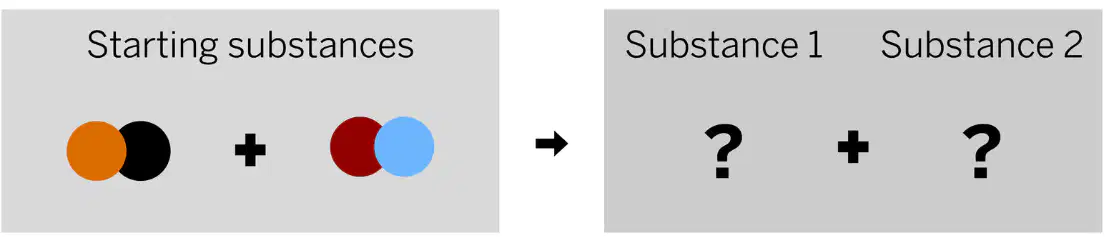
Which of the diagrams below shows the repeating groups of atoms that make up the ending substances?
a)
A
b)
B
c)
C
d)
D
2.

The diagram below shows the repeating groups of atoms that make up two samples. Both samples are gases at room temperature. Will the other properties of the samples likely be the same or different?
a)
The other properties will likely be DIFFERENT because the repeating groups of atoms that make up the two samples have different numbers of atoms.
b)
The other properties will likely be the SAME because the repeating groups of atoms that make up the two samples have the SAME types of atoms.
c)
The other properties will likely be DIFFERENT because they are the SAME repeating group of atoms.
d)
The other properties will likely be the SAME because both samples have DIFFERENT repeating groups of atoms.
3.
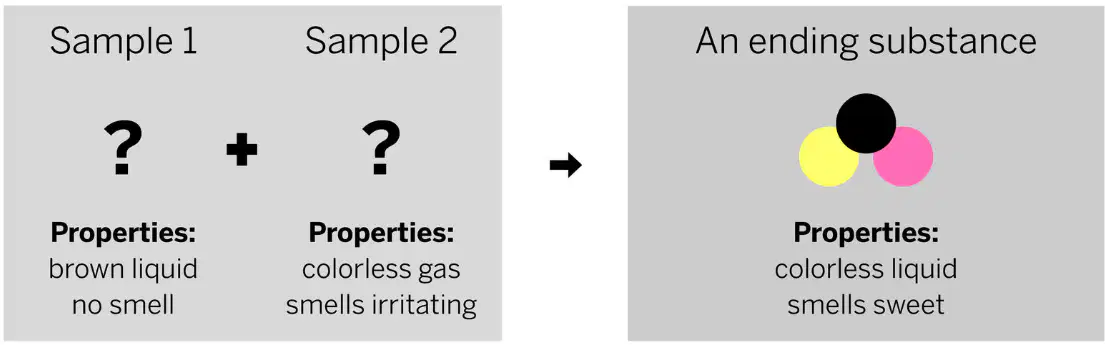
Which of the diagrams below shows the repeating groups of atoms that make up the samples the scientist mixed together? (This only shows one of the ending substances, it is not a balanced equation.)
a)
A
b)
B
c)
C
d)
D
4.
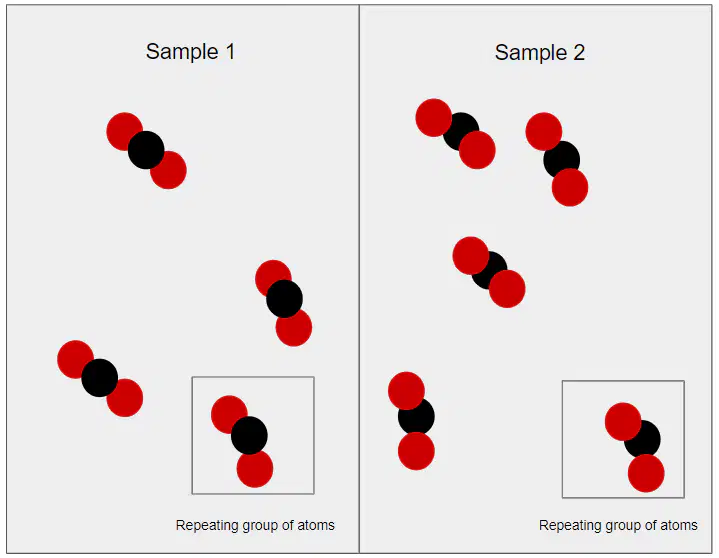
The diagram below shows the repeating groups of atoms that make up two samples. Both samples are gases at room temperature. Will the other properties of the samples likely be the same or different? (Examples of properties are smell, color, and the temperature at which a substance melts.)
a)
The other properties will likely be DIFFERENT because the repeating groups of atoms that make up the two samples have different numbers of atoms.
b)
The other properties will likely be the SAME because the repeating groups of atoms that make up the two samples have the SAME types of atoms.
c)
The other properties will likely be DIFFERENT because they are the SAME repeating group of atoms.
d)
The other properties will likely be the SAME because both samples have DIFFERENT repeating groups of atoms.
5.
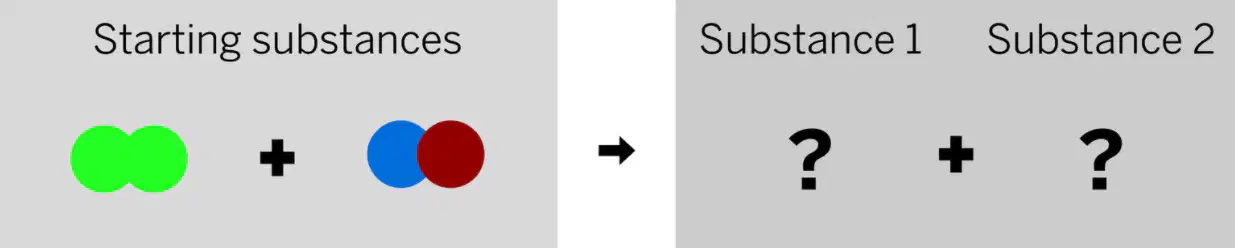
Which of the diagrams below shows the repeating groups of atoms that make up the ending substances?
a)
A
b)
B
c)
C
d)
D
6.
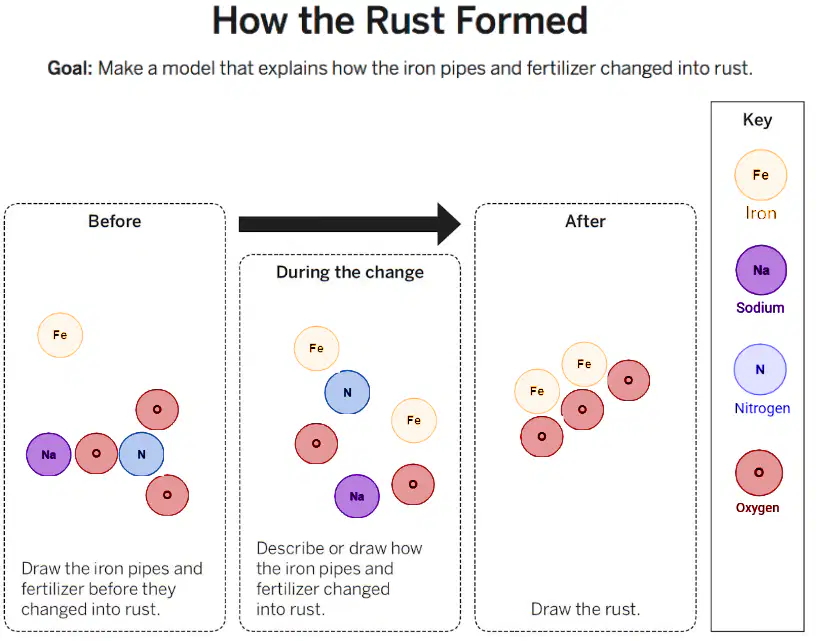
What is this model missing to make it correct?
a)
It should only have the oxygen and iron atoms in the before box.
b)
It should have 2 iron atoms in the before box instead of just one.
7.
When the rust formed in the chemical reaction what would it be called?
a)
a reactant
b)
a product
8.
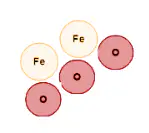
Where did the oxygen atoms come from that formed the rust in Westfield?
a)
The air
b)
The fertilizer
c)
The pipe
d)
The water
9.
What is the process by which atoms rearrange to form new substances?
a)
Chemical function
b)
Chemical reactant
c)
chemical formula
d)
Chemical reaction
10.
Which of the following is defined as, " to change the order or position of something"?
a)
reactant
b)
product
c)
rearrange
d)
model
11.
Which of the following is defined as, "a starting substance that is part of a chemical reaction"?
a)
product
b)
reactant
c)
molecule
d)
atoms
12.
Which of the following is defined as, "an ending substance that is made during a chemical reaction"?
a)
product
b)
reactant
c)
molecules
d)
atoms
13.
Which of the following is BEST defined as, "something that is made of all the same atoms or groups of atoms"?
a)
products
b)
reactants
c)
substances
d)
molecules
14.
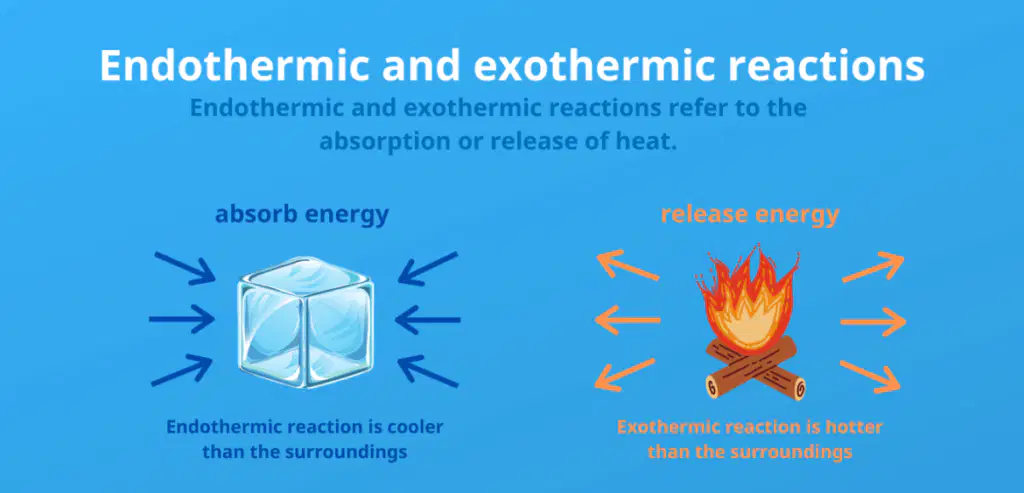
In an exothermic reaction, what happens?
a)
Energy is released making the temperature rise.
b)
Energy is absorbed making the temperature drop.
15.

Which are examples of endothermic reactions? (check all that apply)
a)
photosynthesis
b)
instant cold pack
c)
burning
d)
cooking
16.
True or False: During a chemical reaction, atoms do change from one type to another.
a)
True
b)
False
17.
True or False: Substances have different properties because they are made of different groups of atoms.
a)
True
b)
False
18.
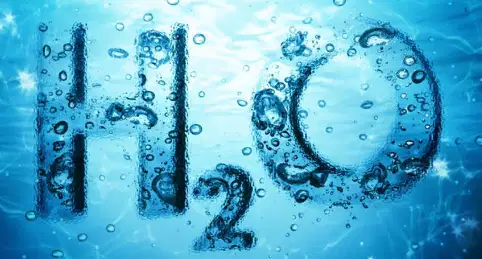
Can one substance change into another substance? (for example water)
a)
No, because substances can't change into new things.
b)
Yes, because new atoms can be created.
c)
No, because atoms can not be destroyed.
d)
Yes, because atoms can be rearranged.
19.
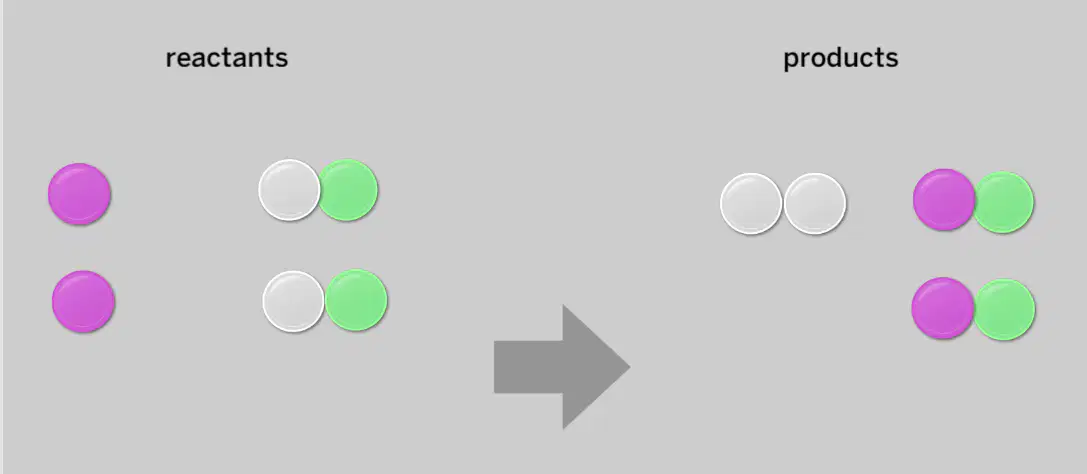
True or False: In a complete balanced chemical equation, there must be the same number of atoms of each element on the reactants and products side.
a)
True
b)
False
20.
What does the Law of Conservation of Matter mean?
a)
That atoms CAN be created or destroyed.
b)
That atoms CAN'T be created or destroyed.
c)
That atoms CAN change their type and number.
21.

Which samples could be used to create this as an ending substance?
a)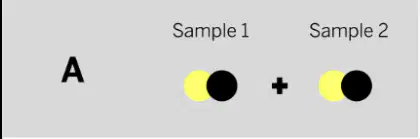
Option 1
b)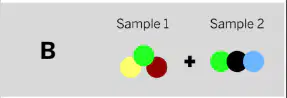
Option 2
c)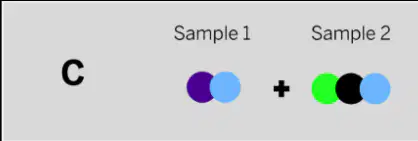
Option 3
d)
Option 4
22.
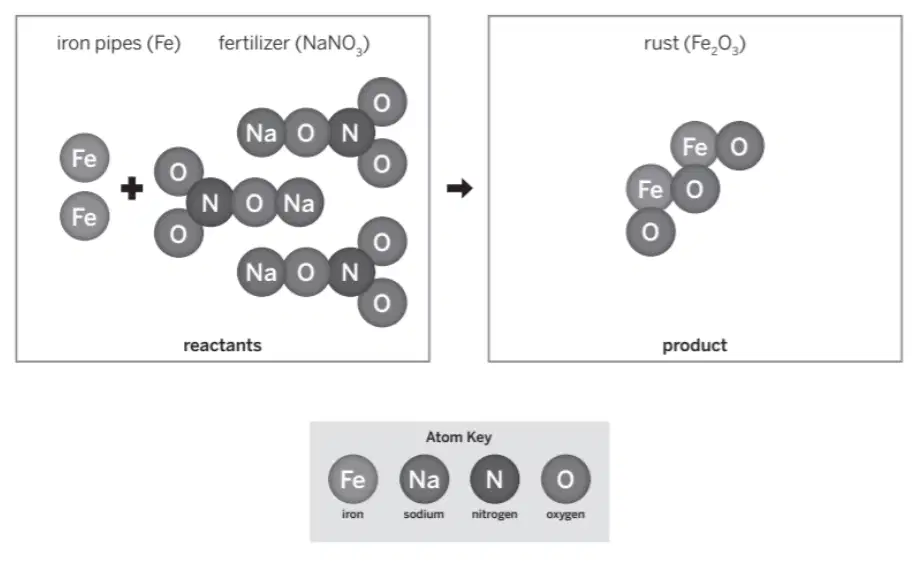
What was produced during the reaction between the iron pipes and the fertilizer?
a)
Claim 1: During the chemical reaction, only the rust was produced.
b)
Claim 2: During the chemical reaction, the rust and another substance were produced.
23.

What was produced during the reaction between the iron pipes and the fertilizer? (Check all that apply)
a)
Iron Oxide
b)
Sodium Chloride
c)
Potassium Chromate
d)
Sodium Nitrite
24.
Which was the best source used to gather evidence for our claim?
a)
The Sim
b)
The Token Activity
c)
The Atomic Scale Model
25.
What reasoning best supports the evidence for your claim?
a)
The atomic scale model shows the chemical reaction between the iron pipes and the fertilizer. It shows that no atoms are created or destroyed but rearranged to form sodium nitrite and rust.
b)
The sim shows the chemical reaction between the iron oxide and sodium nitrite rearranging to form iron and fertilizer. It shows that some atoms are destroyed during the process.
c)
The token activity shows the chemical reaction between the different colored tokens creates many groups of tokens when you rearrange them.
100 %

