wayground logo

Free Printable Worksheets

Font size

S
M
L
XL
Worksheets

Water 2

Total questions: 87

Worksheet time: 3585secs

Name
Class
Date
1.

What percentage of the earth covered with water?

a)

50%

b)

60%

c)

71%

d)

80%

2.

True or False: It isn't important to save water because there are a lot of water on Earth.

a)

True

b)

False

3.

Why is clean water important?

a)

All life on Earth depends on clean water to live and grow.

b)

We need clean water for recreational activities.

c)

We need bodies of water for transportation

d)

We need water to regulate the temperature on Earth.
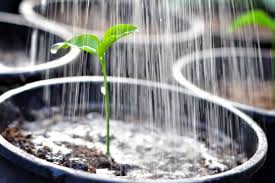
4.

Why does plant need water?

a)

To make food through photosynthesis

b)

To reproduce

c)

To grow

d)

All of the above

5.

What is the process that electricity is produced from energy of running water?

a)

water cycle

b)

hydroelectric power

c)

water dam

d)

windmills

6.

Most water can be found in the _______________.

a)

Ocean

b)

Sea

c)

River

d)

Pond

7.

These are the sources of water.

a)

Lakes

b)

Sea

c)

River

d)

All of the above

8.

Which of the following is a way of conserving water?

a)

Leave the tap running while brushing teeth

b)

Use a hose to wash the car

c)

Use the washing machine at full load

d)

Leave the shower running while soaping

9.

We cannot drink water from sea/ocean because it is?

a)

bitter

b)

salty

c)

creepy

d)

tangy

10.

Keeping the water running when you brush your teeth wastes a lot of water is one way to conserve water.

a)

True

b)

False

11.

Without water there is no___________!

a)

time

b)

tasks

c)

mobile

d)

life

12.

Bonus Question

Why do we need to conserve water? (You may select more than one answer)

a)

To save on the water bill

b)

There is a lot of water

c)

It a limited sources

d)

To get enough clean water in the future

13.

What percentage of the earth is water?

a)

50%

b)

60%

c)

71%

d)

80%

14.
"Ensuring availability of water for future generations" is a
a)
Goal of water conservation
b)
Strategy of water conservation
c)
Key activity of water conservation
15.
what is the water division of earth
a)
ocean water 97.5 per cent,freshwater frozen as ice 1.5 per cent and freshwater 1 per cent
b)
ocean water-47%,freshwater 50%,freshwater frozen as ice 3%
c)
ocean water 1%,freshwater frozen as ice-90%,freshwater9%
d)
freshwater-33.33%,freshwater frozen as ice 33.33%,ocean water 33.33%
16.

A scientist studies a sample of swamp water. She finds that there are many dead plants and fish in the water. ________ in the water could be the main cause of this.

a)

oxygen

b)

litter and pollution

c)

mud and silt

d)

pebbles and sand

17.

what is the main cause of water pollution?

a)

invasive species

b)

animals

c)

plants and insects

d)

human impact and decision making

18.
Which of the following is a way of conserving water?
a)
Leave the tap running while brushing teeth
b)
Use a hose to wash the car
c)
Use the washing machine at full load
d)
Leave the shower running while soaping
19.
Why do we need to conserve water?
a)
It is an unlimited resource. 
b)
It is a limited resource. 
c)
There is a lot of water. 
d)
There is no need to conserve water.
20.
 It’s okay to flush some trash down the toilet like cotton balls and tissue
a)
True
b)
False
21.
Keeping the water running when you brush your teeth wastes a lot of water.
a)
True
b)
False
22.
When is the best time of day to water your lawn?
a)
Early morning or late evening
b)
In the afternoon
c)
All day long
d)
At night
23.
Water that is stored in layers of rock and soil beneath the Earth's surface is called ________
a)
groundwater
b)
sewage
c)
a reservoir
d)
an underground stream
24.
An area underground that water flows through is called an _____
a)
Water Table
b)
Zone of Aeration
c)
Aquifer
d)
Drainage Basin
25.
Approximately 75 percent of the Earth's surface is covered in water. So why is water considered such a precious resource?
a)
The greenhouse effect is causing most of the world's freshwater to be trapped in the atmosphere
b)
Only a small fraction of the Earth's water is freshwater available for drinking and irrigation
c)
Each year, more freshwater is being trapped in icecaps located at the North and South Poles
d)
Global warming caused by greenhouse gas emissions will likely cause Earth's oceans to evaporate
26.
What will most likely happen if the human population continues to grow at current rates?
a)
There will be fewer natural resources available for future generations.
b)
There will be an increase in nitrogen levels in the atmosphere.
c)
There will be a decrease in water pollution.
d)
There will be an increase in the number of strong hurricanes
27.
Which actions taken by a school environmental club would make a positive human impact?   
a)
planting native trees along the border of the school property 
b)
making wooden benches by harvesting local trees 
c)
introducing a new population of foxes to school grounds
d)
clearing an area to make room for additional student parking
28.

What usually uses more water in the home?

a)

Washing machine

b)

taking a shower

c)

brushing your teth

d)

drinking water

29.

Approximately how many gallons of water does it take to grow sugar cane?

a)

20- 25 gallons

b)

2-4 gallons

c)

180-200 gallons

30.

What percentage of the earth's water is salt water?

a)

3%

b)

25%

c)

71%

d)

96.5%

31.

Based on our articles and class information, predict what will happen to the percentage of water frozen in glaciers and ice Caps over the next 20 years?

a)

It will increase from 68.7%

b)

It will stay the same at 68.7%

c)

It will decrease from 68.7%

32.

1/3 of household watering is for outdoors. What are good irrigation practices for lawns or gardens?

a)

Avoid watering in the heat of the day so it doesn't evaporate.

b)

Don't water on windy or rainy days

c)

Do not water lawns between 10 AM -4 PM

d)

All of the above

33.

Hydroelectric Power uses what source to create energy?

a)

Fire

b)

Air

c)

Water

d)

Rocks

34.

What does the greek root “Hydro” mean?

a)

Earth

b)

Air

c)

Fire

d)

Water

35.

What are the three parts of a typical hydroelectric plant?

a)

An Electric Plant, Water Plant, Concrete Structure

b)

A reservoir, turbine and a river/dam

c)

An electric plant, river/dam and a reservoir

36.

Presently hydropower plants provide __________ of the world’s electricity

a)

1/5

b)

1/3

c)

1/4

d)

1/8

37.

The largest hydroelectric plant in the United States is on the:

a)

Columbia River

b)

Mississippi River

c)

Sacramento River

38.

How many years did it take to complete the biggest hydroelectric plant in the United States?

a)

7 years

b)

9 years

c)

5 years

d)

1 year

39.

True or False, fast-flowing rivers helped aid the process of grinding flour and cutting wood.

a)

True

b)

False

40.

What is the primary source of renewable energy used by the Three Gorges Dam?

a)

Wind energy

b)

Solar energy

c)

Geothermal energy

d)

Running water

41.

What is the function of a hydroelectric dam?

a)

To extract natural gas

b)

To generate electricity from coal

c)

To store fossil fuels underground

d)

To redirect river flow through a large pipe

42.

How does a hydroelectric dam produce electricity?

a)

By burning fossil fuels

b)

By harnessing wind power

c)

By using solar panels

d)

By turning the blades of a turbine with rushing water

43.

What is the purpose of sealing the penstocks of a dam?

a)

To increase the flow of water through the turbines

b)

To reduce the electricity output

c)

To prevent wildlife from entering the dam

d)

To hold back excess water during stormy seasons

44.

Which region in China was prone to deadly floods during rainy seasons?

a)

Guangdong Province

b)

Shanghai

c)

Beijing

d)

Hubei Province

45.

How many turbines does the Three Gorges Dam contain?

a)

50 turbines

b)

20 turbines

c)

32 turbines

d)

40 turbines

46.

What was the environmental impact of creating the Three Gorges Dam's reservoir?

a)

Improved air quality

b)

Reduced water pollution

c)

Destroyed historical and archaeological sites

d)

Increased biodiversity

47.

Which dam holds the record for producing more power than the Three Gorges Dam?

a)

Itaipu Dam

b)

Hoover Dam

c)

Grand Coulee Dam

d)

Bakun Dam

48.

What factor allows the Itaipu Dam to consistently generate more power each year than the Three Gorges Dam?

a)

Number of turbines

b)

Location atop a large waterfall

c)

Size of the reservoir

d)

Amount of rainfall

49.

What do governments need to ensure when building power plants according to the text?

a)

Sustainable environmental and human impact

b)

Low energy production

c)

High construction costs

d)

Short-term benefits only

50.
What is the energy source for the water cycle?
a)
the sun
b)
the earth
c)
water
d)
the moon
51.
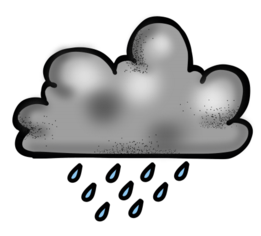
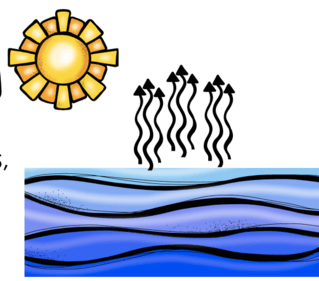
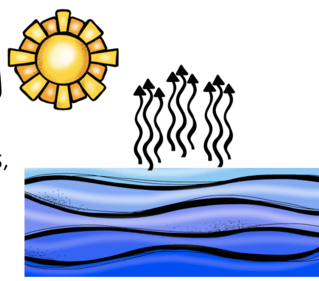
What part of the water cycle does this picture show?
a)
condensation
b)
precipitation
c)
evaporation
52.
What part of the water cycle does this picture show?
a)
condensation
b)
precipitation
c)
evaporation
53.
What is evaporation?
a)
The part of the water cycle when the sun heats up water, turning it from a liquid into water vapor or steam. It rises from the ground into the air.
b)
The part of the water cycle when the water vapor in the air gets cold. The water turns back into a liquid and forms clouds.
c)
The part of the water cycle when clouds get heavy and can no longer hold the liquid water. This causes the water to fall from the sky to the earth as rain, snow, sleet, or hail.
54.
What is condensation?
a)
The part of the water cycle when the sun heats up water, turning it from a liquid into water vapor or steam. It rises from the ground into the air.
b)
The part of the water cycle when the water vapor in the air gets cold. The water turns back into a liquid and forms clouds.
c)
The part of the water cycle when clouds get heavy and can no longer hold the liquid water. This causes the water to fall from the sky to the earth as rain, snow, sleet, or hail.
55.
What is precipitation?
a)
The part of the water cycle when the sun heats up water, turning it from a liquid into water vapor or steam. It rises from the ground into the air.
b)
The part of the water cycle when the water vapor in the air gets cold. The water turns back into a liquid and forms clouds.
c)
The part of the water cycle when clouds get heavy and can no longer hold the liquid water. This causes the water to fall from the sky to the earth as rain, snow, sleet, or hail.
56.
When water condenses, the water vapor in the air gets ___________ and changes back into liquid.
a)
cold
b)
hot
c)
warm
d)
solid
57.
When water condenses, the liquid water forms ______________.
a)
water vapor
b)
steam
c)
air
d)
clouds
58.
Precipitation happens when clouds of water droplets are too ______________.
a)
cold
b)
light
c)
heavy
d)
hot
59.
Evaporation happens when the sun ___________ water and turns it into vapor.
a)
cools
b)
heats up
c)
freezes
d)
lights up
60.
Which of these is an example of precipitation?
a)
snow
b)
air
c)
clouds
d)
vapor
61.
What is the water cycle?
a)
the 3 forms of water
b)
the movement of water on, above, or below the surface of the Earth
c)
when water melts
d)
when clouds form
62.
Where is most water found on Earth?
a)
glaciers
b)
lakes
c)
rivers
d)
oceans
63.
River, streams and oceans are all points of _____________ in the water cycle.
a)
collection 
b)
precipitation
c)
condensation
d)
evaporation
64.
Which type of rainfall would be most helpful to farmers? 
a)
rainfall that evaporates quickly
b)
rainfall that runs off the land quickly
c)
rainfall that soaks into the soil slowly 
d)
very little rainfall
65.
Many Utah towns use water from wells for drinking.  How does water get into wells? 
a)
it has to be poured into them from water tanks
b)
rain sinks down through the soil into them 
c)
it is pumped by large engines into the well
d)
it evaporates from inside the Earth
66.
What controls whether water is a gas, liquid, or solid ice? 
a)
the shape or size of the cup
b)
where it has been stored
c)
if it is being used for irrigation
d)
what its temperature is 
67.
Does the water cycle ever end?
a)
Yes, once water evaporates it is gone forever
b)
Yes, when it rains, the water goes into the ground forever
c)
No, once it evaporates the water fairies come and sing a rainy day song.
d)
No, the water cycle has been going on for billions of years, and will continue on forever.
68.
What follows evaporation during the water cycle?
a)
Water evaporates into water vapor
b)
Water vapor condenses and forms a  cloud
c)
Water precipitates to the ground
d)
Water runs down into the hydrosphere
69.
What is water vapor?
a)
Water on the lan
b)
Water in the air
c)
Water in plants
d)
Water in the water (hydrosphere)
70.

What % of a baby's body is water?

a)

10%

b)

55%

c)

75%

d)

85%

71.

How much of the Earth's water is saltwater?

a)

50%

b)

75%

c)

95%

d)

97.5%

72.

What is 'surface water'?

a)

All the frozen and liquid water above ground

b)

All the liquid water above ground.

c)

All the water on the surface of the Earth

d)

All the water frozen in the Antarctic

73.

How much of the Earth's water is freshwater?

a)

2.5%

b)

5%

c)

25%

d)

50%

74.

The Nile river and Lake Ontario are both examples of

a)

Surface Water

b)

Polar regions

c)

Ground water

d)

reservoirs

75.

How much of the Earth's freshwater is 'surface water'?

a)

0.003%

b)

3%

c)

33%

d)

0.3%

76.

Select 2 reasons that Humans depend on ground water?

a)

It is more nutritious than other sourced water

b)

It is comparatively tasty

c)

It is comparatively plentiful

d)

It is comparatively accessible

77.

How much of our Worldwide fresh water usage is accounted for by domestic use?

a)

70%

b)

22%

c)

8%

d)

0.3%

78.

What is the most common use of fresh water worldwide?

a)

Industry

b)

Domestic

c)

Soft drinks

d)

Agriculture

79.

How is 70% of the Earth's fresh water supply current stored?

a)

In Reservoirs

b)

In storage tanks

c)

In frozen Polar regions

d)

In underground Aquifers?

80.

things water pollution causes

a)

Death of animals

b)

Habitat destroyed

c)

Humans sick 

d)

no food to eat

81.

Who is the main cause of water pollution ?

a)

animals

b)

human

c)

both

82.

Water is a __________ resource.

a)

wet

b)

natural

c)

pollution

83.

What are three ways you can help the earth? 

a)

reduce plastic trash

b)

reduce plastic bottle

c)

Throw plastic in the rubbish

d)

Recycle plastic

84.

______________________ is the introduction of chemical, physical, or biological agents into water that degrade water quality and adversely affect the organisms that depend on the water.

a)

water pollution

b)

desalination

c)

watershed

d)

watershed

85.

Hot water does not act as a pollutant. 

a)

true

b)

false

86.

Water pollution occurs when

a)

Harmful substances enter a water supply

b)

Industries dispose of waste safely and correctly.

c)

Industries cut costs with waste disposal.

87.

What can happen if fertilizer gets into streams or lakes when water runs off after it rains?

a)

Plants such as algae can grow out of control.

b)

Chemicals such a DDTs & PCBs can get into the fish.

c)

The water can get too warm.