
 Worksheets
HW 3 Light; Snell's Law
Total questions: 20
Worksheet time: 2hrs 40mins
What is the speed of light in a vacuum?
3.0 x 10⁸ m/s
1.0 x 10⁸ m/s
10 m/s
5.0 x 10⁸ m/s
What is the speed of light in a material that has an index of refraction of 1.88?
3.0 x 10⁸ m/s
1.88 x 10⁸ m/s
1.6 x 10⁸ m/s
5.64 x 10⁸ m/s
If a material has an index of refraction of 2.3, how fast will light travel through that material?
2.3 x 10⁸ m/s
6.9 x 10⁸ m/s
3.0 x 10⁸ m/s
1.3 x 10⁸ m/s
If light travels through a piece of glass at 2.1 x 10⁸ m/s, what is the index of refraction of the glass?
1.14
1.43
2.10
6.3

Light travels from air (n = 1.00) into a "mystery" material. The incident ray of light hits the surface at angle of 43o and the refracted ray enters the mystery material at an angle of 27o. What is the index of refraction of the mystery material? n1sin(Θ1) = n2sin(Θ2)
1.5
1.0
0.67
2.1

Light travels from air (n = 1.00) into a second material. The incident ray of light hits the surface at angle of 64o and the refracted ray enters the second material at an angle of 32o. What is the index of refraction of the second material? n1sin(Θ1) = n2sin(Θ2)
1.4
0.90
0.53
1.7

Light travels from air (n = 1.00) into a glass block that has an index of refraction of 1.46. The incident ray of light hits the surface at angle of 45o. At what angle will the light ray enter the glass? n1sin(Θ1) = n2sin(Θ2)
45o
29o
31o
64o
flint glass n=1.70
barium glass n=1.60
crown glass n=1.523
water n=1.33
diamond n=2.45

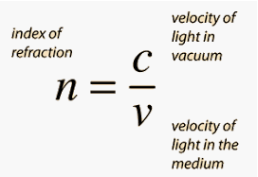
The index of refraction, is defined as the ratio of the speed of light in a vacuum (c = 3x10^8 m/s) to the speed of light in a medium. What is the index of refraction of a medium where the speed of light is 0.7c ? Round off your values to 3 sig. figs.
1.42
1.43
1.28
1.29
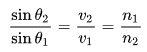
A higher index of refraction means that the wave travels _____________ the speed of light in a vacuum in that medium.
Faster than
Slower than
Equal to
Answer is not here
The index of refraction, is defined as the ratio of the speed of light in a vacuum (c = 3x10^8 m/s) to the speed of light in a medium. What is the index of refraction of a medium where the speed of light is 0.7c ? Round off your values to 3 sig. figs.
1.42
1.43
1.28
1.29


Glass has a _____________ index of refraction (or "n") than air.
Equal
Greater
Less
Impossible to say

