
 Worksheets
LONG TEST ON EARTHQUAKE AND FAULTS
Total questions: 31
Worksheet time: 14mins
In this type of fault, the hanging wall moves upward relative to the foot wall.
STRIKE-SLIP
REVERSE FAULT
FAULT
NORMAL FAULT
It is a Philippine national institution dedicated to provide information on the activities of volcanoes, earthquakes, and tsunamis.
PHIVOLCS
PHILVOLCS
PAGASA
DOST
They are common at convergent boundaries.
STRIKE-SLIP
REVERSE FAULT
FAULT
NORMAL FAULT
It is a break in the Earth’s crust, and along the break, significant movement has taken place.
STRIKE-SLIP
REVERSE FAULT
FAULT
NORMAL FAULT
In this type of fault, the hanging wall moves downward relative to the foot wall.
STRIKE-SLIP
REVERSE FAULT
FAULT
NORMAL FAULT
The forces creating strike-slip faults are _____, carrying the sides past each other.
LATERAL OR HORIZONTAL
COMPRESSIONAL
EXTENSIONAL
NONE OF THE ABOVE
The forces creating reverse faults are_____, pushing the sides together.
LATERAL OR HORIZONTAL
COMPRESSIONAL
EXTENSIONAL
NONE OF THE ABOVE
They are most common at divergent boundaries.
STRIKE-SLIP
REVERSE FAULT
FAULT
NORMAL FAULT
It is a shaking of the ground caused by the sudden movement of tectonic plates
TECTONIC PLATES
EARTHQUAKE
FAULT
NORMAL FAULT
In this type of fault, both blocks slide horizontally across one another.
STRIKE-SLIP
REVERSE FAULT
FAULT
NORMAL FAULT
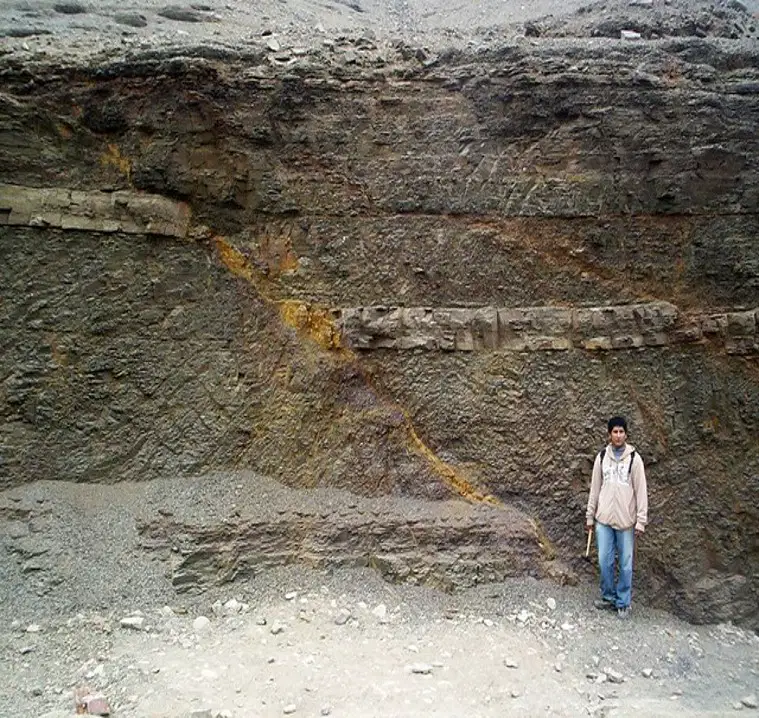
What type of fault is being shown in the picture?
Reverse fault
Strike-slip fault
Normal fault

What type of fault is being shown in the picture?
Reverse fault
Strike-slip fault
Normal fault
It is a point directly above the focus and is situated on the surface of the earth.
Focus
Epicenter
It is known to be the center of the earthquake
Focus
Epicenter
It is the point below the surface of the earth where an earthquake originates.
Focus
Epicenter
(a) is the study of earthquake
(a) are the scientists who study earthquakes
(a) is the instrument used to identify the magnitude of an earthquake
(a) refers to the strength and energy released by an earthquake.
(a) refers to the damage caused by an earthquake
Area around epicenter is the one that is hit the hardest by an earthquake and can be seen by the people.
TRUE
FALSE
In locating the origin of the earthquake, seismologists first locate the focus.
TRUE
FALSE
In terms of determining the cause of the earthquake, seismologists start first with the study of the focus.
TRUE
FALSE
By locating the epicenter of the earthquake, seismologists can determine the origin of the earthquake both above and below the crust.
TRUE
FALSE
Epicenters are located beneath the surface of the Earth, while the focus is on the crust.
TRUE
FALSE
(a) is the greatest earthquake recorded in the history
(a) is a path along the Pacific Ocean characterized by active volcanoes and frequent earthquakes.
Seismologists identify an active fault by checking the country’s (a)
These are faults that haven’t cause any earthquake before until the present, but can cause earthquake in the future.
INACTIVE FAULT
ACTIVE FAULT
These are faults that had caused an earthquake before and can possibly make another earthquake in the future.
ACTIVE FAULT
INACTIVE FAULT
What is the meaning of the acronym PHIVOLCS?
(a)

