
NEW
Font size
 Worksheets
Science 10: Q 4-1 Drill - Plate Tectonics
Total questions: 10
Worksheet time: 5mins

What type of fault is presented in this picture?
Normal Dip-Slip Fault
Reverse Dip-Lip Fault
Left-Lateral Strike-Slip Fault
Right-Lateral Strike-Slip Fault
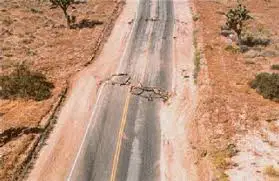
What type of fault is presented in the picture?
Normal Dip-Slip Fault
Reverse Dip-Slip Fault
Left-Lateral Strike-Slip Fault
Right-Lateral Strike-Slip Fault

From the same example, what type of plate boundary is presented in this picture?
divergent boundary
convergent boundary
transform boundary
convection boundary
Which layer of the earth do plate tectonics belong to?
Crust
Mantle
Lithosphere
Asthenosphere
Layer of the earth that is considered to be "weak or plastic" and able to flow or harden depending on the heat of the earth's core
crust
mantle
lithosphere
asthenosphere
What landform may form when an oceanic plate subducts under a continental plate?
trench
volcano
oceanic ridge
both a and b
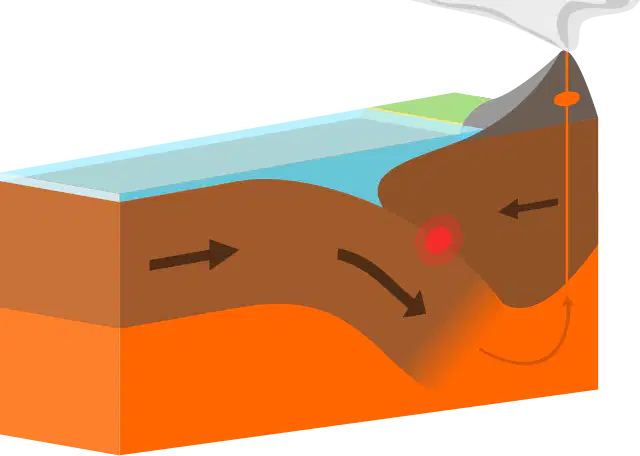
Which of the following is NOT true about the plate boundary shown in the picture?
It is a collision of an oceanic plate and a continental plate
Its is formed when plates of two different densities meet
It is formed when less dense plate subducts under denser plate
The following movement along this boundary may cause earthquake
Oceanic Ridges are formed through seafloor spreading, where magma rises to the crust to form new sea floors. What type of boundary do oceanic ridges belong to?
divergent boundary
convergent boundary
transform boundary
convenction boundary
This theory states that the sinking of the cool, dense plates at subduction contribute to their movement along the mantle.
slab pull
gravitational pull
convection current
molten magma surfing
How can volcanoes away from any plate boundary form?
weak crust
hotspots in the mantle
strong and massive earthquakes
convections currents seeping into crust

