

wayground logo

Free Printable Worksheets

Font size

S
M
L
XL
Worksheets

Igneous rock ch 4 ls2

Total questions: 22

Worksheet time: 2mins

Name
Class
Date
1.
  1. What is igneous rock?

a)
Igneous rock is a type of rock formed from the cooling and solidification of magma or lava.
b)
A type of rock that forms only underwater.
c)
Metamorphic rock created by heat and pressure.
d)
Sedimentary rock formed from compressed sediments.
2.

  1. What is the primary process involved in the formation of igneous rocks?

a)

Cooling and solidification of magma or lava.

b)

Compaction and cementation of sediments.

c)

Metamorphism due to heat and pressure.

d)

Erosion and sedimentation.

3.
  1. What is extrusive rock?

a)
Extrusive rock is a type of igneous rock that forms from lava that cools quickly on the Earth's surface.
b)

Extrusive rock created by the alteration of existing rocks under heat and pressure.

c)
A type of sedimentary rock formed from compressed organic materials.
d)

Extrusive rock that forms deep underground from slowly cooled magma.

4.

Why do large crystals form in intrusive rock?

a)
Large crystals develop from sedimentary processes.
b)
Large crystals are formed by volcanic eruptions.
c)
Large crystals form in intrusive rock due to slow cooling of magma.
d)
Large crystals form due to rapid cooling of lava.
5.

Which type of rock is formed from the solidification of magma or lava?

a)

igneous

b)

sedimentary

c)

metamorphic

d)

bioclastic

6.
  1. What three factors determine the type of igneous that forms?

a)
Type of rock formation, mineral hardness, pressure conditions
b)
Composition of magma, temperature of solidification, rate of cooling
c)
Presence of water, wind speed, geological age
d)
Color of the rock, size of crystals, location of formation
7.
  1. Where does extrusive rock form?

a)
Extrusive rock forms underground.
b)
Extrusive rock forms in the mantle.
c)
Extrusive rock forms in water.
d)
Extrusive rock forms on the Earth's surface.
8.
  1. At what rate does extrusive rock cool?

a)
Extrusive rock cools rapidly.
b)
Extrusive rock cools underground.
c)
Extrusive rock cools at a moderate rate.
d)
Extrusive rock cools slowly.
9.
  1. 9. Why don't crystals always form in extrusive rock?

a)
Crystals are always present in all types of rock.
b)
Extrusive rock is formed from sedimentary processes.
c)
Crystals form due to slow cooling in extrusive rock.
d)
Crystals do not form in extrusive rock due to rapid cooling.
10.
  1. 10. What happens to the gas in gas-rich lava as it erupts?

a)

The gas expands and can cause explosive eruptions. It escapes.

b)
The gas cools down and solidifies immediately.
c)
The gas remains trapped and does not escape.
d)
The gas condenses into liquid droplets.
11.
  1. 11. Which feature of extrusive rock indicates that gases escaped?

a)

Vesicles or holes left in the rock.

b)

Striations or holes left in the rock.

c)

Fossils or holes left in the rock.

d)

Crystals and holes left in the rock.

12.
  1. 12. Where does igneous rock form?

a)
Igneous rock forms in the ocean from coral reefs.
b)
Igneous rock forms from the compression of fossils.
c)
Igneous rock forms from sedimentary layers.
d)
Igneous rock forms from the cooling of magma or lava.
13.
  1. At what rate does intrusive rock form?

a)
Intrusive rock forms slowly.
b)
Intrusive rock forms rapidly.
c)
Intrusive rock forms at high temperatures.
d)
Intrusive rock forms underwater.
14.

Diorite is an intrusive igneous rock. What does this tell you about it?

a)

it was formed from lava that erupted onto Earth's surface

b)

it was formed from magma that hardened beneath Earth's surface

c)

it was formed from rapidly cooling lava

15.

Where do intrusive rocks form?

a)

Inside the Earth

b)

In outer space

c)

At the bottom of the ocean

d)

On the Earth's surface

16.

How does the temperature of extrusive rock compare to the temperature of intrusive rock?

a)

extrusive rock cools more slowly

b)

intrusive rock cools more slowly

c)

both cool at the same rate

17.

Basalt is an extrusive igneous rock. What does this tell you about it?

a)

it was formed from lava that erupted onto Earth's surface

b)

it was formed from slowly cooling magma

c)

it was formed from magma that hardened beneath Earth's surface
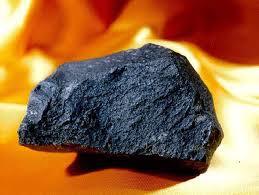
18.

This rock was found near the mouth of a volcano. What type of rock is this?

a)

Sedimentary

b)

Igneous

c)

Metamorphic

19.

Diorite is an intrusive igneous rock. What does this tell you about it?

a)

it was formed from lava that erupted onto Earth's surface

b)

it was formed from magma that hardened beneath Earth's surface

c)

it was formed from rapidly cooling lava

20.

The size of crystals in Igneous Rocks depends upon

a)

pressure

b)

the presence of air

c)

the presence of water

d)

cooling rate

21.

Which type of crystals form in intrusive rock?

a)
Metamorphic crystals (e.g., garnet, schist)
b)
Plutonic crystals (e.g., quartz, feldspar, mica)
c)
Sedimentary crystals (e.g., calcite, gypsum)
d)
Volcanic crystals (e.g., obsidian, pumice)
22.

What is pumice?

a)

A type of extrusive igneous rock

b)

A heavy, dense mineral

c)
A form of igneous glass
d)
A type of sedimentary rock
