
 Worksheets
Y7 Chemistry: Particles and Mixturess
Total questions: 130
Worksheet time: 2hrs 33mins
When something goes from gas to liquid, it is called...
Evaporation
Condensation
Deposition
Freezing
Something that goes from liquid to gas is...
Evaporation
Melting
Freezing
Sublimation
Which of the following sentences are true about solids?
Solids are rigid, have a fixed shape but not a fixed volume
Solids are not rigid, have a fixed shape and no fixed volume
Solids are rigid, have a fixed shape and a fixed volume

All matter is made up of tiny _______________
energy
particles (atoms and molecules)
bits
antimatter
The particles of ___________________ are tightly packed.
solids
liquids
gases
none
The particles of liquids can:
vibrate
move past each other
both
none
The forces of attraction between particles of _________ are weakest.
solids
liquids
gases
none


Which of the following sentences are true about solids?
Solids are rigid, have a fixed shape but not a fixed volume
Solids are not rigid, have a fixed shape and no fixed volume
Solids are rigid, have a fixed shape and a fixed volume
Particles are always moving.
True
False
Something that goes from liquid to gas is...
Evaporation
Melting
Freezing
Sublimation
Which image shows particles in a solid?


Which image shows particles in a liquid?
Which image shows particles in a gas?

_________ particles are shown in this image
Solid
Liquid
Gas
Plasma

__________ particles are shown in this image
Solid
Liquid
Gas
Plasma

__________ particles are shown in this image
Solid
Liquid
Gas
Plasma
1 of the 5 main ideas of the particle model is
All matter is made up of tiny particles too small to see
All matter is made up of large particles
Matter is only found in Science laboratories
Matter is only found in solids
1 of the 5 main ideas of the particle model is
There are only spaces between gases
There are spaces between the particles
The spaces between particles are greater in liquids compared to gases
There are no spaces between solid particles
1 of the 5 main ideas of the particle model is
There are no forces between between any particles
Weaker force= particles are closer together
Weaker force= particles are further apart
Gases are the only state of matter that doesn't have a force
1 of the 5 main ideas of the particle model is
The particles never move in any state of matter
The particles only move in a liquid and gas
The particles in all states of matter are always moving
Only the particles in water move
1 of the 5 main ideas of the particle model is
Particles move faster at low temperatures
Particles explode when heated
Particles can't move in a solid when it's heated or cooled
Particles move faster at high temperatures
Solids and liquids are incompressible because
Stronger forces means that particles are closer together and can't be moved
The particles vibrate therefore can't be broken
Humans aren't strong enough to break them
Weaker forces means that particles are closer together and can't be moved
Liquids and gases spread to fill their container because
They are both compressible
The particles can move
There are large spaces between particles
Both have strong forces which allow particles to flow
Which of the following is NOT suggested by the particle model?
made up of tiny particles
particles move faster as the temperature increases
particles move slower as the temperature decreases
particles do not move in a solid
How are particles usually represented in the particle model?
as small circles
as straight lines
as small squares
as circles that are tightly backed together
The three types of mixtures are..
solutions, solutes, solvents
solutions, colloids, suspensions
solutions, colloids, sediments
concentrates, dilutes, dissolvers
If a substance is soluble is means...
that it can dissolve into another substance
that it cannot dissolve into another substance
it must be a concentrated substance
it must be a diluted substance
Which is the most common type of mixutre
solutions
solutes
colloids
suspensions
Solutions are made up of..
a soluble and a solvent
a solute and a solvent
a suspension and a sediment
a suspension and a colloid
Some sugar dissolves in water, the solute is...
particles
water
sugar
oxygen
Some cordial is mixed with water, the solvent is...
cordial
water
absent
going to dissolve
A feature of a solution is..
it is transparent
it is colourless
it is cloudy
it is concentrated
A suspension is a mixture that has
a solute and a solvent
a sediment
a cloudy appearance
oil in it
Which best describes the word sediment?
a substance that something else can dissolve into
small particles that easily dissolve
medium sized particles that block light
large particles that settle to the bottom of a mixture
A feature of a colloid is that..
they are cloudy
they are transparent
they are colourless
they have a sediment
Solutions has ______________ sized particles, colloids have _________________ sized particles, and suspensions have _________________________ sized particles.
small, medium, large
large, medium, small
medium, small, large
medium, large, small
_________________ is an example of a solution, __________________ is an example of a colloid, _____________________ is an example of a suspension.
cordial, sand and water, milk
sand and water, milk, cordial
milk, cordial, sand and water
cordial, milk, sand and water
In which mixture can you see all of the parts?
homogeneous
heterogeneous
In which mixture can you not see all of the parts?
homogeneous
heterogeneous


What is a mixture in which all the parts are EVENLY mixed?
energy
beaker
solution
salad

Which of the following is a solution?
geletin with blueberries
granola
juice
salad

Which of the following is a solution?
lemonade
trail mix
legos
iron filings and sand

A salad is an example of a __________.
homogenous mixture
solution
heterogeneous mixture
homogenous solution


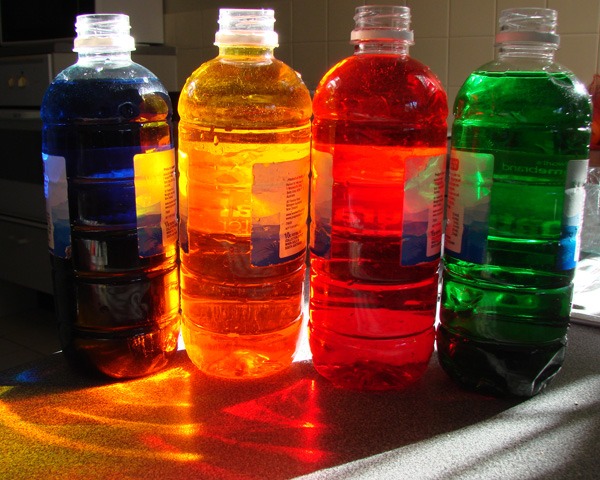
What is the definition of a solvent?
The substance that is dissolved.
The substance in which the solute is dissolved.
Unable to be dissolved.

A combination of two or more substances.
mixtures
separate
solid
whisk
Which tool could you use to separate large and small particles?
A sieve
A distillation flask
Chromatography
Evaporating basin
In a solution of saltwater, what is the solute?
Water
Saltwater
Salt
There is no solute, it is insoluble
Distilled water is a pure substance, but tap water is not. Why?
Distilled water has separated all the non-water molecules out
Distilled water only contains water molecules.
Tap water contains other particles.
Tap water is a mixture.
Place the phase changes in the correct place on the diagram
sublimation
deposition
melting
freezing
vaporization
condensation
Which arrow is the melting point of the substance?
Which arrow is the freezing point of the substance?
Label each of the phase changes on the diagram.
Depositing
Subliming
Melting
Boiling
Freezing
Condensing
Label the states of matter
liquid
gas
solid
ice
Label the 3 states of matter shown here
Solid
Liquid
Gas
Label the states of matter
liquid
gas
solid
Label the higher and lower temperature jars.
Which best describes a solid (a)
A gas has (a) particle motion and (b) attractive forces between particles.
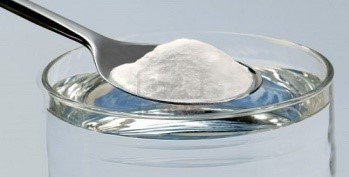
Identify the solute
Which of these is a property of a solution?
It is always a solid
It cannot dissolve in water
It settles to the bottom if left undisturbed
It allows light to travel straight through
What happens to substances that dissolve in water?
They create a suspension
They change color
They break up into very small pieces
They become insoluble
Which of these statements about solutes is NOT true?
It can be a gas
It can be a liquid
It has to be a solid
It dissolves in a solvent
What describes substances that do not dissolve in water?
Insoluble
Solution
Sparingly soluble
Soluble

Give the missing labels for this diagram, in their correct order.
solid, liquid, gas
solute, solvent, solution
solution, solute, solvent
solvent, solute, solution
Substances which dissolve in water are said to be (a) in water
What is the name given to a mixture of a solvent (like water) and an insoluble substances (like vegie oil) that has been shaken up to force the substances to mix for a while?
(a)
Which of the following are properties of suspensions?
They are often not transparent
The substance settles at the bottom of the container after a while
They have a clear appearance
They small bad

Milk is a type of mixture called a colloid. Colloids are a bit like suspensions because
light can't pass through them
everything is soluble
suspensions are always white
suspensions keep you in suspense
Milk is a type of mixture called a colloid. Colloids are NOT like suspensions because
light can't pass through them
material doesn't eventually settle at the bottom
colloids are edible
colloids dissolve in water
Which of the following probably isn't a colloid?


In fizzy drinks, the fizz is produced by dissolving carbon dioxide gas into the drink. The gas starts to escape when you open the drink. This means carbon dioxide is
insoluble
the solute and is insoluble
the solvent and is soluble
the solute and is soluble

Which of the following describes what is happening when eucalyptus oil is used to try and remove greasy marks from a surface?
the eucalyptus oil is acting as a solvent
the eucalyptus oil is acting as a solute
the eucalyptus oil is acting as a solution
The eucalyptus oil is making a suspension
How well a solute (like sugar) dissolves in a solvent (like water) is called its
solvency
solvication
solubleness
solubility
A solution that contains the maximum amount of dissolved solute is called a ______ solution.
saturated
maximum
suspension
full
If a person wanted to make a saturated solution of sugar, they would know when the solution is saturated, because
they were really tired of stirring it
they used up all the sugar
there was undissolved sugar at the bottom, which would not dissolve
it went blue
A solution which does not contain much solute is said to be a D (a) solution
A solution which contains a lot of dissolved solute is known as a C__C__T____D solution
(a)
Solvent: A substance that (a) another substance
(a) : A substance that dissolves
Insoluble: A (a) that doesn't dissolve
(a) : A cloudy liquid containing insoluble particles.
(a) : type of mixture that always looks cloudy because clumps of insoluble particles remain suspended throughout it – they don’t settle as sediment
Which one is not a colloid
Foam
Gel
Emulsion
Coffee
In a ______________, one substance is dissolved in another substance.
solution
suspension
colloid
A snow globe would be an example of a __________________.
colloid
solution
suspension
A combination of two or more substances that can be physically separated is called a...
Mixture
Pure substance
Compound

Which substance is MOST soluble at 0 ºC?
KCI
NaNO3
NaCl
Ce2(SO4)3


Colloids are mixtures where fine particles are dispersed throughout another substance, like milk. What are some other examples of colloids? Select all that apply.
mayonaisse
gelatin
trail mix
jelly

