wayground logo

Free Printable Worksheets

Font size

S
M
L
XL
Worksheets

Forces

Total questions: 150

Worksheet time: 3hrs 48mins

Name
Class
Date
1.
Which statement is true about a moving object?
When an object is ....
a)
...accelerating, the resultant force acting on it must be zero
b)
... moving at a steady speed, the air resistance acting on it must equal zero
c)
... moving at a steady speed, the resultant force acting on it must equal zero
d)
... moving, there must be a resultant force acting on it.
2.
A woman lifts 20 bricks, each of weight 6N.
What other information is needed to calculate the useful work done in lifting the bricks?
a)
the distance she lifts the bricks
b)
the mass of the bricks
c)
the time taken to lift the bricks
d)
the volume of the bricks
3.
How far does the car travel before it reaches a steady speed?
a)
10m
b)
20m
c)
100m
d)
200m
4.
Which statement is correct about a bottle of water?
a)
its mass at the North Pole is different from its mass at the Equator
b)
its mass is measured in newtons
c)
its weight and mass are the same thing
d)
its weight is one of the forces acting on it
5.
a)
  A
b)
  B
c)
  C
d)
  D
6.
Which statement about mass and weight is correct?
a)
Mass and weight are both forces
b)
Neither mass nor weight is a force
c)
Only mass is a force
d)
Only weight is a force
7.
a)
   A
b)
  B
c)
   C
d)
   D
8.
In a race, a car travels 60 times around a 3.6km track. This takes 2.4 hours. What is the average speed of the car?
a)
1.5 km/h
b)
90 km/h
c)
144 km/h
d)
216 km/h
9.
Which quantity is measured in newtons?
a)
density
b)
energy
c)
pressure
d)
weight
10.
Two forces act on an object.
In which situation is it IMPOSSIBLE for the object to be in equilibrium?
a)
The two forces act in the same direction
b)
The two forces act through the same point
c)
The two forces are of the same type
d)
The two forces are the same size
11.

What is the equation that links gravitational field strength, mass and weight?

a)

weight = mass x gravitational field strength

b)

weight = mass ÷ gravitational field strength

c)

weight = gravitational field strength ÷ mass

12.

What is the equation that links distance, force and work done?

a)

work done = force x distance

b)

work done = force ÷ distance

c)

work done = distance ÷ force

13.

What is the equation that links extension, force applied to a spring and spring constant?

a)

force applied to a spring = spring constant x extension

b)

force applied to a spring = spring constant ÷ extension

c)

force applied to a spring = extension ÷ spring constant

14.

What is the equation that links distance, time and velocity?

a)

velocity = time x distance

b)

velocity = distance ÷ time

c)

velocity = time ÷ distance

15.

What is the equation that links acceleration, change in velocity and time?

a)

acceleration = change in velocity x time

b)

acceleration = change in velocity ÷ time

c)

acceleration = time ÷ change in velocity

16.

What is the equation that links acceleration, mass, and resultant force?

a)

resultant force = mass x acceleration

b)

resultant force = mass ÷ acceleration

c)

resultant force = acceleration ÷ mass

17.

What is the equation that links mass, momentum, and velocity?

a)

momentum = mass x velocity

b)

momentum = mass ÷ velocity

c)

momentum = velocity ÷ mass

18.

What is the momentum of a toy car of mass 500 g, travelling at a velocity of 30 m/s?

a)

0.15 kgm/s

b)

15 kgm/s

c)

15 000 kgm/s

d)

15 000 000 kgm/s

19.

What is the unit of work?

a)

Newton

b)

Joule

c)

Watt

d)

meter

20.

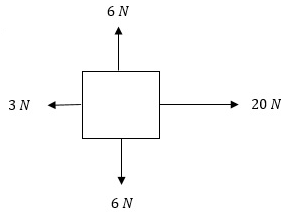
What is the resultant force in this diagram?

a)

17 N, right

b)

17 N, left

c)

23 N, right

d)

12 N, up

21.

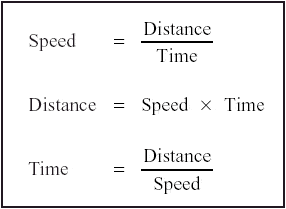
What equation links distance, speed and time?

a)

speed = time ÷ distance

b)

speed = distance ÷ time

c)

speed = distance x time

d)

speed = time x distance

22.
Which of the following is a unit for acceleration?
a)
km/s
b)
m/s2
c)
mi/hr
d)
ft
23.

Which of these can be measured in meters per second (m/s)

a)

Distance

b)

Time

c)

Speed

d)

Acceleration

24.

Calculate the average speed (in m/s) if a cheetah runs 180 metres in 10 seconds.

a)

198 m/s

b)

170 m/s

c)

12 m/s

d)

18 m/s

25.
Of the following, which is a vector?
a)
Mass
b)
Time
c)
Speed
d)
Velocity
26.

Acceleration is defined as the "change in..."

a)

the time it takes to move from one place to another.

b)

velocity of an object.

c)

distance, divided by the time taken.

d)

velocity, divided by the time taken.

27.
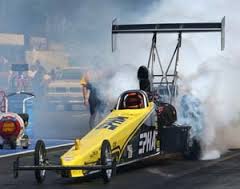
A drag racer accelerated from 0 m/s to 200 m/s in 5 s.  What was the acceleration?
a)
0 m/s
b)
40 m/s2
c)
-40 m/s2
d)
40 m/s
28.
A golf ball accelerates off a tee at 15m/s2, changing its velocity from 0m/s to 50 m/s down the fairway. How long did it take the golf ball to accelerate?
a)
750 seconds
b)
35 seconds
c)
0.3 seconds
d)
3.3 seconds
29.

A dog runs with an initial speed of 7.5 m/s on a waxed floor. It slides to a stop in 15 seconds. What is the acceleration?

a)

-7.5 m/s

b)

-7.5 m/s2

c)

-0.5 m/s2

d)

0.5 m/s

30.

A spring has a spring constant of 5 N/cm. What is its extension when loaded with 15 N?

a)

3 cm

b)

5 cm

c)

3 m

d)

5 m

31.

What is 30 m/s in km/h? (type the number only without units)

(a)  

32.

What is the momentum of a 500g car travelling at 30 m/s? Give your answer in kgm/s without the units. (momentum = mass x velocity)

(a)  

33.

What are the units of power?

a)

Joules

b)

Newtons

c)

Amps

d)

Watts

e)

Kilowatt-hours

34.

The rate of energy transfer (energy divided by time) is called what? (Begins with a p)

(a)  

35.

What is the kinetic energy of a 800g toy moving at 10m/s? Give your answer in Joules, but only type the number - no units.

a)

8

b)

40

c)

4000

d)

4

36.

Gravitational potential energy is equal to mass x gravitational field x (a)   ?

37.

What quantity is measured in kilograms?

(a)  

38.

What is the GPE of a 60kg man standing on top of a 25cm high stool? State the units with your answer (a single letter is fine).

(a)  

39.

What is the correct formula for force?

a)

Mass x weight

b)

Mass x velocity

c)

Mass x acceleration

d)

Mass x time

e)

Mass x distance

40.

An object with a mass of 5kg is dropped from a height of 100m. What is the impact velocity with the ground, in metres per second, to one decimal place? Do not type the units.

(a)  

41.

If two cars are travelling towards each other, which of these statements is true.

a)

One has a negative time

b)

One has a negative mass

c)

One has a negative distance

d)

One has a negative momentum

e)

One has a negative kinetic energy

42.

What is 30 km/h in m/s given to 1 decimal place? Do not type the units.

a)

8.3

b)

9.8

c)

6.9

d)

9.4

e)

108

43.

What is the density of a cube with dimensions of 4cm x 4cm x 4cm with a mass of 16g? Give your answer in g/cm^3 without typing the units.

(a)  

44.

Which of these is not a force?

a)

Kinetic

b)

Thrust

c)

Tension

d)

Drag

e)

Friction

45.

Which of these are measured in Joules? Tick all that apply (two answers).

a)

Kinetic energy

b)

Weight

c)

Thrust

d)

Power

e)

Work done

46.

Which of these does not affect the time taken for an object to fall from a height?

a)

mass

b)

initial speed

c)

final speed

d)

acceleration

e)

distance

47.

What are the two quantities needed to work out momentum and also kinetic energy?

a)

mass

b)

time

c)

acceleration

d)

velocity

e)

distance

48.

Which has the highest density? Do not guess, use your day to day knowledge of each substance.

a)

water

b)

oil

c)

copper

d)

gold

e)

aluminium

49.

Which of these is not an equation for energy?

a)

12mv2\frac{1}{2}mv^2

b)

mghmgh

c)

PtPt

d)

mvmv

e)

FdFd

50.

Which of these is not a non-renewable energy source for a power station?

a)

coal

b)

nuclear

c)

woodchips

d)

oil

51.
Wind blowing at 20 mph.Vector or scalar?
a)
Scalar
b)
Vector
52.
30 m/sec, East. Scalar or Vector
a)
Scalar
b)
Vector
c)
Neither
53.
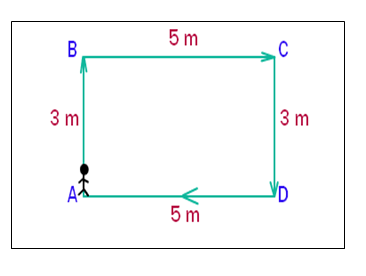
Sara walks from Point A to Point B. Which is true?
a)
Distance and displacement are EQUAL
b)
Distance is less than displacement
54.
"For every action, there is an equal and opposite reaction."
a)
Newton's 1st Law
b)
Newton's 2nd Law
c)
Newton's 3rd Law
d)
Newton's 4th Law
55.
Force = Mass x Acceleration
a)
Newton's 1st Law
b)
Newton's 2nd Law
c)
Newton's 3rd Law
d)
Newton's 4th Law
56.
"An object in motion (or at rest) will to stay in motion (or at rest) until an outside force acts upon it."
a)
Newton's 1st Law
b)
Newton's 2nd Law
c)
Newton's 3rd Law
d)
Newton's 4th Law
57.
The tendency of an object to resist changes in its motion is...
a)
inertia
b)
force
c)
acceleration
d)
velocity
58.
A cannonball with a mass of 0.5 kg is flying at an acceleration of 10 m/sec/sec. What is it's force?
a)
50 Newtons
b)
5 Newtons
c)
20 Newtons
d)
9.5 Newtons
59.
A cannonball with a mass of 10 kg is flying at an acceleration of 5 m/sec/sec. What is it's force?
a)
50 Newtons
b)
5 Newtons
c)
20 Newtons
d)
9.5 Newtons
60.
The net force on a ball thrown in outer space is... (you are no longer touching the ball)
a)
there is none
b)
forward
c)
down and backward
d)
forward and down
61.
The net force on a ball thrown on Earth is... (you are no longer touching the ball)
a)
there is none
b)
forward
c)
down and backward
d)
forward and down
62.
Mass x acceleration = ?
a)
force
b)
inertia
c)
momentum
d)
velocity
63.
What is the force of an object with a mass of 30 kg and an acceleration of 10 m/s2? 
a)
300
b)
3
c)
20
d)
40
64.
Calculate the acceleration of a 150 kg object that is moved with a force of 300N. 
a)
2
b)
150
c)
.5
d)
450
65.
What is the mass of an object that is accelerating 60 m/s2 when a force of 3000N is exerted? 
a)
5
b)
3060
c)
50
d)
180000
66.
What net force is required to accelerate a car at a rate of 2 m/s2 if the car has a mass of 3,000 kg? 
a)
1500
b)
6000
c)
3002
d)
2998
67.
A10 kg bowling ball would require what force to accelerate down an alleyway at a rate of 3 m/s2? 
a)
13
b)
3.3333333
c)
30
d)
7
68.
If you increase the mass on an object, its acceleration
a)
decreases
b)
stays the same
c)
also increases
d)
stops
69.
If a 2kg bird is pushed by the wind with a force of 2N, how fast does the bird accelerate?
a)
1 m
b)
2 m/s2
c)
4m/s2
d)
1 m/s2
70.
Which statement is true about a moving object?
When an object is ....
a)
...accelerating, the resultant force acting on it must be zero
b)
... moving at a steady speed, the air resistance acting on it must equal zero
c)
... moving at a steady speed, the resultant force acting on it must equal zero
d)
... moving, there must be a resultant force acting on it.
71.
A woman lifts 20 bricks, each of weight 6N.
What other information is needed to calculate the useful work done in lifting the bricks?
a)
the distance she lifts the bricks
b)
the mass of the bricks
c)
the time taken to lift the bricks
d)
the volume of the bricks
72.
How far does the car travel before it reaches a steady speed?
a)
10m
b)
20m
c)
100m
d)
200m
73.
Which statement is correct about a bottle of water?
a)
its mass at the North Pole is different from its mass at the Equator
b)
its mass is measured in newtons
c)
its weight and mass are the same thing
d)
its weight is one of the forces acting on it
74.
a)
  A
b)
  B
c)
  C
d)
  D
75.
Which statement about mass and weight is correct?
a)
Mass and weight are both forces
b)
Neither mass nor weight is a force
c)
Only mass is a force
d)
Only weight is a force
76.
a)
   A
b)
  B
c)
   C
d)
   D
77.
In a race, a car travels 60 times around a 3.6km track. This takes 2.4 hours. What is the average speed of the car?
a)
1.5 km/h
b)
90 km/h
c)
144 km/h
d)
216 km/h
78.
Which quantity is measured in newtons?
a)
density
b)
energy
c)
pressure
d)
weight
79.
Two forces act on an object.
In which situation is it IMPOSSIBLE for the object to be in equilibrium?
a)
The two forces act in the same direction
b)
The two forces act through the same point
c)
The two forces are of the same type
d)
The two forces are the same size
80.
Wind blowing at 20 mph.Vector or scalar?
a)
Scalar
b)
Vector
81.
30 m/sec, East. Scalar or Vector
a)
Scalar
b)
Vector
c)
Neither
82.
Sara walks from Point A to Point B. Which is true?
a)
Distance and displacement are EQUAL
b)
Distance is less than displacement
83.
"For every action, there is an equal and opposite reaction."
a)
Newton's 1st Law
b)
Newton's 2nd Law
c)
Newton's 3rd Law
d)
Newton's 4th Law
84.
Force = Mass x Acceleration
a)
Newton's 1st Law
b)
Newton's 2nd Law
c)
Newton's 3rd Law
d)
Newton's 4th Law
85.
"An object in motion (or at rest) will to stay in motion (or at rest) until an outside force acts upon it."
a)
Newton's 1st Law
b)
Newton's 2nd Law
c)
Newton's 3rd Law
d)
Newton's 4th Law
86.
The tendency of an object to resist changes in its motion is...
a)
inertia
b)
force
c)
acceleration
d)
velocity
87.
A cannonball with a mass of 0.5 kg is flying at an acceleration of 10 m/sec/sec. What is it's force?
a)
50 Newtons
b)
5 Newtons
c)
20 Newtons
d)
9.5 Newtons
88.
A cannonball with a mass of 10 kg is flying at an acceleration of 5 m/sec/sec. What is it's force?
a)
50 Newtons
b)
5 Newtons
c)
20 Newtons
d)
9.5 Newtons
89.
The net force on a ball thrown in outer space is... (you are no longer touching the ball)
a)
there is none
b)
forward
c)
down and backward
d)
forward and down
90.
The net force on a ball thrown on Earth is... (you are no longer touching the ball)
a)
there is none
b)
forward
c)
down and backward
d)
forward and down
91.
Mass x acceleration = ?
a)
force
b)
inertia
c)
momentum
d)
velocity
92.
What is the force of an object with a mass of 30 kg and an acceleration of 10 m/s2? 
a)
300
b)
3
c)
20
d)
40
93.
Calculate the acceleration of a 150 kg object that is moved with a force of 300N. 
a)
2
b)
150
c)
.5
d)
450
94.
What is the mass of an object that is accelerating 60 m/s2 when a force of 3000N is exerted? 
a)
5
b)
3060
c)
50
d)
180000
95.
What net force is required to accelerate a car at a rate of 2 m/s2 if the car has a mass of 3,000 kg? 
a)
1500
b)
6000
c)
3002
d)
2998
96.
A10 kg bowling ball would require what force to accelerate down an alleyway at a rate of 3 m/s2? 
a)
13
b)
3.3333333
c)
30
d)
7
97.
If you increase the mass on an object, its acceleration
a)
decreases
b)
stays the same
c)
also increases
d)
stops
98.
If a 2kg bird is pushed by the wind with a force of 2N, how fast does the bird accelerate?
a)
1 m
b)
2 m/s2
c)
4m/s2
d)
1 m/s2
99.
The diagram below shows a skateboarder pushing himself forward with a force of 25 N while the wind pushes back with a force of 5 N. How will the skateboarder be affected if the force of the wind increases to 8 N?
a)
The speed of the skateboarder will increase.
b)
The speed of the skateboarder will remain constant.
c)
The speed of the skateboarder will decrease.
d)
The skateboarder will come to a stop.
100.
A toy car was used in an investigation about forces. During which of the following scenarios was the car experiencing balanced forces?
a)
The toy car speeds up as it rolls down a ramp.
b)
The toy car travels forward at a constant speed.
c)
The toy car slows down as it rolls up a hill.
d)
The toy car changes direction at a constant speed.
101.
The graph shows how the speed of an object changed over time. During which segments of this graph were the forces acting on the object balanced?
a)
R only
b)
Q and S
c)
R and T
d)
R, S and T
102.
What is the net force?
a)
1.3 N left
b)
1.3 N right
c)
3.7 N left
d)
3.7 N right
103.

Which of these blocks would result in motion?

a)

Block 1

b)

Block 2

c)

Block 1 and 2

d)

Blocks 2 and 3

104.

What is the net force on this object?

a)

to the right with a strength of 11 Newtons.

b)

to the left with a strength of 7 Newtons.

c)

to the right with a strength of 25 Newtons.

d)

to the left with a strength of 6 Newtons.

105.

Students attached a wooden block to a spring scale and placed a 10 g mass on top of the block and pulled it 50 cm across the table.Which of the following changes to their setup would result in a larger force reading on the spring scale?

a)

Sliding the block 60 cm

b)

Attaching a larger spring scale

c)

Using a 20 g mass

d)

Using a circular piece of wood

106.

If the total net force is equal to 2N to the right. How much force is being applied by the student on the far left.

a)

20N

b)

21N

c)

22N

d)

23N

107.
The sum of all forces acting on an object.
a)
Contact Force
b)
Balanced Force
c)
Unbalanced Force
d)
Net Force
108.

Friction is a contact force that acts _______ to the surfaces in contact.

a)

parallel

b)

perpendicular

c)

equal

d)

at an acute angle

109.

What affect would decreasing the normal force between two objects have on the force of friction?

a)

The force of friction would increase.

b)

The force of friction would decrease.

c)

The force of friction would remain the same.

d)

The force of friction would disappear completely.

110.

What is the frequency of a wave?

a)

# of oscillations produced in a certain amount of time

b)

The distance the wave oscillates from it's resting position

c)

The lowest point of a transverse wave

d)

Resting point of a wave - no wave movement

111.

What is the amplitude of a wave?

a)

Where there is no wave movement

b)

The distance the wave oscillates from it's resting position

c)

A disturbance that transfers energy from one place to another

d)

The distance between two corresponding parts of a wave

112.
The number of wavelengths that pass a point each second
a)
frequency
b)
wavelength
c)
pitch
d)
amplitude
113.

If the wavelength of a wave increased, what would happen to the frequency?

a)

decrease

b)

increase

c)

stay the same

114.

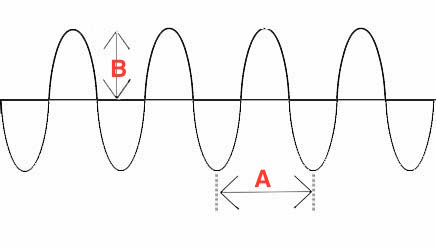
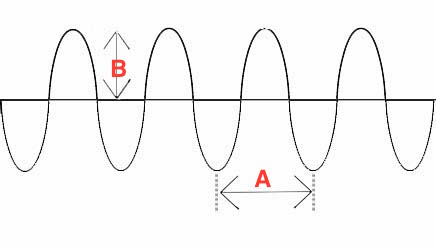
What property of this wave is represented by the letter "A"

a)

amplitude

b)

crest

c)

trough

d)

wavelength

115.
What property of the wave is represented by the letter "B"?
a)
amplitude
b)
crest
c)
trough
d)
wavelength
116.
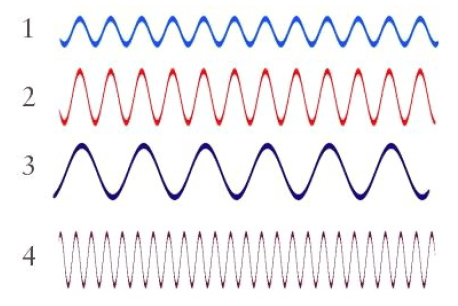
Which wave in the diagram has the greatest frequency?
a)
1
b)
2
c)
3
d)
4
117.

The units of frequency are...

a)

metres

b)

seconds

c)

Hertz

d)

degrees

118.

Light is an example of a transverse wave

a)

True

b)

False

119.

Sound is an example of a transverse wave

a)

True

b)

False

120.

Which of the following statements describes the period of a wave?

a)

Number of waves per second

b)

Distance from crest to crest

c)

Distance from resting position to top of the wave

d)

Time taken to produce one wave

121.

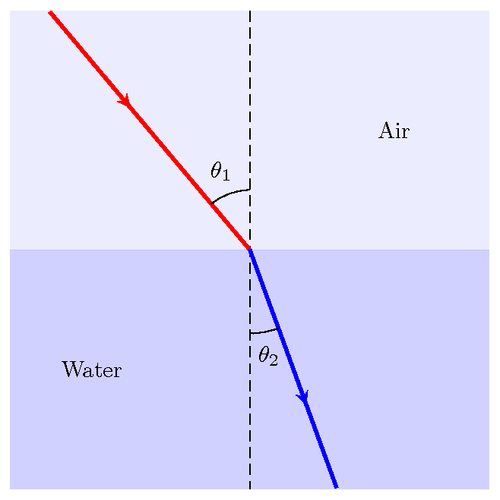
The following image demonstrates...

a)

Reflection

b)

Refraction

c)

Interference

d)

Diffraction

122.
Which is the best description of what is meant by a good thermal insulator?
a)
A.   A material that doesn’t allow thermal energy to move through it easily.
b)
B.   A material that doesn’t allow any thermal energy to move through it easily.
c)
C.   A material that doesn’t allow cold to move through it easily.
d)
D.   A material that does allow cold to move through it easily
123.
In order to do work, energy is
a)
A.  transferred
b)
B.  used up
c)
C.  lost
d)
D.  lost or transferred
124.
When a ball is suspended from a string what forces are acting on the ball:
a)
A.   Weight and string tension.
b)
B.   Weight and uphrust.
c)
C.   Weight and air resistance.
d)
D.   weight and gravity
125.
When a melon is dropped onto a pavement which of the following best describes what happens to energy?
a)
A.   The gravitational potential store reduces and the heat store of the surroundings increases.
b)
B.   The melons gains kinetic energy, which is lost when it hits the floor.
c)
C.   The melon’s energy store steadily reduces as it falls.
d)
D.   The gravitational potential store increases and the heat store of the surroundings increases.
126.
Which statement is true about a moving object?
When an object is ....
a)
...accelerating, the resultant force acting on it must be zero
b)
... moving at a steady speed, the air resistance acting on it must equal zero
c)
... moving at a steady speed, the resultant force acting on it must equal zero
d)
... moving, there must be a resultant force acting on it.
127.
A woman lifts 20 bricks, each of weight 6N.
What other information is needed to calculate the useful work done in lifting the bricks?
a)
the distance she lifts the bricks
b)
the mass of the bricks
c)
the time taken to lift the bricks
d)
the volume of the bricks
128.
How far does the car travel before it reaches a steady speed?
a)
10m
b)
20m
c)
100m
d)
200m
129.
Which statement is correct about a bottle of water?
a)
its mass at the North Pole is different from its mass at the Equator
b)
its mass is measured in newtons
c)
its weight and mass are the same thing
d)
its weight is one of the forces acting on it
130.
Which statement about mass and weight is correct?
a)
Mass and weight are both forces
b)
Neither mass nor weight is a force
c)
Only mass is a force
d)
Only weight is a force
131.
In a race, a car travels 60 times around a 3.6km track. This takes 2.4 hours. What is the average speed of the car?
a)
1.5 km/h
b)
90 km/h
c)
144 km/h
d)
216 km/h
132.

A spring has a spring constant of 5 N/cm. What is its extension when loaded with 15 N?

a)

3 cm

b)

5 cm

c)

3 m

d)

5 m

133.

Acceleration is defined as the "change in..."

a)

the time it takes to move from one place to another.

b)

velocity of an object.

c)

distance, divided by the time taken.

d)

velocity, divided by the time taken.

134.

Calculate the average speed (in m/s) if a cheetah runs 180 metres in 10 seconds.

a)

198 m/s

b)

170 m/s

c)

12 m/s

d)

18 m/s

135.

What is the resultant force in this diagram?

a)

17 N, right

b)

17 N, left

c)

23 N, right

d)

12 N, up

136.

What is the unit of work?

a)

Newton

b)

Joule

c)

Watt

d)

meter

137.

What is the momentum of a toy car of mass 500 g, travelling at a velocity of 30 m/s?

a)

0.15 kgm/s

b)

15 kgm/s

c)

15 000 kgm/s

d)

15 000 000 kgm/s

138.

Which type of wave is illustrated in the diagram?

a)

Longitudinal

b)

Slinky

c)

Transverse

d)

Water

139.

Max is sitting in his boat observing water waves enter the harbour. He counts 20 waves passing into the harbour in one minute. What is the frequency?

a)

0.33 Hz

b)

3.0 Hz

c)

20 Hz

d)

1200 Hz

140.

A compass needle responds to a magnetic field, because the compass needle is a

a)

A. generator

b)

B. motor

c)

C. magnet

d)

D. transformer

141.

Electric current is measured in ____________.

a)

Newtons (N)

b)

Amperes (A)

c)

Hertz (Hz)

d)

Volts (V)

142.

A _______________ is a current-carrying coil of wire with lots of loops.

a)

magnet

b)

electromagnet

c)

solenoid

d)

compass

143.

What happens if you cut a magnet in half?

a)

Nothing

b)

The magnets repel

c)

There will be two magnets

144.

How can you increase the magnetic field strength in an electromagnet?

a)

Increase the number of coils.

b)

increase the voltage

c)

increase the current by reducing the resistance of the coil

d)

all of the above

145.

How can you decrease the magnetic field strength in an electromagnet?

a)

Increase the number of coils.

b)

increase the voltage

c)

decrease the current by increasing the resistance of the coil

d)

all of the above

146.

Choose what the forefinger represents in Flemings left hand law.

a)

Field (South to North)

b)

Force

c)

Field (North to South)

147.

What causes the motor effect?

a)

A current carrying wire exerting a force on an electromagnet

b)

A current carrying wire exerting a force on a temporary magnet

c)

A current carrying wire exerting a force on a permanent magnet

148.

What do speakers contain?

a)

Magnet

b)

Magnet and electromagnet

c)

Electromagnet

149.

Looking at this diagram of a transformer, describe the movement of electricity through the national grid.

4 lines
150.

Why is electrical power transmitted at high voltages in the national grid?

a)

Travels faster through the wires

b)

Lower current which means less heat loss

c)

Higher voltages doesn't electrocute people