
 Worksheets
Tectonic Plates
Total questions: 18
Worksheet time: 9mins
Plates that move together can form...
mountains
earthquakes
volcanoes
ocean ridges
_______ currents within the mantle cause the earth’s plates to move and shift molten material to rise and fall due to density and gravity.
Convection
Radiation
Conduction
Advection
When plates move away from each other, this can create…
Mountains
Conduction
Rifts and ocean ridges
Convection Currents
When pressure builds between two tectonic plates, it can suddenly release causing a(an) ________.
Earthquake
Tsunami
Volcanic Eruption
Landslide
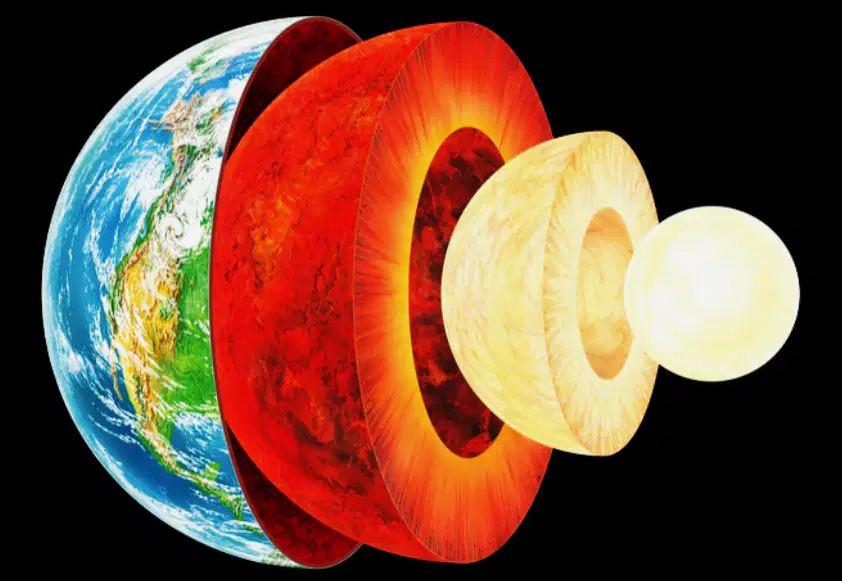
What is the hottest layer of the Earth?
Core
Mantle
Crust
Outer Core
Less dense objects __________.
Float, rise
Sink, fall
Drop, descend
Submerge, lower
More dense objects ____________.
Sink
Float
Hover
Remain level
True or False: It is not possible for mountains to get taller over time?
True
False
Normally, Mt. Everest moves NE but in 2015 it moved backwards. What caused this event?
An earthquake
Volcanic activity
Meteorite impact
Glacial movement
What type of plate movement is happening in the mid-Atlantic ridge?
Plates are moving away from each other
Plates are moving towards each other
Plates are sliding past each other
No movement is occurring at the mid-Atlantic ridge
Why are earthquakes so deep in the Andes Mountains?
The plants move towards each other but one plate sinks into the mantle.
When the mountain roots converge, only one root descends into the mantle.
The tectonic plates slide past each other, causing one to dip deep underground.
A unique interaction of the Earth's layers forces one plate to subside beneath the other.
Oceanic plates sink below land plates because they are more dense.
True
False
Where are volcanoes most likely to form?
Along plate boundaries
Near the center of continents
Near water
On the moon
What mountain range is Mt. Everest in?
The Olympics
The Himalayas
The Rockies
The Cascades
What is an earthquake?
When tectonic plates move against each other causing the earth to move.
When the earth causes an upward thrust in the epicenter.
When the earth moves up and down along the ocean floor.
None of the above.
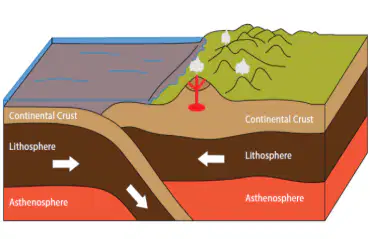
What would this type of plate movement create?
Shallow earthquakes with scattered volcanoes
Nothing would happen
Deep earthquakes with volcanoes above it in a line pattern
A ridge-like area
Many earthquakes happen along the borders of ...
Countries
Climate Zones
Tectonic Plates
None of the above

What would this type of plate movement result in?
Mountains
A hole in the ground
A new ocean
Thin layer of crust. Possibly vocanoes.

