
 Worksheets
Respiratory System Test
Total questions: 38
Worksheet time: 21mins
1. larynx
2. nasal cavity
3. pharynx
4. trachea
Which of the following is the correct order that air would flow during inhalation.


Within the lungs, the exchange of oxygen and carbon dioxide occurs between the ___ and the capillaries.
trachea
bronchi
alveoli
diaphragm


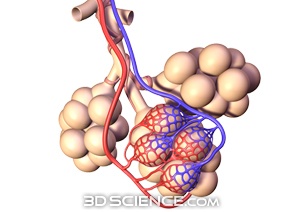
Which of the following accurately describes the relationship between the gas laws and pulmonary ventilation?
When the intercostals contract, the lung volume increases causing exhalation.
When the intercostals contract, the lung volume increases causing inhalation.
When the diaphragm contracts, lung volume increases causing a decrease in pressure leading to inhalation.
When the diaphragm contracts, lung volume increases causing a decrease in pressure leading to exhalation.
In humans, what process allows the gas exchange of both oxygen and carbon dioxide through the respiratory membrane?
active transport
passive transport
simple diffusion
osmosis
Breathing out; exhalation of breath.
Inspiration
Expiration

What is the tool called that we used to check our oxygen levels?
chemoreceptor
pulse oximeter
pulse and oxygen level reader
chemical meter
What organ controls the rate of breathing?
lung
heart
hypothalmus
brain stem
What is total lung capacity?
vital and tidal capacities
the amount of air you breathe normally
vital and residual capacities
all of the above
The amount of air you breathe normally is your
tidal lung capacity
vital lung capacity
residual lung capacity
total lung capacity
What does the cilia do in the respiratory syestem ?
The cilia carries food and air through the respiratory system.
The cilia is known to be part of a cell.
Cilia filters particles in the air that enter the respiratory system
Cilia contains the vocal chords.
Upon exhalation, the diaphragm _________ and returns to its dome like shape causing air to be forced out of the lungs
contracts
relaxes
gets smaller
moves downward
What is the scientific term for breathing? (Is the physical movement of air in and out of respiratory tract)
Pulmonary ventilation
alveolar ventilation
cellular respiration
internal respiration
What happens to the pressure in the lungs during exhalation?
pressure increases
pressure decreases
pressure stays the same
Air pressure always move from a ____________ to a _____________ pressure.
low : high
high : low
low : medium
equal : equal
Internal respiration is also called _____________.
Pulmonary Ventilation
External respiration
Alveolar Ventilation
Cellular Respiration
___________ is the process which involves the uptake of O2 and production of CO2 within individual cells
Pulmonary Ventilation
External respiration
Alveolar Ventilation
Internal Respiration
Most of the oxygen transported by the blood is bound to ___________.
hemoglobin
Bicarbonate ion
Carbon Dioxide
Water
_____ ______ refers to the movement of air into and out of the lungs. (breathing)
Pulmonary Ventilation
Internal respiration
Alveolar Ventilation
Cellular Respiration
_____________ is the exchange of gases between interstitial fluids (fluid present between the cells and tissues) and external environment. This process includes pulmonary ventilation (breathing), alveolar ventilation (movement of air into and out of alveoli).
External Respiration
Internal Respiration
Cellular Respiration
Muscle Contraction

