
 Worksheets
iMedia Block 5:
Total questions: 124
Worksheet time: 1hrs 8mins
What is the main characteristic of an MP3 file format?
Lossless
Lossy
Large file size
Used for studio recordings
Fill in the blank: WAV is a ______ file format.
lossless.
lossy.
compressed.
encrypted.
Which audio file format maintains all the data so quality is retained?
MP3
WAV
AAC
FLAC

Bit depth affects audio quality by determining the:
frequency range of the audio
dynamic range of the audio
number of audio channels
compression rate of the audio

The process of converting analogue data to digital data is known as:
Sampling
Quantization
Encoding
All of the above
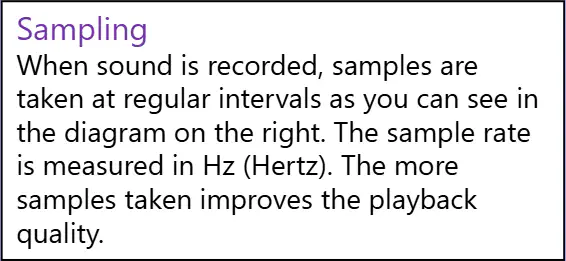
Fill in the blank: The sample rate is measured in ______.
Hz (Hertz)
kHz (Kilohertz)
dB (Decibels)
bps (Bits per second)
What is the description of moving images?
Animation
Still images
Text
Audio
Which of the following is a lossy file format used for streaming videos and films?
MP4
AVI
MPEG
MOV
Which file format is lossless and used for editing raw footage?
MP4
AVI
MPEG
MOV
What is the main characteristic of the MPEG file format?
Compression of audio and video data
High-resolution image storage
Text file encoding
Secure data encryption
Which file format is only compatible with Apple devices such as iPhone and iPad?
MP4
AVI
MPEG
MOV
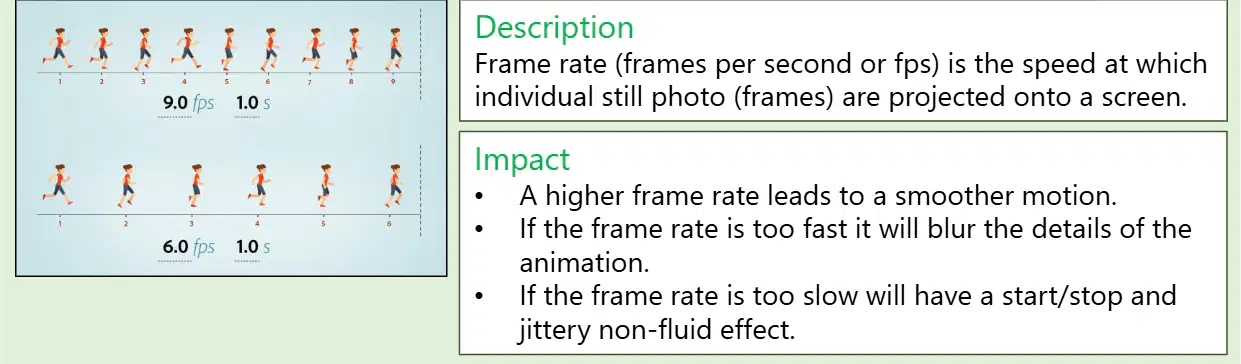
What is the impact of a higher frame rate on motion?
Smoother motion
Choppier motion
No change in motion
Slower motion

What does video resolution determine?
The clarity of the video
The length of the video
The color of the video
The sound quality of the video
Which of the following is not a video resolution type mentioned in the description?
SD
HD
4K UHD
2K UHD
Which of the following file formats is typically used for high-quality audio editing?
AAC
WAV
FLAC
MP3
What does the term 'bit rate' refer to in digital audio?
The number of audio channels
The dynamic range of the audio
The frequency of the audio signal
The number of bits processed per unit of time
Which video file format is known for its high compression efficiency and is widely used for streaming?
AVI
MKV
MP4
WMV
What is the purpose of the laws designed to protect the rights of individuals?
To promote defamation
To safeguard privacy rights
To encourage unauthorized photography
To restrict media producers
In the UK, where is recording images or taking photographs largely unregulated?
Restrooms
Healthcare facilities
Public places
Private places
What is necessary for media producers when capturing media in private places like homes, museums, and concert venues?
Trespassing charges
Permission from the property owner
Consent from the subject
Licensing fees
What is essential before publishing or using images and photographs for commercial purposes?
Obtaining proper permissions and release forms
Capturing images freely
Ignoring privacy rights
Recording in public places
For private property owner consent, what is necessary for media producers?
Trespassing charges
Licensing fees
Permission from the property owner
Consent from the subject
What can result from failing to obtain appropriate permissions for publishing images and photographs?
Severe fines and monetary damages
Legal protection
No consequences
Full rights to the content
What can happen if media producers persistently bother property owners or photograph someone on private property without consent?
No consequences
Full rights to the content
Legal protection
Time in prison
What does defamation involve?
Promoting false statements
Protecting someone's reputation
Encouraging revenge attacks
Damaging someone's reputation through false statements
What does data protection legislation safeguard individuals' personal information against?
All of the above
Misuse of data
Identity or bank fraud
Unscrupulous activities
What can result from non-compliance with data protection rights?
Maximum fines of 20 million Euros
Legal disputes
Severe penalties
All of the above
Which of these is a trademark?


Defamation is...
Losing your fame
Speaking the truth about someone
Spreading false rumours to damage a person's reputation
Trying to enhance your reputation
Libel is...
to make a false statement in writing to damage a person's reputation
to make a false verbal statement to damage a person's reputation
Slander is...
to make a false statement in writing to damage a person's reputation
to make a false verbal statement to damage a person's reputation

A false statement presented as a fact that causes injury or damage to the character (reputation) of the person it is about is _____________.
censorship
defamation
slander
libel

Telling others that a person is a liar (when they are NOT) is an example of ___________.
Libel
Slander
Defamation
Censorship

A published or written false statement that is damaging to a person's reputation is known as ___________.
Libel
Slander
BOTH Libel and Slander.
NEITHER Libel nor Slander.
Libel is _____________.
When erroneous (FALSE) information that is damaging to someone is POSTED on Facebook.
Telling something TRUE about someone to your best friend.
Telling LIES about someone else.

Match the following...
Slander
The action of making a FALSE spoken statement damaging a person's reputation.
Libel
Posting a FALSE statement about someone on TikTok that damages a person's reputation.
Defamation
Any action of damaging the good reputation of someone else.
A piece of legislation that aims to protect a person’s personal data.
Data Protection Act
Computer Misuse Act
Detailed Protection Act
Copyright
What enables people to control their interactions with others and safeguards against unwanted interference?
Privacy
Public records
Public places
Media production
Where is recording images or taking photographs largely unregulated?
Personal homes
Healthcare facilities
In the UK public places
Private properties
What is required before publishing images and photographs for commercial purposes?
Notification to the local government
A public announcement
Proper permissions and release forms
A social media post
What type of defamation is relevant to news articles and magazines?
Public defamation
Slander
Private defamation
Libel
What can unauthorized photography or recording on private property lead to?
A reward
A thank you note
Trespassing charges
Public recognition
What is not required when recording in public places for media producers?
Consent from individuals
Permission from the government
A camera
Full rights to the content
What does data protection legislation safeguard?
Individual's personal information
Business secrets
Media content
Government data
What are the consequences of non-compliance with data protection rights?
A warning
A small fee
Penalties with maximum fines
A congratulatory message
What must media producers obtain to ensure compliance with legal considerations?
A university degree
An online presence
Necessary permissions
A social media following
What type of defamation is applicable to social media posts and videos?
Online defamation
Slander
Public defamation
Libel
What is essential for journalists to avoid accusations of invasion of privacy?
Using pseudonyms for subjects
Obtaining consent for interviews
Reporting only in public spaces
Fact-checking their sources
Under what condition can personal data be processed according to data protection laws?
With the subject's explicit consent
During public events only
Without consent if it's newsworthy
If the subject is a public figure
How long does copyright typically last after the creator's death?
100 years
Lifetime
50 years
70 years
What is required to obtain a patent?
A business plan
A creative idea
Disclosure of technical information
Market analysis
How often must trademarks be renewed?
Every 10 years
Every 20 years
Every year
Every 5 years
What must be done to protect a trademark?
Sell it online
Post it on social media
Get a website domain
Register with the intellectual property office
Which license is a popular free option in creative media?
General Public License
Creative Commons license
Commercial License
Exclusive License
What can lead to serious repercussions if done without permission?
Using licensed material
Using public domain material
Using someone's copyrighted material
Using personal notes
Which works are protected by copyright?
Ideas
All works
Written works
Audio works
Copyright is important because
It allows others to copy your work
It prevents other people from copying your work
What are the two ways you are able to use a work WITHOUT permission?
public domain & eminent domain
public domain & fairy tales
public domain & fair use
What is Creative Works?
Any kind of original work (writing, painting, music, lyrics)
Adaptations of original work
When someone illegally reproduces or uses a copyrighted work without permission
Taken to court, and a judge can order you to pay money to copyrighted holder
Alan creates a song and copyrights it. Sylvia gets his permission to play it in the background of her Youtube video. This is...
legal
illegal

Copyright law does not apply to under 18s.
True
False
It is legal to copy a DVD to give it to a friend.
False
True
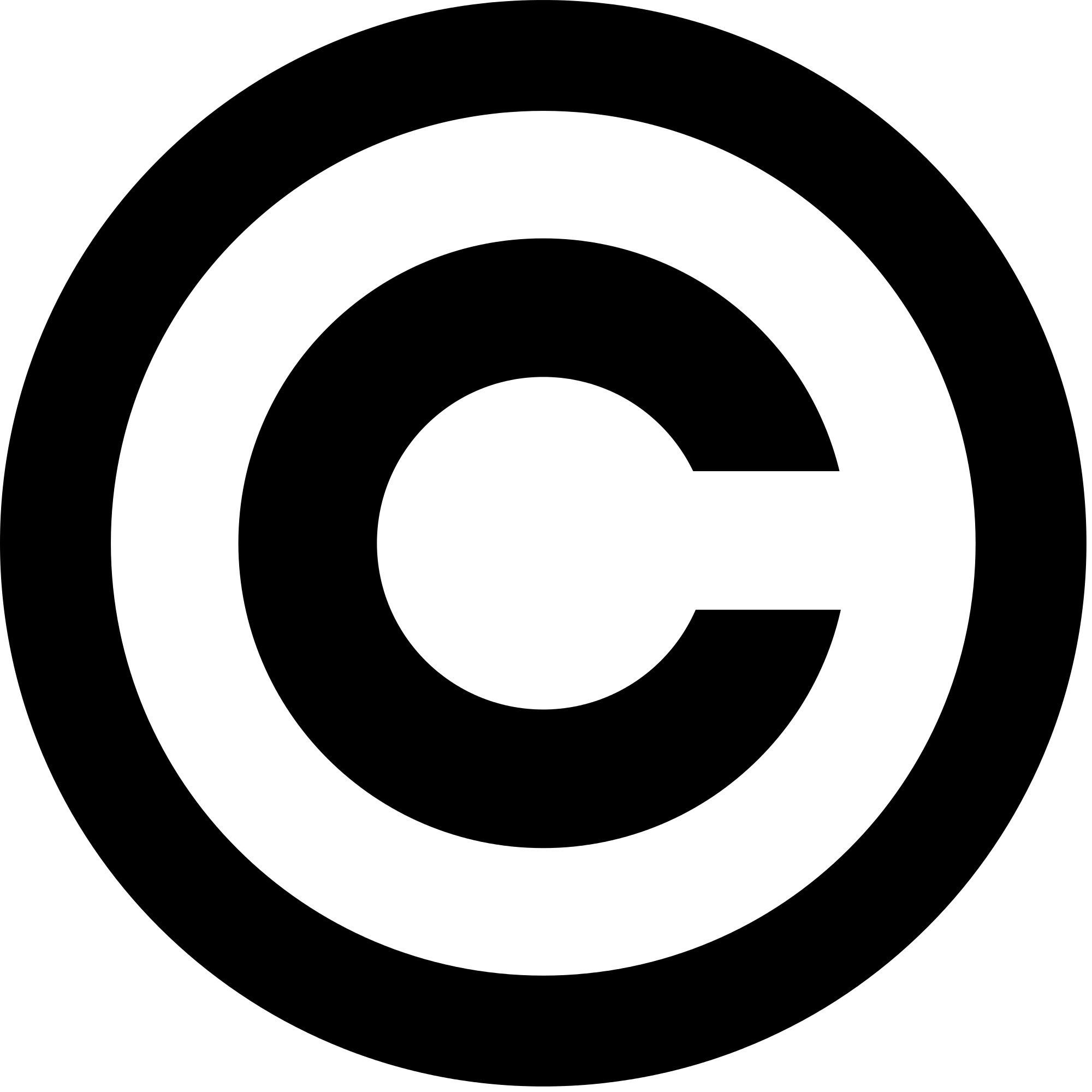
A work must have a copyright symbol (©) to be copy protected
True
False


What is Public Domain?
Material that is under fair use
Material that is free to use and has no owner or copyright
Public Activities that are free to do within the area
Area or territory owned by the government

What do the symbols stand for?
Public Domain
Copyright
Creative Commons
Webpages are copyrighted
True
False

What does this symbol mean?
means your trademark has been registered
means your trademark has not been registered
means your copyright has been registered
means your copyright has a creative commons license

What does this symbol mean?
means your trademark has been registered
means your trademark has not been registered
means your copyright has been registered
means your copyright has a creative commons license
Coca-Cola and Coke are trademark names for a certain drink made by the Coca-Cola Company, which means
no other business can make a cola drink.
no other business can use the name Pepsi.
no other business can use the name Coca-Cola or Coke.
no other business can use the name Coca-Cola or Coke or any name that is similar.
Brand names, slogans, and logos for a product are examples of __________________________.
Servicemark
Trademark
Copyright
Patent

The creative commons "attribution" logo means...
You must give credit to the original author
You can claim the work as your own
You must pay the original author a fee
The copyright is invalid

The creative commons "non-commercial" symbol means...
You may not use the work in order to make money
The creator is not allowed to charge money to use the work
The work infringes trademark
The work may not be used by charities

The creative commons "share alike" logo means...
You may not make any money from the work
You must allow other people to make changes to the work and share it again
You must make changes to the work before sharing it
You may not make any changes to the work
What does IP refer to?
Inventions
Creations of the mind
Natural resources
Physical property
IP is short for (a)
How long does copyright typically last after the creator's death?
100 years
Indefinitely
70 years
50 years
What is required to obtain a patent?
Public announcement
Approval from the government
Payment of a fee
Disclosure of technical information
How long does a patent last?
40 years
20 years
10 years
30 years
What do trademarks protect?
Literary works
Inventions
Company's products or services
Artistic works
How are trademarks identified?
By using the registered trademark symbol
By using the copyright symbol
By using the patent symbol
By using the intellectual property symbol
What is a popular free license in Creative Media?
Open source
Freeware
Creative Commons
Public domain
What is Fair dealing an exception to?
Patents
Trademark law
Copyright law
Intellectual property law
What do symbols and watermarks prevent?
IP infringement
Compensation
Dispute resolution
Licensing arrangement
What does fair dealing mainly apply to?
Personal non-commercial purposes
Government purposes
Commercial purposes
Educational purposes
What is the main purpose of a patent?
To protect the rights of the creator
To make the invention public
To earn revenue from the invention
To prevent others from using the invention
What is the main difference between copyright and patent?
Copyright protects ideas, patent protects physical inventions
Copyright protects physical inventions, patent protects ideas
Copyright protects literary and artistic works, patent protects inventions
Copyright protects inventions, patent protects literary and artistic works
What is the main benefit of a trademark?
It protects the company's reputation
It increases the value of the company
It prevents others from using similar marks
All of the above
Copyright is important because
It allows others to copy your work
It prevents other people from copying your work
Which works are protected by copyright?
Ideas
All works
Written works
Audio works
Who Owns the Copyright for a piece of work?
You and family members
The person who created it
The government
What happens to the work after the copyright time has passed?
It goes into the public domain
There is no time-limit on copyright
The work must be destroyed
A teacher rents Gone With the Wind to show the burning of Atlanta scene to her class while studying the civil war.
This is fair use.
True
False
A student is writing a report for Science class and uses copyright images downloaded from the Internet.
He submits his project to a competition that recognizes classroom work for students and wins a prize for the school.
This is covered under fair use.
True
False
Jason copies the entire last chapter from the final Harry Potter book to his commercial blog but did not say where he got the work from.
Since he only used part of the work, Jason would be protected by fair use.
True
False
What is Fair Use?
When work that is copyrighted is used to make money
When work that is copyrighted is used for an educational purpose
Len creates a song and copyrights it.
Sylvia gets his permission to play it in the background of her Youtube video.
This is...
Legal
Illegal
What does "public domain" mean?
You have to get permission from a public agency to use the copyrighted work.
The copyright has expired so you can use it for free and without permission
A teacher downloads a video and shows it to her class for entertainment purposes.
This counts as fair use
True
False
As a school student, you can use images from the Internet but you must...
Say where you got them from
Pay for them
Which of these is not a form of Copyright?
Public Domain
Fair Use
Copyright
Image Block
Stealing copyrighted work by downloading or copying it in order to keep, sell, or give it away without permission and without paying.
creative commons
piracy
fair use
Match the following answers to the appropriate type of copyright.
Works cannot be used, adapted, copied, or published without permission.
Copyright
Works may be used without permission, but only under certain circumstances using the rules set by creators.
Creative Commons
Works can be used, adapted, copied, and published completely without restrictions. No permission is needed.
Public Domain
You can use material without a license for the purposes of: commentary, criticism, reporting, research, and teaching.
Fair Use
Brand names, slogans, and logos for a product are examples of __________________________.
Servicemark
Trademark
Copyright
Patent

This is an example of...
copyright
a trademark
CC
Which of the following do you need to do in order to use images or other assets which are copyrighted?
Ask for permission
Obtain (get) permission
Give credit and/or pay royalties (fee)
None of these
Which law is being broken? Jess Glynne has released a new song which uses lyrics from a Pink song without permission
Defamation Act
Data Protection Act
Copyright, Designs and Patents Act

