
 Worksheets
Georgia Habitat Adaptations Test Review
Total questions: 16
Worksheet time: 11mins
What does migrate mean?
to release
to stay in place
to move
A deep sleep in which animal’s body temperature drops and body activities are slowed down to conserve energy is called?
migration
learned behavior
hibernation
relaxation
Which of the following would be a reason animals migrate?
warmer temperature
better sources of food
safer place to live
all of the above
The butterflies have sensed that the weather is changing in their mountain habitat. They can only survive in warm weather where food is plentiful. What will happen to the butterflies?
They will hibernate
They will migrate
They will camouflage
Use the information to answer the following question.
A student went down to the coast and Atlantic Ocean habitats and collected seaweed from the ocean waters to put in her freshwater pond at home in the Piedmont region. The seaweed did not survive in the new pond.
Which is the BEST explanation for why the seaweed did not survive in the new pond?
The seaweed needs a hot climate
The seaweed did not get enough sun.
The seaweed can only survive in saltwater.
The seaweed needs sandy soil at the bottom of the pond.
Which of the following is the MOST LIKELY effect of cutting down the trees in a forest habitat?
All of the animals in the forest will die in a short period of time.
Many animals will learn to fly to reach higher branches.
Animals that cannot find what they need will move to a new location.
All of the animals will begin to live in burrows underneath the ground.
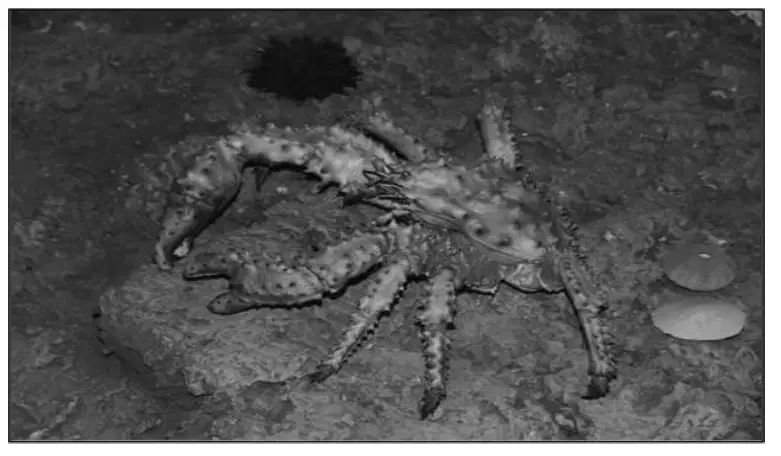
Use the information and picture to answer the following question.
Crabs have adaptations that help them survive best in an ocean habitat.
Which of the following will happen to the crab in this picture if it were placed in a mountain habitat?
The crab would survive because there is water near mountain ranges.
The crab would likely not survive because crabs live in and around saltwater and cannot live without the food they need in saltwater.
The crab would not likely survive because crabs need humidity and warm temperatures to survive.
The crab would survive because crabs do not have specific needs in order to survive.
A farmer bought some land that was full of deer. He fenced the land and brought in some cattle. What might happen to the deer in the habitat?
The number of deer will grow because the food is plentiful.
Nothing because the deer will share the grass with the cattle and live in the fenced area.
The deer will migrate to another place because they don’t like cattle.
The deer will starve or move because there is not enough grass for both the cattle and deer.
In the Atlantic Ocean region of Georgia, there’s been an increase on technology to find fish to sell. What is a possible outcome of this new technology?
There will be an increase in the number of fish.
Nothing. There will be just as many fish.
The population of fish will decrease.
How do the webbed feet of the alligator help it survive in its habitat?
They help the alligator cool off in hot weather.
They allow the alligator to grab food quickly.
They help the alligator swim fast to catch its food.
They make it easier for the alligator to climb trees.
The water moccasin is a venomous snake found in the southern part of Georgia. Several other
nonvenomous water snakes are often mistaken for being a water moccasin. What benefit would
a nonvenomous snake have by looking like a venomous snake?
Other animals will leave them alone.
It helps them blend in better.
They can get food easier.
They can move faster.
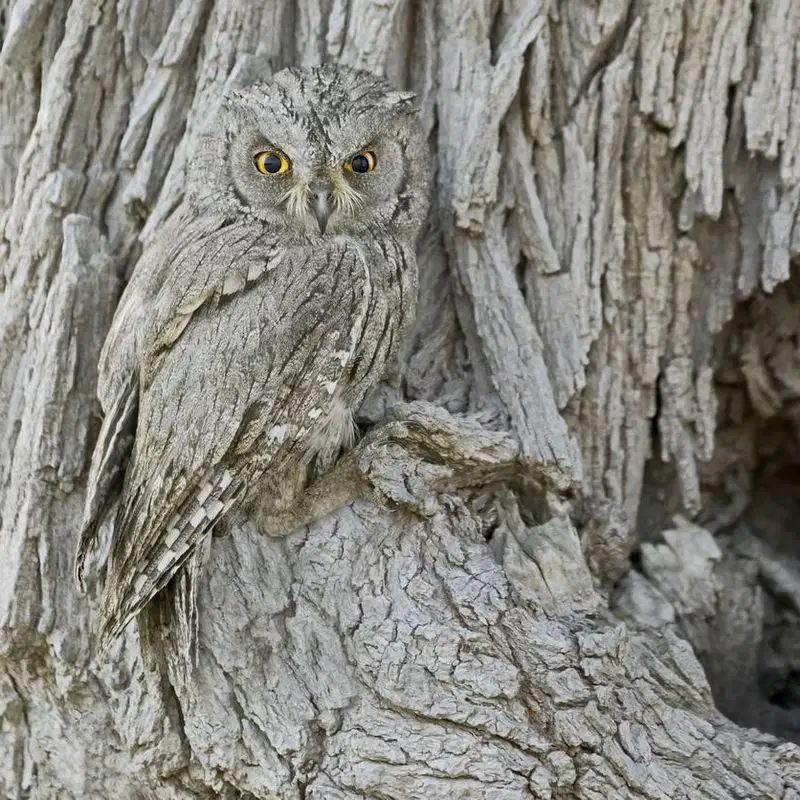
This owl blends in with the tree trunk so it can sneak up on its prey. Which animal adaptation is this?
mimicry
hibernation
migration
camouflage
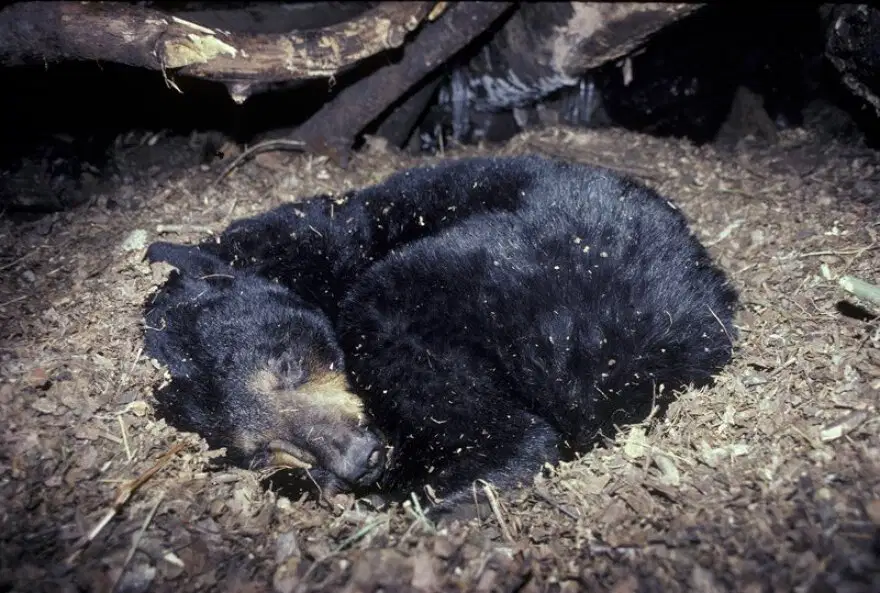
The black bear sleeps through the winter when food is scarce. Which animal adaptation is this?
mimicry
hibernation
migration
camouflage
White-tailed deer in Georgia are hunted by bobcats, bears, coyotes, and humans. What feature do the deer have that best keep them hidden from predators?
large ears
split hooves
brown fur
white tail

How does an toucan's beak help it survive?
eyesight
hearing
collecting food
movement

