wayground logo

Free Printable Worksheets

Font size

S
M
L
XL
Worksheets

Unit 7 Test Test Review 2

Total questions: 35

Worksheet time: 19mins

Name
Class
Date
1.

How many valence electrons does an atom typically have in its outer shell to be considered stable?

a)

8

b)

12

c)

18

d)

0

2.

Which type of bond is characterized by a 'sea of electrons' that are free to move around metal ions?

a)

Ionic bonds

b)

Covalent Bonds

c)

Metallic Bonds

d)

Molecular bonds

3.

What is the chemical formula for Copper(I) Chloride?

a)

CuCl

b)

CuCl2

c)

Cu2Cl2

d)

Cu(Cl)2

4.
What is the name of the following formula: SiBr4?
a)
Monosilicon Bromide
b)
Silicon Bromide
c)
Silicon TetraBromide
d)
Silicon(I) Pentabromide
5.

The compound sulfur hexafluoride tells you that this compound contains:

a)

1 sulfur and 6 fluorines

b)

6 sulfurs and 1 fluorine

c)

1 sulfur and 4 fluorines

d)

2 sulfurs and 6 fluorines

6.

What is the chemical formula for the compound known as Carbonate?

a)

CO2

b)

CO3

c)

C2O4

d)

C3O2

7.
What is the oxidation number phosphate?
a)
-3
b)
+3
c)
-2
d)
-5
8.

Which atomic particles are primarily responsible for forming chemical bonds?

a)

neutrons

b)

protons

c)

valence electrons

d)

atomic mass

9.

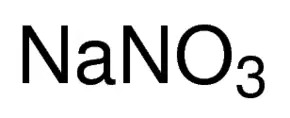
What is the chemical formula for Sodium Nitrate?

a)

NaNO2

b)

NaNO3

c)

NaN3

d)

Na2O

10.
What type of bond requires the use of prefixes in the chemical name?
a)
Covalent
b)
Ionic
c)
Metallic
d)
Binary
11.
Determine the name of this compound.
a)
copper chloride
b)
copper (I) chloride
c)
copper(II) chloride
d)
copper monochloride
12.

What is the chemical formula for Tricarbon octachloride?

a)

C3Cl8

b)

C8Cl3

c)

C3Cl4

d)

C4Cl3

13.

In ____________, atoms transfer electrons to achieve a full outer shell.

a)

ionic bonds

b)

metallic bonds

c)

covalent bonds

d)

polyatomic bonds

14.
A compound containing sodium and chlorine, in a binary ionic compound, would be named
a)
sodium chlorine.
b)
sodium chlorate.
c)
sodium chloride.
d)
sodiide chlorine.
15.
Which pair of atoms will form a covalent molecule?
a)
One atom of copper and two atoms of fluorine
b)
One atom of oxygen and one atom of iron
c)
One atom of sodium and one atom of fluorine
d)
One atom of oxygen and two atoms of hydrogen
16.
If you want to conduct an electrical current, which situation would produce a solution capable of this?
a)
Dissolving water in oil.
b)
Dissolving solid NaBr in oil.
c)
Dissolving sugar in water.
d)
Dissolving solid NaF in water.
17.
Elements on the LEFT side of the periodic table will most likely form:
a)
Positive ions
b)
Negative ions
c)
Neutral ions
d)
Polyatomic ions
18.
How does a positively charged ion form?
a)
An atom loses a proton.
b)
An atom gains an electron.
c)
An atom gains a proton.
d)
An atom loses an electron.
19.

In the ionic compound magnesium bromide (MgBr₂), what does the subscript "2" indicate?

a)

There are two magnesium ions for each bromide ion

b)

There are two bromide ions for each magnesium ion

c)

Bromide has a charge of 2+

d)

Magnesium has a charge of 2-

20.
Why do atoms share electrons in covalent bonds?
a)
to become more polar
b)
to form stable outer energy levels (shells)
c)
to become ions
d)
to be more attractive
21.
Metallic bonds from between
a)
cations and protons
b)
anions and electrons
c)
cations and electrons
d)
cations and pronouns
22.
Which type of atoms usually become anions?
a)
noble gases
b)
metals
c)
nonmetals
23.

Which principle explains why atoms form chemical bonds to achieve a full outer shell of electrons?

a)

Valence Shell Principle

b)

Octet Principle

c)

Stability Principle

d)

Electron Shell Principle

24.
Ionic bonds have a ______________ melting/boiling point.
a)
low
b)
variable
c)
high
25.
What is the difference in oxidation #'s and valence electrons?
a)
Oxidation numbers represent the # of electrons in the outermost shell and valence electrons are represented by periods.
b)
Oxidation #s tell how many electrons are in an element and valence electrons are the ones lost or gained in a reaction
c)
Valence electrons are the electrons in the outermost energy level and oxidation #'s tell the charge of an ion after electrons are gained or lost
26.

What is the chemical formula for diphosphorus monoxide

a)

PO

b)

P2O2

c)

PO2

d)

P2O

27.
What is the correct name for this formula: AlPO4
a)
Aluminum phosphorus
b)
Aluminum phosphate
c)
Aluminum phosoxide
d)
Aluminum quatrophosphate
28.
dihydrogen monosulfide
a)
H2S
b)
HS2
c)
HS
d)
H2S6
29.

What is the formula for diphosphorus pentoxide?

a)

P2O5

b)

PO5

c)

P5O2

d)

P2O6

30.

In the compound Cu₂O₃, we do not know the charge of the element Copper (Cu) by just looking at the periodic table. Based on its bond to Oxygen (O), what is the charge of Copper (Cu)?

a)

a. +1

b)

b. +2

c)

c. +3

d)

d. +4

31.
What is the oxidation number of oxygen in most compounds?
a)
6
b)
-2
c)
8
d)
0
32.

How many valence electrons do MOST atoms need to be stable?

a)

2

b)

8

c)

electrons equal to number of protons

d)

electrons equal to number of neutrons

33.

What is the chemical formula for sulfur dioxide?

a)

SO

b)

SO2

c)

S2O

d)

SO3

34.

Which type of bond involves the sharing of electron pairs between atoms?

a)

Hydrogen bond

b)

Ionic bond

c)

Covalent bond

d)

Metallic bond

35.

What is the oxidation number of chlorine in NaCl?

a)

-1

b)

+2

c)

0

d)

+1