
 Worksheets
Lesson 13: A Growing Sense of Nationhood
Total questions: 52
Worksheet time: 26mins
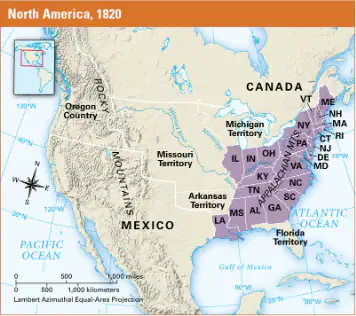
In the early 1800s, where did most Americans live?
in the southern states
in New England
west of the Mississippi River
east of the Appalachian Mountains
Which of these was an obstacle to unity in the United States in the early 1800s?
few waterways
desert landscapes
poor transportation
unexplored wilderness
John C. Calhoun and Daniel Webster had a major disagreement about
the authority of the Supreme Court.
the role of business in the economy.
the rights of states to defy federal authority.
the role of the executive branch of government.
Which style of music was created by enslaved African Americans?
opera
ballads
classical
spirituals
In the early 1800s, all of these were American symbols except
the U.S. flag.
the Capitol building.
the Uncle Sam figure.
the Statue of Liberty.
Which economic system, based on private ownership, did Henry Clay promote?
socialism
capitalism
communism
liberalism
The Era of Good Feelings ended and the beginning of political divisions in the United States emerged after
the War of 1812
the election of 1824
James Monroe's presidency
the McCulloch v. Maryland decision
As the United States developed its own national identity, many Americans came to embrace the value of A. dominance. B. conformity. C. compassion. D. individualism.
dominance
conformity
compassion
individualism
The Era of Good Feelings was known as a period in which
there was a strong sense of national unity.
international alliances expanded.
political parties were eliminated.
there was a rapid increase in immigration.
Which statement does NOT describe John Marshall’s Supreme Court decisions in the early 1800s?
A. They promoted national economic growth.
B. They reinforced the authority of business contracts.
C. They increased the power of the federal government over states.
D. They established the power of states over the federal government.
According to Henry Clay, the government could encourage economic growth by
building community housing.
producing goods and services.
investing in businesses.
funding transportation projects.
How did James Fenimore Cooper contribute to American culture?
He wrote books about the American frontier.
He told tales of his wilderness adventures.
He drew illustrations of American plants and animals.
He composed songs that portrayed life in the south.
What was a goal of Henry Clay’s American System?
to abolish slavery
to promote economic growth
to create a strong military force
to create alliances with European powers
What gave early American art its individual identity?
the use of abstract forms
the unique subject matter
the limited color palette
the emphasis on folk art
Which poet wrote about the United States' growing importance to the world? Sail on, O Ship of State! Sail on, O Union, strong and great! Humanity with all its fears, With all the hopes of future years, Is hanging breathless on thy fate!
Thomas Cole
Gilbert Stuart
John James Audubon
Henry Wadsworth Longfellow
Where were Washington Irving’s folktales set?
the western frontier
upstate New York
southern plantations
Boston, Massachusetts
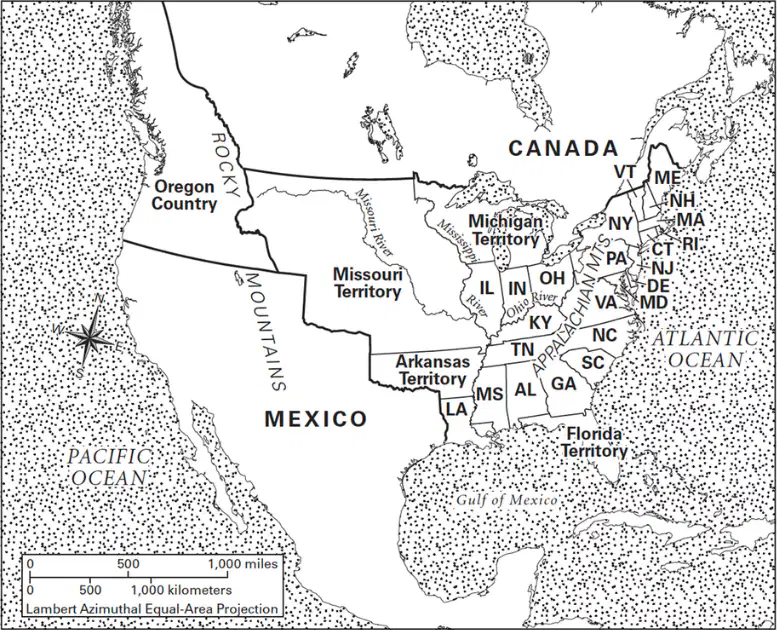
What physical feature marked the end of the incorporated United States and the beginning of the Missouri and Arkansas territories in 1820?
The Mississippi River
The Rocky Mountains
The Appalachian Mountains
The Missouri River
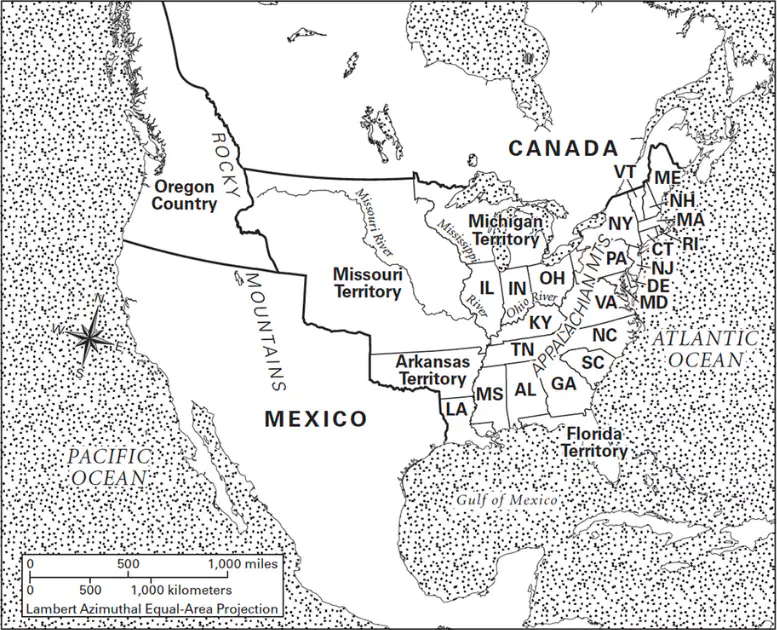
Between 1776 and 1820, how did the United States change?
The United States gained independence and expanded its territory.
The United States remained a British colony.
The United States became a monarchy.
The United States lost all its territories.
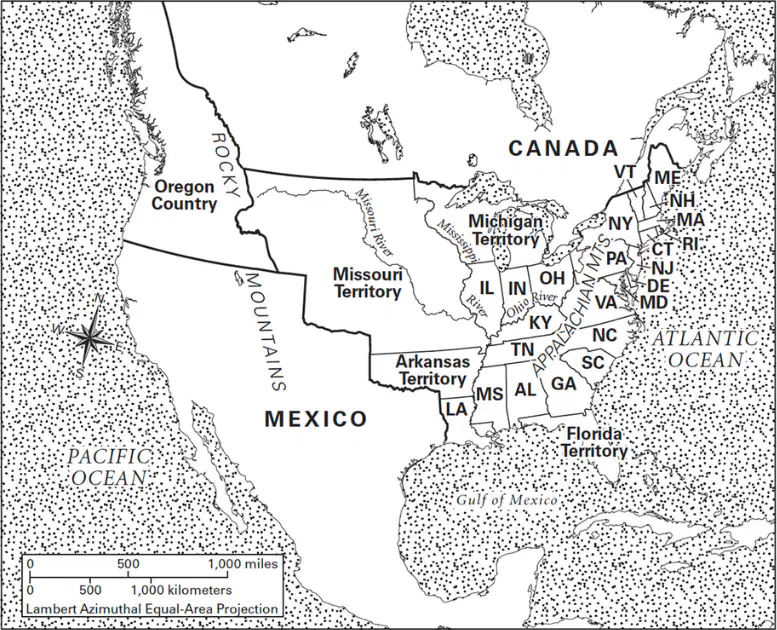
The people who lived west of the Appalachians were often described as hardy and rugged because:
they had to adapt to harsh living conditions.
they were wealthy and lived in luxury.
they had access to advanced technology.
they lived in urban areas with modern amenities.
Write a short essay comparing what it meant to be an American in the early 1800s with what it means to be an American today. Include specific characteristics, events, and symbols that molded an identity in the 1800s and influence your impression of an American identity today. Make sure to convey your ideas clearly, using standard English.
What are the key differences between American identity in the early 1800s and today?
How did events and symbols in the 1800s shape American identity?
What does it mean to be an American today compared to the early 1800s?
What are the characteristics of American identity in the early 1800s?
A proposal to the government that called for taxes on imports, federally funded transportation projects, and a new national bank.
proclaimed
folk art
emerging
capitalism
American System
An economic system based on the private ownership of farms and businesses.
proclaimed
capitalism
folk art
American System
emerging
To come into existence or become more noticeable.
capitalism
American System
folk art
emerging
proclaimed
Art made by ordinary people (as opposed to trained artists) using traditional methods.
proclaimed
emerging
capitalism
American System
folk art
to announce publically
emerging
capitalism
folk art
American System
proclaimed
unexplored wilderness at the edge of the country
frontier
American System
capitalism
emerging
folk art
Which of these was an obstacle to unity in the United States in the early 1800's?
few waterways
desert landscapes
poor transportation
unexplored wilderness
Who was President at the time of the Louisiana Purchase?
Thomas Jefferson
Theodore Roosevelt
In the mid 1800’s the concept of nativism led people to call for
Giving back land to Native Americans
Extending the borders of the US
Eliminating slavery in the US
Restricting immigration
The Olympics happens in every __________________
4 years
3 years
5 years
2 years
6 years
Which relay happens at the start of the Olympics??
Torch relay...
Race relay...
Ball relay...
Bottle relay
No relays happen at the start of the race...
When did the Olympics start??
The was Olympics started by the Ancient Greeks...
No body knows when the Olympics started...
The Olympics was started by ancient kings or queens...
The Olympics was started by the Ancient Romans...
The Olympics was started by Benjamin Franklin...
2020's Olympics was to be held in _____________________
Japan...
Australia...
India...
United Kingdom...
Not decided yet...
The Olympic Games were created for _______
Venus
To see who's the strongest country/person/team on Earth
Zeus
Humanity
The first modern day Olympic Games was held in ______
The United Kingdom
The United States of America
Greece
Brazil
The winners of the ancient Olympics received
Crowns of olive branches
Medals
Why weren’t women allowed to attend the ancient Olympic Games?
Because they were not allowed to compete.
Because they had to stay home.
Because the men were not clothed.
The five rings of the Olympic symbol represent
the five original events.
the five oceans around the world.
the five inhabited continents of the world.

What country leads the Parade of Nations at the Opening Ceremony at the Olympic Games?
The Hosting nation
The Nation who won the medal count from the previous Games
Greece
Whichever team walks the fastest

What is the most watched sport in the summer Olympics?
Track
Swimming
Equestrian
Gymnastics

What year did the Olympic Games originate?
500 BC
776 BC
25 AD
1896

Which Greek figure is said to have founded the Olympics?
Zeus
Prometheus
Heracles
Hestia
Who currently holds the men’s 100m Olympic track and field title?
Usain Bolt
Asafa Power
Carl Lewis

Where will the 2024 Summer Olympics be held?
Abu Dhabi
Tokyo
Los Angeles
Paris

What is the approximate value of gold in a 2018 Olympic gold medal?
$6
$60
$600
$6000

Where were the Olympics held in the Ancient Games?
Olympia
Argos
Athens
Corinth
What are Cinderella teams?
Teams that are out of the tournament if they lose one game
Teams that people do not think will do well but surprise everybody
Teams that people think will do well and win the tournament
Teams that have the best players in the league
Why is the college basketball tournament called March Madness?
Both words start with the letter "M"
It is a crazy tournament where anything can happen.
The tournament path is long and difficult.
Not every team makes the tournament.

