Wayground logo

Free Printable Worksheets

Font size

S
M
L
XL
Worksheets

Reporting Category 3: Biological Evolution Quizizz

Total questions: 30

Worksheet time: 20mins
Name
Class
Date
1.
This scientist came up with the idea of natural selection.
a)
Jean Baptiste Lamarck
b)
Gregor Mendel
c)
Charles Darwin
d)
Thomas Malthus
2.
Inherited trait that helps an organism survive is a(n) __________.
a)
Fossil
b)
Adaptation
c)
Ancestor
d)
Natural selection
3.
Survival of the fittest or when favorable adaptations reproduce faster is called what?
a)
Evolution
b)
Adaptation
c)
Natural selection
d)
Fossilization
4.
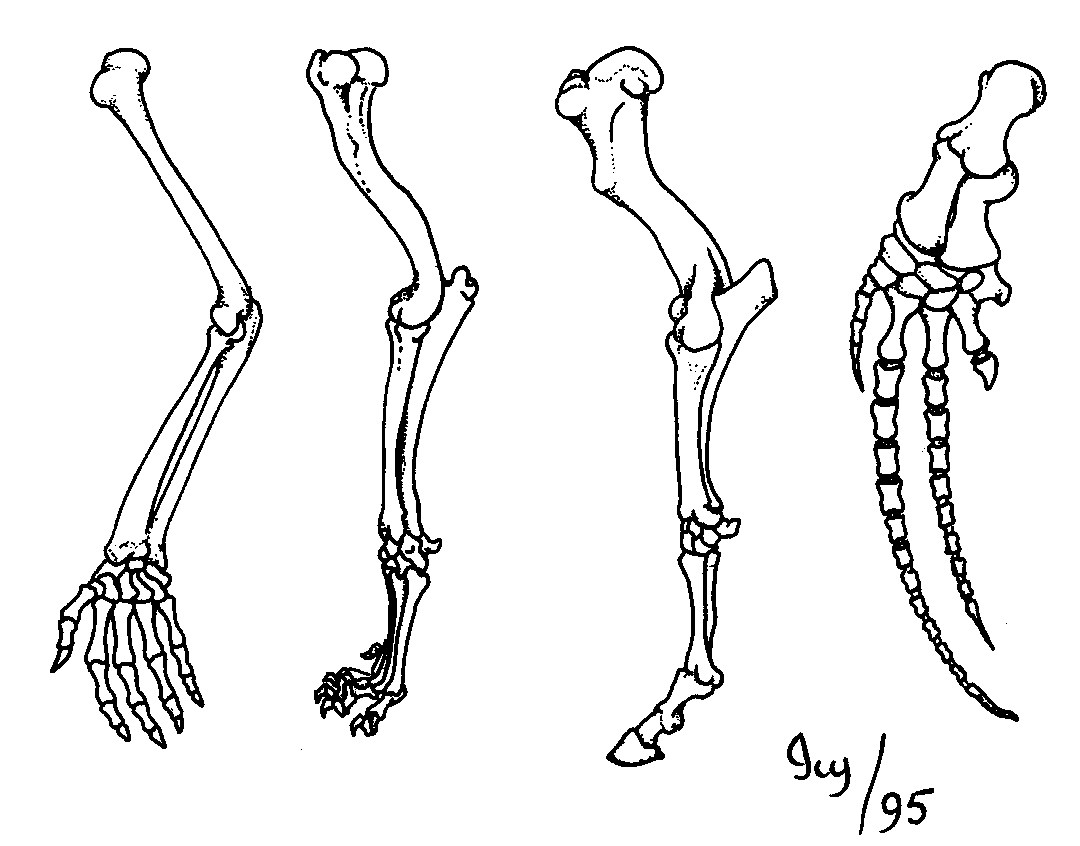
Structures with the same parts have different functions; suggests that organisms share a common ancestry
a)
vestigial structures
b)
homologous structures
c)
adaptive radiation
d)
fossil
5.
The diagram shows fossils in different rock layers. Which of these statements about the age of these fossils is most likely correct?
a)
Fossil A and C are the same age
b)
Fossil B is older than fossil C
c)
Fossils A is older than fossil B
d)
Fossil D is older than fossil C
6.

What do we call a change in a species over time?

a)

Adaptation

b)

Evolution

c)

Extinction

d)

Environmental influences

7.
Why do embryologist study embryos?
a)
to see if they are related
b)
to understand adaptations
c)
to determine the age
d)
to learn what parents are vestigial
8.
The environment around Manchester, England, changed during the Industrial Revolution.  How did this change affect peppered moths living in the area?
a)
Natural selection favored moths with dark wings because predators could not see them on the soot-colored trees.
b)
Natural selection favored moths with white wings that were easy for predators to see.
c)
Natural selection favored moths with white wings because predators could not see them on the soot-colored trees.
d)
Natural selection caused moths with white wings to become extinct.
9.
When an organism completely dies out, it is called.....
a)
Adaption
b)
Extinction
c)
Fossilization
d)
Mutation
10.
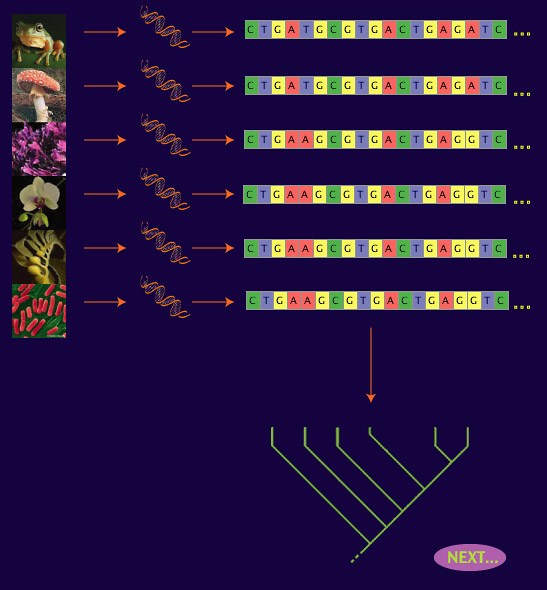
Two organisms that are closely related would have
a)
very similar DNA sequence
b)
exactly the same DNA sequences
c)
no proteins in common
d)
completely different DNA sequence
11.
Comparing human hemoglobin of chimpanzees, horses, kangaroos, and chickens, reveal that humans have the fewest amino acid differences with 
a)
Kangaroos
b)
Horses
c)
chickens
d)
chimpanzees
12.
Which layer is oldest?
a)
A
b)
W
c)
G
d)
Z
13.
Mutations are important because they bring about
a)
death of the organism in which they develop
b)
genetic variation needed for a population to evolve
c)
benefits for the individual, not for the population
d)
Hardey-Weinberg equilibrium within a population
14.
Finches on the Galapagos Islands had different beaks in order to help them do what?
a)
Build nests
b)
Fight off predators
c)
Collect food sources
d)
Compete with rivals
15.
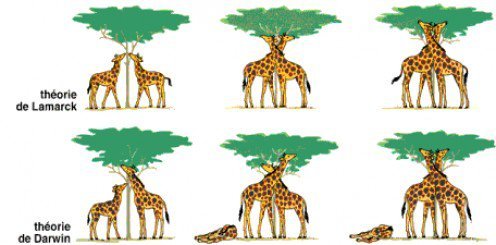
What would happen if the Giraffes never evolve?
a)
they would survive
b)
They would thrive
c)
They would become extinct
d)
They will find another source of food
16.
Why are advantageous traits more likely to be passed onto offspring?
a)
Because they are more likely to survive and reproduce.
b)
Because they come from dominant alleles.
c)
Because they come from recessive alleles.
d)
Because the trait is an acquired phenotype.
17.
Farmers breed cows to produce high amounts of milk. This is an example of...
a)
Natural Selection 
b)
Variations in a species 
c)
Selective Breeding 
d)
inbreeding
18.
A scientist puts 100 houseflies in a sealed container; then sprays an insecticide into the container.  Ninety-six of the flies die.  Four survive.  The scientist lets the survivors mate and produce offspring, then repeats the experiment with 100 offspring.  Fifty-six of them survive the spray.  This experimental result is evidence of – 
a)
adaptive radiation 
b)
speciation
c)
natural selection
d)
extinction
19.
Why are advantageous traits more likely to be passed onto offspring?
a)
Because they are more likely to survive and reproduce.
b)
Because they come from dominant alleles.
c)
Because they come from recessive alleles.
d)
Because the trait is an acquired phenotype.
20.
The model that predicts evolution occurs at a slow, steady rate is called...
a)
gradualism
b)
punctuated equilibrium
c)
adaptive radiation
d)
convergent evolution 
21.
The model that predicts evolution occurs in rapid bursts followed by long periods of no change is called...
a)
gradualism
b)
punctuated equilibrium
c)
adaptive radiation
d)
convergent evolution 
22.
If, like the horse, all of the transitional forms for a species are found in the fossil record, which model of evolution most likely occurred in that species?
a)
punctuated equilibrium
b)
gradualism
c)
adaptive radiation
d)
convergent evolution
23.

new species evole rapidly: Stays the same for long periods of time: Evolution sudden or rarely happens

a)

gradualism

b)

punctuated equilibrium

24.

A forest fire ignites in the Sam Houston State Forest and kills many members of a population of pigmy rattlesnakes.

a)

Gene Flow

b)

Genetic Drift

25.

Select the best answer based on the image.

a)

Gene Flow

b)

Genetic Drift

26.

Maria Concepcion Soto settled in the northern area of Venezuela. She suffered from a rare genetic disorder called Huntington’s Disease. As a result, the now 20,000 individuals who live there also have a high risk of Huntington’s Disease.

a)

Gene Flow

b)

Genetic Drift

27.

Select the best answer based on the image.

a)

Gene Flow

b)

Genetic Drift

28.

One of the original Amish settlers who founded a new area for them had a rare, genetic disorder which causes short limbs and extra digits. Now, many within the population show this trait.

a)

Gene Flow

b)

Genetic Drift

29.

Select the best answer based on the image.

a)

Gene Flow

b)

Genetic Drift

30.

A population of flowers on one side of a river transports pollen to flowers on the other side of the river

a)

Gene Flow

b)

Genetic Drift