
NEW
Font size
 Worksheets
Assignment: Design Considerations PRQs
Total questions: 68
Worksheet time: 34mins

What are the critical factors examined in advanced embedded system design according to the document?
Cost, size, and weight
Performance, reliability, and security
Speed, efficiency, and cost
Design, aesthetics, and usability
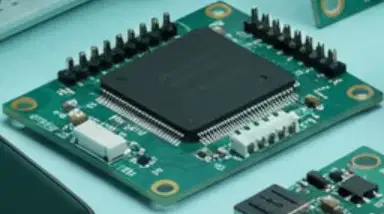
What are embedded systems primarily designed for?
General-purpose computing
Specific functions with tight constraints
Entertainment purposes
Large-scale data processing
In which areas are embedded systems commonly found?
Only in consumer electronics
Only in medical devices
From consumer electronics to critical infrastructure and medical devices
Only in critical infrastructure
What challenges are associated with the growing complexity of embedded systems?
Decreased functionality
Simplified design processes
Significant design challenges due to rising expectations for functionality, connectivity, and security
Reduced security concerns
What were the characteristics of embedded systems in the 1970s-1980s?
Multi-core architectures and AI integration
32-bit processors and expanded connectivity
Simple 8-bit microcontrollers with limited memory
Edge computing capabilities
Which era saw the emergence of embedded operating systems?
1970s-1980s
1990s-2000s
2010s-Present
2020s-2030s
What advancements characterize embedded systems from the 2010s to the present?
Simple 8-bit microcontrollers
32-bit processors
Multi-core architectures and IoT connectivity
Basic functionality with limited memory
Which component of advanced embedded systems is responsible for forming the system's brain?
Memory Architecture
Processing Units
I/O and Interfaces
Communication Modules
What does the memory architecture in advanced embedded systems typically include?
Only RAM
Flash, RAM, and sometimes external storage
Only external storage
Only flash memory
Which component enables interaction with sensors, displays, and external devices in advanced embedded systems?
Processing Units
Memory Architecture
I/O and Interfaces
Communication Modules
What type of interfaces do communication modules in advanced embedded systems support?
Only wired interfaces
Only wireless interfaces
Both wired and wireless interfaces
Only local connectivity
Based on the system architecture design, which layer is responsible for task scheduling and resource management?
Applications
Middleware
Operating System
Hardware Abstraction
Which layer in the system architecture design provides high-level functionality and user interfaces?
Physical Hardware
Middleware
Operating System
Applications
In the system architecture design, what is the primary function of the Middleware layer?
Task scheduling and resource management
Protocol stacks and service frameworks
Device drivers and low-level interfaces
High-level functionality and user interfaces
What is a key feature of Real-Time Operating Systems (RTOS) that ensures high-priority tasks execute immediately when needed?
Deterministic Timing
Task Management
Resource Optimization
Synchronization
Which feature of RTOS guarantees response times for critical operations, essential for safety and reliability?
Task Management
Resource Optimization
Deterministic Timing
Synchronization
How does RTOS optimize resource usage compared to general-purpose operating systems?
By using deterministic timing
Through preemptive scheduling
By efficient memory usage and reduced overhead
By built-in synchronization mechanisms
What mechanism in RTOS supports inter-task communication and resource sharing?
Deterministic Timing
Task Management
Resource Optimization
Synchronization
Which power management strategy involves adjusting voltage based on workload demands?
Frequency Management
Peripheral Gating
Dynamic Voltage Scaling
Sleep Modes
What is the purpose of Peripheral Gating in power management?
Reducing clock rates during low activity
Disabling unused hardware blocks to eliminate leakage current
Adjusting voltage based on workload demands
Multiple power states with selective peripheral shutdown
How does Frequency Management contribute to power management?
By adjusting voltage based on workload demands
By reducing clock rates during periods of low activity
By disabling unused hardware blocks
By providing multiple power states
What is the function of Sleep Modes in power management strategies?
Adjusting voltage based on workload demands
Reducing clock rates during low activity
Disabling unused hardware blocks
Providing multiple power states with selective peripheral shutdown
What is the primary purpose of a threat assessment in security considerations?
To implement cryptographic verification of firmware
To identify potential vulnerabilities and attack vectors
To employ hardware-accelerated encryption
To implement runtime security checks
How does a secure boot chain contribute to security?
By detecting and responding to potential breaches
By employing hardware-accelerated encryption
By implementing cryptographic verification of firmware
By identifying potential vulnerabilities
What role do cryptographic services play in security considerations?
They detect and respond to potential breaches
They identify potential vulnerabilities
They employ hardware-accelerated encryption for data protection
They implement cryptographic verification of firmware
What is the function of continuous monitoring in security considerations?
To implement cryptographic verification of firmware
To detect and respond to potential breaches
To employ hardware-accelerated encryption
To identify potential vulnerabilities

What is the purpose of redundant systems in reliability and fault tolerance?
To increase system speed
To duplicate critical components for continued operation
To reduce system cost
To enhance user interface
How do error detection and correction mechanisms protect a system?
By increasing processing power
By using ECC memory and checksums to prevent data corruption
By enhancing graphical output
By reducing power consumption
What role do watchdog mechanisms play in system reliability?
They enhance system aesthetics
They reset the system if software becomes unresponsive
They increase data storage capacity
They improve network connectivity
What is the function of fault logging in a system?
To improve system speed
To enable post-mortem analysis and preventive measures
To enhance user experience
To reduce hardware costs
How do dedicated hardware modules contribute to performance optimization?
They increase CPU load for cryptography tasks.
They offload CPU-intensive tasks like cryptography and signal processing.
They reduce the need for custom ASIC or FPGA implementations.
They decrease the performance gains for specific algorithms.
What is the benefit of using custom ASIC or FPGA implementations in hardware acceleration?
They provide 1-2x performance gains for specific algorithms.
They reduce the need for strategic data placement.
They can provide 10-100x performance gains for specific algorithms.
They eliminate the need for compiler techniques.
Which technique is used in memory optimization to reduce cache misses and memory access latency?
Increasing CPU clock speed.
Using platform-specific compiler flags.
Strategic data placement.
Eliminating data alignment.
What role do platform-specific compiler flags play in performance optimization?
They slow down the execution speed.
They enable aggressive optimizations for size and speed.
They increase memory access latency.
They reduce the need for profile-guided optimization.
What is the potential speedup for parallelizable workloads when using multi-core designs compared to single-core designs?
2-16x
1-5x
10-20x
5-10x
What percentage of power efficiency is typically achieved when distributing tasks across multiple lower-frequency cores?
20%
30%
40%
50%

What is the average core utilization in poorly balanced multi-core systems?
35%
45%
55%
65%
Which debugging technique provides a direct view of registers and memory?
Trace Analysis
Logic Analysis
JTAG Debugging
Remote Logging
What is the primary benefit of using Trace Analysis in debugging?
Protocol and timing verification
Insight into program flow and timing
Debug deployed systems with minimal intrusion
Direct view of registers and memory
Which application is associated with Logic Analysis?
Hardware-level access
Real-time execution monitoring
Digital signal observation
Field diagnostics
What is the benefit of Remote Logging in debugging?
Protocol and timing verification
Insight into program flow and timing
Debug deployed systems with minimal intrusion
Direct view of registers and memory
Which software development methodology involves writing tests before implementation to ensure functional correctness?
Continuous Integration
Agile Sprints
Test-Driven Development
Cross-Functional Teams
What is the primary benefit of frequent code merges with automated testing in software development?
Reducing development costs
Preventing integration issues
Increasing team size
Enhancing user interface design
In which methodology do hardware and software engineers collaborate closely throughout development?
Agile Sprints
Continuous Integration
Cross-Functional Teams
Test-Driven Development
What is the main focus of Agile Sprints in software development?
Long development cycles
Clear goals and maintaining momentum
Writing extensive documentation
Isolating team members
What is the purpose of Architectural Exploration in hardware-software co-design?
To evaluate hardware-software tradeoffs early in the design process.
To simulate complete system behavior before physical hardware exists.
To test hardware designs and firmware interactions in reconfigurable logic.
To validate hardware and software components together throughout development.
Which stage in hardware-software co-design involves simulating complete system behavior before physical hardware exists?
Architectural Exploration
Virtual Prototyping
FPGA Prototyping
Integrated Verification
In which stage of hardware-software co-design are hardware designs and firmware interactions tested in reconfigurable logic?
Architectural Exploration
Virtual Prototyping
FPGA Prototyping
Integrated Verification
What is the focus of Integrated Verification in the hardware-software co-design process?
To evaluate hardware-software tradeoffs early in the design process.
To simulate complete system behavior before physical hardware exists.
To test hardware designs and firmware interactions in reconfigurable logic.
To validate hardware and software components together throughout development.
Based on the diagram, which connectivity option has the highest range in meters?
Bluetooth LE
WiFi
LoRa
5G
Which connectivity option in the diagram has the highest data rate in Mbps?
Bluetooth LE
WiFi
LoRa
5G
According to the diagram, which connectivity option uses the least power in mW?
Bluetooth LE
WiFi
LoRa
Zigbee
Which of the following is a TinyML application that does not rely on cloud dependency?
Voice recognition with minimal resources
Predictive maintenance with local processing
Gesture detection without cloud dependency
GPU compute for parallel inference
What is the role of Neural Processing Units (NPUs) in embedded systems?
They are used for voice recognition
They perform predictive maintenance
They accelerate neural network computations
They are used for model quantization
Which optimization technique involves reducing the precision of models to 8-bit or 4-bit?
Pruning of unnecessary network connections
Model quantization
Knowledge distillation
Gesture detection
What is the purpose of modular architecture in scalability and upgradeability?
To ensure secure firmware updates
To maintain support for legacy interfaces
To allow easy component addition or replacement
To allocate extra processing power
How does resource headroom contribute to future requirements?
By maintaining support for legacy interfaces
By allocating extra processing power and memory
By implementing secure firmware updates
By designing with standardized interfaces
What is the role of OTA updates in system upgradeability?
To design with standardized interfaces
To allocate extra processing power
To implement secure firmware update mechanisms
To maintain support for legacy protocols
Why is backward compatibility important in scalability?
It allows for easy component addition
It ensures secure firmware updates
It maintains support for legacy interfaces and protocols
It allocates extra processing power
Why is effective thermal management critical in electronic systems?
It enhances the aesthetic appeal of devices.
It is essential for reliability and performance.
It reduces the weight of electronic components.
It increases the power consumption of devices.
Which of the following is a solution for thermal management in electronic systems?
Passive heatsinks
Solar panels
Wireless chargers
LED lights
What is the first step in EMI/EMC considerations according to the document?
Implement PCB Best Practices
Add Shielding and Filtering
Identify Noise Sources
Verify Through Testing
Which of the following is a recommended practice for implementing PCB best practices?
Use ground planes
Deploy EMI shields
Conduct pre-compliance testing
Map potential emission points
What is the purpose of adding shielding and filtering in EMI/EMC considerations?
To optimize component placement
To deploy EMI shields and ferrite beads
To map emission points
To conduct formal EMC testing
What is the final step in the EMI/EMC considerations process?
Implement PCB Best Practices
Add Shielding and Filtering
Identify Noise Sources
Verify Through Testing
Which type of user interface is essential for safety-critical applications due to its reliability and tactile feedback?
Touch Interfaces
Voice Control
Tactile Interfaces
Gesture Control
What is the primary advantage of capacitive and resistive touchscreens in user interfaces?
They provide tactile feedback.
They enable intuitive interaction with dynamic content.
They allow hands-free operation.
They are used in safety-critical applications.
How do microphone arrays contribute to user interface design in embedded systems?
By providing tactile feedback.
By enabling intuitive interaction with dynamic content.
By allowing hands-free operation in various environments.
By enhancing visual display quality.

