
NEW
Font size
 Worksheets
Macronutrients
Total questions: 42
Worksheet time: 21mins
Where does our energy and the building blocks for our cells come from?
Water
Food
Air
Sunlight
What are macronutrients?
Parts of food that give us energy
Vitamins and minerals
Water and fiber
Enzymes and hormones
Which of the following is NOT a macronutrient?
Carbohydrates
Fats
Proteins
Vitamins
What do micronutrients include?
Carbohydrates and fats
Proteins and calories
Vitamins and minerals
Sugars and starches
What do Nutrition Facts labels tell us about?
The price of the food
The ingredients used in the food
The nutritional content per serving size
The brand of the food
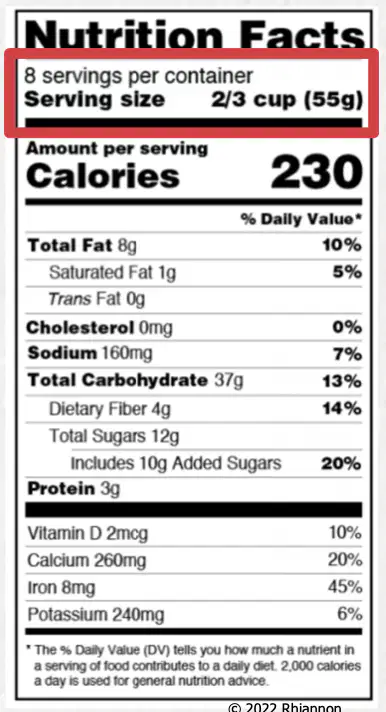
How many servings per container are listed in the example Nutrition Facts label?
5 servings
10 servings
8 servings
12 servings
What is the % Daily Value (DV) on nutrition labels based on?
A 1,500 calorie diet
A 2,000 calorie diet
A 2,500 calorie diet
A 3,000 calorie diet
Why are % Daily Values (DV) important on nutrition labels?
They show the exact amount of nutrients everyone should consume.
They help make quick decisions when comparing grocery items.
They are only for people with specific dietary needs.
They are used to calculate the price of the product.
What does a % Daily Value (DV) of 5% or less indicate about a nutrient in food?
The food is high in that nutrient.
The food is low in that nutrient.
The food has no nutrient.
The food is average in that nutrient.
What does a % Daily Value (DV) of 20% or more indicate about a nutrient in food?
The food is low in that nutrient.
The food is high in that nutrient.
The food has no nutrient.
The food is average in that nutrient.
Which nutrients do not have a % Daily Value listed on the nutrition facts label?
Trans fat and total sugars
Sodium and cholesterol
Protein and vitamin D
Calcium and iron
Why do trans fat and total sugars not have a % Daily Value listed?
They are not considered important.
There is no specific recommended level for them.
They are always zero in foods.
They are not nutrients.
What does the calories portion of the nutrition label identify?
The amount of protein in the food
The amount of energy the food contains per serving
The amount of vitamins in the food
The amount of sugar in the food
Which of the following factors does NOT affect a person's caloric need?
Age
Eye color
Activity level
Rate of metabolism
What is the purpose of the Mifflin-St. Jeor equation?
To calculate your basal metabolic rate (BMR) and factor in activity levels.
To measure your heart rate during exercise.
To determine your daily water intake.
To find out your ideal body weight.

How many calories are there per serving according to the nutrition facts label?
230
150
300
180
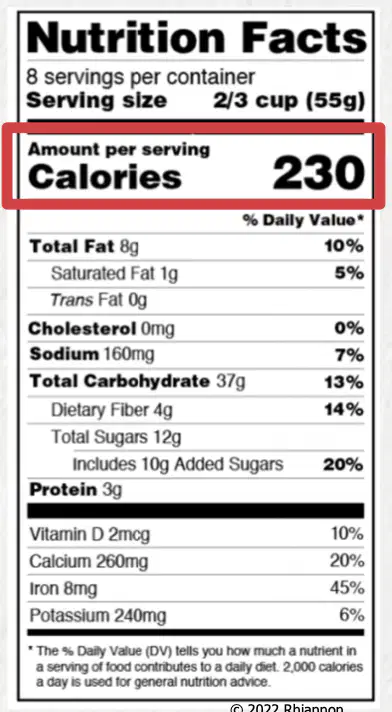
What is the total fat content per serving as shown on the nutrition facts label?
8g
5g
10g
12g
What is the main source of energy for our body?
Proteins
Fats
Carbohydrates
Vitamins
How many calories per gram do carbohydrates provide?
2 calories/gram
4 calories/gram
6 calories/gram
8 calories/gram
What percentage of our diet is generally recommended to be made up of carbohydrates?
10-20%
30-40%
45-65%
70-80%
Which type of carbohydrates is digested more quickly and tends to raise blood sugar levels more quickly?
Complex Carbohydrates
Simple Carbohydrates
Proteins
Fats
Which of the following is an example of complex carbohydrates?
Soda
Candy
Whole grains
Fruit juice
What is considered high in fiber according to the nutrition label?
1 gram of fiber per every 5 grams of carbs
1 gram of fiber per every 10 grams of carbs
2 grams of fiber per every 5 grams of carbs
2 grams of fiber per every 10 grams of carbs
Why is fiber important for our health?
It helps build muscles
It is essential for gut health and regulation of glucose levels
It provides energy
It strengthens bones
What should be kept to a minimum according to the nutrition label?
Total carbohydrates
Total sugars and added sugars
Dietary fiber
Protein
What is the main source of energy mentioned in the text?
Carbohydrates
Proteins
Fats
Vitamins
How many calories per gram do fats provide?
4 calories/gram
7 calories/gram
9 calories/gram
12 calories/gram
What percentage of our diet is recommended to be made up of fats?
10-15%
20-35%
40-50%
5-10%
What type of fat is liquid at room temperature and can lower blood cholesterol levels?
Saturated Fat
Trans Fat
Monounsaturated Fat
Hydrogenated Fat
Which of the following is considered a "bad" fat that is solid at room temperature?
Monounsaturated Fat
Polyunsaturated Fat
Saturated Fat
Omega-3 Fat
Which type of fat includes olive oil, canola oil, and avocados?
Trans Fat
Monounsaturated Fat
Saturated Fat
Polyunsaturated Fat
What is no longer recognized as safe as of 2013?
Monounsaturated Fat
Polyunsaturated Fat
Trans Fat
Saturated Fat
What is one of the main functions of proteins in the body?
Provide vitamins
Form enzymes and antibodies
Store fat
Produce hormones
How many calories does 1 gram of protein provide?
2 calories
4 calories
6 calories
8 calories
What percentage of our diet is generally recommended to be made up of protein?
5-15%
10-35%
20-40%
25-50%
How much protein should an average adult consume per kg of body weight each day?
0.5 grams
0.8 grams
1.0 grams
1.2 grams
What is the recommended daily protein intake for males aged 14-18?
40 grams
46 grams
52 grams
58 grams
What is the recommended daily protein intake for females aged 14-18?
40 grams
46 grams
52 grams
58 grams
What are proteins made up of?
Carbohydrates
Fats
Amino acids
Vitamins
How many essential amino acids are required for normal growth and maintenance of the body?
5
7
9
11
Which of the following is an example of a complete protein?
Beans
Nuts
Meat
Rice
What is an example of complementary proteins for vegetarians?
Bread and butter
Rice and beans
Milk and cookies
Pasta and sauce

