
 Worksheets
Topic 11 Review: Change Over Time
Total questions: 25
Worksheet time: 40mins

The disappearance of a species is called
Evolution
Extinction
Migration
Mutation

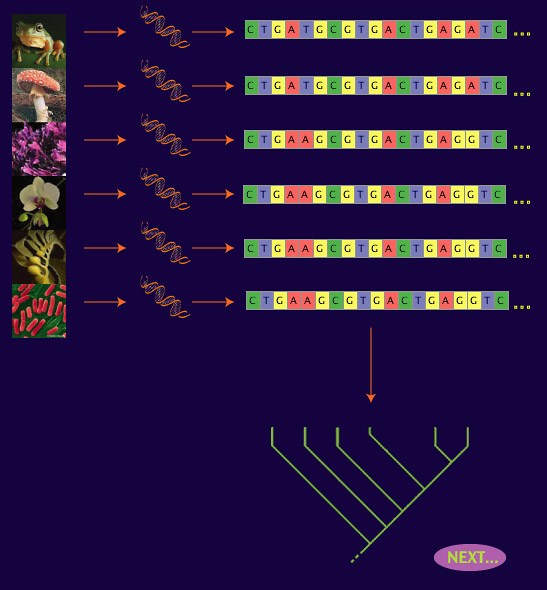
This image shows that
These animals have no simliarities in their structures.
Two different species may have evolved from a common ancestor.
These animals are from the same species.
These animals likely evolved from different ancestors due to their differences.
What is a trait that helps an organism survive and reproduce?
variation
adaptation
species
evolution
Who developed the theory of evolution by natural selection (survival of the fittest)?
Galapagos Islands
Charles Dickens
Charles Darwin
Jay Wright
Evolution of adaptations is something that happens to populations over many generations.
True
False
Although Darwin did not know about genes, he could see that animals of the same species who had slight variations that helped them to survive longer could produce more offspring than animals who were not as well equipped. Which of the following could be an example of a variation that would help a group of animals survive?
black bears in a region that was always covered with snow
turtles with long necks on an island where the food source was elevated
choosing a cat to take home from an animal shelter
planting a certain kind of flower to attract butterflies
48. In a litter of feral kittens, the bright yellow ones were easy for predators to spot. Two generations later, each kitten in the litter was grey. This is an example of:
artificial selection
homologous structures
natural selection
vestigial structures
#40. How do homologous structures provide evidence for evolution?
The more similar a structure is in two living species, the more likely it is that the species share a close common ancestor.
The more different a structure is in two living species, the more likely it is that the species share a close common ancestor.
They provide no evidence of evolution.
A fox with thicker fur than average would have a survival advantage over other foxes if:
There is more competition for food in the fox population.
The air temperature significantly decreases in winter.
A drought occurs, limiting the amount of water available.
A new disease appears that infects the foxes.
Due to genetic inheritance, members of a species can be slightly different from another in their traits. This is known as...
Variation
Overproduction
Competition
Evolution
The finches on the Galapagos island were similar in form except for variations of their beaks. Darwin observed that these variations were useful for:
Attracting a mate.
Gathering food.
Defending territory.
Building nests.
1. The process of choosing parent organisms for desired characteristics is called
natural selection
Artificial selection
random selection
genetic manipulation
When humans select desirable traits to be passed down to offspring
natural selection
artificial selection
The primary difference natural and artificial selection is
In nature selection the “pressure” comes from the environment; In artificial selection the “pressure” comes from humans (or another species).
In artificial selection the “pressure” comes from the environment; In natural selection the “pressure” comes from humans (or another species).
Natural selections is when humans breed the animal; Artificial selection is when humans direct genes directly.
They are different terms for the same concept.

When a farmer breeds only his or her best livestock, the process involved is.......
natural selection
artificial variation
artificial selection
survival of the fittest


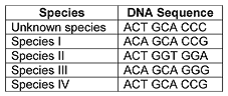
The fossil record help scientists
better understand the kinds of organisms that lived in the past
better understand how the environment has changed over time
better understand how organisms have evolved over time
all of the above
What is common ancestry?
When a species no longer exists
When organisms are descended from a single ancestor
Charles Darwin was a scientist whose notable visit to the ___________ shaped his ideas about the theory of evolution.
Hawii
Galapagos Islands
South America
Equador

