
 Worksheets
FAST PREP 4TH Grade
Total questions: 146
Worksheet time: 3hrs 17mins
What is the "plot" of a story?
The beginning
The events from start to finish
The character's emotions
The setting
What is the theme of a story?
The main character's name
The lesson or message the story conveys
The time and place where the story happens
The main events in the story
Which sentence best summarizes a story?
It retells every detail
It includes all characters and settings
It gives a short version of main events
It focuses on one character’s actions
What is the point of view using “I” and “me”?
First Person
Second Person
Third Person
Omniscient
Which point of view uses “you”?
First Person
Second Person
Third Person
Limited
Which point of view is from an outside narrator who knows all characters' thoughts?
First Person
Second Person
Author's Perspective
Third Person
What is a metaphor?
A comparison using “like” or “as”
Giving human qualities to something non-human
A direct comparison between two unlike things
An exaggeration for effect
Which is an example of a simile?
The stars were diamonds in the sky.
The wind whispered through the trees.
The car was as fast as lightning.
The classroom was a zoo.
What is personification?
An exaggeration
Giving human qualities to non-human things
A comparison between unlike things
Using "like" or "as"
What is an idiom?
A comparison using "like" or "as"
A saying that means something different from the literal meaning
An exaggeration for effect
Giving human qualities to non-human things
Which is an example of hyperbole?
She ran as fast as a cheetah.
The homework took a million years to finish.
The tree danced in the wind.
The pillow was as soft as a cloud.
What does "enthusiastic" mean?
Sad
Angry
Excited and eager
Bored
What does "miserable" mean?
Happy
Comfortable
Unhappy or sad
Excited
What is the central idea of a passage?
The conclusion of the story
The main idea the author wants to share
A character's thoughts and feelings
The setting of the story
What is the prefix in "unhappy"?
"happy"
"un-"
"app"
"-y"
What does "-ful" mean in "hopeful"?
Full of
Not
Without
To make
Which is an example of cause and effect?
“First, the sky darkened. Then, it started to rain.”
“The cat sat on the mat. The dog ran outside.”
“The story is set in a small village.”
“There are many types of animals in the zoo.”
Which is a text feature in an informational book?
plot
map
character
rhyme
What does "gloomy" mean in: "The weather was gloomy, with dark clouds and no sunshine"?
Bright and sunny
Dark and sad
Warm and clear
Quiet and peaceful
What does "hesitate" mean in: "He paused and hesitated before answering"?
To jump
To wait or delay
To speak loudly
To ignore
What is an author's perspective?
The way the author writes the characters' dialogue
The author's opinion or attitude about the topic
The main events in the story
The setting of the story
What is a "line" in a poem?
A group of words in a sentence
A single row of words in a poem
The title of the poem
A paragraph in a poem
What is a "stanza" in a poem?
The rhythm of the poem
A group of lines in a poem
The title of the poem
The rhyme scheme of the poem
What is rhyme scheme?
The order of events in a poem
The pattern of rhyming words at the end of lines
The type of poem being written
The emotion felt while reading the poem
What is alliteration?
Repetition of vowel sounds
Repetition of consonant sounds
Arrangement of words into stanzas
Rhythm of a poem
What is the mood of a poem?
Main idea of the poem
Rhyme scheme of the poem
Feelings or emotions the poem creates
Author's name
Which is an example of onomatopoeia?
"The wind howled."
"The cat sat."
What type of figurative language is in: "The bees buzzed in the garden"?
Simile
Metaphor
Onomatopoeia
Personification
Identify the figurative language in: "The mountains stood tall and silent."
Simile
Metaphor
Onomatopoeia
Personification

The end of a story where the conflict is solved
Characters
Internal Conflict
Resolution
Exposition

What is the most exciting moment in a plot diagram?
exposition
climax
rising action
resolution
What is a theme in a story?
A story happening in a spooky house.
A fight between good and bad.

What POINT OF VIEW is illustrated?
1st person narrator
3rd person narrator


The narrator uses pronouns like “he” and “she”and has limited knowledge in _________ point of view.
first person
second person
third person limited
third person omniscent
When the narrator is all-knowing, this is _____________ point of view.
first person
second person
third person limited
third person omniscient

A feeling of exciting or anxious uncertainty about what may happen next in a story
Suspense
Internal Conflict
Theme
Setting
What is the purpose of a simile?
To give human qualities to non-human things
To compare using 'like' or 'as'
To exaggerate for effect
To create a direct comparison
Which sentence has personification?
The river was a winding snake.
The sun smiled down on us.
The car zoomed down the street.
The cake was as sweet as honey.
What does the prefix "re-" mean in "rewrite"?
Write with difficulty
Write poorly
Write quickly
Write again
How is the text organized by the author?
Main idea
Theme
Problem
Text structure
This text structure uses facts and details to describe a topic.
cause and effect
descriptive
compare and contrast
sequential order
This text structure explains how something happens or is done, step-by-step.
sequential order
problem and solution
cause and effect
compare and contrast
This text structure explains a problem and shows how it can be or is resolved.
descriptive
cause and effect
problem and solution
chronological order
This text structure shows how two topics are alike and different.
compare and contrast
problem and solution
descriptive
sequential order
This text structure explains what happens and why.
descriptive
chronological order
problem and solution
cause and effect
This text structure presents information in time order.
cause and effect
compare and contrast
chronological order
descriptive
Ice cream comes in many flavors. Two popular ones are strawberry and chocolate. Strawberry may have fruit pieces, while chocolate usually does not. More chocolate ice cream is sold annually, but both taste great in a milkshake.
How is the information organized?
problem and solution
sequential order
compare and contrast
cause and effect
The tiny ice cream shop around the corner has the best ice cream. Inside, there's a long counter with stools and comfy booths. The walls have old-fashioned decor and tables have silver napkin holders. My favorite part is behind the counter with all the ice cream flavors like cookies and cream, pistachio, and moose tracks.
How is the information organized?
descriptive
cause and effect
chronological order
compare and contrast
Freezer burn can ruin ice cream by forming ice crystals on its surface. To prevent this, scoop ice cream into a bowl instead of eating from the container, and return the container to the fridge immediately.
How is information organized?
sequential order
problem and solution
descriptive
compare and contrast
No one knows the true origin of ice cream, but the first published ice cream recipe appears in “Mrs. Mary Eales's Receipts,” a cook book that was printed in London in 1718. Sometime around 1832, a confectioner named Augustus Jackson created multiple ice cream recipes and invented a superior technique to manufacture ice cream. Ice cream soda was invented around 1874, but the real breakthrough may have been at the 1904 World’s Fair in St. Louis, Missouri, when the American ice cream cone was unveiled!
How is the information organized?
compare and contrast
chronological order
problem and solution
cause and effect
Have you ever had an ice cream headache? That’s when a painful sensation resonates in your head after eating something cold (usually ice cream) on a hot day. This pain is a result of the dilation of a nerve center in the roof of your mouth. The nerve center is overreacting to the cold by trying to heat your brain. Ice cream headaches have caused many smiles to turn into frowns.
How is the information organized?
cause and effect
sequential order
descriptive
compare and contrast
Making ice cream is not easy. Cream and sugar have to first be mixed in a frozen container. Ingredients may be added at this point, if desired. Then, the mixture must be stirred and whipped until the cream and sugar mixture is frozen. Depending on the equipment, this may take as long as an hour. After the ice cream is prepared, it must be kept frozen until it is ready to be enjoyed. Making ice cream is taxing, but most people would agree that it is worth the work.
How is the information organized?
problem and solution
cause and effect
descriptive
sequential order
When it comes to making ice cream, you can do it the traditional way, or you can use liquid nitrogen to freeze your mixture. These two methods are very different. Making ice cream the traditional way consists of stirring the mixture in a frozen container which can be tiring and take much longer. On the other hand, using liquid nitrogen to freeze the mixture can be much faster. Since liquid nitrogen freezes the mixture faster, the crystal grains are smaller, giving the ice cream a creamier texture. Even though both methods are different, they both produce a delicious ice cream!
How is the information organized?
compare and contrast
problem and solution
chronological order
descriptive
It was the most beautiful banana split that I had ever seen. In the middle of the bowl, there were three huge scoops of ice cream: chocolate, strawberry, and vanilla. On top of the ice cream, there was a delicious banana and thick web of chocolate and caramel sauces. A huge puff of whipped cream covered the sauces and a handful of crushed nuts dappled the whipped cream. On top of it all was a plump and juicy cherry.
How is the information organized?
sequential order
cause and effect
compare and contrast
descriptive
Rhythm is the repeating patterns of sounds
False
True
What is a group of lines called that form a verse?
Line
Stanza
Paragraph
Meter
Words with a similar ending sound are called...
Equal
Rhythm
Repeated
Rhyme
The main idea of a poem. What the author wants you to learn
free verse
cinquain
theme
metaphor
A piece of writing that usually has figurative language and is written in separate lines which often have a repeated rhythm and sometimes rhyme.
poem
stanza
line
personification
What are the red letters an example of?
The people along the sand (A)
All turn and look one way. (B)
They turn their back on the land. (A)
They look at the sea all day. (B)
As long as it takes to pass (C)
A ship keeps raising its hull; (C)
The wetter ground like glass (D)
Reflects a standing gull. (D)
Rhythm
Rhyme
Rhyme scheme
Alliteration
summary
key detail
main idea

A
B
C
D

A
B
C
D

A
B
C
Which text feature lists the major parts of a book along with their page numbers?
glossary
table of contents
index
diagram

An alphabetical listing of the key names, terms, events, and topics with page numbers.
caption
glossary
index
table of contents
Which text feature divides the text into sections?
diagram
caption
subheading
title

A drawing that shows or explains something.
diagram
map
caption
photograph
A list of key terms in alphabetical order; each key word is defined.
index
glossary
textbox
table of contents
This text feature gives information in a visual way.
textbox
photograph/illustration
caption
timeline
Which text feature sends the reader signals about how to read the content?
bold, italic, or colored text
subheadings
diagram
map
Which text feature tells the reader the topic of the text?
captions
titles
diagrams
tables
Which text feature explains what is shown in a picture or illustration?
caption
diagram
timeline
table
Which text feature is a drawing that shows basic shapes of land and other geographic features?
table
timeline
map
caption
Which text feature organizes large amounts of information in a small space?
timeline
table
diagram
caption
Which text feature shows important events in time order?
graphs
tables
timelines
maps
This feature explains what the illustration/photograph is. It tells you what you see in the picture.
Glossary
Index
Table of contents
Caption
Located in the back of the book this feature gives the definitions of important vocabulary words?
Captions
Index
Glossary
None of the above

This feature list topics and gives you the page number to navigate to the information. Found in the front of the book.
Index
Table of contents
Glossary
Diagram

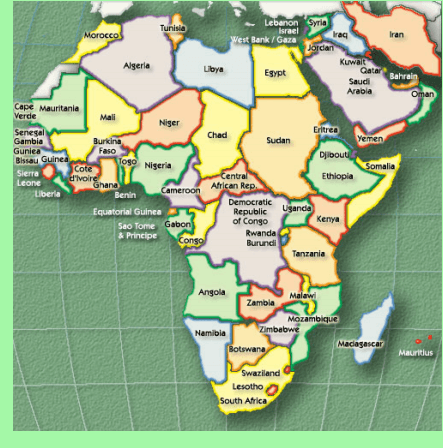
This is an example of ____________ text feature? NOTICE THE LABELS added to the picture.
Index
Table of contents
Glossary
Diagram
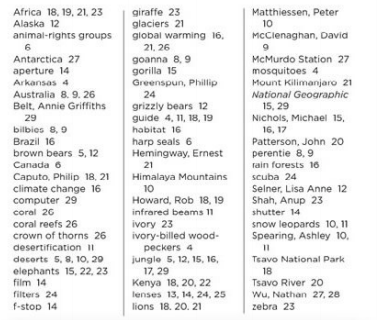
This is an example of an _______________. Located in the back of a book and gives the page number to a specific topic.
a table of contents page
an index page
a glossary
a title page





What is the central idea of a text?
What the test is least about
What the text is mostly about
Not Sure

What are the details in a text?
Details support the central idea in a text
Central idea supports the details in a text
Details are not important in a text
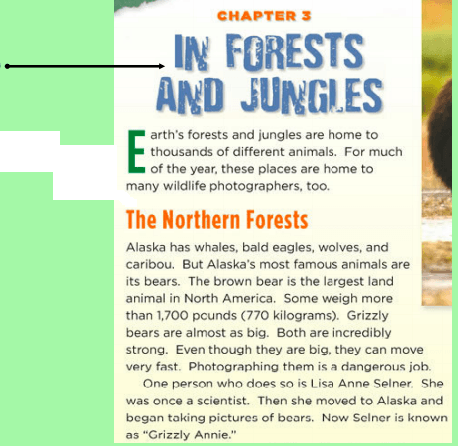
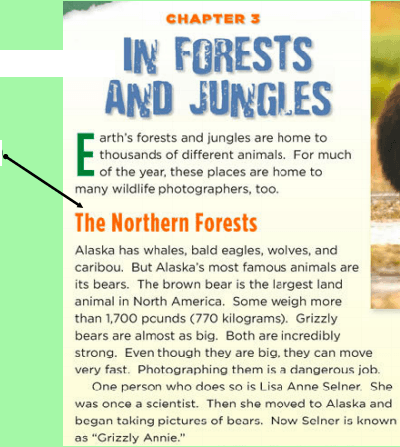
Why is it important to carefully read the title and subheadings of a text?
(a)
Repeated words in a text are important because..
They make the text sound and look good
They may be a clue of what the central idea is
Not sure
The central idea of a text is always clear.
True
False
Not sure

Why are illustrations in a text important?
They make the text look prettier
They can offer clues to the central idea
They take up space in a text
What information can the first and last sentences in a text give us?
They always give us the central idea
They sometimes give us the central idea, but not always
Not sure
Which of the following is NOT a strategy to use when searching for the central idea?
Highlighting important information
Rereading the text
Highlighting the entire text

Rereading is a great strategy to use to help in finding the central idea.
True
False
Not Sure
There are small yellow flowers growing in the field by the school. Please be careful not to trample the flowers as you walk across the field. Watch each step you take so the school can keep these pretty flowers safe.
What does the word trample mean in this paragraph?
pick up
jump over
step on
throw down
We are always very careful around Mr. Sutton's dog Buster. The neighbors say the dog is vicious. Buster runs to the fence and barks at us, so we are a little scared of him.
Based on the context clues in the paragraph, what is the meaning of vicious?
sweet
playful
fun to be around
very mean
Amber took a cookie away from her little sister. She tried to conceal the cookie by putting it in her pocket. She did not want her mom to see it.
What is the meaning of the word conceal?
hide
take
eat
tease
Monica always loses when she plays checkers with her older brother Greg. Today, she hopes to finally defeat him. Monica believes that she can finally win.
The word defeat most likely means
lose
play
beat
give
Campbell finished her second piece of cake. She reached for another piece, but her mother stopped her. She said that Campbell had eaten sufficient pieces of cake for one day.
What does the word sufficient mean?
delicious
enough
large
small
Grandma loves to buy Shelby attractive dresses with bows and flowers. Shelby likes to wear the lovely dresses Grandma buys.
Attractive most likely means
old
scratchy
pretty
extra
Our dog Twizzler keeps running away. We keep him confined, but he always finds a way out of the backyard. He likes to dig under the fence.
The word confined most likely means the same as
shut in
loose
well fed
away
Belinda is very cautious when she crosses the street. She does not want to get hit by a car. She always looks both ways. She walks across when the street is clear.
What is the meaning of cautious in the passage above?
excited
tired
angry
careful
The Henleys are a very reserved couple. They rarely talk to their neighbors, and they don't like to leave their house. They always keep their curtains closed, and they never have visitors. In fact, some of their neighbors have never met them!
Based on the context clues in the paragraph, what is the meaning of reserved?
private
welcoming
friendly
happy
Scott could not find his glasses anywhere. He worried that he might have thrown them away when he was cleaning his room. He began to rummage through the garbage hoping that he would find them.
What does the word rummage mean?
search
fight
run
smell
What is a personification?
A person's name.
An expression that does not have a literal meaning.
Gives an object human actions or expressions.
Which one is an example of a personification?
Daniel ate an ice cream.
That costs me an arm and a leg!
The flower danced in the wind.
The sun was warm on the child's face.
What is being personified?
"The orange wall screamed at her when she walked by."
The wall.
Walked by.
Screamed.
Orange.
Hyperboles are phrases that
compare two unlike things
exaggerate
give person-like qualities to animals and things
have a different meaning than the words.
personification
Hyperbole
Simile or metaphor?
He was so scared he was as white as a ghost.
simile
metaphor
When two things are being compared using like or as, it is called a _____.
simile
metaphor
A comparison of two unlike things without using "like" or "as is:
simile
metaphor
The city is a sea of sadness.
My father is a bear in the mornings.
personification
metaphor
simile

Life is a roller coaster ride.
Metaphor
Simile
Personification
Hyperbole

The lightning danced across the sky during the storm.
Metaphor
Simile
Personification
Hyperbole

My backpack weighs a ton!
simile
hyperbole
personification
metaphor

The bees buzzed as they flew around the garden.
Onomatopoeia
Metaphor
Personification
Simile
What is an example of a Metaphor?
The pipe busted open.
I am so hungry that I could eat a horse.
I like school.
This classroom is a zoo.
What makes a good summary? (choose all that apply)
Only including information from the text
Explains what the author thinks
Includes only most important details.
Copies sentences word for word from the text.
States the reader's opinion
Which of the following statements about SUMMARIZING is true?
The Summary is a thought that is true but is not in the passage.
The Summary is what the passage is mostly about.
The Summary is specific, detailed information contained in the passage.
The Summary is always found in the first sentence of the passage.
Please take this package ___ the post office.
To
Two
Too
I am growing so fast that my shoes are getting ____ small.
To
Two
Too
He received a perfect score on the last ____ tests!
To
Two
Too
This box is ____ heavy ___ carry by myself.
To, Too
Two, To
Too, To
Too, Two
Ask your friends if _____ ready to begin.
There
Their
They're
The boys left _____ jackets at school
There
Their
They're
______ is room in the car for one more person.
There
Their
They're
All of the dogs in the neighborhood _____ barking.
is
were
Mary and John usually _____ together
plays
play
The group ____ very large.
are
is
We are going to _____ for Christmas
Dallas, Texas
dallas, Texas
Dallas, Texas
dallas, texas

