
Font size
 Worksheets
Body Systems Activity
Total questions: 36
Worksheet time: 54mins
Which of the following is a body system?
Nervous system
Solar system
Economic system
Political system
Which body system is responsible for transporting blood and nutrients throughout the body? (a)
Circulatory System
Respiratory System
Nervous System
Skeletal System
What is the nervous system?
The nervous system is the body system that gathers and interprets information about the body's internal and external environments and responds to that information.
The nervous system is responsible for the circulation of blood throughout the body.
The nervous system is the system that breaks down food into nutrients.
The nervous system is the system that supports and protects the body's organs.
Which of the following is a part of the nervous system?
Heart
Brain
Lungs
What organ controls thousands of activities inside your body by sending impulses to different parts?
Brain
Heart
Liver
Kidneys
What is the major function of the spinal cord?
To relay messages from your brain to different parts of your body.
To filter waste from the blood.
To pump blood throughout the body.
To produce hormones.
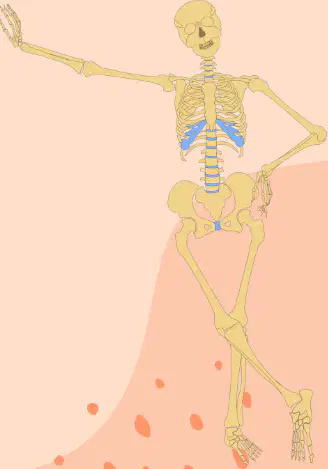
What is the skeletal system?
The framework of your body.
A system for digestion.
A network of blood vessels.
A group of muscles.
What do the bones of the skeletal system do?
Support your body, protect organs, store minerals, and work with muscles to help you move.
Only support your body and protect organs.
Store minerals and produce blood cells.
Help you move without any other function.
Which of the following is a function of the skeletal system?
Digest food
Store minerals
Produce energy
Circulate blood
What is a Ball and Socket Joint?
A type of joint that allows for rotational movement.
A joint that only allows bending and straightening.
A joint that allows sliding movements.
A joint that is immovable.
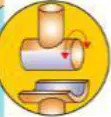
What is a Hinge Joint?
A type of joint that allows for movement in one direction.
A joint that allows for rotational movement.
A joint that allows for sliding movement.
A joint that allows for multi-directional movement.
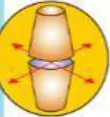
What is a Gliding Joint?
A type of joint that allows bones to glide past one another.
A joint that allows rotational movement only.
A joint that is immovable and fixed.
A joint that allows bending and straightening.
What is cartilage?
Connective tissue that is more flexible than bones. Ex. ears and nose.
A type of muscle tissue found in the heart.
A dense, hard tissue that forms the outer layer of bones.
A type of nerve tissue responsible for transmitting signals.

Any tissue that is made of cells or fibers that contract and expand to cause movement is called _______.
muscle
bone
nerve
skin
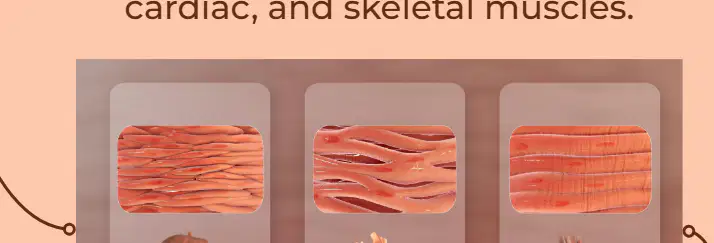
What are the three types of muscles?
Smooth, cardiac, and skeletal muscles.
Cardiac, skeletal, and epithelial muscles.
Smooth, epithelial, and connective muscles.
Skeletal, connective, and nervous muscles.
Which type of muscle makes up many of your internal organs such as your stomach and intestines?
Skeletal muscles
Cardiac muscles
Smooth muscles
Where is cardiac muscle found?
In the heart
In the lungs
In the liver
In the kidneys
What type of muscles are attached to bones?
Skeletal muscles
Smooth muscles
Cardiac muscles
Involuntary muscles
What is the function of the digestive system?
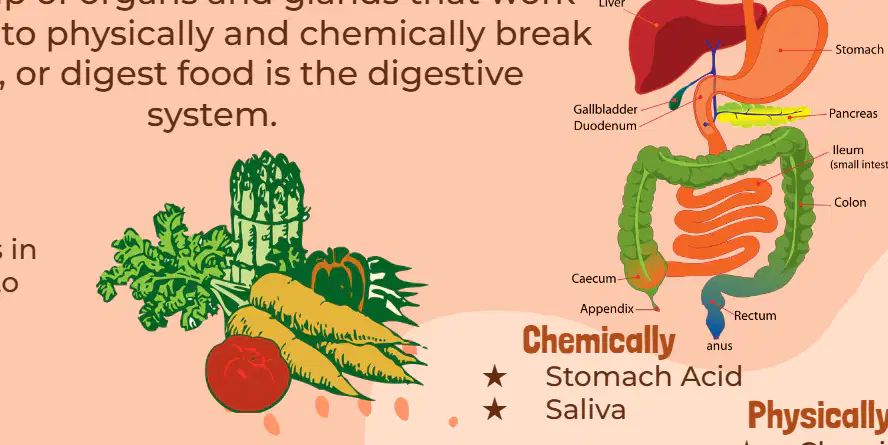
The group of organs and glands that work together to physically and chemically break down, or digest food is the digestive system.
The system responsible for pumping blood throughout the body.
The network of nerves that transmits signals between different parts of the body.
The system that provides structural support and protection to the body.
Which of the following are involved in the chemical digestion of food?
Chewing
Stomach Acid
Saliva
All of the above
What are nutrients?
Nutrients are the substances in foods that your body needs to function properly.
Nutrients are the waste products of digestion.
Nutrients are the chemicals that give food its color.
Nutrients are the substances that make food taste good.

01. Digestion begins in the ______ where you chew your food.
Mouth
Stomach
Esophagus
Intestine
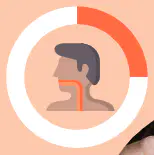
Once food is swallowed it goes through the ______ to the stomach.
Esophagus
Trachea
Intestine
Larynx
Food is broken down by acidic juices in the ______.
Stomach
Intestine
Mouth
Esophagus

Most chemical digestion and absorption take place in the ______.
Small Intestine
Stomach
Large Intestine
Esophagus

Waste products enter the (a) intestine.
What is the main function of the circulatory system?
Transporting and removing materials from every cell in the body.
Producing hormones for growth and metabolism.
Breaking down food into nutrients.
Coordinating body movements and balance.
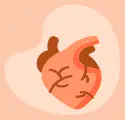
What does the heart do?
The heart pumps blood and oxygen throughout the body.
The heart digests food.
The heart filters waste from the blood.
The heart controls body temperature.
What are blood vessels responsible for?
Blood vessels are supply lines that carry blood away from the heart and return it to the heart.
Blood vessels are responsible for digesting food.
Blood vessels are responsible for transmitting nerve signals.
Blood vessels are responsible for producing hormones.
What is the primary function of the respiratory system?
To bring oxygen into the body and remove carbon dioxide from the body.
To digest food and absorb nutrients.
To circulate blood throughout the body.
To control and coordinate body movements.
How do the diaphragm and ribs contribute to breathing?
They contract and air moves into the lungs.
They expand and air moves out of the lungs.
They relax and air moves into the lungs.
They contract and air moves out of the lungs.
What happens when the diaphragm relaxes?
Air leaves the lungs.
Air enters the lungs.
The lungs expand.
The diaphragm contracts.
What will happen if you do not help your group?
You will be deducted points.
Nothing will happen.
You will receive extra points.
Your group will be disbanded.
What will be included in the poster for the project?
Organs in the body system you are responsible for, Functions, Creativity.
Only the title of the project.
A list of materials used.
The names of the team members.
The body has several organ systems. Which organ system is pictured here?
muscular system
skeletal system
digestive system
circulatory system
respiratory system
nervous system
The body has several organ systems. Which organ system is pictured here?
muscular system
skeletal system
digestive system
circulatory system
respiratory system
nervous system

