
 Worksheets
Gilded Age STAAR Review - 25
Total questions: 20
Worksheet time: 26mins
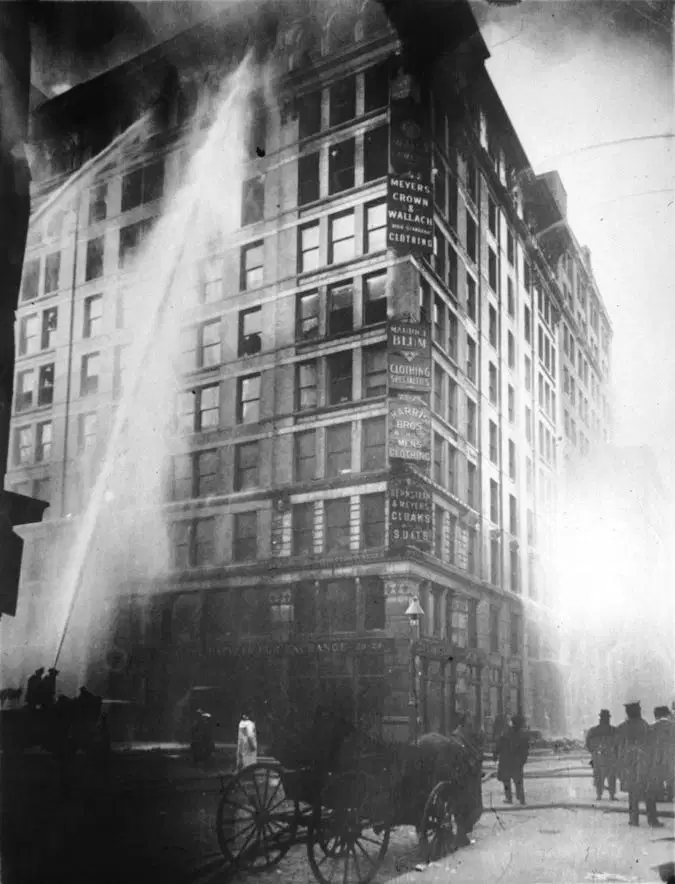
What resulted from the event shown in the image?
It led to increased support for women's suffrage and the right to vote.
It prompted immediate improvements in factory working conditions nationwide.
It caused a significant decline in the garment industry to New York City.
It resulted in stricter building and fire safety codes to protect workers.
The Senate of the United States shall be composed of two Senators from each state, elected by the people thereof, for six years; and each senator shall have one vote. The electors in each state shall have the qualifications requisite for electors of the most numerous branch of the state legislatures. - 17th Amendment to the U.S. Constitution, 1913
What significant change did the 17th Amendment make to the process of selecting U.S. Senators?
It established the direct election of U.S. senators by the people of each state.
It allowed the president to appoint U.S. senators with the approval of each state.
It changed the term length of U.S. senators to six years.
It gave each U.S. senator one vote in the senate.
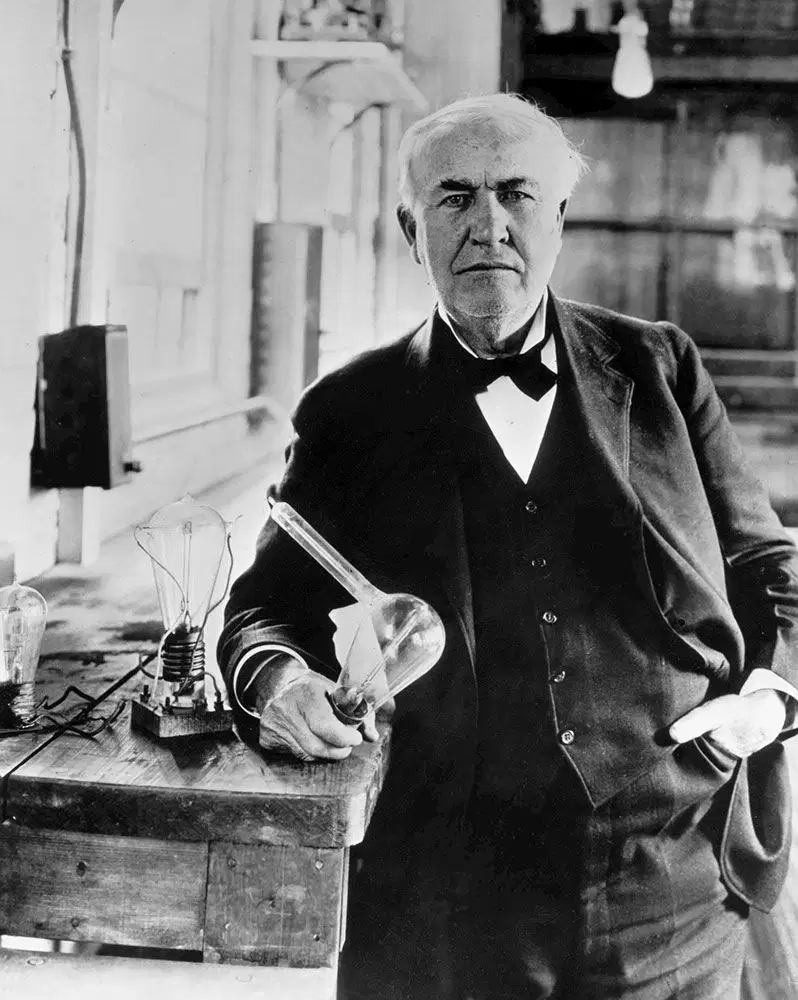
Which of the following statements BEST reflects the significance of this innovation show in the image in the context of the late 19th and early 20th century?
Edison's light bulb was a novelty item that had little impact on industrial practices of the time.
Edison's light bulb provided a safer and more efficient source of light than gas lamps, transforming domestic and industrial activities.
While the invention of the light bulb was significant in transforming city life its real impact was in brining light to rural areas.
While innovative, the light bulb invention failed to become widespread due to the high cost of electricity during Edison's time.
This table lists the effects that the growth of big business had on society in the late 1800s and early 1900s. Identify the causes and effects that are missing from the table. 3 in each.
Big business needed an increasing amount of labor
Robber barons used ruthless tactics to build buisniesses by limiting competition
The government wanted to support the growth of U.S. Businesses.
Many people moved from rural areas to urban centers.
Fear of monopoly power led the government to regulate businesses.
Tariffs were used to shield businessess from foreign competition.

In 1882, the government passed this legislation that restricted immigration for 10 years from a certain group into the United States.
Nativist Act
Mexican Repatriation Act
Dawes Act
Chinese Exclusion Act

The Pendleton Act of United States in 1883 decided that government jobs should be awarded on the basis of merit (test) instead of political affiliation.
direct voting
civil service reform
political machines
civil labor unions

Many Immigrants faced issues once they arrived such as language barriers, but these group of people mostly restricted new immigrants from entering the country.
Democrats
Republicans
Robber barons
Nativists

In 1890, during the Gilded Age, who wrote about and photographed the horrible living conditions of America's working poor in the Book, How the Other Half Lives?
Upton Sinclair
Ida Tarbell
Ida Wells
Jacob Riis

What was a city government marked by corruption, bribery, and Kickbacks (common during the Gilded Age) called?
credit mobilier
political machine
corrected democracy
electoral politics

Name for entrepreneurs who use ruthless tactics to destroy competition or to keep wages low
Captain of Industry
Robber Baron
Philanthropist
Consolidator

Who was the leader of Tammany Hall (New York Political Machine)?
Andrew Carnegie
Henry Ford
John D. Rockefeller
William Tweed

The Bessemer Process was a more efficient way to make this product, plus it made it stronger.
steel
automobiles
gasoline
cloth

Complete control over an industry's production, wages, & prices
monopoly
capitalism
socialism
concentration of wealth
What union formed in 1898, hoped to create a single union of skilled and unskilled workers, demanded an 8 hour workday, safety codes, better pay and organized strikes to get companies to grant their demands?
AFL (American Federation of Labor)
Knights of Labor
Knights of Columbus
Congress of Industrial Organizations
The Pullman strike was about what?
Match the following inventors to their invention.
Light Bulb
Thomas Edison
Typewriter
Christopher Sholes
Bessemer Process
Henry Bessemer
Telephone
Alexander Graham Bell
Elevator
Elisha Otis
Choose whether each description is associated with Andrew Carnegie, John D. Rockefeller, J.P. Morgan, or Cornelius Vanderbilt. the following
Controlled the U.S. Oil industry by utilizing trusts.
John D. Rockefeller
Specialized in mergers and acquisitions backed by experience in banking.
J.P. Morgan
Used both horizontal and vertical integration as main business practice to dominate the steel industry.
Andrew Carnegie
Improved interstate transportation making it quicker and more efficient.
Cornelius Vanderbilt
The term "Gilded Age" was coined by which famous author to describe the superficial glitter of the new wealth that masked the underlying social problems?
Mark Twain
Henry James
Upton Sinclair
F. Scott Fitzgerald
During the Gilded Age there was an increase in ____________________ and ___________________ as people moved to U.S. cities looking for economic opportunities.
Work and Infrastructure
Corruption and Laissez-Faire
Urbanization and Immigration
Monopolies and Political Bosses
Which immigration port was on the Atlantic coast? (a) Which immigration port was on the Pacific coast? (b)

