
 Worksheets
A&P digestion
Total questions: 28
Worksheet time: 23mins
Chemical digestion is a series of (a) reactions that break dietary macromolecules into monomers
(a) disease is a chronic bacterial infection that affects the gums and bone supporting the teeth, potentially leading to tooth loss if left untreated.
Saliva is composed of:
salivary amylase and lingual lipase
mucus
lysozyme
immunoglobulin A
Electrolytes
Swallowing center is where in the brain?
hypothalamus
medulla and pons
thalamus
midbrain
The "brain of the gut"
works with autonomic nervous system and independently
(a)
The stomach BEGINS chemical digestion of...
carbs
fats
proteins
nucleic acids
fibers
The stomach produces a pasty/soupy mixture called:
(a)
A patient in the emergency room begins vomiting uncontrollably after experiencing severe abdominal trauma. Which of the following best explains the physiological response controlled by the emetic center in this situation?
A. Increased bile secretion and smooth muscle relaxation
B. Activation of reverse peristalsis, increased heart rate, salivation, and sweating
C. Decreased respiratory rate and inhibition of gastric acid production
D. Enhanced absorption of nutrients in the small intestine
A child develops projectile vomiting after consuming spoiled food. If this continues unchecked, which of the following complications is the most likely to develop?
A. Decreased muscle tone and body temperature
B. Nutrient overload and high blood sugar
C. Dehydration, electrolyte imbalance, and possible esophageal damage
D. Damaged immune response and decreased red blood cell count
Chief cells in the stomach secrete...
Pepsinogen
Chymosin
Intrinsic factor
Gastric Lipase
hydrochloric acid
The stomach gland secretion responsible for:
vitamin B12 absorption in the small intestine
(a)
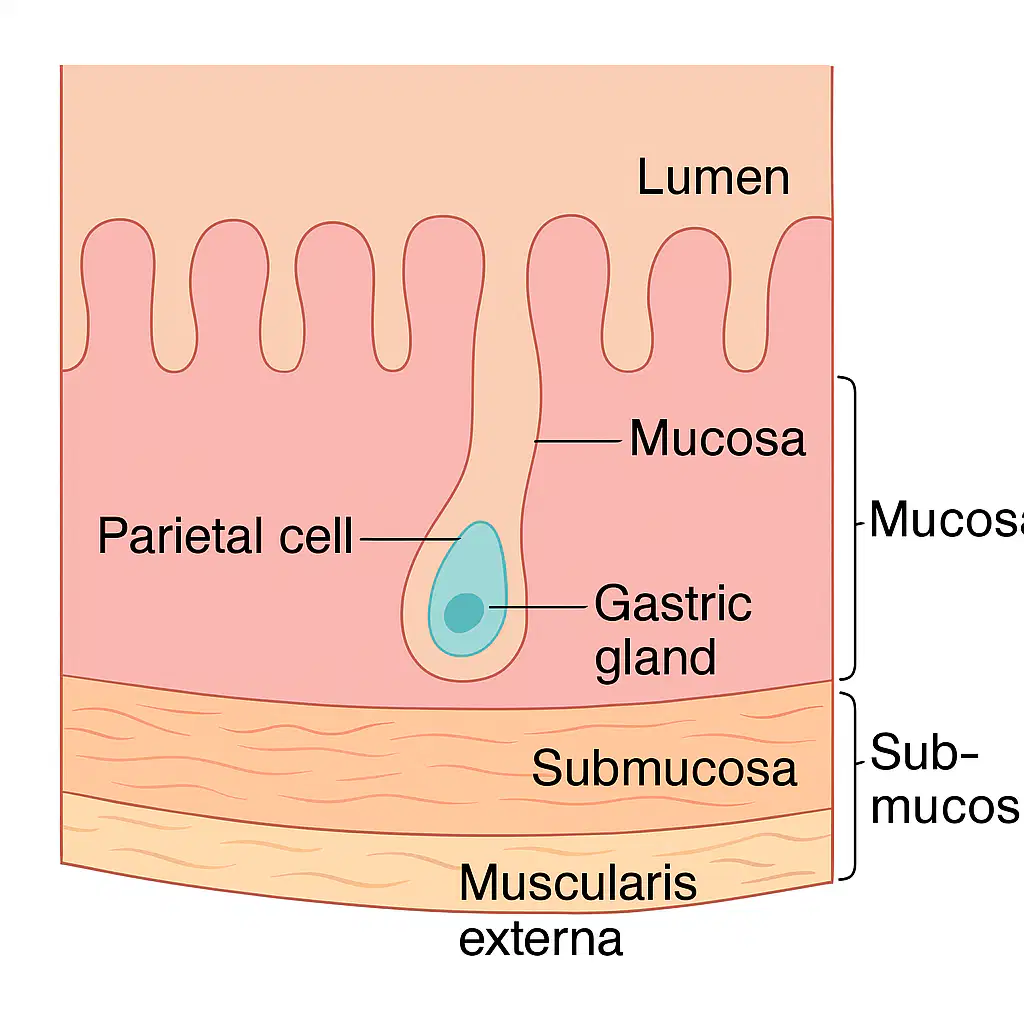
Parietal cells in the stomach secrete...
Pepsinogen
Chymosin
Intrinsic factor
Gastric Lipase
hydrochloric acid
A student studying gastric histology learns that certain cells in the stomach are responsible for releasing a substance with a very low pH that helps denature proteins. Which gastric cell type is responsible for this secretion?
A. Mucous cells – Secrete gut-brain hormones
B. Chief cells – Secrete hydrochloric acid
C. Parietal cells – Secrete hydrochloric acid
D. Enteroendocrine cells – Secrete pepsinogen
An infant has trouble digesting milk proteins due to a deficiency in an enzyme that curdles milk. Which gastric gland cell type is most likely underactive?
A. Chief cells – Responsible for chymosin production
B. Parietal cells – Responsible for intrinsic factor
C. Mucous cells – Responsible for gut-brain peptide release
D. Enteroendocrine cells – Responsible for hydrochloric acid
What is the function of bile in the digestive system?
It breaks down carbohydrates
It emulsifies fats
It activates digestive enzymes
It absorbs vitamins
Hydrochloric acid _______ pepsin and lingual lipase
activates
inhibits
neutralizes
secretes
Chief cells secrete the zymogen pepsinogen which is converted to pepsin by (a) and autocatalytic effect (positive feedback)
Pepsin digests (a)
True or False:
Parietal cells (responsible for making the acidic HCL) pump H+ into the lumen of a gastric gland by an active transport protein, H+ -K+ ATPase (Proton pump).
The antiport uses ATP to pump H+ out of the cell and K+ in.
true
false
CO2 + H2O -> (with enzyme CAH) makes: H2CO3-- what is the name of this product?
(a)
The H2CO3 -> HCO3- + H+
What is HCO3- called?
(a)
What is HCl called?
(a)
True or False:
Gastric Lipase (from chief cells) with lingual lipase, digest 50-60% of dietary fat in the stomach. The remainder is digested in the small intestine
True
False
The medulla relays signals of food to the stomach with vagus nerves. The stomach responds with the
_______-_______ response
(a)
Which macro-molecule lengthens the amount of time for stomach emptying?
(a)
The (a) phase is the stage where the stomach responds to sensory food information.
Signal goes:
cerebrum -> hypothalamus -> medulla -> vagus nerve -> enteric nervous system
The stomach begins secretes acid and prepares the stomach to receive food.
The (a) phase is initiated by stretch and rising pH
controlled by short and long reflex
ACh, histamine, and gastrin (G cells)
The (a) phase has chyme in the duodenum
Acid and fats in the duodenum activate inhibitory enterogastric reflex: reduced vagal output, increased sympathetic stimulation, duodenal hormones (GIP, secretin, cholecystokinin)

