
 Worksheets
Project Budgeting
Total questions: 50
Worksheet time: 25mins
What is a project budget?
A project budget is the total projected costs needed to complete a project over a defined period of time. It’s used to estimate what the costs of the project will be for every phase of the project.
A project budget is a list of all the tasks to be completed in a project.
A project budget is a timeline of the project phases.
A project budget is a document that outlines the project goals and objectives.
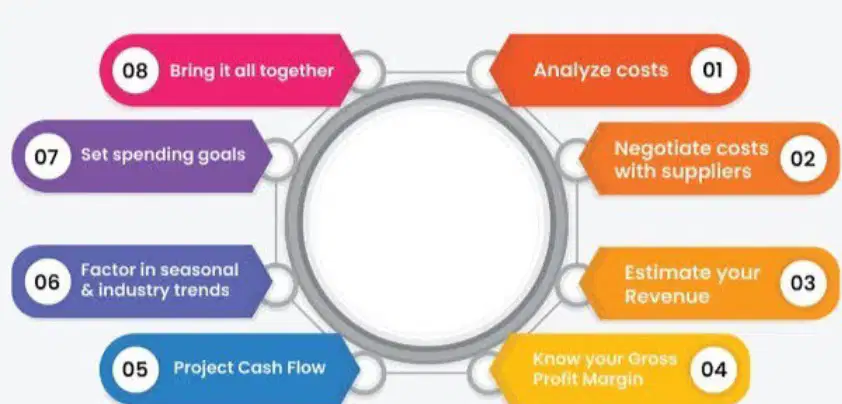
Which of the following is a step to create a project budget?
A) Analyze costs
B) Ignore costs
C) Skip planning
D) Avoid suppliers
The project budget will include (a) costs.
The project budget will include material procurement ________.
costs
expenses
fees
charges
The project budget will include operating ________.
costs
expenses
revenues
profits
One key benefit of effective budgeting related to resources is:
Increased spending
Resource optimization
Higher taxes
More debt
Which benefit of effective budgeting helps manage expenses and avoid overspending?
Tracking income and expenses
Setting financial goals
Creating a savings plan
Avoiding unnecessary debt
How does effective budgeting assist in tracking project progress?
By providing a clear financial roadmap
By increasing project costs
By delaying project timelines
By reducing team collaboration
What is the role of risk mitigation in effective budgeting?
To eliminate all risks in budgeting
To identify and reduce potential risks in budgeting
To ignore risks and focus on profits
To increase risks for higher returns
Why is the project budget considered the engine that drives your project’s funding?
It helps in planning the project timeline.
It drives your project’s funding.
It ensures team collaboration.
It manages project risks.
What does the project budget communicate to stakeholders?
The project timeline.
The project risks.
How much money is needed and when it’s needed.
The team roles.
What is one of the reasons you need a project budget?
To pay teams.
To ensure project quality.
To manage project risks.
To improve team communication.
What can a project budget help you with regarding equipment and materials?
To buy or rent equipment and materials.
To design equipment.
To sell equipment.
To dispose of materials.
What is the purpose of a budget in a project plan?
To increase project costs
To act as a baseline to measure performance
To eliminate project costs
To delay project timelines
What is project budgeting?
Project budgeting is the process of estimating the full cost of the project from the very beginning until the end.
Project budgeting is the process of allocating resources to different departments without considering the project timeline.
Project budgeting is the method of tracking employee performance throughout the project lifecycle.
Project budgeting is the strategy of marketing the project to potential investors.
Which of the following is involved in the project budgeting process?
Budget planning
Budget tracking
Project budget management
All of the above
Fill in the blank: Budget planning involves estimating costs and making a budget based on a project _______.
estimate
plan
timeline
goal
The first step in creating a project budget is:
Identifying project goals
Estimating costs
Allocating resources
Reviewing past budgets
Defining the project scope before creating a budget is important because:
it helps in identifying the necessary resources and costs accurately.
it allows for more flexibility in project execution.
it ensures that the project will be completed on time.
it guarantees that the project will be successful.
What does Work Breakdown Structure (WBS) involve in project budgeting?
Defining project scope
Allocating resources
Breaking down project into smaller components
Setting project timelines
What should be determined to complete each phase of the project?
A) Resources
B) Time
C) Location
D) Weather
Calculate the wages or salaries for team members involved. What type of cost is this?
Labor Costs
Material Costs
Overhead Costs
Fixed Costs
Estimate the price of raw materials or supplies needed for the project. What type of cost is this?
Material Costs
Labor Costs
Overhead Costs
Fixed Costs
What is Bottom-Up Estimating?
A method of estimating project costs by starting from the highest level and working downwards.
A method of estimating project costs by starting from the lowest level and aggregating upwards.
A method of estimating project costs by using historical data and expert judgment.
A method of estimating project costs by using a fixed percentage of the total project cost.
Which of the following is a characteristic of Top-Down Estimating?
Uses historical data
Uses the overall budget or similar past projects
Estimates costs at a granular level
Avoids over-budgeting
What is the typical percentage of the total project budget that should be allocated as a contingency fund to cover unforeseen expenses?
1-2%
3-4%
5-10%
11-15%
Fill in the blank: A Risk Management Plan involves identifying potential risks and estimating their financial impact. Allocate part of the budget for these potential risks and adjust as necessary throughout the _______.
project
year
quarter
lifetime
What is a budget baseline?
A) A reference point for tracking spending
B) A list of all expenses
C) A financial report
D) A project timeline
One of the project budgeting approaches is (a) .
analogous
parametric
top-down
bottom-up
One of the project budgeting approaches is (a) .
analogous
parametric
top-down
bottom-up
One of the project budgeting approaches is (a) .
analogous
parametric
top-down
bottom-up
What is an analogous estimating technique?
A method using historical data to determine project cost and duration by comparing similar past projects.
A method using current data to estimate future project costs.
A method that ignores past project data.
A method that uses only financial data to estimate costs.
What is parametric estimating?
A) A method to estimate project time, cost, and resources using historical and statistical data.
B) A method to estimate project time, cost, and resources using only historical data.
C) A method to estimate project time, cost, and resources using only statistical data.
D) A method to estimate project time, cost, and resources using random data.
What is top-down estimating?
Top-down estimating is when the organization sets the cost and/or the duration of the project, and the project manager seeks expert opinions to help determine the budget.
Top-down estimating is when the project manager independently determines the budget without consulting experts.
Top-down estimating involves detailed analysis of each project component to determine the budget.
Top-down estimating is when the project team votes on the budget and duration.
What is bottom-up estimating?
Bottom-up estimating is working from the lowest possible level of detail.
Bottom-up estimating is a top-down approach to project management.
Bottom-up estimating is a method of estimating costs by using historical data.
Bottom-up estimating is a technique used to estimate project duration by analyzing the critical path.
What does estimating project budgets include?
Some uncertainty
Exact calculations
Guaranteed profits
Fixed expenses
What is especially true for material and labor in project budgeting?
Uncertainty regarding usage and price
Fixed costs and predictable expenses
Guaranteed availability and stable supply
Consistent quality and uniform standards
How does standardization of the project and components affect uncertainty?
The more standardized the project and components, the lower the uncertainty
The more standardized the project and components, the higher the uncertainty
Standardization has no effect on uncertainty
Standardization increases complexity and thus uncertainty
What effect does the experience of the cost estimator have on uncertainty?
The more experienced the cost estimator, the lower the uncertainty
The more experienced the cost estimator, the higher the uncertainty
Experience of the cost estimator has no effect on uncertainty
Uncertainty is only affected by external factors
What can be used as guides in estimating project budgets?
Previous, similar projects
Expert judgment
Historical data
Project management software
What is one rule of thumb for estimating construction costs?
Construction cost by square feet
Construction cost by material type
Construction cost by labor hours
Construction cost by project duration
Which of the following is a rule of thumb for estimating printing costs?
By weight
By number of pages
By color
Lawn care cost is estimated by which rule of thumb?
Lawn care cost by square feet of lawn
Lawn care cost by number of plants
Lawn care cost by type of grass
Lawn care cost by weather conditions
Why might there not be as much historical data available when estimating budgets?
Lack of record-keeping in the past
Data loss due to technological failures
Changes in accounting standards
All of the above
What can cause significant differences even with similar projects when estimating budgets?
Project scope variations
Identical project timelines
Uniform resource allocation
Consistent stakeholder expectations
Who has input to the budget?
The finance department
The marketing team
The HR department
All departments
Estimating budgets is difficult when multiple people have control over the budget because:
it leads to miscommunication and lack of coordination.
it ensures better financial management.
it simplifies the decision-making process.
it reduces the need for budget reviews.
What does the term 'flexibility' refer to in the context of estimating budgets?
The ability to adjust budget estimates as project requirements change.
The fixed amount allocated for unexpected expenses.
The rigidity in maintaining the original budget plan.
The process of approving budget changes.
Why might the accounting system not be set up to track project data?
Lack of integration capabilities
High cost of implementation
Limited user access
Inadequate training
What is a challenge in the usage of labor and material over time?
Efficient allocation of resources
Increasing labor costs
Depletion of material resources
All of the above

