
 Worksheets
Forms and Transformation of Energy
Total questions: 36
Worksheet time: 20mins
What is energy?
The ability to do work
A type of matter
A form of sound
A visible object
What is the unit of measurement for energy?
Newtons (N)
Joules (J)
Watts (W)
Volts (V)

What is mechanical energy?
The sum of potential energy and kinetic energy
The difference between potential energy and kinetic energy
Only potential energy
Only kinetic energy
What type of energy is described as stored energy that depends on an object's mass and position or shape?
Kinetic energy
Thermal energy
Potential energy
Chemical energy
What type of energy is described as the energy of motion that depends on an object's mass and speed?
Potential energy
Kinetic energy
Thermal energy
Electrical energy
What is gravitational potential energy dependent on?
Speed and time
Mass and height
Temperature and pressure
Volume and density
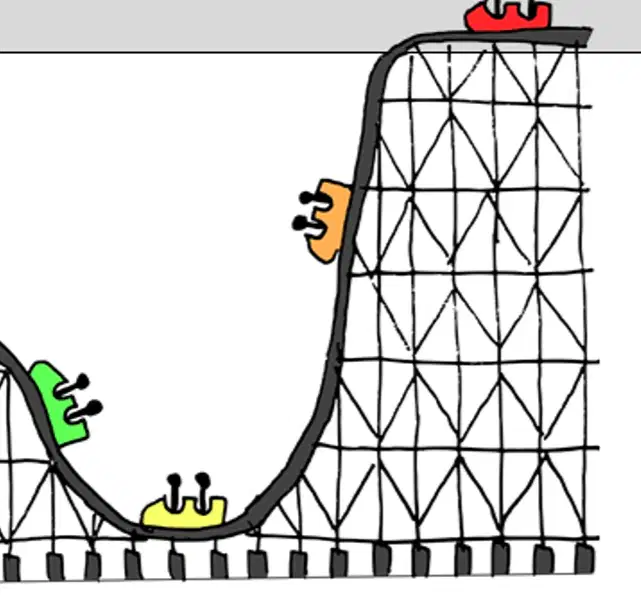
Which of the following is an example of gravitational potential energy?
A moving car
A spinning top
A rollercoaster at the top of a hill
A burning candle
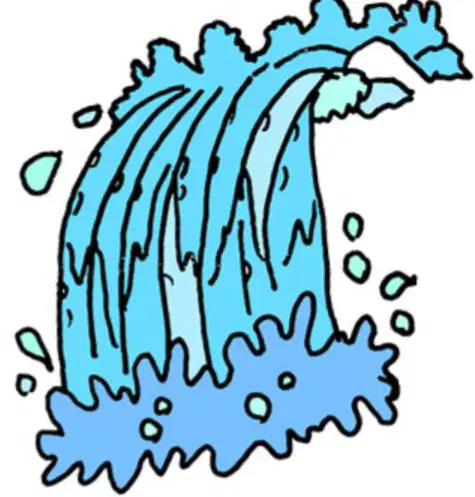
What type of energy is associated with hydropower?
Kinetic energy
Chemical energy
Gravitational potential energy
Thermal energy
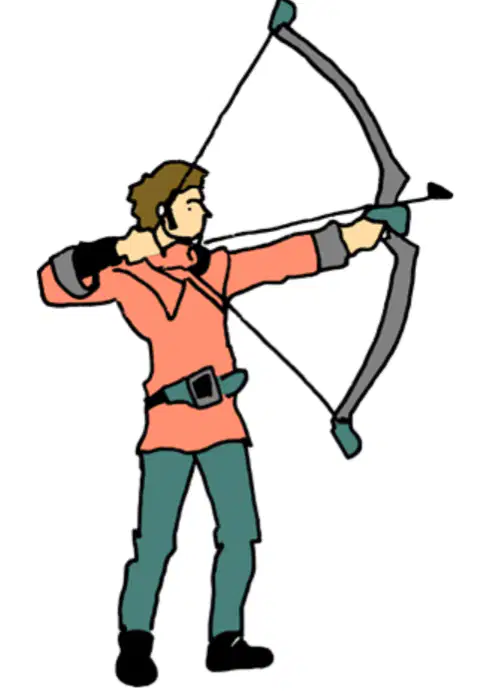
What is elastic potential energy?
Energy stored due to being stretched or compressed
Energy from the sun
Energy from moving water
Energy from chemical reactions

Which of the following is an example of elastic potential energy?
A stretched rubber band
A rolling ball
A burning candle
A flowing river
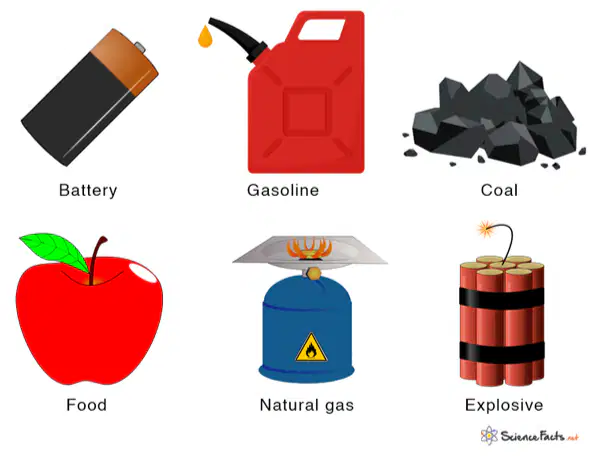
What is an example of chemical potential energy?
A moving car
A stretched rubber band
Fuel and food
A rolling ball
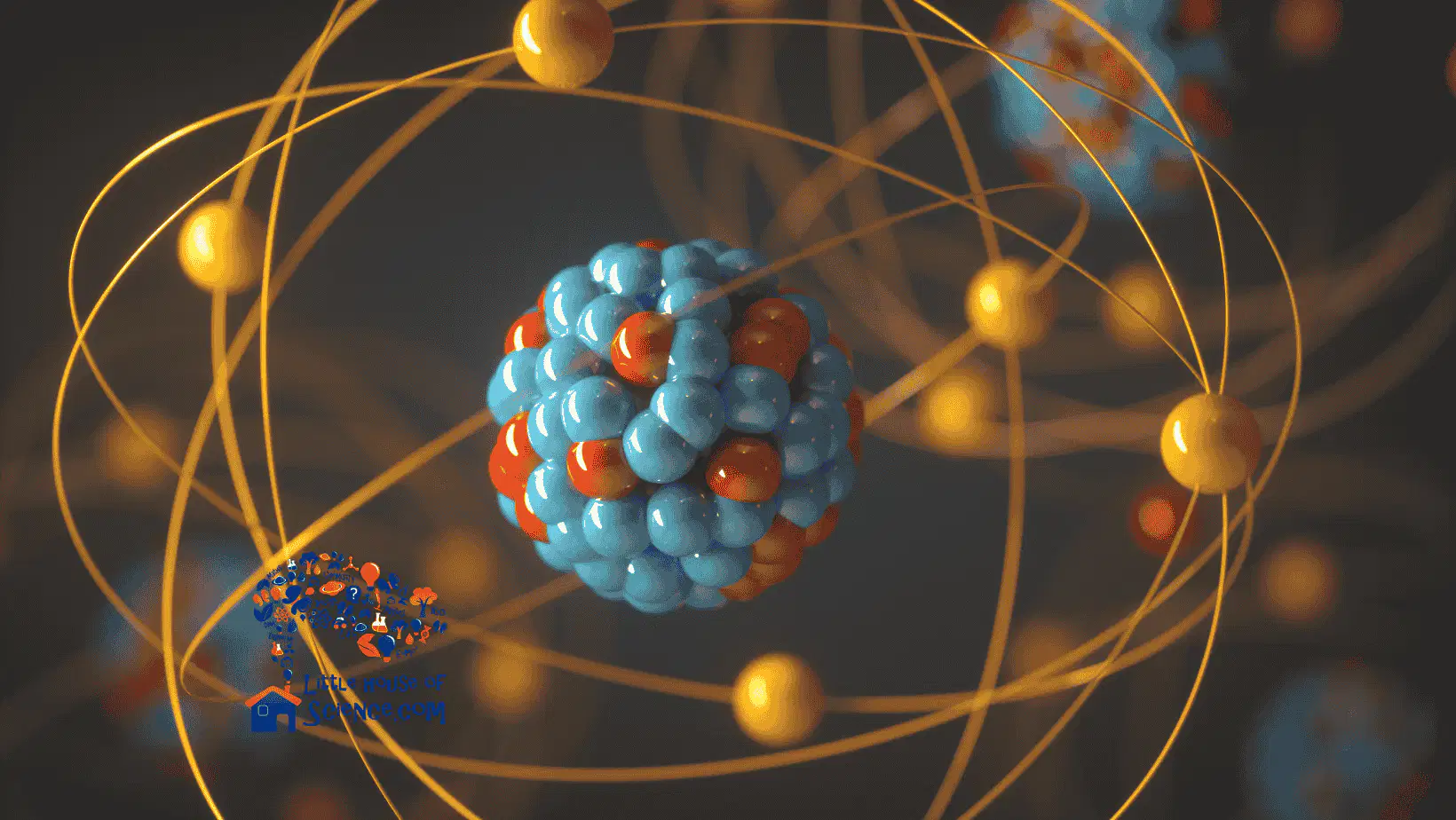
Where is chemical potential energy stored?
In the motion of objects
In the bonds between atoms
In the height of an object
In the speed of an object
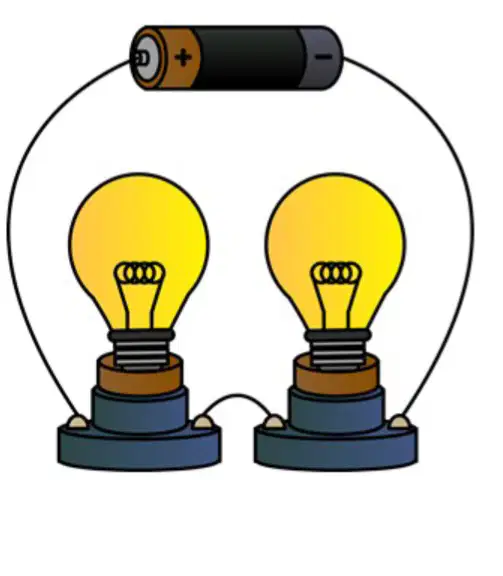
What does electrical kinetic energy involve?
Movement of protons
Movement of electrons
Movement of neutrons
Movement of atoms
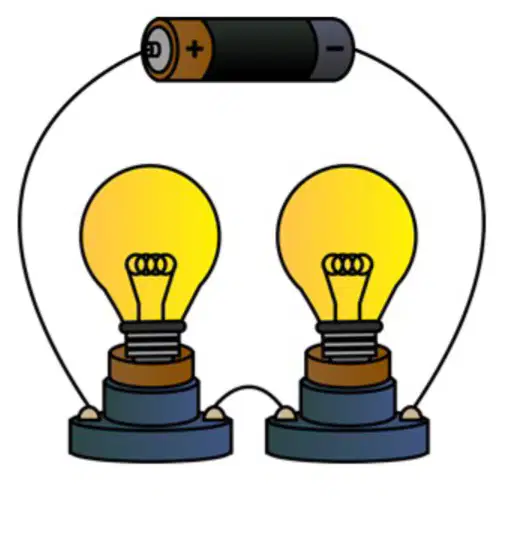
Which of the following is NOT an example of electrical kinetic energy?
Current in appliances
Lightning
A moving car
A battery in use

What is one type of kinetic energy (KE) that involves vibrational movement through substances in waves?
Thermal energy
Sound energy
Electrical energy
Chemical energy
What is an example of radiant energy?
Sound waves
Visible light
Mechanical energy
Chemical energy

Which of the following is a type of electromagnetic wave?
Sound wave
X-ray
Water wave
Seismic wave
Radiant energy is a form of what type of energy?
Potential energy
Kinetic energy
Chemical energy
Nuclear energy

Which of the following is NOT an example of radiant energy?
Radiowaves
X-rays
Sound waves
Visible light
What type of energy do electromagnetic waves represent?
Thermal energy
Radiant energy
Mechanical energy
Electrical energy
According to the Law of Conservation of Energy, what happens to energy?
It disappears after use.
It can be transformed or transferred.
It remains in its original form.
It is always created anew.
What is a key concept of the Law of Conservation of Energy?
Energy is infinite.
Energy can neither be created nor destroyed.
Energy is always visible.
Energy is only in one form.
What is the Law of Conservation of Energy?
Energy can be created and destroyed.
Energy can be converted from one form to another but cannot be created or destroyed.
Energy is always lost in the form of heat.
Energy is only present in moving objects.
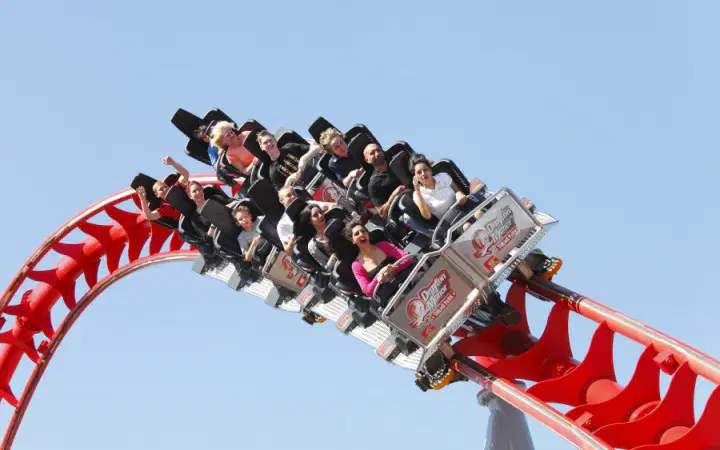
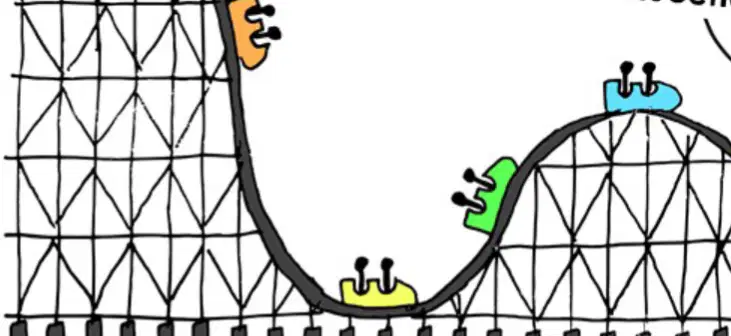
What happens to the potential energy of the roller coaster car as it begins its first drop?
It is destroyed.
It is converted into kinetic energy.
It remains unchanged.
It is converted into thermal energy.
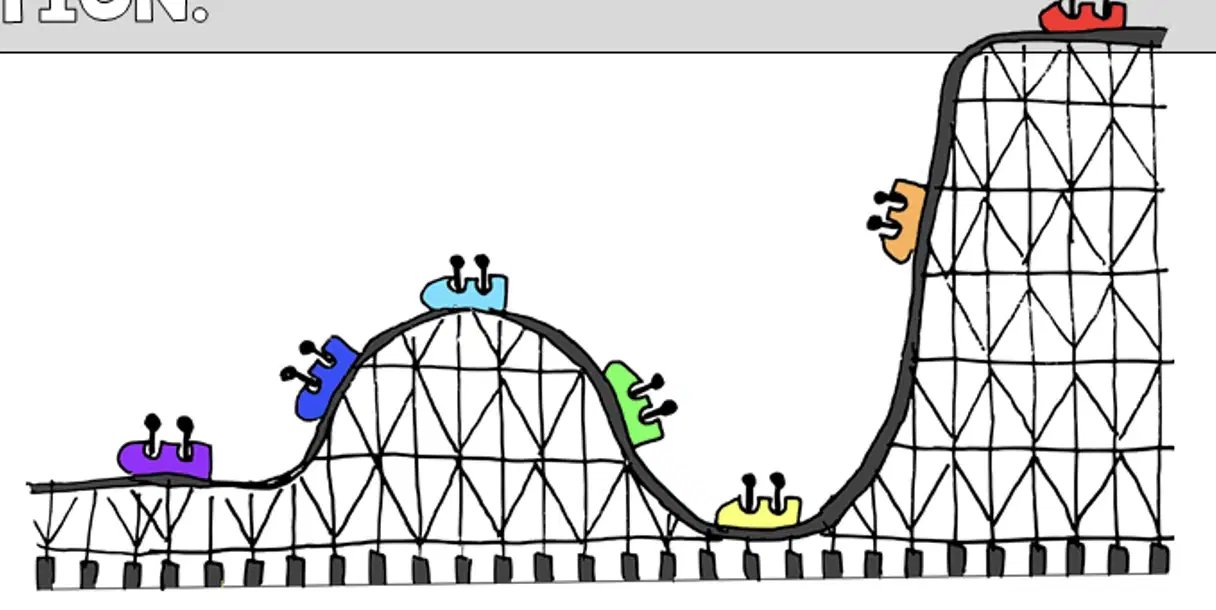
As the roller coaster car ascends the second hill, what happens to its kinetic energy?
It is converted back into potential energy.
It is lost as sound energy.
It remains as kinetic energy.
It is converted into electrical energy.
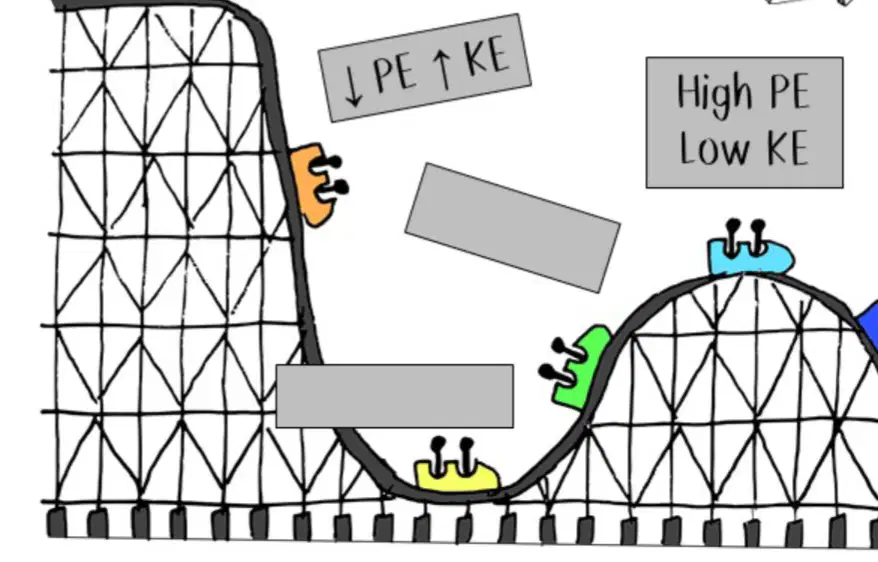
What is the Law of Conservation of Energy?
Energy cannot be created or destroyed, only transformed.
Energy can be created and destroyed.
Energy is always increasing in a system.
Energy is always decreasing in a system.
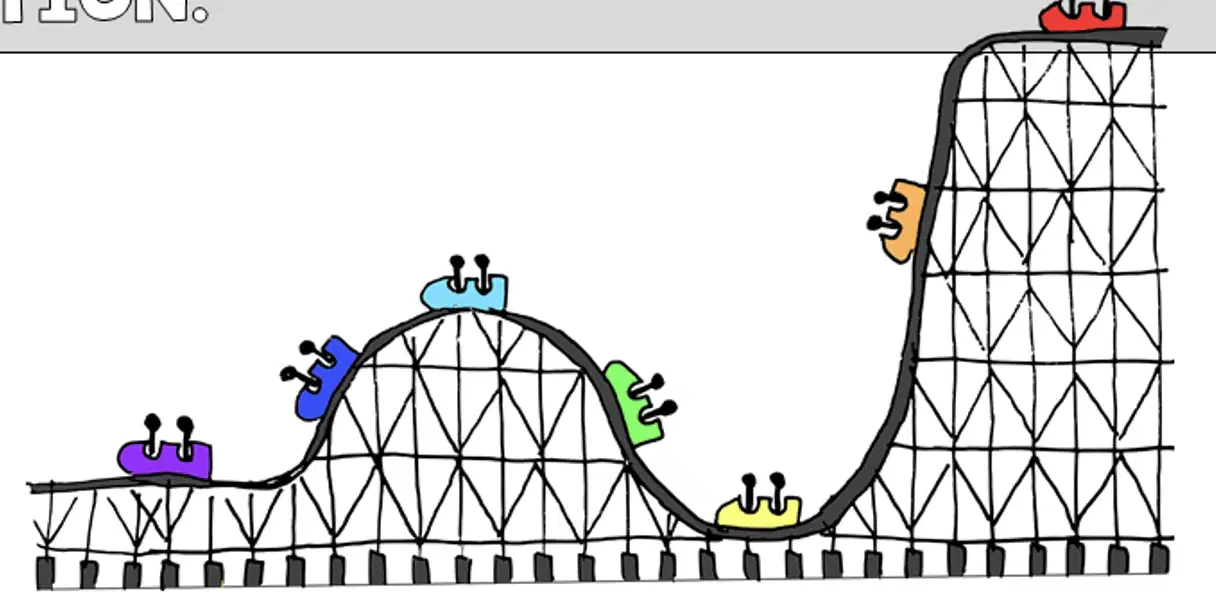
When a roller coaster is at the top of a hill, what is true about its kinetic energy?
It is at its maximum.
It is at its minimum.
It is equal to potential energy.
It is zero.
What does the Law of Conservation of Energy state?
Energy can be created or destroyed.
Energy can be transformed from one form to another, but the total amount remains constant.
Energy is always lost as heat.
Energy is only conserved in closed systems.
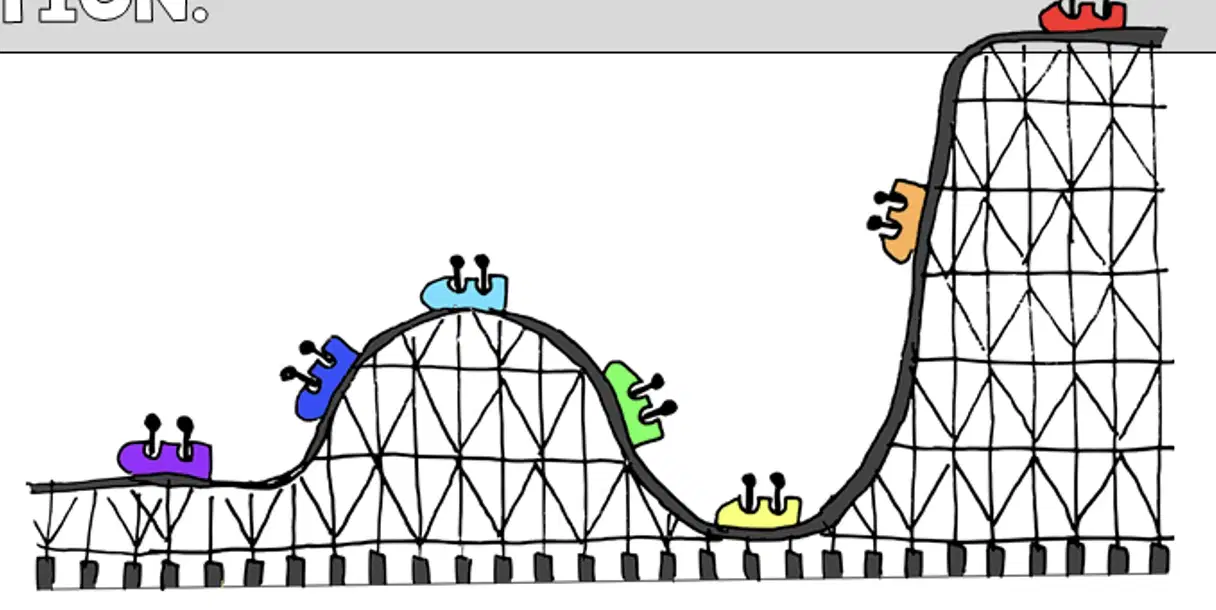
What happens to the energy of the roller coaster car as it moves?
It remains constant without any transformation.
It is entirely converted to sound energy.
It transforms between potential and kinetic energy.
It is lost completely at the top of each hill.

When a toaster heats up, electrical energy is converted into what type of energy?
Kinetic energy
Electromagnetic energy
Thermal energy
Potential energy
None
____________ is the ability to do work.
Energy
Force
Friction
Motion
A student claims that energy is lost in a closed system. Critically evaluate this statement.
Energy is lost as sound
Energy is transformed into different forms, but the total energy remains constant
Energy is lost as light
Energy is lost as heat

Explain how the Law of Conservation of Energy applies to a roller coaster ride.
The energy is lost as the roller coaster moves
The potential energy at the top is converted to kinetic energy as it descends
The energy is created as the roller coaster speeds up
The energy is destroyed when the roller coaster stops
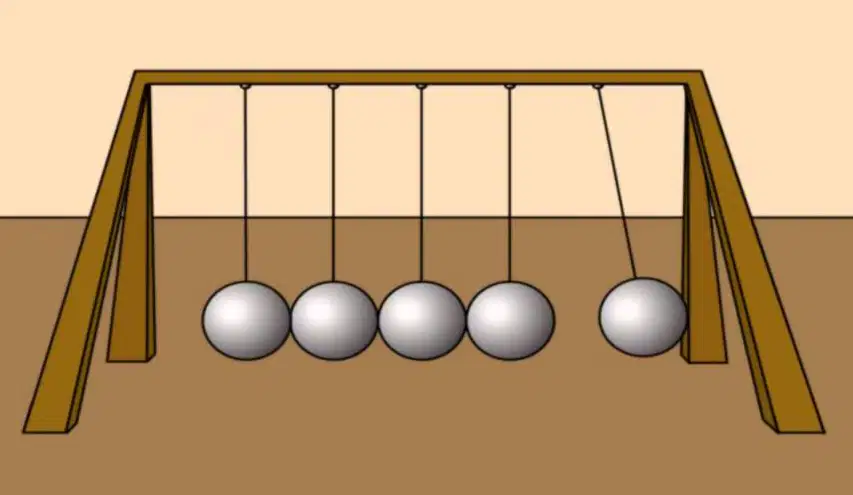
Which statement about energy is NOT true?
Energy cannot be created or destroyed.
Energy is used up when an object moves.
Energy can be converted from one form to another.
There are manyforms of energy including: thermal, nuclear, mechanical, chemical, electrical, and electromagnetic.
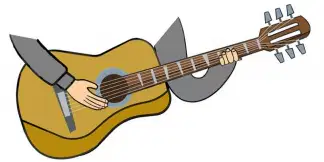
This energy travels in waves causing particles to vibrate. It can travel through air and water.
heat energy
sound energy
light energy
kinetic energy


