
 Worksheets
AP Government Review
Total questions: 127
Worksheet time: 2hrs 39mins
What are the five core values that most Americans across the ideological spectrum say they believe in?
Free Enterprise, Equality of Opportunity, Limited Gov't, Individualism, Rule of Law
Wealth, Power, Control, Authority, Influence
Tradition, Heritage, Culture, Religion, Family
Security, Safety, Protection, Defense, Stability
Define political socialization.
The process by which individuals learn and acquire political attitudes and beliefs
The method of organizing political campaigns
The strategy of implementing political policies
The system of electing government officials
What are five main elements in people’s lives that define their socialization process?
Family, Education, Media, Peers, Religion
Wealth, Power, Influence, Control, Authority
Tradition, Heritage, Culture, Language, Art
Security, Safety, Protection, Defense, Stability
How do events impact Americans' political ideologies?
They can reinforce or challenge existing beliefs
They have no effect on political ideologies
They only affect economic policies
They solely influence foreign relations
How does the margin of error affect poll results?
It increases the accuracy of the results.
It decreases the sample size needed.
It indicates the potential range of error in the results.
It eliminates bias in the poll.
How do pollsters use "random sampling" to ensure a representative sample?
By selecting participants based on their opinions.
By choosing participants from a specific demographic.
By randomly selecting participants from the entire population.
By selecting participants who are easily accessible.
Why is random sampling so important when polling?
It ensures that the poll is conducted quickly.
It guarantees that the results are 100% accurate.
It helps in obtaining a sample that reflects the diversity of the population.
It reduces the cost of conducting the poll.
What is the purpose of a Public Opinion Poll?
To predict future events.
To gather opinions on a specific issue.
To entertain the public.
To advertise a product.
What is the methodology used in a Tracking Poll?
Conducting interviews at a single point in time.
Repeatedly surveying the same group over time.
Gathering data from focus groups.
Using online surveys exclusively.
What is the main purpose of an Entrance/Exit Poll?
To predict the outcome of an election.
To gather demographic information.
To influence voters' decisions.
To test new polling methods.
What distinguishes a Push Poll from other types of polls?
It uses neutral questions to gather data.
It aims to influence respondents under the guise of conducting a poll.
It is conducted online only.
It focuses on gathering data from a large sample size.
What is the primary use of Focus Groups in polling?
To gather quantitative data.
To explore in-depth opinions and attitudes.
To conduct large-scale surveys.
To predict election outcomes.
Discuss the impact of question wording in surveys. How might an "agree-disagree" format affect results?
It clarifies the respondent's opinion.
It may lead to biased responses.
It simplifies the survey process.
It ensures accurate data collection.
What do candidates use poll results for?
To determine election dates.
To adjust their campaign strategies.
To select their running mates.
To decide on their political party.
What services and policies are important to or typically supported by both parties and ideologies?
Only healthcare policies.
Only education policies.
A combination of various services and policies.
Only economic policies.
What are some economic policies that would most likely be supported by a liberal individual?
Tax cuts for the wealthy
Increased social welfare programs
Deregulation of industries
Reduction in government spending
What are some economic policies that would most likely be supported by a conservative individual?
Increased government intervention
Higher taxes on corporations
Deregulation and tax cuts
Expansion of social programs

What is a key focus of Supply-Side Economics?
Increasing government spending
Reducing taxes and regulation
Expanding social welfare
Nationalizing industries

What is a key focus of Keynesian Economics?
Reducing government intervention
Cutting taxes for the wealthy
Increasing government spending to boost demand
Privatizing public services
How does a divided government influence the policymaking process in Congress?
It speeds up the legislative process
It often leads to gridlock and compromise
It eliminates the need for debate
It ensures one party's dominance
What policies involve more state spending? (Think Federalism)
National defense
Education and infrastructure
Social Security
Medicare
What policies involve more federal spending? (Again, think Federalism)
Local law enforcement
National defense and Social Security
Public transportation
State parks
The process by which people form their political attitudes
Media
Political Socialization
Public Agenda
Intensity
What are demographics?
Demographics are the “measure of the people”
Demographics are the social indicators or socio-economic status (SES) of individuals in the population
Demographics indicate race, class, family, religion, residence, age, gender etc
All the above
What is the role of media in political socialization?
To organize political campaigns
To influence political opinions and attitudes
To conduct elections
To provide entertainment
Which economic policy is most likely to be supported by a libertarian individual?
Increased government regulation
Free market with minimal government intervention
Expansion of social welfare programs
Nationalization of key industries
How does political socialization occur through family influence?
Through financial support for political campaigns
By voting in the same elections
Through discussions and shared values
By attending political rallies together
Where are moderates on the political spectrum?
on the far right
somewhat right
in the center
somewhat left
Alex is concerned about certain harmful chemicals in the water supply. There is a big power plant a few miles away and he worries about what kinds of chemicals it might be putting into the air and water. He sits down at his computer to email his representatives in Congress about his concerns, and thinks a lot more should be done to make sure more restrictions are put on those kinds of plants.
Conservative
Liberal
Libertarian
A principle of constitutional government in which the government's powers are defined and limited by a constitution.
Limited Government
Party Platform
Polarization
Means Test
A political philosophy that advocates free will and maximizes individual rights while minimizing the role of government; the role of government is limited simply protecting the rights of people.
Populism
Libertarian
Conservative
Liberal
The belief the government must manage the economy by spending more money when in a recession and cutting spending when there is inflation.
Keynesian Economics
Supply-Side Economics
Monetary Policy
Fiscal Policy
Economic theory that lower taxes and fewer regulations will stimulate the economy as businesses and individuals invest their money, thereby creating higher tax revenue.
Keynesian Economics
Supply-Side Economics
Monetary Policy
Fiscal Policy
After a national census has been taken, changes in population distribution cause the changing of congressional seats among the states. This effect is commonly called
Congressional districting
Apportionment
Gerrymandering
Reapportionment
Which of the following is NOT true of the Congress?
Each house determines its own leadership and rules.
Terms of Congress last for two years.
Congress is unicameral in nature.
Only the President may call special sessions of Congress.
Which of the following best describes a non-legislative power of Congress?
Power to declare war
Power to tax
Impeachment power
Power to regulate commerce
Which if the following is NOT considered to be a contributing factor to the incumbency effect?
name recognition
voting record
educational background
experience in campaigning
Which of the following is an accurate comparison of the House of Representatives and the Senate?
The Speaker of the House may only vote to break a tie in the House, and the President of the Senate may vote on any legislation before the Senate.
In the House members can delay the vote on legislation by filibustering, and in the Senate members must send all legislation through the Rules Committee.
In the House members represent the entire state, and in the Senate members represent districts within the state.
The Speaker of the House is the most powerful position in the House, and the majority leader is the most powerful position in the Senate.
( DOC 1) Which of the following statements can be supported by the data in the chart?
Americans are becoming consistently more conservative over time.
Majorities in the Senate typically come from the same party as the president.
Midterm elections tend to attract more Republican voters than Democratic voters.
Staggered term lengths disrupt existing coalitions and the ruling party of the Senate.
When the Founding Fathers finally decided on the length of the presidential term of office, they established a term
of 8 years
of 4 years
not to exceed 10 years
that could not be renewed after 4 years
The President decides to send American troops into Syria to help in the fight against ISIS. This is an example of which of the President's powers?
power as party leader
power as commander-in-chief
power of appointment
power to "faithfully execute the law"
Which power is used by the president for enforcing federal law?
general executive power
veto power
executive agreements
patronage
(DOC 2) Which of the following statements best depicts the role of the president referred to in the quote?
The president serves as commander-in-chief of the armed forces.
The President must "faithfully execute" the laws of the United States.
The President serves as a crisis manager and although he may have expanded powers during times of crisis, he can also be restrained by the other branches.
The President can check or restrain the other two branches of government.
(DOC 3) Which of the following best summarizes Alexander Hamilton's argument?
The executive branch is too powerful under the Articles of Confederation.
The executive branch should be the most powerful branch of government.
The executive branch is designed to handle emergencies and immediate crises.
The executive branch would function best with a single person in charge.
(DOC 3) Which of the following powers of the President best embodies the type of executive action Hamilton is arguing for?
Appointing cabinet officials
Commander-in-chief of the armed forces
Signing a bill into law
Delivering the State of the Union
Under the guidelines of the Constitution, which of the following is NOT within the jurisdiction of the federal courts?
cases involving federal law
cases involving interpretation of state constitutions
cases involving interpretation of the federal Constitution
treaties
Federal courts created by Congress under Article III of the Constitution include the Supreme Court, district courts, the Courts of Appeals, Court of Appeals for the Federal Circuit, and the U.S. Court of International Trade. These courts can best be described as
legislative courts
territorial courts
constitutional courts
original courts
When making an appointment to the Supreme Court, presidents
remain impartial by refusing candidate endorsements from the Supreme Court
often select a candidate who is neither decidedly liberal or conservative
tend to ignore race as a consideration for selecting a judge
tend to choose judges from their own political party
Which of the following has little bearing when the president makes an appointment to the Supreme Court?
party affiliation
judicial philosophy
likability
"litmus test"
The majority opinion, issued by the Supreme Court as the final decision of a case, becomes the standard or guide that will be followed in deciding similar cases in the future. This standard or guide is known as a
precedent
brief
argument
decision
The judicial philosophy that advocates the courts' active role in policymaking is called
strict constructionist
judicial activism
loose constructionist
judicial restraint
(DOC 4) Alexander Hamilton is advocating for which of the following?
The use of common law
The power of judicial review
The supremacy of the Constitution
The need for a multilayered court system
(DOC 4) Which of the following would best contribute to the sort of independent, nonpartisan decision making for which Hamilton is advocating?
Having federal courts being seated with unelected judges and justices
Having the chief justice preside over impeachment hearings
Prohibiting justices from having political affiliations
Not confirming a president's particular selection to fill a judicial vacancy
The political arm of an interest group that is legally entitled to raise money in order to contribute funds directly to candidates.
527 Groups
Independent expenditures
PACs
SuperPACs
Polarizing opinions regarding which of the following presidents effectively split the Democratic-Republican Party?
T. Jefferson
J. Adams
A. Jackson
A. Lincoln
All of the following can be considered incumbency advantages during congressional elections except for
paid staff, franking priviledge
name/face recognition and experience
presidential coattails
redistricting, scandal, midterm elections
The media can act as a linkage institution in all of the following ways except...
reporting breaking news to inform our electorate
investigative journalism (to expose corruption, politicians, government inaction, etc.)
covering campaigns/elections (horse race journalism)
nominating candidates, endorsing candidates for office
The term "soft money" is best described as:
Regulated donations to national candidates.
Unregulated donations to elected officials.
Illegal political contributions by interest groups.
Unlimited campaign contributions to political parties.
All of the following are functions of political parties except...
educating the electorate, grassroots canvassing (GOTV efforts)
levying poll taxes on unaffiliated voters
recruiting and nominating candidates
donating to candidates campaigns (especially incumbents)
Interest groups act as linkage institutions in all of the following ways except...
running candidates for office
endorsing candidates running for office
lobbying the government to seek long-lasting change, change in policy
educating our electorate about their particular interest(s)
Which of the following statements about gerrymandering is true?
It has been banned by United States Supreme Court decisions starting with Baker v. Carr
It was used traditionally to maintain urban control of the House of Representatives.
It can be used by a political party to draw boundary lines to control as many districts as possible.
It guarantees greater constituency control over elected representatives.
Even with large majorities in their own party in Congress, presidents experience difficulty in exercising legislative leadership because
the president must compete against state governors for influence
the weak nature of political parties hampers the president's ability to control Congress
the president's use of the veto is ineffective with Congress
the president seldom addresses the same issues as members of Congress
Which of the following statements about the Senate is true?
Each state is represented in the Senate according to its population.
The Senate, unlike the House, has a Rules Committee.
The Senate is more responsible than the House for initiating appropriations legislation.
Individual senators can exercise substantial influence over the legislative process.
All of the following are ways that the legislative branch can check the powers of the executive branch EXCEPT:
Congress may pass a law declaring a presidential action unconstitutional.
The Senate may refuse to approve a presidential appointment.
Congress may override a presidential veto.
Congress may remove the president through its impeachment and conviction powers.
The role Congress plays in ensuring that executive branch agencies are carrying out their legislated responsibilities is known as
judicial review
legislative oversight
executive privilege
bicameralism
Advocates of shifting the task of drawing United States House districts from state legislatures to independent commissions are likely to claim which of the following as an advantage of independent commissions?
Independent commissions are more likely to create majority-minority districts districts where they are appropriate.
Independent commissions are more likely to create districts where minor parties are victorious.
House districts drawn by independent commissions are immune from challenges by the United States Department of Justice.
Independent commissions significantly reduce the influence of partisan gerrymandering in the redistricting process.
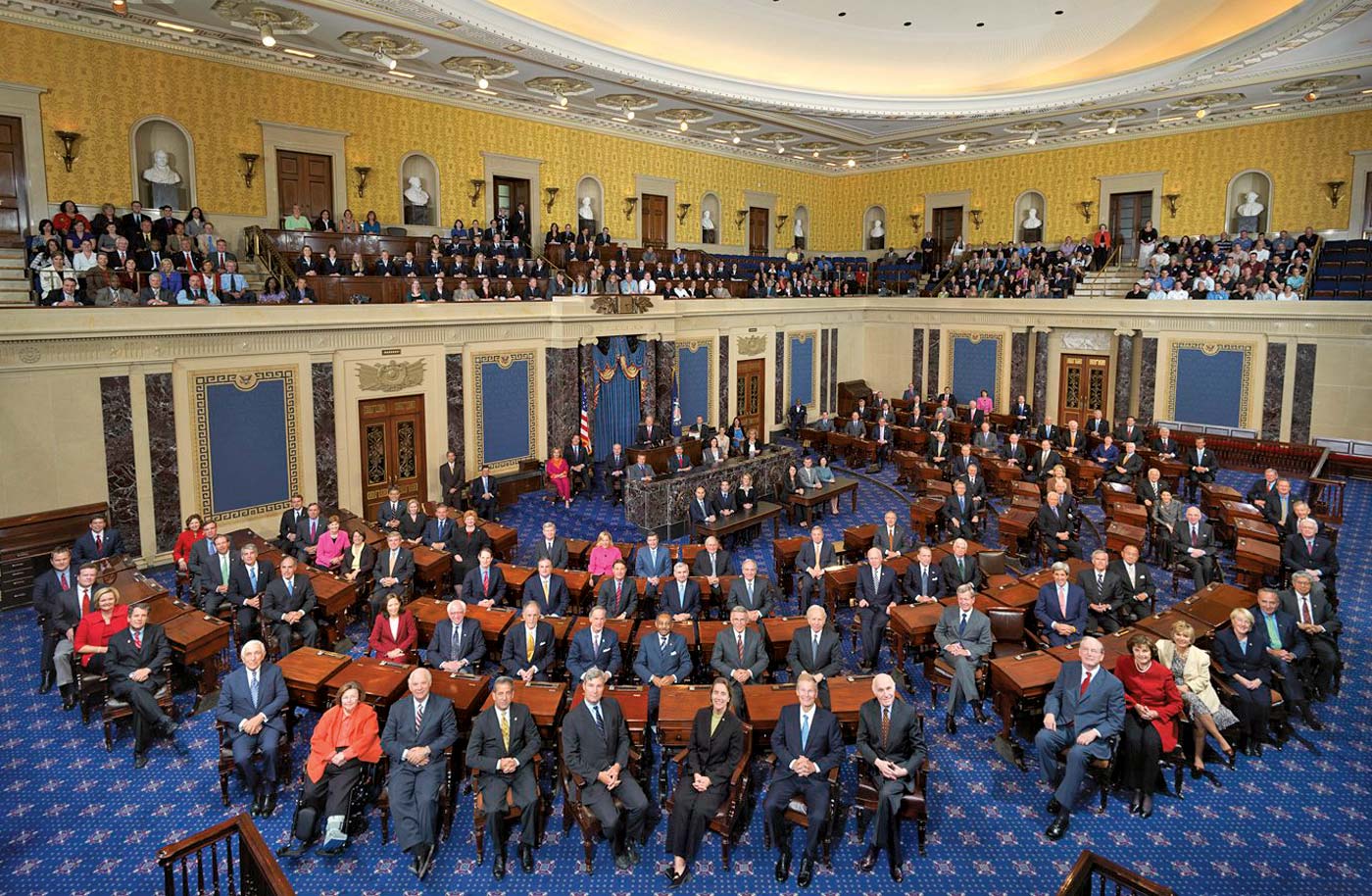
The --- confirms or denies presidential appointments to the Federal bureaucracy.
Supreme Court
Congress
House of Representatives
Senate
After a national census has been taken, changes in population distribution cause the changing of congressional seats among the states. This effect is commonly called
Congressional redistricitng
Apportionment
Gerrymandering
Repportionment
Which of the following is NOT true of the Congress?
Each house determines its own leadership and rules
Terms of Congress last for two years
Congress is unicameral in nature
Only the president may call special sessions of Congress
Which of the following best describes a nonlegislative power of Congress?
Power to declare war
Power to tax
Impeachment power
Power to regulate commerce
A law passed in 1973 that requires the presidents to consult with Congress whenever possible prior to using military force and to withdraw forces after 60 days unless Congress declares war or grants an extension.
War Powers Resolution
United Nations
Hatch Act
Pendleton Civil Service Act
The constitutional power of the president to send a bill back to Congress with reasons for rejecting it.
Veto
Legislative Veto
Presidential Coattails
Pocket Veto
A legislature divided into two houses.
Bicameral Legislature
Balance of Trade
Joint Committee
Legislative Oversight
drawing the boundaries of legislative districts in bizarre or unusual shapes to favor one party
lizarding
partisan districting
gerrymandering
sleazy
A tactic to block legislation that involves one or more Senators holding the floor indefinitely is called...
Filibustering
Riding
Logrolling
Hot-Airing
Members of Congress are granted generous franking privileges that
permit them to mail letters to their constituents for free.
allow them to charge items to a special expense account.
allow members unlimited phone calls to their district without charge.
permit them to receive four, round-trip airfares to their district.
The president of the Senate is
the leader of the majority party in the Senate.
the senator with the most seniority, regardless of party.
the fourth person in line to succeed the president.
the vice president of the United States.
According to the Constitution, the minimum age to be a Senator is
25
30
35
40
The House consists of _____ members.
100
270
435
50
Who is next in line to become President of the United States if the Vice President is unable to take over?
Majority Leader of the Senate
President of the Senate
President pro tempore of the Senate
Speaker of the House
The Chair of a committee is likely the...
Member of the majority party with the most constituents
Oldest
Member of the Minority Party with the most seniority
Member with the most expertise
Every two years, _____ of the Senate must stand for reelection
one-half
three-quarters
two-thirds
one-third
Which body originates ALL bills concerning revenue and taxes?
House
Senate
Congress
Supreme Court
How long must you be a U.S. citizen to serve in the House of Representatives?
7 years
9 years
3 years
5 years
A member of the House is elected for a term of how many years?
1 year
2 years
4 years
6 years
How many members are in Congress?
100
270
435
535
Which of the following was NOT a feature of the Articles of Confederation?
There was no executive branch to enforce laws.
Each state had one vote in Congress, regardless of its size.
Amendments to the Articles required approval from all states.
The national government had the power to levy taxes.
Which of the following accurately characterizes the main difference between elite theories and pluralist theories of politics in the United States?
Elite theories argue that a single minority dominates in all policy areas; pluralist theories argue that many minorities compete in different policy areas.
Elite theories argue that social status is the major source of political power; pluralist theories argue that wealth is the major source.
Elite theories view government as efficient; pluralist theories view it as slow and wasteful.
Elite theories concentrate on the role of interest groups; pluralist theories emphasize the role of individuals.
Which of the following is the best example of a categorical grant?
Money given to states for specific programs
Money given to individuals in the form of tax rebates
Money given to states unconditionally
Money given to states to spend at their discretion
The debates between Federalists and Anti-Federalists were primarily about which of the following issues?
The right of the people to rebel
The existence of slavery
The scope of power of the central government
The need to establish a standard currency
The Americans with Disabilities Act, which provides protections for the disabled, is an example of
a federal mandate
horizontal federalism
dual federalism
state supremacy
The “Bill of Rights” is found in
The Declaration of Independence.
The Third Article of the Constitution
Amendments to the Constitution
Bills passed by Congress
The Tenth Amendment to the Constitution has been interpreted by the Supreme Court to
prevent states from taxing agencies of the federal government
reserve powers to the states
restrict the application of judicial review
allow for the burning of the flag as an expression of protest
Which of the following constitutional principles most directly addresses the relationship between the national and state governments?
The Bill of Rights
Separation of powers
Representation
Federalism
Of the following, which has been used most to expand the power of the national government?
The First Amendment
The Fifth Amendment
The habeas corpus clause of the Constitution
The commerce clause of the Constitution
The outcome of a conflict between the Constitution and the states is determined by
the Great Compromise
the supremacy clause
Federalist #10
judicial review
Which of the following was stipulated in Article III of the Constitution?
creation of the Supreme Court
executive powers
powers of Congress
full faith and credit clause
Which of the following would least likely be favored by state governments?
unfunded mandates
categorical grants
block grants
revenue sharing
Which of the following is most likely to be preferred by state governments?
unfunded mandates
categorical grants
block grants
revenue sharing
Which of the following statements is correct about the differences between the Federalists and Anti-Federalists?
Neither group was willing to dissolve the union over the questions of counting slaves for purposes of representation.
The Federalists believed a Bill of Rights was essential whereas the Anti-Federalists did not.
The Federalists believed in national sovereignty whereas the Anti-Federalists believed in strong state governments.
he Federalists did not believe in the need for a presidential cabinet whereas the Anti-Federalists did.
Which of the following is an example of checks and balances, as established by the Constitution?
A requirement that states lower their legal drinking age to eighteen so they can receive federal highway grants
Media criticism of public officials during an election campaign period
The requirement that presidential appointments to the Supreme Court be approved by the Senate
The election of the President by the Electoral College rather than by direct election
The importance of Shays' Rebellion to the development of the United States Constitution was that it
revealed the necessity of adding the Bill of Rights to the Constitution
demonstrated the intensity of anti-ratification sentiment within the thirteen states
convinced the delegates attending the Constitutional Convention to accept the Connecticut Plan
indicated that a strong national government was needed to protect property and maintain order
States and localities have the most discretion in establishing policy when federal funding is derived from
categorical grants
matching grants
block grants
project grants
The Constitution grants Congress the power to establish post offices and post roads. This is an example of
enumerated powers
implied powers
reserved powers
concurrent powers
Both the national and states’ governments can establish court systems. This is an example of
reserved powers
a mandate
concurrent powers
full faith and credit clause
Which of the following best characterizes the general argument made in Brutus 1?
A large republic is dangerous to personal liberty and undermines the states.
A small republic is more susceptible to corruption than a large republic.
A large republic would be preferable to a small one because more people could participate.
A small republic would pose more danger to individual liberty than a large republic.
Which of the following is an accurate summary of James Madison's argument in The Federalist 10?
A large republic makes it possible to abolish factions and concentrate all power at the national level.
A large republic allows the federal government to dominate the state governments through the necessary and proper clause.
A large republic is a direct democracy where the people have a direct vote in policy matters, which controls factions.
A large republic presents more opportunities for groups to participate, compete, and limit each other.
Which of the following best describes the concept of 'Separation of Powers' as outlined in the Constitution?
The division of powers between the federal and state governments
The division of powers among the three branches of government
The division of powers between the President and Congress
The division of powers between the House of Representatives and the Senate
A difference between US v. Lopez and McCulloch v. Maryland is?
Lopez increased the national government's power while McCulloch did not
McCulloch was based off the commerce clause while Lopez was based off the elastic clause
Lopez checked the national government's power while McCulloch increased it
McCulloch was used the supremacy clause while Lopez used the elastic clause

