
 Worksheets
Chemistry Final Exam Review
Total questions: 38
Worksheet time: 19mins
Coco was bored over summer break and decided to use her chemistry knowledge for a party. She decided to fill up different balloons to the same volume and let them sit at different locations that she chose inside and outside of her house. After a day, she checked their volumes. 1. Which is the independent variable?
Gas
Balloon material
Volume
House location
Coco was bored over summer break and decided to use her chemistry knowledge for a party. She decided to fill up different balloons to the same volume and let them sit at different temperatures that she chose inside and outside of her house. After a day, she checked their volumes. Which is the dependent variable?
Gas
Balloon material
Volume
House location
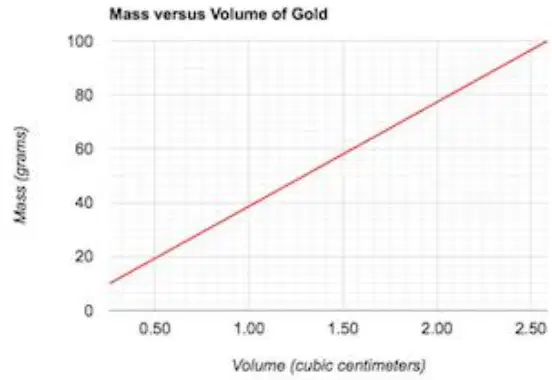
What is the volume (in cubic centimeters) of 40 grams of gold?
5
1
2
3
What kind of property is color?
Intensive
Extensive
What kind of property is density?
Physical
Chemical
You are tasked with classifying the following matter: It adjusts to the walls of its container. It appears uniform in composition. It has an indefinite volume. How should this matter be classified?
Solid
Gas
Liquid
You are tasked with classifying the following matter: Upon looking at the container, several different colored chunks have settled to the bottom of a clear liquid within. How should this matter be classified?
Element
Compound
Heterogeneous Mixture
Homogeneous Mixture
Which model of the atom is considered the first?
Atomos
Plum Pudding Model
Nuclear Model
Electron Cloud Model
Which model of the atom added electrons?
Atomos
Plum Pudding Model
Nuclear Model
Electron Cloud Model
Which model of the atom added a dense, positively charged center?
Atomos
Plum Pudding Model
Nuclear Model
Electron Cloud Model
Which model of the atom showed electron location probabilities in a cloud?
Atomos
Plum Pudding Model
Nuclear Model
Electron Cloud Model
Which of the following pairs of atoms are isotopes?
a. 1125Na and 1123Na
b. 12H and 24He
c. 612C and 712C
d. 3580Br and 3578Zn
Which of the following is the correct electron configuration for Carbon?
1s^2 2s^2 3s^2
1s^2 2s^2 2p^2
1s^2 2p^4
2p6
Which of the following is the correct shape of the s orbital?
Sphere
Peanut
Double dumbbell
Funky
Which of the following is the correct trend for electronegativity?
Increases towards Fluorine
Increases towards Francium
Which of the following is the correct trend for atomic radius?
Increases towards Fluorine
Increases towards Francium

Which of the following diagrams is correct for NH3?
Diagram a
Diagram b
Diagram c
H₂O has a boiling point of 100 °C while C₁₈H₃₉N has a boiling point of 350 °C. Which must have stronger IMFs?
H2O
C18H39N
Spiderman is sneaking through Dr. Octopus’ lab and accidentally knocks over 2 open beakers. One is labelled CH₂OH-CHOH-CH₂OH and the other is labelled CH₃CH₂OH. Which one has stronger IMFs?
CH2OHCHOHCH2OH
CH3CH2OH
Surface tension increases with
Stronger intermolecular forces
Weaker intermolecular forces
What observation would indicate that an endothermic reaction has taken place?
The beaker feels hot when touched
The beaker contents glow
The beaker feels cold when touched
The beaker contents become solid
All exothermic reactions (exploding fireworks) are spontaneous (happen without outside help)
True
False
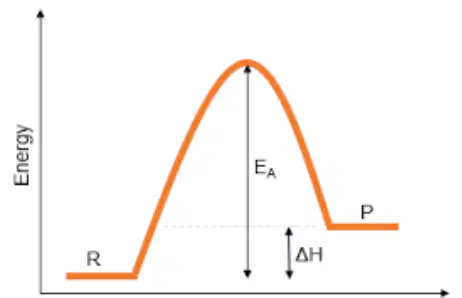
Which part of the diagram shows the change in enthalpy of the reaction?
R
P
E_A
ΔH

Which graph is endothermic?
Graph A
Graph B

Which graph is exothermic?
Graph A
Graph B
Independent variable - ________
the variable changed on purpose by the scientist
the variable that is measured
the variable that is kept constant
the variable that is dependent on another
Dependent variable - ________
the variable being recorded as a result of the change
the variable that is manipulated
the constant variable
the variable that is not affected
Chemical property - ________
a property that requires changing the compound’s identity to determine
a property that can be observed without changing the substance
a property related to the physical state of a substance
a property that involves the mass of a substance
Physical property - ________
a property that can be measured without changing the identity of the substance
a property that involves a chemical reaction
a property that changes the substance's chemical structure
a property that is only observed during a chemical change
Intensive property - ________
a property that is not affected by the amount of substance
a property that depends on the amount of substance
a property that changes with temperature
a property that varies with pressure
Extensive property - ________
a property that is affected by the amount of substance
a property that is independent of the amount of substance
a property that depends on temperature
a property that depends on pressure
Indefinite - ________
undefined, undetermined, changes
finite, certain, constant
definite, fixed, stable
known, determined, unchanged
Definite - ________
defined, known, measured
undefined, unknown, unmeasured
ambiguous, uncertain, vague
indefinite, unclear, imprecise
Homogeneous - ________
same all throughout, the composition does not change based on location
varies throughout, the composition changes based on location
is unpredictable in composition
is always a mixture of different substances
Heterogeneous - ________
different within the same sample, the composition does change
uniform throughout, the composition does not change
consisting of identical parts
composed of similar elements
Atomic radius - ________
the distance from the nucleus of an atom to the edge of its electron cloud
the number of protons in an atom
the energy required to remove an electron from an atom
the ability of an atom to attract electrons
Endothermic - ________
description of a process where energy is taken into the compound or reaction, total energy of the system increases
description of a process where energy is released from the compound or reaction, total energy of the system decreases
description of a process where no energy change occurs, total energy of the system remains constant
description of a process where energy is both taken in and released, total energy of the system fluctuates
Exothermic - ________
description of a process where energy is released from the compound or reaction, total energy of the system decreases
description of a process where energy is absorbed into the compound or reaction, total energy of the system increases
description of a process where there is no change in energy of the system
description of a process where energy is neither absorbed nor released

