
 Worksheets
U4 Review pt 1
Total questions: 68
Worksheet time: 41mins
What was the main product traded by the Swahili city-states along the Indian Ocean?
Silk
Gold
Spices
Ivory
Which desert did the Trans-Saharan trade network cross?
Kalahari
Sahara
Namib
Gobi
Which body of water was key to the Red Sea trade network?
Mediterranean Sea
Atlantic Ocean
Red Sea
Indian Ocean
How did monsoon winds influence trade in the Indian Ocean?
They made travel impossible during certain months.
They provided predictable wind patterns that facilitated sailing.
They caused frequent shipwrecks.
They had no impact on trade.
What was the role of camels in the Trans-Saharan trade?
They were used for food.
They were mainly used to transport goods.
They were traded as luxury items.
They were used to plow fields.
What role did the Swahili city-states play in cultural exchange within the Indian Ocean trade network?
They kept to themselves and avoided other cultures.
They helped exchange cultures by connecting Africa and Asia.
They only traded with European nations.
They didn't have a big role in cultural exchange.
What was a major impact of the Trans-Saharan trade on societies in West Africa?
Population decrease
Islam spread
Wealth reduction
Becoming isolated from other areas
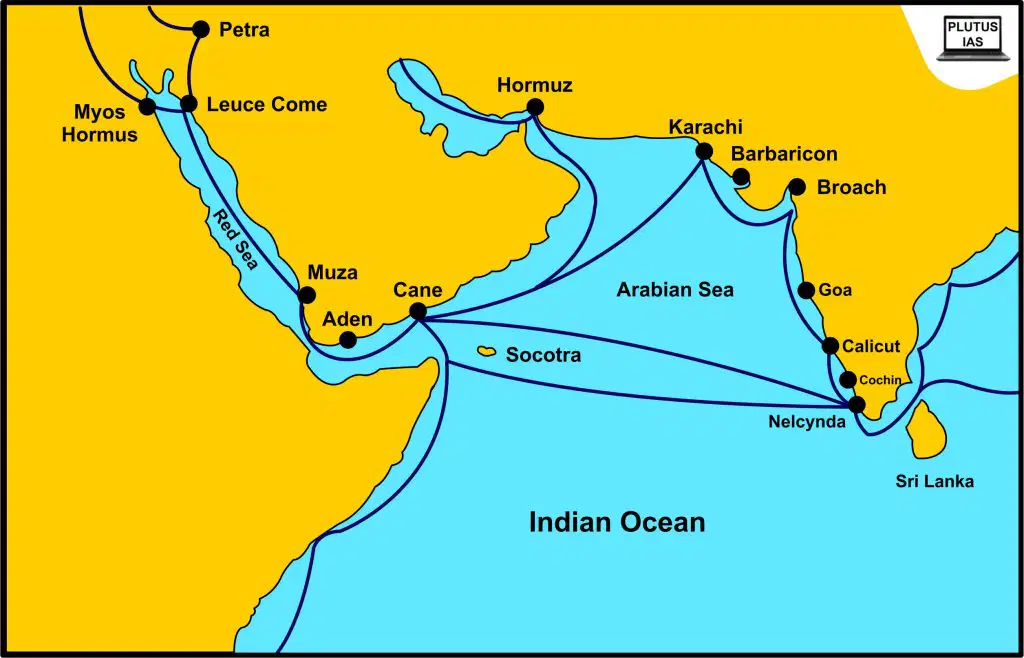
Which city was an important port in the Red Sea trade?
Alexandria
Mombasa
Mecca
Aden
How do the goods traded in the Indian Ocean network compare to those in the Trans-Saharan network?
Both networks mainly traded spices.
The Indian Ocean network traded luxury goods like silk and spices, while the Trans-Saharan network traded gold and salt.
Both networks traded agricultural products.
The Indian Ocean network traded metals, while the Trans-Saharan network traded textiles.
Assess the key role of the Red Sea in ancient trade routes.
It was a minor route with little importance.
It was a vital connection between the Mediterranean and Indian Ocean trade routes.
It was mainly used for local trade within Africa.
It was avoided because of dangerous waters.
What was the main reason for the fall of the Swahili city-states?
Too many people
European takeover and control of trade routes
Natural disasters
Fighting within
What was the role of religion in the Trans-Saharan trade?
Religion had no role in the trade.
The trade helped spread Christianity.
The trade helped spread Islam and establish Islamic learning centers.
The trade was mainly secular with no religious influence.
Between the 11th and 15th centuries, Muslim traders from Egypt sought goods from China and Southeast Asia, buying them on India's southwest coast. Sea voyages between Egypt and India were dangerous and long, with traders waiting months for favorable winds.
To stay safe, Muslim merchants formed karim, or convoyed fleets. Egyptian rulers provided armed escorts, making Red Sea-India trade a protected and regular activity.
The karim merchants were part of large family firms with assets and clients across trading networks. In the Indian Ocean trade, Muslim traders interacted with Hindus, Zoroastrians, Christians, and Jews, sharing ships and caravanserais. In Egypt, many Jewish traders worked within Muslim business networks.
Xinru Liu and Lynda Norene Shaffer, historians, Connections across Eurasia, published in 2007
Which type of goods was this trade pattern most typical for during 1200–1450?
Daily food staples like bread or milk
Bulk commodities like grain or coal
Luxury goods like spices or porcelain
Livestock like pigs or cattle

What does the map show about Indian Ocean trade?
Monsoons stopped trade along the East African coast.
Europeans moved goods from West Africa to the Indian Ocean.
Trade included most regions around the Indian Ocean and China.
Silk was the main item traded across the Indian Ocean.

West African culture was influenced by the ________________________ trade network
Trans-Saharan
Indian Ocean
Middle Eastern
Mediterranean

Which of these was NOT traded on the Trans-Saharan Trade Network?
Salt
Slaves
Sand
Gold

What was mainly traded for gold in early West African trans-Saharan trade?
Iron
Salt
Slaves
Ivory
Why were camels used as pack animals on the Silk Road?
They could carry heavy loads
They didn't need much water
Both
Why did West African gold and salt traders use different transportation methods like camels, boats, and donkeys?
Each West African government chose a different official transportation method.
The trade network covered various climates and geographies needing different transportation.
The trade network linked cultures that preferred their own transportation methods.
Neighboring kingdoms exchanged different inventions and animals for gold and salt.
Which coastal region in East Africa saw the emergence of powerful city-states that became major trade hubs on the Indian Ocean?
Guinea Coast
Malay Coast
Swahili Coast
Omani Coast
What did Africans mainly supply in the trade between East Africa and Asia?
art works
manufactured goods
grains and produce
raw materials
How did trade affect West Africa?
Islam was introduced to Mali
Buddhism was introduced to Mali
Women gained more rights
Great Zimbabwe became a center of learning
a group of merchants and camels crossing the desert
a clan of people living in the mountains
a North African family of nomads
a port city that engages in trading
What is the best definition of a commodity?
an item that is very scarce
a valuable mineral such as gold
any trade good
a caravan of camels
What does scarcity mean?
an item that is in short supply
a valuable mineral such as gold
any trade good
a caravan of camels
the seasonal wind of the Indian Ocean and southern Asia, blowing from the southwest in summer and from the northeast in winter.
monsoon
dhow
mariner
sultan
What were the major goods traded on the Trans-Saharan Trade route?
Gold and slaves
Iron and slaves
Gold and salt
Iron and gold
What does surplus mean?
A large city
A small quantity
Insufficient
More than needed
The Ghana, Mali, and Songhai empires thrived because they were close to the ____
biggest European cities
Mediterranean Sea
Red Sea coast
Trans-Saharan trade routes
What are the 3 West African kingdoms in order of their historical appearance?
Ghana, Mali and Songhai
Mali, Songhai and Ghana
Songhai, Ghana and Mali
Ghana, Songhai and Mali

Which area is in West Africa?
A
B
C
D
Why was the Silk Road significant?
it helped the Han empire control the Mediterranean region
it linked Asian and many different cultures for more a thousand years
it extended a thousand miles across Asia
it connected the Han and Egyptian empires
What is true about cultural diffusion?
Cultural diffusion spreads ideas, knowledge, and goods.
Cultural diffusion no longer takes place today.
Cultural diffusion occurs only within one culture.
Cultural diffusion happened only along the Silk Road.

Which animal was most helpful for trading gold, silk, and salt across the desert?
Camel
Horse
Elephant
Alpaca
How did the Swahili Coast states primarily generate wealth to develop their societies?
Trade
Conquest
Agriculture
Mining
What role did the wealth from trade play in the development of public services in the Swahili Coast states?
It was invested in public infrastructure and services.
It was used to build military forces.
It was hoarded by the ruling elite.
It was used to fund religious missions.
Which of the following was a key factor in the Swahili Coast states becoming wealthier through trade?
Abundance of natural resources
Isolation from other regions
Strategic location along the Indian Ocean trade routes
Strong military presence
What geographical feature contributed to the Swahili states becoming a major trade center?
Position near the Nile River
Access to the Atlantic Ocean
Location along the Indian Ocean coast
Proximity to the Sahara Desert
How did the Swahili states' location influence their trade relationships?
They had direct access to trade with the Middle East and India.
They primarily traded with European countries.
They were isolated from other regions.
They focused on local trade within Africa.
Which factor made the Swahili city-states a hub for cultural exchange?
Their inland location
Their strategic position on the Indian Ocean trade routes
Their reliance on agriculture
Their isolation from other cultures
How did trade routes contribute to cultural diffusion on the Swahili Coast?
By preventing the spread of new technologies
By introducing new goods and ideas from different regions
By isolating the Swahili Coast from other cultures
By limiting interactions to only local communities
Which of the following best describes the impact of merchants on the Swahili Coast?
They focused solely on agricultural trade
They avoided interactions with other cultures
They facilitated the exchange of cultural practices and languages
They only traded local goods within the region
What role did the Indian Ocean trade network play in the development of the Swahili Coast states?
It isolated the Swahili Coast from other regions
It led to the decline of the Swahili Coast states
It helped the Swahili Coast states become major cultural and trade hubs
It restricted the Swahili Coast states to trading only with Europe

Which region is richest in oil?
West
North
West & Central
South

Mansa Musa took a ____________ to Mecca.
migration
surplus
pilgrimage
minerals
Mansa Musa had a __________ of gold.
pilgrimage
inflation
caravan
surplus

Pictured in Mansa Musa's....
caravan
migration
pilgrimage
kingdom
Which is considered both a mineral and a resource?
gold
quartz
coffee
salt

Which region(s) would you travel to for diamonds?
South & Central
North & West
South & East
North & South

_______ is when a stronger country dominates a weaker country politically, economically, and socially.
Isolationism
Nationalism
Globalization
Imperialism
Which statement best describes the purpose of the Berlin Conference.
So European countries could divide Africa in a civil manner.
To decide how European countries would help Africa.
To end the slave trade.

What are the traits that make camels good for the desert? Choose all that apply
Long eyelashes
they can go for long times without water
they can carry heavy loads
they don't sink in the sand
they make good friends
What is a network?
an interconnected system of things or people
the extended spatial location of something
an extended social group having a distinctive cultural and economic organization
the number of inhabitants in a given place
West Africa was known for trading
Pepper and Salt
Gold and Silver
Salt and Gold
None of the above
The biggest, hottest desert in the world is the
Sahara Desert
Savannah Desert
Hot Desert
Dry Desert
An African Tribal Storyteller is a
Reader
Author
Griot
Muslim
Someone who practices the religion of Islam is a
Muslim
African
Sherpa
Trader
Information from the past that you get from people talking to each other is
written history
artifacts
conversation
oral history
Objects from the past that are left for us to study
artifacts
facts
arts
none of the above
The most important West African city, for trade and education was
Timbuktu
Cairo
Gao
Rome
Mansa Musa was leader of which West African trading empire?
Ghana
Mali
Songhay
Axum

What region is Northern Africa?
Yellow
Red
Purple
Green
What region is Southern Africa?
Yellow
Blue
Purple
Red
What region is Central Africa?
Yellow
Blue
Purple
Red
What region is Western Africa?
Yellow
Green
Purple
Red
What region is Eastern Africa?
Yellow
Green
Purple
Blue

