
 Worksheets
Respiratory System
Total questions: 84
Worksheet time: 45mins
Which organs make up the respiratory system?
Heart and blood vessels
Lungs and air passages
Stomach and intestines
Kidneys and bladder
What is the main function of the respiratory system?
Digests food
Takes in oxygen and removes carbon dioxide
Pumps blood
Produces hormones
Fill in the blank: The body only has a ____ minute supply of oxygen, so the respiratory system must work continuously.
4-6
10-12
20-30
1-2
What are the two openings through which air enters the nasal cavity called?
Turbinates
Nostrils or nares
Adenoid area
Palate
What is the function of the nasal septum?
Warms the air
Divides the nose into right and left nasal cavities
Traps dirt particles
Produces mucous
Fill in the blank: The nasal cavities are hollow spaces that are lined with _______ membranes, which trap pathogens and dirt and moisten air.
mucous
serous
synovial
cutaneous
What is the role of cilia in the nasal cavity?
Divide the nose
Trap larger dirt particles and move mucous toward the esophagus
Warm the air
Produce blood supply

Sinuses are ______ in the skull.
cavities
muscles
nerves
joints

What area do the sinuses surround?
the nasal area
the ear canal
the eye socket
the jawbone

Sinuses are connected to nasal cavities by:
Long tubes
Short ducts
Blood vessels
Nerves

The mucous membrane lining the sinuses helps to ______ and ______ air.
(a)

Sinuses provide resonance for the voice.
True
False
The pharynx is also known as the ______ and lies directly behind the nasal cavities. It is 5 inches long.
throat
larynx
esophagus
trachea
What is the common passageway for air and food?
Trachea
Pharynx
Esophagus
Larynx
When food is swallowed, the ______ closes over the opening to the larynx, preventing food from entering the lungs.
epiglottis
trachea
esophagus
pharynx
The oropharynx is located posterior to the ________ (oral cavity).
mouth
nose
larynx
esophagus
Which part of the pharynx contains adenoids (pharyngeal tonsils) and Eustachian tube openings?
A) Nasopharynx
B) Oropharynx
C) Laryngopharynx
The laryngopharynx branches into the ________ and esophagus.
larynx
trachea
pharynx
bronchi
Which part of the pharynx receives air from the nasopharynx and both air and food from the mouth?
Nasopharynx
Oropharynx
Laryngopharynx
What is the larynx also known as?
Windpipe
Voice box
Esophagus
Adam's apple
How many folds does the larynx contain?
1
2
3
4
What covers the larynx during swallowing?
Tongue
Epiglottis
Vocal cords
Glottis
The largest cartilage plate in the larynx is known as the _________.
Adam's apple
Cricoid cartilage
Epiglottis
Arytenoid cartilage
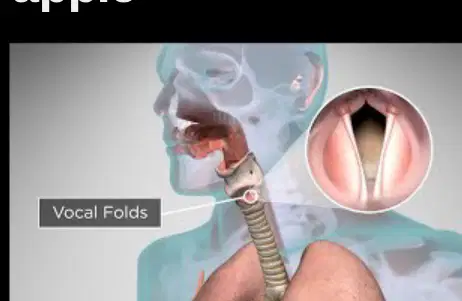
Refer to the diagram. Which structure is responsible for producing sound by vibrating?
Epiglottis
Vocal cords
Trachea
Esophagus
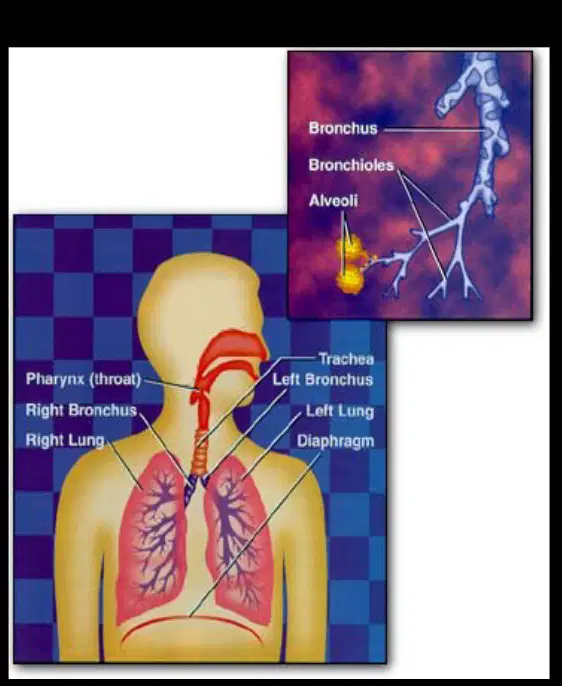
What is another name for the trachea?
Windpipe
Esophagus
Bronchus
Alveoli

The trachea carries air from the ______ to the bronchi.
larynx
esophagus
pharynx
alveoli
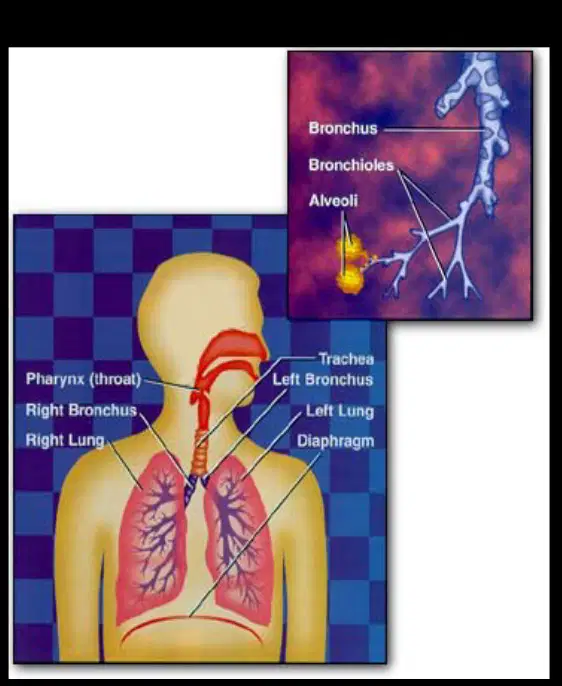
What keeps the trachea open and more rigid?
Smooth muscle
C shaped rings of hyaline cartilage
Blood vessels
Alveoli
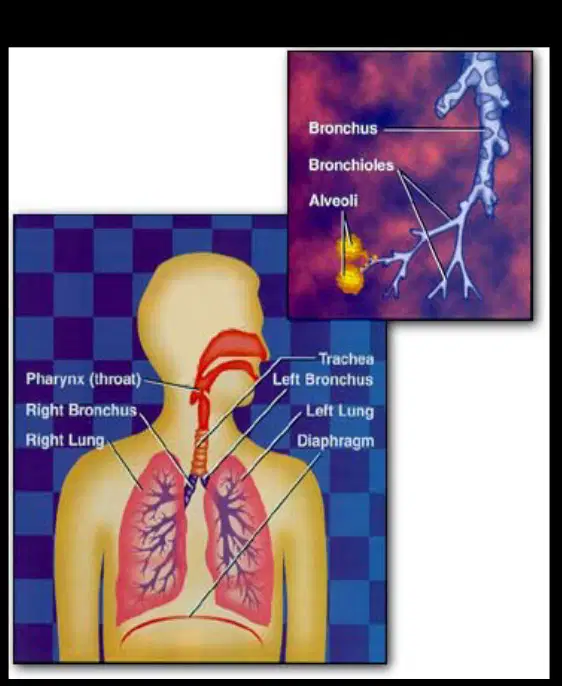
The trachea is lined with ______ mucous membrane.
ciliated
stratified
squamous
cuboidal
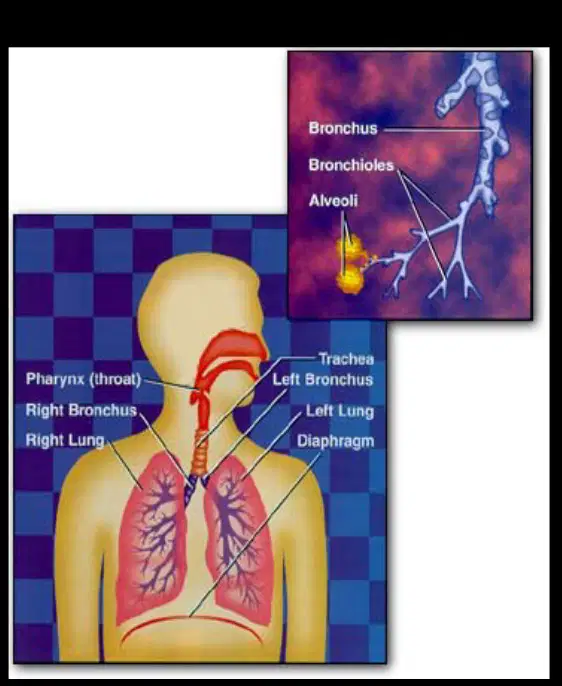
Coughing and expectoration are functions related to which part of the respiratory system?
Larynx
Trachea
Alveoli
Diaphragm
What does the lower end of the trachea divide into?
Two alveoli
Right and left bronchi
Two pleura
Two diaphragms
What is the function of the bronchi?
Carry blood from the heart to the lungs
Carry air from the trachea to alveoli in lungs
Produce pleural fluid
Control diaphragm movement
The bronchi keep dividing into tiny ________, which end in alveoli.
bronchioles
capillaries
arterioles
tracheoles
Which bronchus is shorter, wider, and extends more vertically than the other?
The right bronchus
The left bronchus
The middle bronchus
The superior bronchus
Which of the following best describes the structure of alveoli?
Thick-walled sacs made of muscle tissue
Clusters of thin-walled sacs made of single layer epithelial tissue with a rich blood supply of capillaries
Solid masses of bone tissue
Glands that secrete hormones
The inner surfaces of alveoli are covered with ________ to keep them from collapsing.
surfactant (lipid/fatty substance)
mucus
water
hemoglobin
O2 and CO2 exchange takes place between the alveoli and capillaries by diffusion.
True
False
Which part of the respiratory system is directly connected to the alveolar sacs?
Terminal Bronchiole
Pulmonary Arteriole
Respiratory Bronchiole
Trachea
What organ contains the bronchi and alveoli?
Lungs
Heart
Liver
Kidneys
How many lobes does the right lung have?
3 lobes
2 lobes
4 lobes
5 lobes
How many lobes does the left lung have?
(a)
Which lung is larger and shorter, and is displaced by the liver?
(a)
Which lung is smaller and displaced by the heart?
(a)
Lung tissue is porous and spongy, and it floats.
True
False
Which of the following is NOT a function or characteristic of the lungs?
Contains the bronchi and alveoli
Fills the thoracic cavity
Produces insulin
Lung tissue is porous and spongy
What is the thin, moist slippery membrane that covers the lungs called?
Pleura
Pericardium
Peritoneum
Meninges
Which of the following best describes the pleura?
A) A single-layered membrane covering the heart
B) A double-walled sac with visceral pleura attached to the lung surface and parietal pleura attached to the chest wall
C) A muscle involved in breathing
D) A bone in the rib cage
The pleural cavity is the space between the two layers of the pleura and is filled with pleural fluid to prevent friction as lungs expand during breathing.
True
False
What structure of the respiratory system is responsible for voice production?
Larynx
Trachea
Bronchi
Alveoli
Which body function is made possible by fibrous plates contained within the cartilage of the larynx?
(a)
The respiratory system ends in millions of tiny, thin walled sacs called: ________
Alveoli
Bronchioles
Trachea
Capillaries
What covers the outer surface of the lungs and lines the inner surface of the rib cage?
Pleura
Pericardium
Diaphragm
Peritoneum
The windpipe is referred to as the: ________
Trachea
Esophagus
Bronchi
Larynx
The wall of the trachea are made more rigid by the presence of: ________
Rings of Cartilage
Muscle fibers
Ligaments
Blood vessels
Each lung is divided into two or three parts called: ________
Lobes
Bronchi
Alveoli
Villi
When the trachea divides to enter both lungs, the tubes that are formed are called: ________
Bronchi
Alveoli
Bronchioles
Tracheoles
The partition that separated the nose into right and left cavities is the: ________
Septum
Nasal concha
Turbinates
Sinus
The medical name for the throat is the: ________
Pharynx
Larynx
Trachea
Esophagus
What is the main function of the respiratory system in relation to the circulatory system?
Exchanging gases between air and blood.
Digesting food for energy.
Producing hormones for growth.
Filtering waste from the blood.
Which process involves taking in oxygen from air and supplying it to blood for cellular respiration?
Expiration
Inspiration
Circulation
Digestion
Expiration is responsible for the removal and disposal of (a) from blood (waste product from cellular respiration).
The respiratory system helps regulate blood pH.
True
False
Name two homeostatic roles of the respiratory system.
Regulates blood pH and regulates blood oxygen and carbon dioxide levels.
Produces digestive enzymes and stores nutrients.
Controls muscle contractions and generates nerve impulses.
Regulates body temperature and produces hormones.
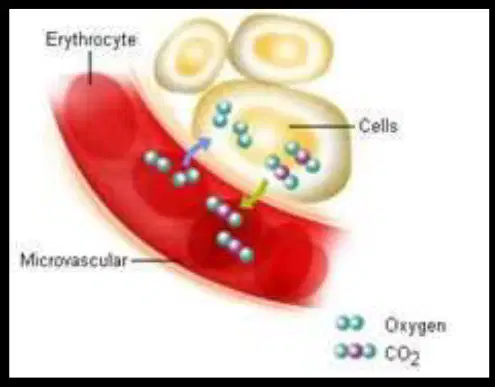
What is internal respiration?
Exchange of CO2 and O2 between the body’s tissue cells and bloodstream
Cells use O2 and nutrients to produce energy, water, and carbon dioxide
Breathing in oxygen from the environment
Transport of nutrients in the blood
Fill in the blank: Cellular respiration is the process by which cells use ______ and nutrients to produce energy, water, and carbon dioxide.
O2
CO2
H2O
N2
The concentration of CO2 waste is higher in the tissue cells than in the bloodstream, so it diffuses into the blood to be taken back to the lungs.
True
False
Which direction does oxygen (O2) diffuse?
From tissue cells to capillaries
From capillaries to tissue cells
From lungs to tissue cells directly
From blood to lungs
External respiration is the exchange of ______ and ______ between the lungs and bloodstream.
O2, CO2
CO2, H2O
O2, N2
CO2, O2
Which of the following best describes what happens during external respiration?
O2 enters the alveoli and diffuses into the capillary blood, while CO2 diffuses from the blood into the alveoli to be breathed out.
CO2 enters the alveoli and diffuses into the capillary blood, while O2 diffuses from the blood into the alveoli to be breathed out.
O2 and CO2 both move from the blood into the alveoli.
O2 and CO2 both move from the alveoli into the blood.
During external respiration, O2 diffuses from the alveoli into the capillary blood because the blood has less O2 than the alveoli.
True
False
What is the partial pressure of O2 (PO2) in the alveoli of the lungs?
160 mm Hg
104 mm Hg
40 mm Hg
45 mm Hg
What is the partial pressure of CO2 (PCO2) in the blood entering the alveolar capillaries?
40 mm Hg
45 mm Hg
27 mm Hg
160 mm Hg
What is another term for respiration?
Digestion
Ventilation
Circulation
Excretion
Respiration (breathing) is controlled by the respiratory center in the _________
medulla oblongata
cerebellum
hypothalamus
cerebrum
Increased CO₂ or decreased O₂ causes an increase in respiration.
True
False
Is respiration usually involuntary or voluntary?
During inhalation, what happens to the diaphragm and the belly?
Diaphragm rises, belly contracts
Diaphragm descends, belly expands
Diaphragm descends, belly contracts
Diaphragm rises, belly expands
What happens to the diaphragm during inspiration (inhalation)?
It relaxes and moves upward
It contracts and moves downward
It stays in the same position
It contracts and moves upward
During inspiration, the intercostal muscles lift the ribs ______, and the sternum ______.
outward, rises
inward, falls
downward, rises
outward, falls
During inhalation, the volume of the lungs increases, creating a vacuum that causes air to rush into the alveoli.
True
False
What happens to the belly during inhalation?
It contracts
It expands
It stays the same
It moves upward
What is expiration (exhalation)?
Breathing in
Breathing out
Holding breath
Sneezing
During exhalation, what happens to the intercostal muscles and diaphragm?
They contract
They relax
They expand
They stiffen
Exhalation is usually a ______ process.
passive
active
forced
voluntary
What happens to the diaphragm during inhalation?
It ascends
It descends
It contracts
It relaxes

