
 Worksheets
Beam Usage and Characteristics Quiz
Total questions: 20
Worksheet time: 10mins
What is a beam primarily used for?
To carry a load applied transverse to its length
To insulate buildings
To conduct electricity
To provide lighting
Where are beams commonly used?
In floors and roofs
In walls and ceilings
In windows and doors
In plumbing systems
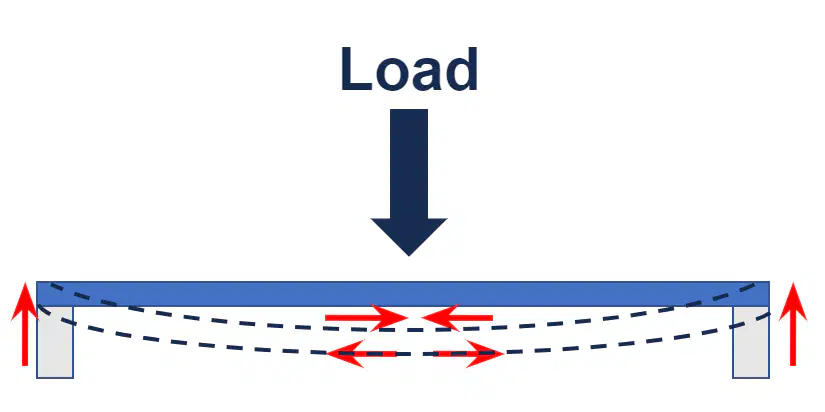
What are beams designed to carry according to the image?
Shear and Bending Moment
Tension and Compression
Torque and Pressure
Heat and Electricity
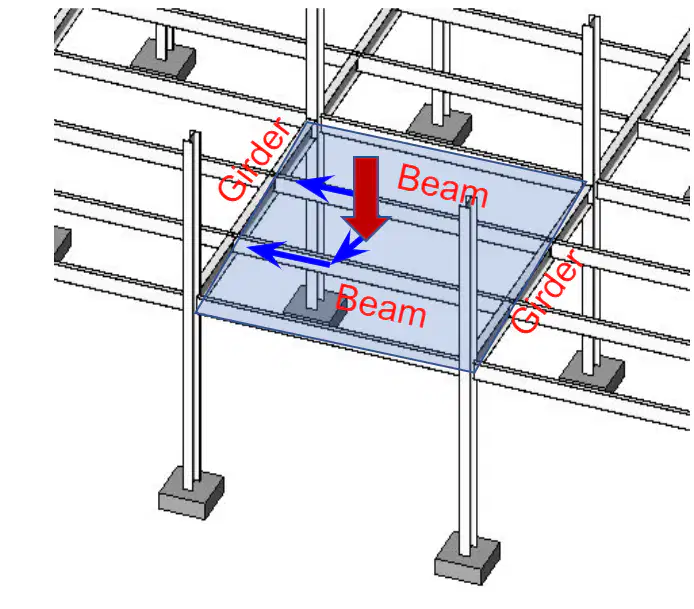
Where are loads initially applied in a building structure?
Walls
Windows
Floor or roof
Doors
What is the role of beams in a building structure?
To decorate the building
To transfer loads to another building component
To provide insulation
To support windows
What is static equilibrium?
The state of an object in which forces are unbalanced
The state of an object in which forces applied counteract each other so that the object remains stationary
The state of an object in which forces cause constant motion
The state of an object in which forces are absent
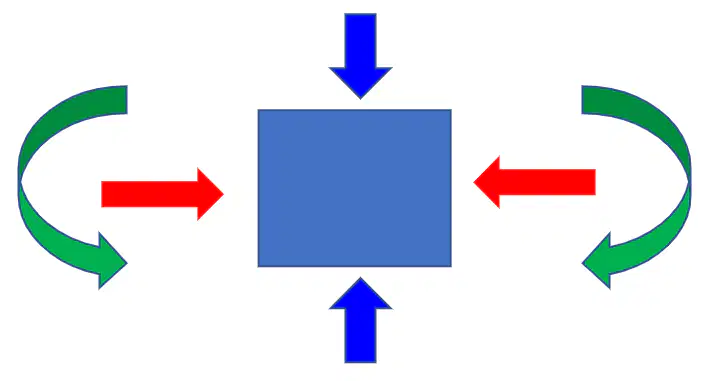
Why must a beam be in static equilibrium?
To move freely
To successfully carry loads
To rotate continuously
To change shape
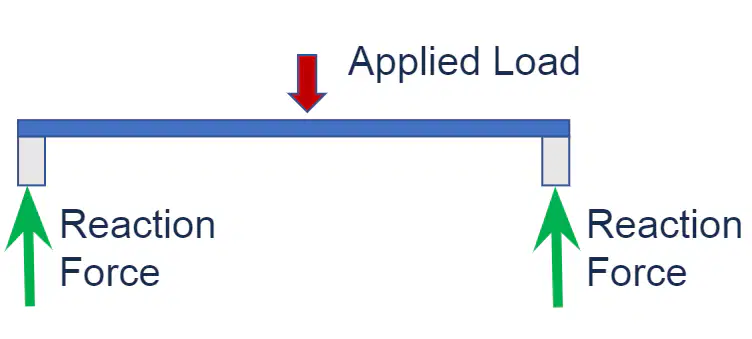
What are the forces called that resist the loads applied to a beam?
Gravitational forces
Reaction forces
Frictional forces
Tension forces
Why are forces often referred to as vectors?
Because they have only magnitude
Because they have only direction
Because they have magnitude and direction
Because they are scalar quantities
What is a linear reaction force often called?
Moment reaction (M)
Shear reaction (F or R)
Torque reaction (T)
Angular reaction (A)
What is a rotational reaction force often called?
Shear reaction (F or R)
Linear reaction (L)
Moment reaction (M)
Force reaction (F)
What must reaction forces do in relation to applied forces?
Exceed the applied forces
Balance the applied forces
Be less than the applied forces
Ignore the applied forces
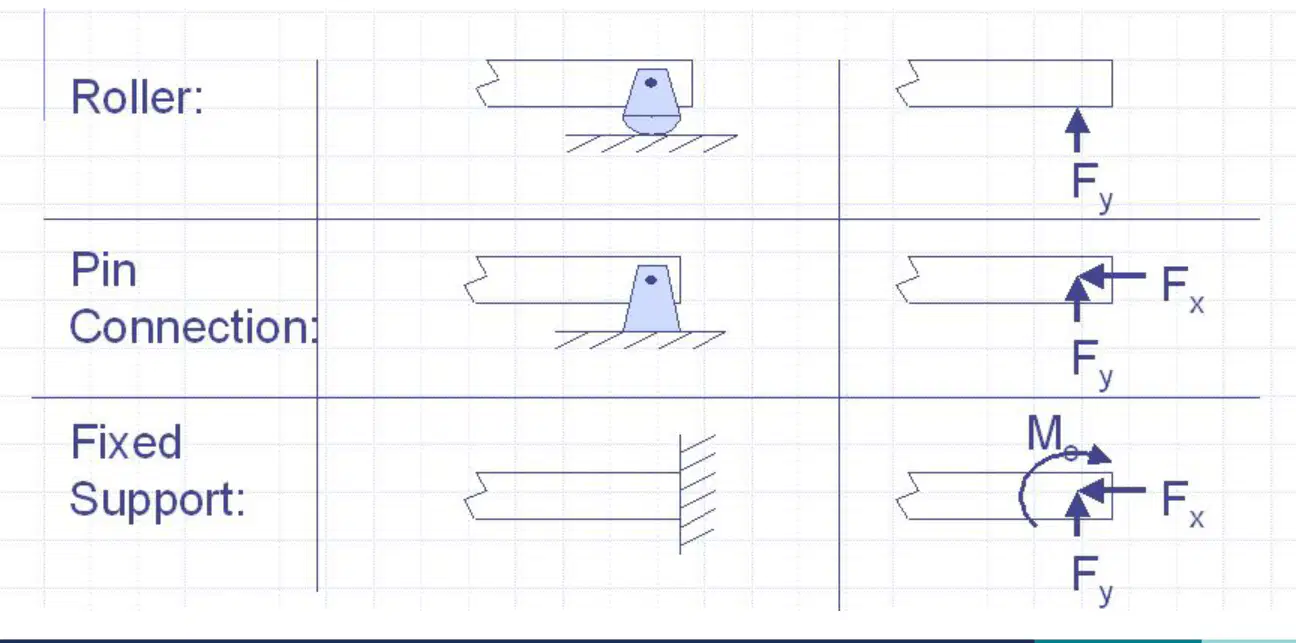
What type of reaction forces are associated with a roller support?
Only vertical force (Fy)
Vertical force (Fy) and horizontal force (Fx)
Vertical force (Fy) and moment (M)
Only horizontal force (Fx)
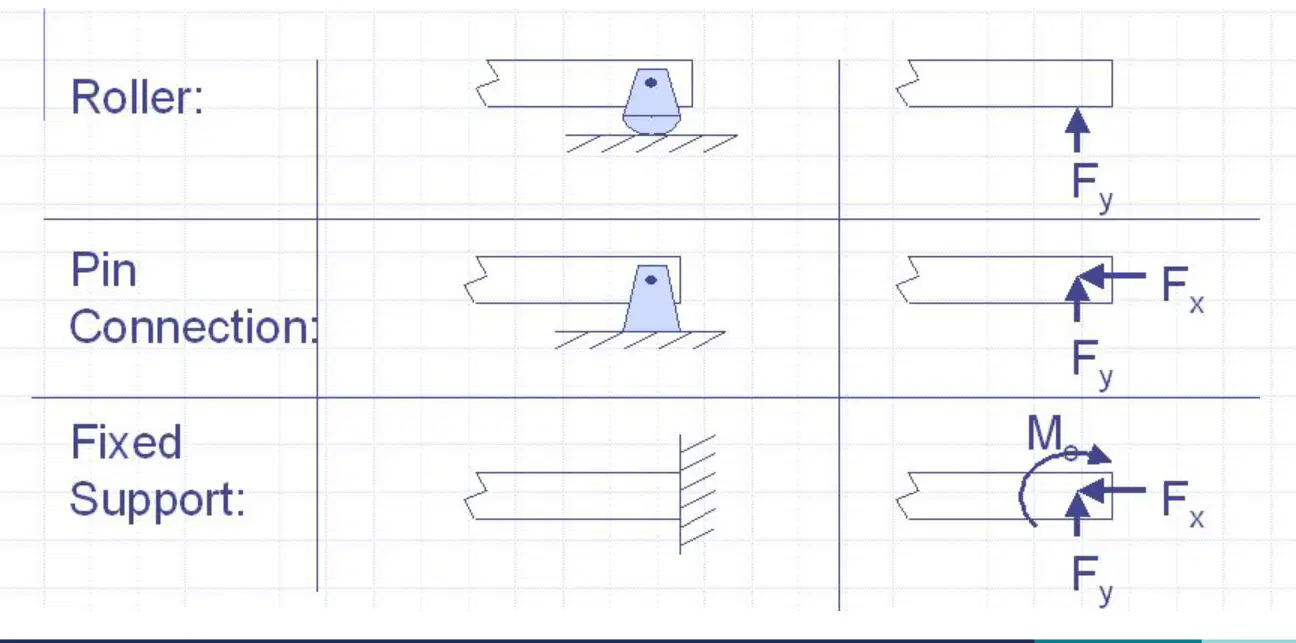
Which type of beam support allows for both vertical and horizontal reaction forces but not a moment?
Roller
Pin Connection
Fixed Support
Cantilever
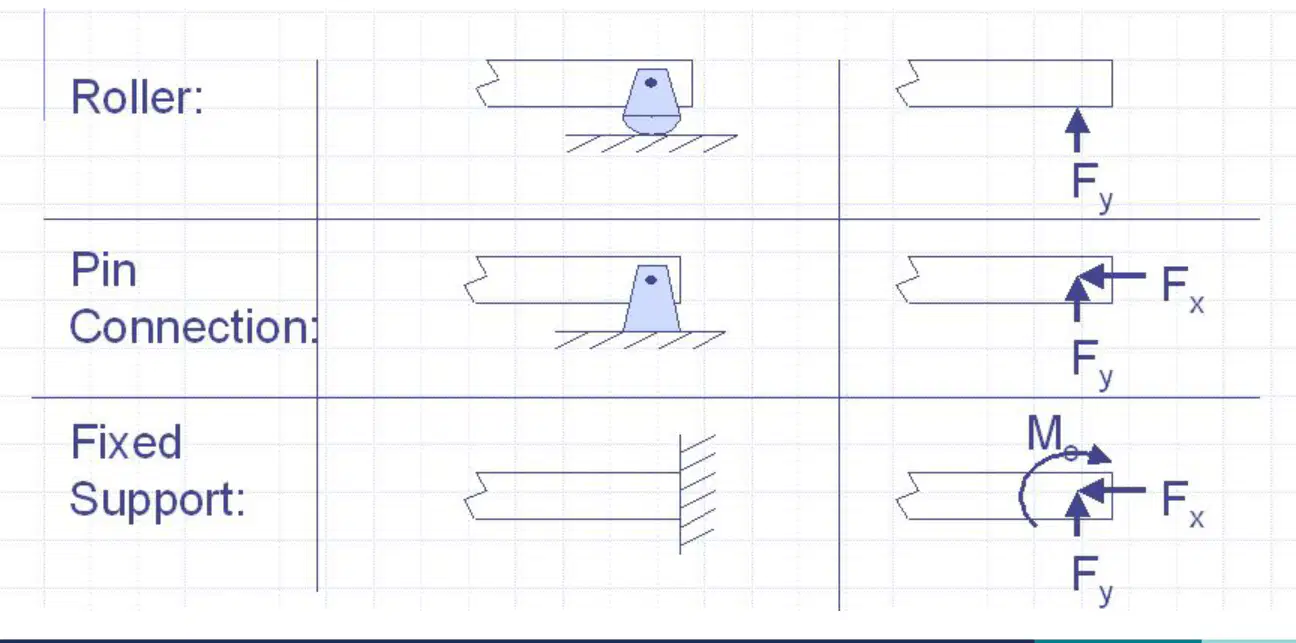
What type of reaction forces are present in a fixed support?
Only vertical force (Fy)
Vertical force (Fy) and horizontal force (Fx)
Vertical force (Fy), horizontal force (Fx), and moment (M)
Only moment (M)

Which type of beam is fixed at one end and experiences a moment?
Simple
Continuous
Cantilever
Truss

What is a characteristic of a continuous beam?
Supported at only one end
Supported at multiple points
Fixed at one end
No supports

Which type of beam is supported at both ends with no intermediate supports?
Simple
Continuous
Cantilever
Arch
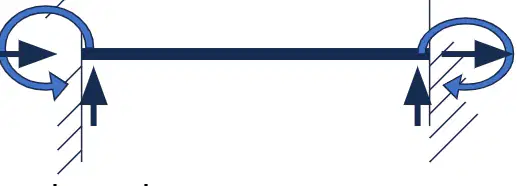
What type of beam is fixed at both ends and experiences moments at each end?
Fixed
Propped
Overhang
Simply Supported
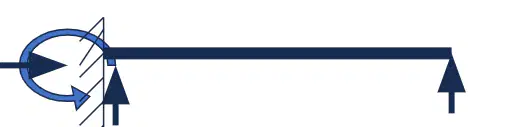
Which type of beam is fixed at one end and supported at the other?
Fixed
Propped
Overhang
Cantilever

