
 Worksheets
Physics Year 9 - Chapter 6
Total questions: 63
Worksheet time: 55mins
Which of the following sound wave produces the highest pitch of sound?


The ____________ of sound is the number of sound vibrations generated in a second.
amplitude
frequency
reflection
absorption

Diagram shows 3 types of sound waves generated from speaker. Which of the following statements is true?
P has a higher pitch than Q
Q has a higher pitch than R
R has the highest pitch
P, Q and R have the same pitch

Which waveform has the lowest frequency?
(a)
(b)
(c)
(d)
(e)

If the distance represented by the letter A (the amplitude) were increased, how would it change the sound?
The sound would be higher.
The sound would be softer.
The sound would be lower.
The sound would be louder.
Frequency is measured in the unit of
Ampere (A)
Hertz (Hz)
Mole (mol)
Meter (m)
Which of the following determines the pitch of a sound wave?
Frequency
Amplitude
Reflection
Absorption
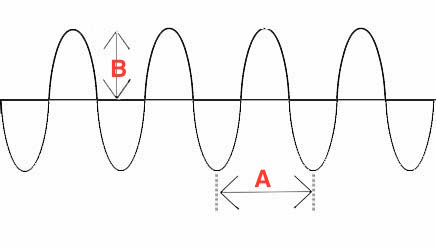
What property of this wave is represented by the letter "A"?
amplitude
crest
trough
wavelength

If the wavelength of a wave increased, what would happen to the frequency?
Decrease
Increase
Decrease and increase
Stay the same

Which of these waves would produce a high pitch sound?
Low frequency wave
High frequency wave
How is sound primarily produced?
A) Through the emission of light waves
B) By the vibration of objects
C) Through the movement of air particles
D) By the generation of electrical currents
How does sound primarily travel through a medium?
A) By the transmission of light waves
B) By the movement of air particles
C) By the transfer of electrical charges
D) By the generation of magnetic fields
What is the term for the distance between two consecutive points in a sound wave that are in phase with each other, such as two consecutive compressions or rarefactions?
A) Wavelength
B) Amplitude
C) Frequency
D) Velocity

Areas of increased pressure on a sound wave are known as a ----
Rarefaction
Compression
Frequency
Amplitude

Spread out areas or areas of decreased pressure on a sound wave are known as a ---
Rarefaction
Amplitude
Compression
Hertz
As sound waves travels _____________, the particles move ___________ and ______________.
(a)
Compression: particles (a)
Rarefraction: particles (a)
Name parts of a wave diagram.
(a)
When a sound gets louder, compression is more ______________, rarefraction is more _____________ ___________.
(a)
Pitch changes due to (a) .
High frequency: waves are (a)
Interference only happens when waves are of the ______ _______ and they have the same _____________ and _____________.
(a)
Constructive interference is when 2 or more same waves add together to produce a _____________ ___________ wave. The ________ increases but the _________ stays the same.
(a)
Destructive interference is when opposite waves meet and (a) each other.
Who proposed the Giant Impact Hypothesis for the formation of the Moon?
Venus
Theia
Mars
Jupiter
What are the two main components involved in the Giant Impact Hypothesis?
Sun and Moon
Mars and Venus
Earth and Jupiter
Earth and a Mars-sized body
What evidence supports the Giant Impact Hypothesis?
Lack of any evidence for the Giant Impact Hypothesis
Different composition of the Moon and Earth's mantle
Presence of life on the Moon
Similar composition of the Moon and Earth's mantle
What is the name of the planet that collide with Earth?
Thiea
Thia
Theia
Thea
What causes the particles to groups together and form moon?
Gravity
nuclear fission
atomic force
resultant force
Which evidence agaisnt formation of moon theory?
No Moon on Mercury and Mars
rocks on theia is same as Earth
rocks on Moon supposed to be Theia not Earth nad Venus got no Moon
Jupiter got Moon, Earth rocks is same as Theia
How stars is formed?
Dust and gas particles are pulled together
by gravity. Increase gravity, increase pressure, cause heat and light
Dust and gas particles are pulled together
by gravity. this explode and give heat and light
Hydrogen and helium pulled together by gravity and pressure increases
Pressure increase due to gravity increase. So cause sparks and heat given
What is Southern nebula called?
Hercules
Orion
Carina
Karine
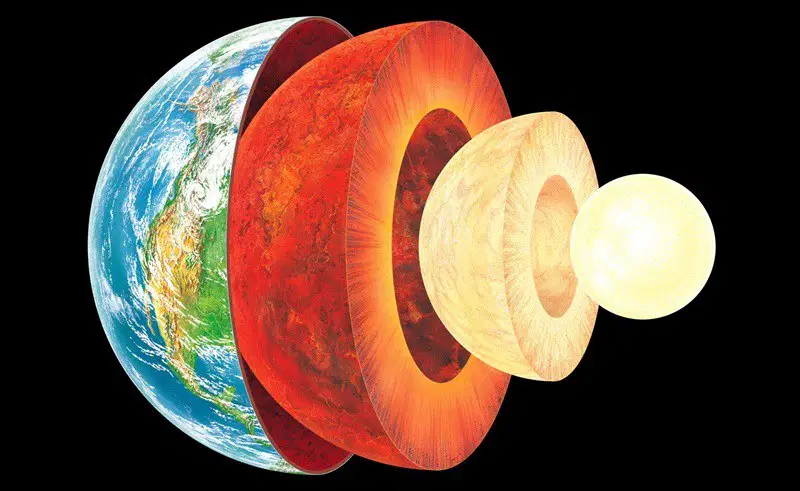
Innest most layer of Earth is
outer core
crust
mantle
inner core
What caused the Earth's plate to move?
convection current of the mantle
movement of tectonic plate
convection of magma
convection current of the sea
Why most underwater volcanoes and earthquakes in ocean, happened near ridges?
magma pushed and caused ridges. This ridges make the volcano to erupt
ridges between two plates, cause magma to pushed up and split the plates, making earthquake
ridge between two plates start to move due to convection current, cause magma comes up
ridge is a boundary between 2
tectonic plates.
magma is being pushed
up cause volcano. 2 tectonic plate move cause Earthquake.
What is the collision theory for the formation of the Moon?
The Moon was formed from a collision between Earth and a Saturn-sized object.
The Moon was formed from a collision between Earth and a Jupiter-sized object.
The Moon was formed from a collision between Earth and a Mars-sized object.
The Moon was formed from a collision between Earth and a Venus-sized object.
The formation of the moon happened after the formation of ______________.
Earth was formed when _______ _________ j______.
(a)
Evidence supporting the collision theory:
1. the Moon is less __________ than the Earth.
2. The Moon's surface was once _____________.
Evidence contradicting the collision theory:
1. Earth's surface is not _________. The collision would've melted the surface.
2. _______ has no moons even with the collisions.
3. the ____________ of the Moon's ________ are more similar to ____________'s than Theia's.
(a)
What is a nebulae?
(a)
There are mostly ___________ gas in nebulae and some _____________ gas.
(a)
Nebulae are very (a) . One as big as Earth would only weigh a few kilograms.
The particles are ______ _____________ in a nebula.
(a)
Name the easiest nebula to see in the northern hemisphere.
(a)
When can you see The Orion?
(a)
Name the easiest nebula to see in the southern hemisphere.
(a)
What is a stellar nursery?
(a)
In a stellar nursery, _____ and ____ collapse under the force of ___________. They collect and _______ __________. The force of __________ __________, causing the __________ to ___________ too. ________ leads to ______. Then atoms ______. The new star gives out _______ and __________.
(a)
Layers of the Earth (outermost to innermost):
1. ________
2. _________
3. ________ ______
4. _______ __________
(a)
Mantle consists of ____-_________ ______ that moves slowly due to _________ ____________.
(a)
_________ic crust is _______ & ________. Continental crust is less ___________ and _________.
(a)
Outer core is __________. Inner core is ______. (state the state of matter)
(a)
What are tectonic plates?
(a)
Convection current:
______ part of the _______ gets heated = becomes less __________ = __________ = _________ = sinks
(a)
Plate boundaries:
1. _________: plates go apart = _________
2. Convergent: plates _______ _____________ = _________ ___________
3. _________: plates ________ __________ = earthquake
(a)
(a) : one plate sinks when two plates collide.
Name two evidences of tectonic plates.
(a)
All the continents come together to form (a) .
Formation of The Moon
(a)
Arrange from smallest to largest:
star, nebula, moon, asteroid
(a)
Why do most volcano and earthquake happen along the mid atlantic ridge?
(a)

