
 Worksheets
Investing and Building Wealth
Total questions: 25
Worksheet time: 1hrs 15mins

What is saving?
Using money to buy something (like a piece of a company)
Keeping money in a safe place (like a savings account)
Spending money on entertainment
Donating money to charity

Saving is good for ________ and emergencies.
short-term goals
long-term investments
daily expenses
luxury purchases

What is the extra money earned from saving called?
Interest
Tax
Debt
Loss

When you invest, you are hoping it will become more ________ over time.
valuable
expensive
fragile
useless

High risk in investing usually means high reward.
True
False

What is the magic that happens in investing, according to the worksheet?
Saving
Compounding
Spending
Borrowing

Based on the example in the image, if you invest $100 and it grows by 5% in the first year, how much money do you have at the end of the first year?
$105
$100
$110
$95
What do you buy when you purchase a stock?
A loan to the company
A tiny piece of that company
A product from the company
A building owned by the company

If the company does well, what happens to the value of your stock?
It goes down
It stays the same
It can go up
It disappears
What is a bond similar to?
Owning a part of a company
Lending money to a government or a big company
Buying real estate
Starting a business
Bonds are generally less risky than stocks.
True
False
What does a mutual fund do with the money it pools from many investors?
Buys a variety of different investments (stocks, bonds, etc.).
Deposits all the money in a savings account.
Lends the money directly to other investors.
Uses the money to purchase real estate only.
Exchange-Traded Funds (ETFs) are similar to which other investment option?
Mutual funds
Fixed deposits
Real estate
Gold coins
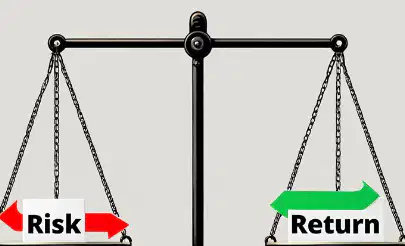
In investing, there's usually a trade-off. What does this trade-off refer to?
The balance between risk and return
The balance between spending and saving
The balance between stocks and bonds
The balance between income and expenses
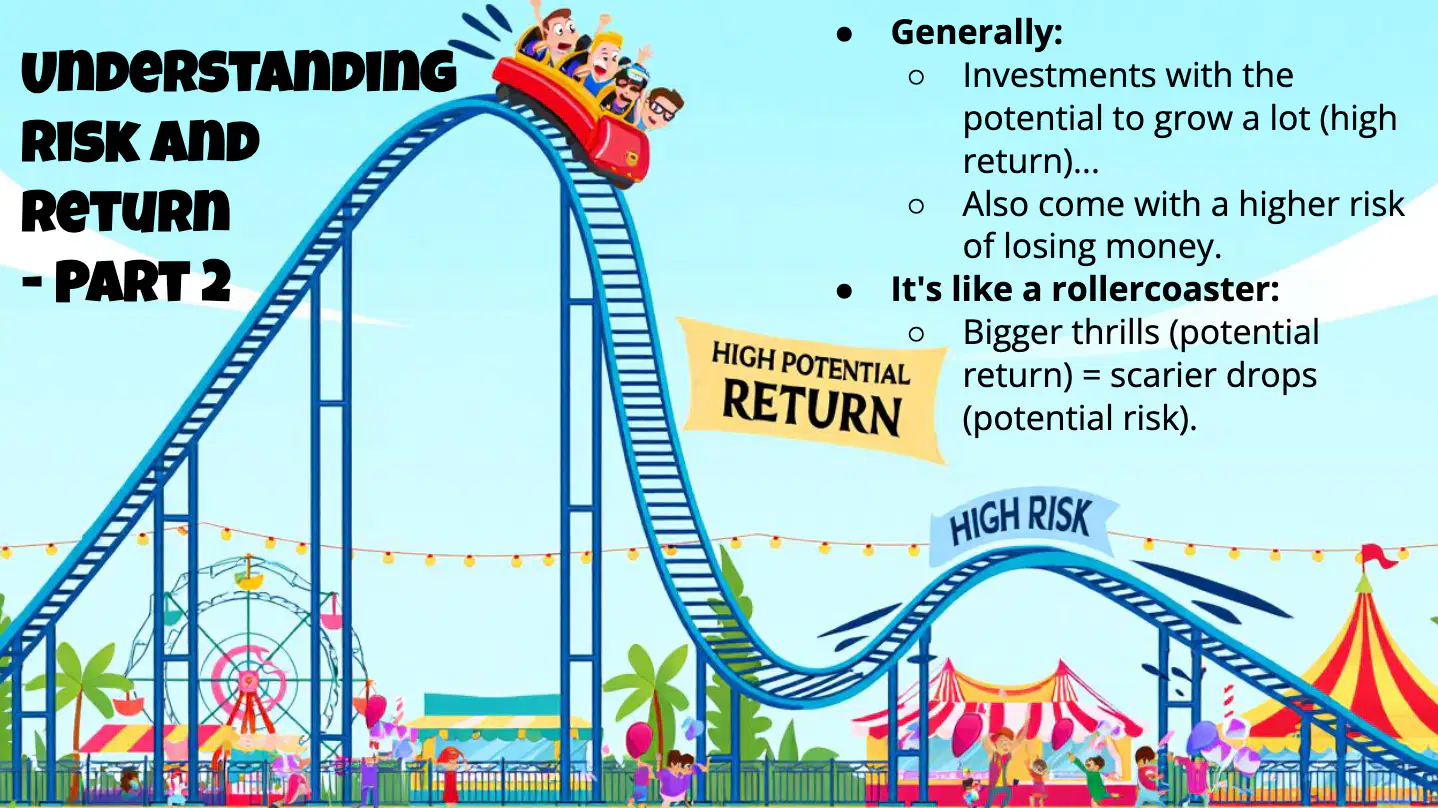
According to the image, investments with the potential to grow a lot (high return) also come with what?
A higher risk of losing money.
A guaranteed profit every year.
No risk at all.
A fixed interest rate.
What does diversification in investing mean?
Putting all your money in one investment
Putting your money into different types of investments
Not investing at all
Only investing in stocks
Why is diversification considered a smarter way to invest?
It guarantees high returns
It reduces overall risk by not relying on a single investment
It is easier to manage
It avoids taxes
What is the foundation for starting to invest as a teenager?
Savings Accounts
Credit Cards
Cryptocurrency
Stock Trading
What is a custodial account?
An account for buying groceries
A special investment account opened by your parents/guardians for you
An account for saving for college
An account for paying bills
What does ROI stand for in investing?
Return on Investment
Rate of Interest
Revenue on Income
Ratio of Investment
What is the main purpose of investing?
To grow your money for long-term goals.
To spend money quickly.
To avoid paying taxes.
To keep all your money in cash.
What does diversifying do to risk?
Diversifying reduces risk.
Diversifying increases risk.
Diversifying eliminates all risk.
Diversifying has no effect on risk.
In investing, what does 'risk' mean?
Potential loss
Guaranteed profit
Stable returns
No change in value
In investing, what does 'return' mean?
Potential gain
Investment risk
Market trend
Company size
What is the benefit of starting to invest early, even with small amounts?
Compounding has more time to work its magic.
It guarantees high returns regardless of market conditions.
It eliminates all investment risks.
It allows you to avoid paying taxes on gains.

