
 Worksheets
Working With Chemical Equations
Total questions: 25
Worksheet time: 13mins
Name
Class
Date
1.
A chemical substance that is present at the start of a chemical reaction (the Ingredients)
a)
Reactant
b)
Product
c)
Law of Conservation of Mass
d)
Molecular Formula
2.

In a chemical equation, what side is the product(s) on?
a)
Right
b)
Top
c)
Bottom
d)
Left
3.
What is a 'mole' (in chemistry!!)
a)
A dozen
b)
A fundamental unit used to measure the amount of a substance
c)
A common rodent that eats mom's garden
d)
The mass of any given element
4.
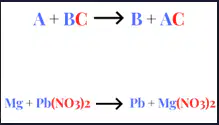
The following Chemical Equation is an Example of _____________________?
a)
Single Displacement
b)
Synthesis
c)
Creation
d)
Decomposition
5.
Limiting Reactant/Reagent
a)
A reactant that is completely consumed in a chemical reaction, limiting the amount of product that can be produced
b)
A quantity that is always calculated and shows the theoretical amount of product that could be produced in an ideal chemical reaction in which there is a
c)
A conversion factor that relates the amounts in moles of any two substances involved in a chemical reaction
d)
An estimate of how much a measured or calculated value differs from a true value
6.
In this chemical reaction, CH₄ + 2 O₂ --> 2 H₂O + CO₂, how many moles of water ( H₂O ) would be produced if 2 moles of methane ( CH₄ ) completely reacted in excess oxygen according to the reaction below?
a)
2 moles H₂O
b)
.5 moles H₂O
c)
4 moles H₂O
d)
2 moles CO₂
7.
What type or Chemical Reaction is seen here:
HCL + LiF ---> HF + LiCl
a)
Double Displacement
b)
Decomposition
c)
Synthesis
d)
Destruction
8.
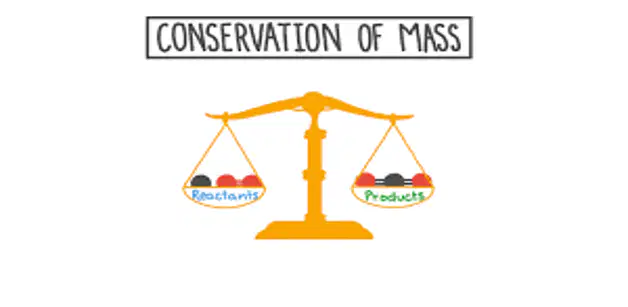
The Law of Conservation of Mass states that....
a)
Matter can not be created or destroyed
b)
Cans, Glass, and Paper must be recycled
c)
Mass is directly proportional to volume
d)
Renewable energy must replace fossil fuels
9.
How many particles are in 1 mole?
a)
6.02 x 10²³
b)
12
c)
1.0 x 10³
d)
144,000
10.
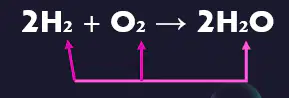
A number written slightly below and to the right of a chemical symbol that shows how many atoms of an element are in a compound.
a)
Subscript
b)
Coefficient
c)
2, 1, 2
d)
Chemical Reaction
11.
A chemical substance formed as a result of a chemical reaction (what is made/created)
a)
Product
b)
Catalyst
c)
Balanced Equation
d)
Homogenous Mixture
12.
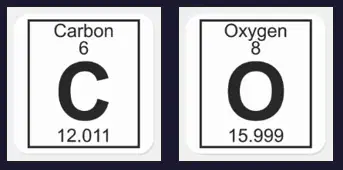
What is the molar mass of CO₂
a)
44.01 g/mol
b)
22 g/mol
c)
6.02 x 10²³ molecules
d)
12.011 grams
13.
When balancing a chemical equation, the total number of atoms of each element must be ____________________.
a)
the same on both sides of the equation
b)
greater on the left side of the equation
c)
greater on the right side of the equation
d)
equal to zero
14.
Stoichiometry is ________________________________
a)
The mathematics of chemical equations
b)
The study of stoicism
c)
A 13-sided geometric shape
d)
The actual yield divided by the theoretical yield times 100%
15.
True or False: 1 mole of Carbon and 1 mole of Hydrogen have the same number of atoms.
a)
True
b)
False
16.
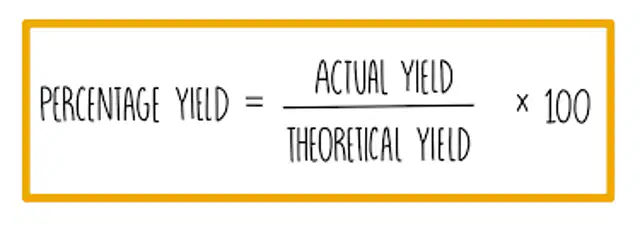
True or False: Theoretical Yield is the maximum amount of product that can be formed from a given amount of reactants, based on stoichiometric calculations
a)
True
b)
False
17.

To convert from grams to moles of any molecule, you must know the ____________________
a)
Molar Mass
b)
Avogadro's Number
c)
The total volume of the solution
d)
Atomic Number
18.
To calculate the molar mass of a substance
a)
Add the atomic mass(es) of elements from the Periodic Table
b)
Divide the Mass by 12.011g (atomic mass of Carbon)
c)
Multiply the Coefficients of the Balanced Chemical Equation
d)
Subtract the Subscripts contained in the molecular formula
19.
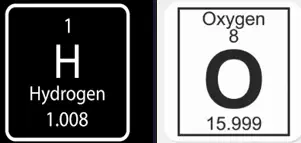
The mass of 2 moles of water (H₂O)
a)
36.0 grams
b)
9.0 grams
c)
72.0 moles
d)
36.0 grams/mole
20.

The Big number IN FRONT of a chemical formula that gets multiplied across and changes how many atoms you have.
a)
Coefficient
b)
Subscript
c)
2, 2, 2, 1
d)
Conservation of Mass
21.
__Na + __F₂ → __NaF
a)
2, 1, 2
b)
2, 0, 2
c)
4, 3, 2, 1
d)
Not enough Information
22.
__Fe +__O₂ → __Fe₂O₃
a)
4, 3, 2
b)
3, 2, 1, blast-off
c)
2, 1, 2
d)
4, 4, 3, 1
23.

How many grams are in 1.50 moles of KClO? (The molar mass of KClO is 90.55 g/mol)
a)
90.55 g
b)
1.50 g
c)
44 g
d)
135.83 g
24.

Convert 6.5 grams of NaOH to moles of NaOH The molar mass of NaOH is 40.00 g/mol
a)
0.163 moles
b)
6.5 moles
c)
260 moles
d)
1 dead mole
25.
Consider this balanced equation: 4 Fe + 3O₂ → 2 Fe₂O₃
If I start with 2.5 moles of Iron (Fe) and 4.5 moles of Oxygen (O₂) gas. Which reactant will be completely consumed?
a)
Iron (Fe)
b)
Oxygen (O₂)
c)
Iron Oxide (Fe₂O₃)
d)
flour
100 %

