
 Worksheets
Unit 11 Test: Electricity and Magnetism
Total questions: 35
Worksheet time: 18mins
Name
Class
Date
1.
The force or push that causes electric charges to move is called
a)
resistance
b)
voltage difference
c)
current
d)
static electricity
2.
Electric charges always flow from _______ areas to ______areas.
a)
positive, negative
b)
positive, netural
c)
negative, positive
d)
neutral, negative
3.
A material through which electrons do NOT flow easily is a(n)
a)
insulator
b)
conductor
c)
fuse
d)
circuit breaker
4.
Which of the following statements about electric charge is true? (Choose electrical forces act at a distance)
a)
Objects must be touching one another to exert electrical force.
b)
Electrical forces act at a distance
c)
Air cannot conduct electricity; it is conducted only by solid materials
d)
Opposite electric charges always repel one another.
5.
Mr. Smith and his lass are conducting an experiment. The class needs to choose a good insulator. Which of the following could be used as an insulator?
a)
plastic plate
b)
silver spoon
c)
copper wire
d)
gold necklace
6.
Which of the following will increase the resistance of a wire?
a)
using a thicker/wider wire
b)
using a shorter wire
c)
increasing the temperature of the wire
d)
using silver instead of copper
7.
What is the current produced by a 9-volt battery flowing through a resistance of 0.2 ohms?
a)
1.8 amps
b)
45 amps
c)
0.022 amps
d)
8.8 amps
8.
Which two areas of physical science are closely related to the development of electric motors and generators?
a)
sound and light
b)
electricity and sound
c)
light and magnetism
d)
electricity and magnetism
9.
Which of the following will decrease the strength of the magnetic field around a wire? (Choose using less loops)
a)
increasing the current flowing through the wire
b)
using less loops around the iron core
c)
flipping the direction of the current flowing through the wire
d)
using a larger iron core
10.
Silver has a resistance of 0.0198 ohms. What voltage would produce a current of 100 amps?
a)
0.000198 V
b)
5,050 V
c)
100.0198 V
d)
1.98 V
11.
This contains a piece of metal that melts if it gets too hot in order to open a circuit.
a)
conductor
b)
insulator
c)
fuse
d)
circuit breaker
12.
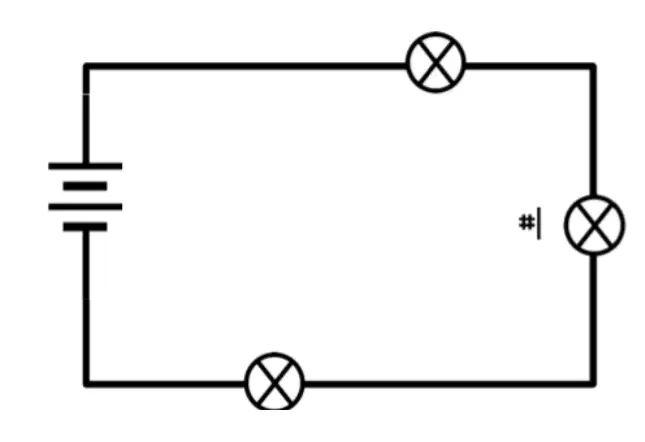
What does the symbol labeled #1 represent?
a)
light
b)
battery
c)
resistor
d)
switch
13.
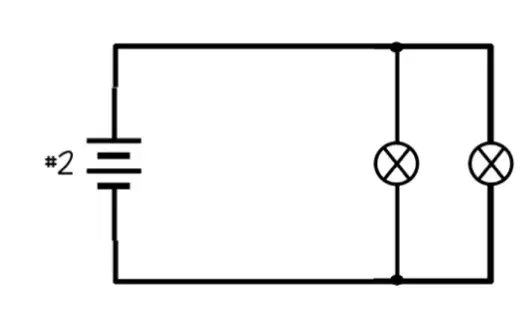
What does the symbol labeled #2 represent?
a)
light
b)
battery
c)
resistor
d)
switch
14.
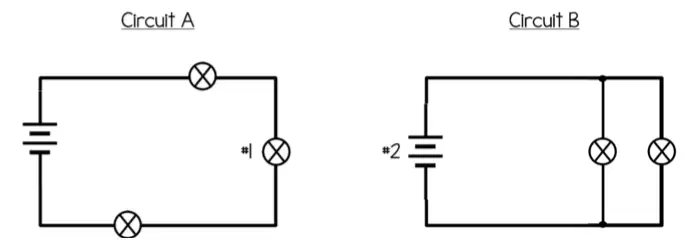
Circuit ______ is wired in parallel and circuit _______ is wired in series.
a)
A ; B
b)
B; A
15.
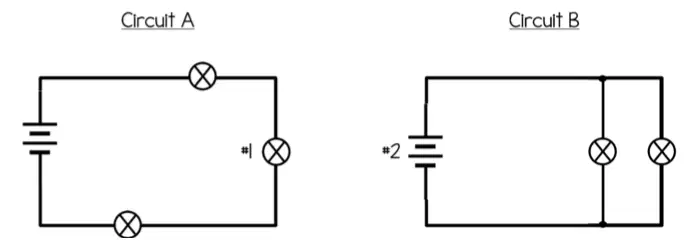
Circuit _____ represents the way homes are usually wired.
a)
A
b)
B
16.
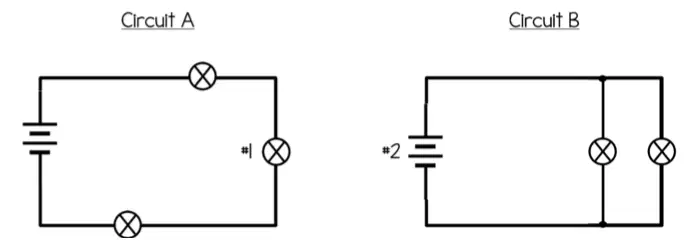
Circuit _____ is the type of circuit that causes an entire string of lights to go out when one of the bulbs burns out.
a)
A
b)
B
17.
The function of a generator is to change _______. (Choose mechanical to electrical)
a)
chemical energy to electrical energy
b)
electrical energy to chemical energy
c)
electrical energy to mechanical energy
d)
mechanical energy to electrical energy
18.
This exerts a force that causes other electric charges to move. (Choose electrical fields)
a)
electrical poles
b)
electrical fields
c)
insulators
d)
conductors
19.
Which circuit below contains the greatest voltage?
a)
A circuit with a current of 20 amps and a resistance of 16 ohms
b)
A circuit with a current of 10 amps and a resistance of 10 ohms
c)
A circuit with a current of 25 amps and a resistance of 16 ohms
d)
A circuit with a current of 20 amps and a resistance of 10 ohms
20.
Which of the following objects would NOT be a good insulator of electric charge?
a)
skin
b)
wood
c)
plastic
d)
rubber
21.
Which symbol would represent a device that can easily turn the circuit on or off?
a)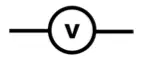
A
b)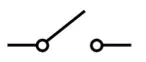
B
c)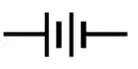
C
d)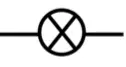
D
22.
The Law of Conservation of Charge states that _____.
a)
charge can be created and destroyed but not transferred
b)
charge cannot be created and destroyed but it can be transferred
c)
charge cannot be created and destroyed and it cannot be transferred
d)
none of these
23.
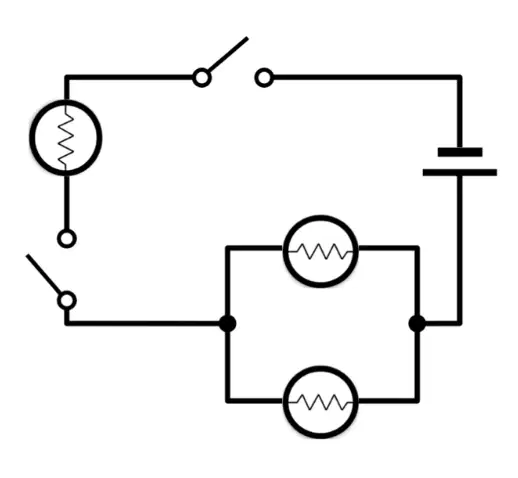
Which of the following statements is true about the circuit to the right?
a)
There are 2 batteries, 2 switches, and 2 resistors.
b)
There are 2 batteries, 2 switches, and 3 resistors.
c)
There is 1 battery, 2 switches, and 3 resistors.
d)
There are 3 batteries and 3 resistors.
24.
Opposite charges _______. Like charges _______.
a)
attract ; repel
b)
repel ; attract
25.
Electric charge flows from ______ voltage to _______ voltage.
a)
high ; low
b)
low ; high
26.
To increase the current, you should ______ voltage and _________ resistance.
a)
increase ; decrease
b)
decrease ; increase
27.
Charges can act at a distance by exerting a(n) ______ which is an example of charging by ______.
a)
electric field ; induction
b)
induction ; electric field
28.
Positively charged particles in an atom
a)
protons
b)
series circuit
c)
parallel circuit
d)
electroscope
e)
voltmeter
29.
Negatively charged particles in an atom
a)
electrons
b)
series circuit
c)
parallel circuit
d)
electroscope
e)
voltmeter
30.
Particles in the atom that have no charge
a)
neutrons
b)
series circuit
c)
parallel circuit
d)
electroscope
e)
voltmeter
31.
A device that detects electric charge on an object (choose electroscope)
a)
electroscope
b)
series circuit
c)
parallel circuit
d)
voltmeter
e)
lightning
32.
Temporary magnet made by placing a piece of iron inside a current carrying coil of wire. (Choose electromagnets)
a)
electromagnets
b)
series circuit
c)
parallel circuit
d)
electroscope
e)
voltmeter
33.
Providing a path that allows electric charges to travel directly into the Earth rather than traveling through a building (Choose grounding)
a)
grounding
b)
series circuit
c)
parallel circuit
d)
electroscope
e)
voltmeter
34.
Circuit that has only one pathway for current to travel through
a)
series circuit
b)
parallel circuit
c)
electroscope
d)
voltmeter
e)
lightning
35.
Circuit that has more than one pathway for current to travel through
a)
parallel circuit
b)
series circuit
c)
electroscope
d)
voltmeter
e)
lightning
100 %

