
NEW
Font size
 Worksheets
Unit 6 Asia Review
Total questions: 38
Worksheet time: 29mins
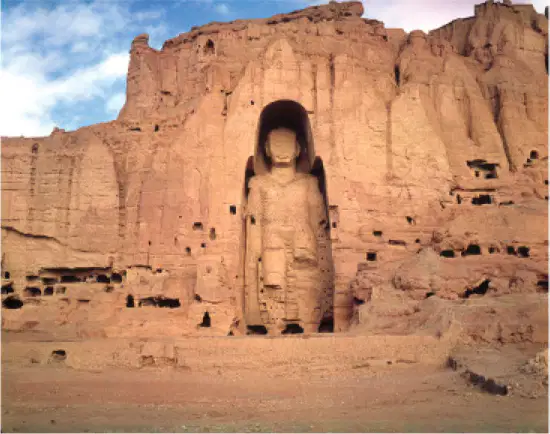
Which of the following best explains the long-lasting durability of the Bamiyan Buddhas prior to their destruction in 2001?
the closed standing pose and rock-cut carving technique
the monumental scale and isolation of the surrounding area
the stucco and metal that originally covered their surface
the hard imported stone that reinforced the base of the figures
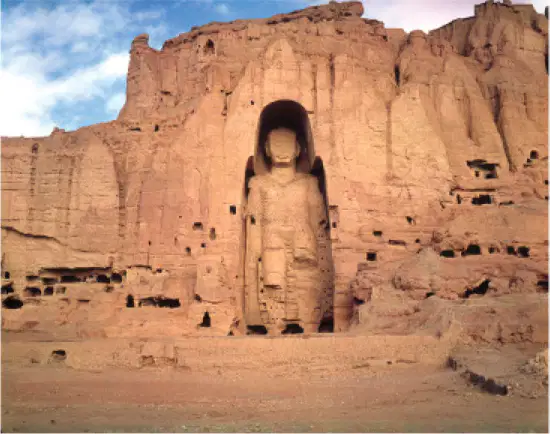
The question refers to the image shown. Although the statues’ bodies remain attached to the rock behind them, the areas around both heads and the feet of the larger figure were freestanding (carved in the round) to provide
sheltered places in which congregations could pray
spaces for circumambulation and meditation
a means for visitors to admire the skill of the carvers
places in which offerings could be left
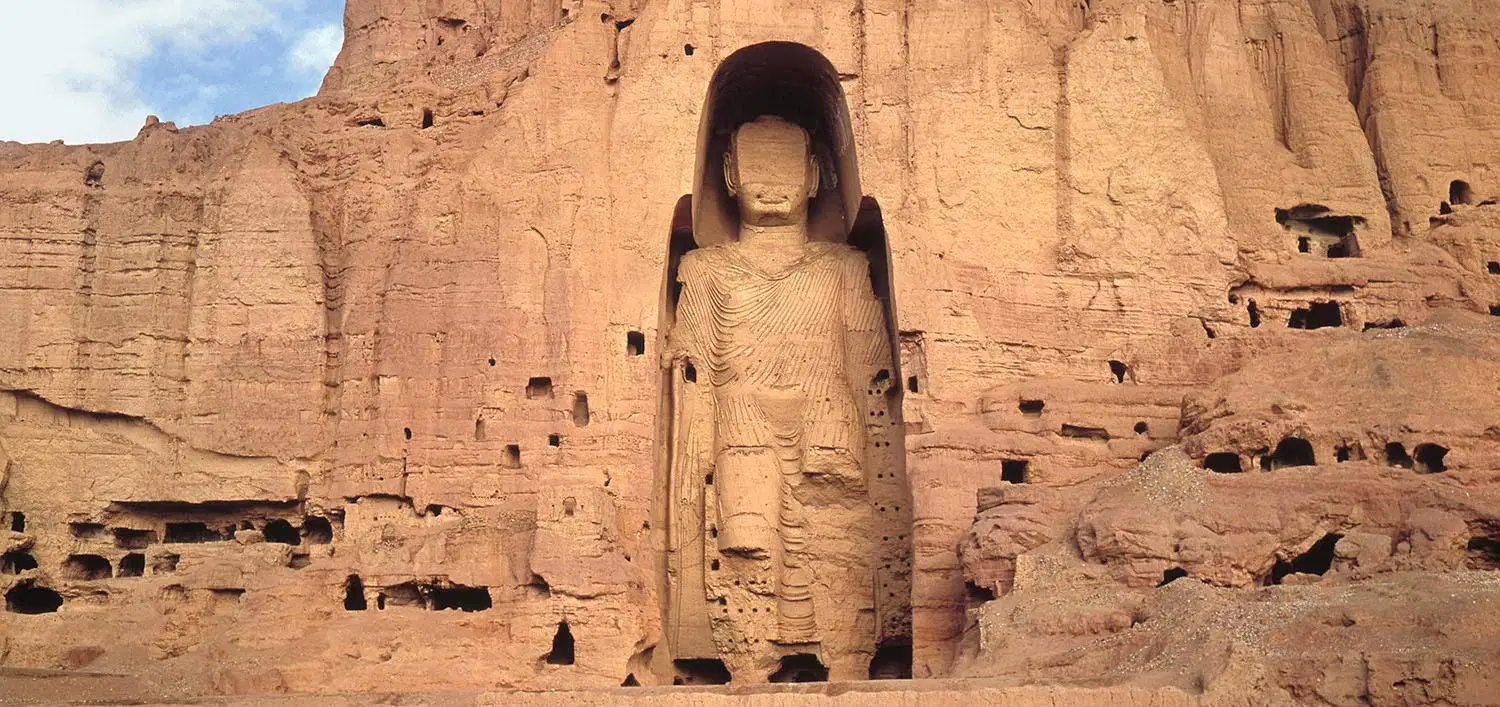
Features of the statues that demonstrate the influence of Greco-Roman, as well as Asian artistic traditions, are best explained by
the education of local rulers
a desire to affect non-Buddhist visitors
the presence of monks from Europe
Bamiyan’s location on the Silk Road
Because of the secular nature of the work, the ornamentation of the Basin (Baptistère de St. Louis) differs from mosque ornamentation by incorporating
intricate vegetal patterns
bands of calligraphy
geometric patterns
human figures
One reason for the central plan of the Dome of the Rock is to
segregate figures with sacred or imperial authority from the general population
house large crowds gathered for congregational worship and communal prayer
accommodate the practice of circumambulation around a sacred space within
recall the theme of judgment because of its similarity in design to a law court

Although the facade of the Treasury of Petra contains many Greek architectural elements, it also departs from Classical Greek architecture in its
use of plastered mud bricks instead of pure stone
use of figural reliefs instead of freestanding sculptures
combination of a columned portico with a pediment
combination of a broken pediment and tholos

The influence of different stylistic traditions that can be seen in the Treasury of Petra reflects the
central role that long-distance trade played in Nabataean society, resulting in exposure to other cultures
vast reach of the Nabataean Empire, which united various countries that had different traditions
repeated conquest of the Nabataeans by different cultures, resulting in the adoption of foreign traditions
adoption of a new religious belief system by the Nabataeans, resulting in the replacement of older traditions
Visitors of the Kaaba approach the shrine in the hope of
seeking blessings and forgiveness
performing daily prayers
offering charity
learning about history
Pilgrims who visit the Kaaba as part of the hajj approach the shrine in the hope of
entering the shrine’s interior to circumambulate the altar contained within
leaving offerings that they have brought near the foot of the shrine’s Eastern wall
touching the Black Stone, which is embedded in the eastern corner of the Kaaba
seeing the ancient statues of saints that are placed in niches in the shrine’s interior
Jowo Rinpoche’s gilded surface and his jewel-encrusted throne and robes are likely perceived by the visitors as expressing the
valuable nature of the relics that are embedded inside the sculpture
royal patronage of the statue and wealth of its original donors
divine origin of the statue and its close connection to the historical Buddha
wealth and splendor that awaits the faithful after entering paradise
In Il-Khanid courtly culture, the figure of Bahram Gur from the Bahram Gur Fights the Karg folio in the Great Il-Khanid Shahnama would have symbolized:
royal authority and ideal kingship
religious devotion
merchant wealth
architectural innovation
The choice of traditional subject matter for the illustrated manuscript of the Shahnama completed under the direction of Shah Tahmasp in c. 1522-1525 C.E. demonstrates the
use of propaganda to draw attention to the accomplishments of his own reign
awareness of Persian cultural identity expressed through Firdausi’s epic poem
fundamental misunderstanding of myths and legends passed down over time
attempt to connect Islamic teachings to the religious practices of ancient Persia
The production of the highly detailed pattern design of the Ardabil Carpet was facilitated by the
high knot count of the woolen pile
small beads woven into a silk base
tiny stitches of overlaid embroidery
thin Egyptian cotton threads of the warp
The Court of Gayumars is characteristic of traditional Persian miniatures in its
borders that are similar to the leading of stained-glass windows
use of contrapposto poses, shadowing, and perspective
horizontal layout with mathematically determined proportions
crowded composition, multiple viewpoints, and complex details
The central significance of the Kaaba in Mecca is reflected in other Islamic architecture in that
all mosques are placed within a wide outer courtyard to mimic the layout of the Kaaba
the plans of all mosques are oriented towards its location, as the center of Islamic prayer
all mosques include an ambulatory, as a reference to the movement of pilgrims around the Kaaba
its cube-like form constitutes the basic geometric shape on which the plan of all mosques is based
The artist conveyed a sense of implied depth in the Court of Gayumars folio from Shah Tahmasp’s Shahnama by
overlapping figures and landscape elements
using linear perspective
employing chiaroscuro
depicting atmospheric perspective
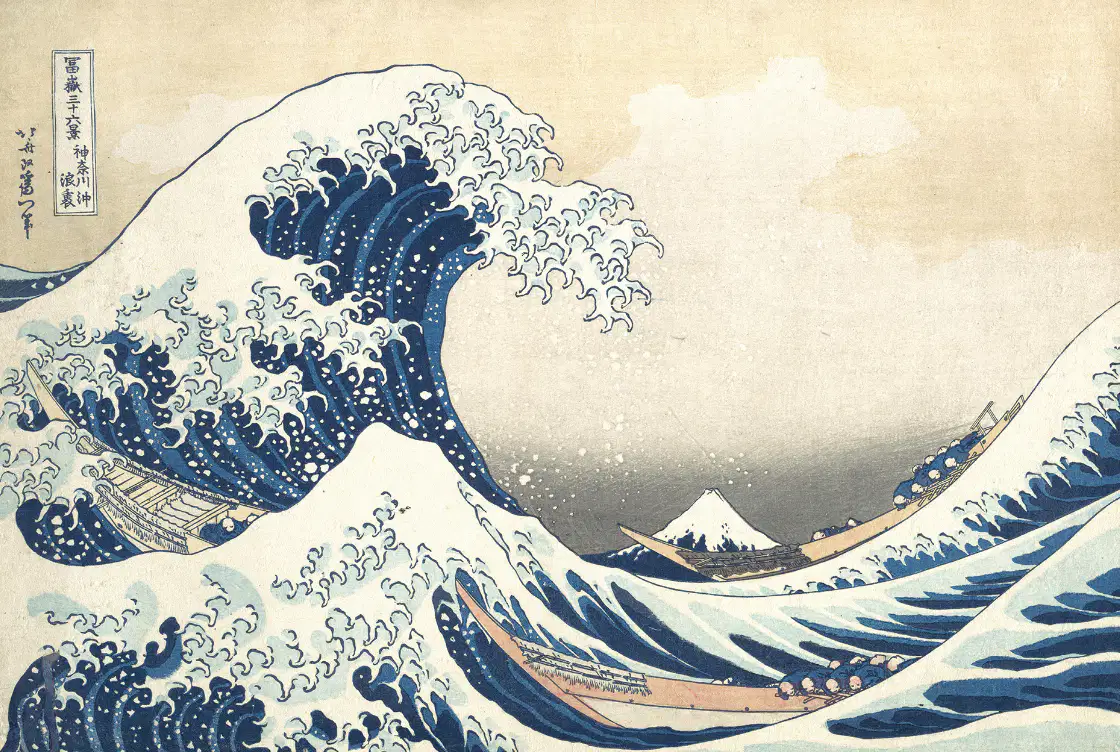
Which of the work’s elements contributes most to the illusion of spatial depth in the image?
The top of the wave, because of its placement at the top of the composition
The mountain, because of its small size in relation to the other objects
The blue color, because of its contrast with the other, more neutral colors
The fishing boats, because of the way they echo the shape of the wave
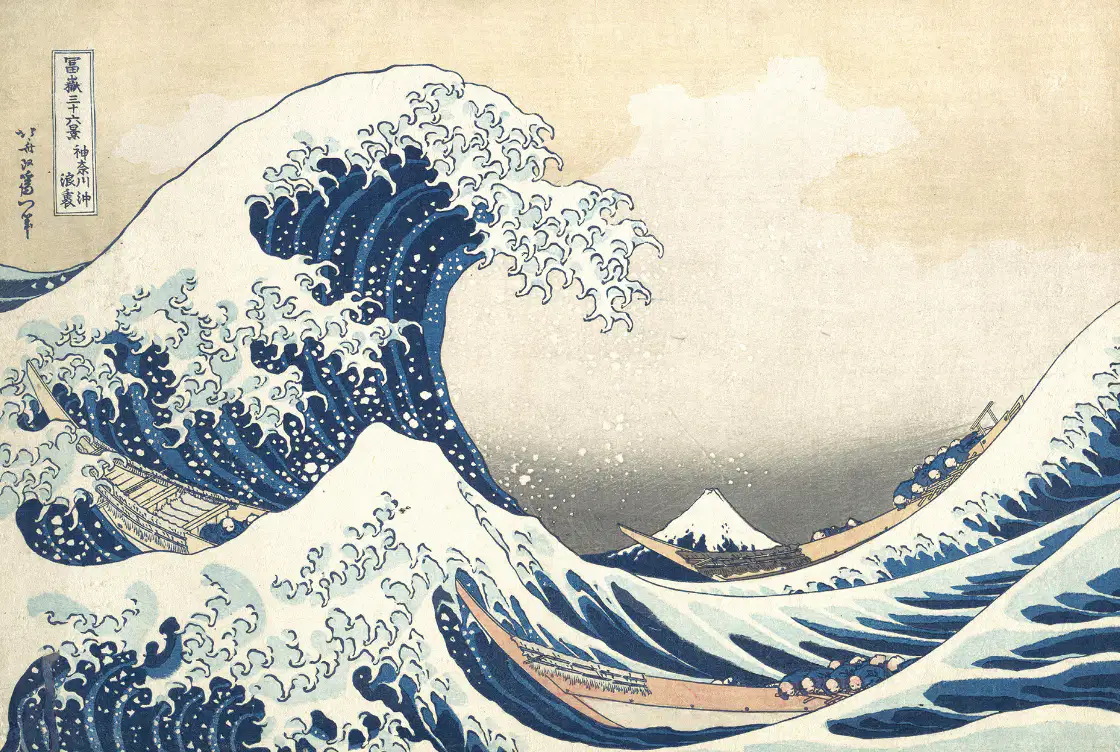
Hokusai’s inclusion of Mount Fuji in this print series may have been intended to
win favor among Buddhist monks, who desired more pilgrims at Fuji monasteries
please government officials, who encouraged foreign tourists to visit sites such as Fuj
attract the interest of Japanese tourists, since the mountain was a popular travel destination
raise awareness of emerging environmental issues, such as increasing deforestation
By breaking from Japanese artistic traditions with his use of perspective and a low horizon line, Hokusai was
responding to
the influence of European art brought to Japan by Dutch traders
the influence of photographs due to their greater availability in Japan
an influx of Chinese paintings due to Japanese military expansion
a surge of religious conversions resulting from missionary activity

The format of the work shown, created in thirteenth century Japan, reflects its intended function as a
decorative screen to be used to divide rooms in courtly living quarters
wall decoration to be displayed in the reception hall of a palace
handscroll to be unrolled in sections at a time for private viewing
funerary text to accompany a deceased warrior into the afterlife
The artist of the work shown likely intended to appeal to the work’s target audience by
depicting in detail an historical conflict from the perspective of the victors
representing a climactic scene from a popular work of dramatic fiction
handscroll to be unrolled in sections at a time for private viewing
using allegory about greed and worldly possessions as political commentary
The format of the work shown reflects the influence on Japanese art of traditional art forms from
India
China
Persia
Indonesia
The gardens of the Taj Mahal are laid out in a chahar bagh layout, intended to evoke a vision of Paradise, that divides the area into quadrants of equal size and is most similar to garden areas within or around the
Forbidden City
Great Stupa at Sanchi
Great Mosque at Isfahan
Alhambra

The work shown above can be attributed to the artistic tradition of
Japan
China
India
Indonesia
. The designers of the terra cotta warriors from the mausoleum of the first Qin emperor of China solved the challenge of creating a project on such a vast scale by
creating large numbers of identical sculptures through lost wax casting
incorporating sculptures from other sites conquered by the emperor
shaping varied sculptures from clay with the help of interchangeable molds
hiring many foreign artists familiar with diverse sculptural traditions

The ancient Korean gold and jade crown shown was likely intended to communicate the power of its wearer through the inclusion of
rectilinear elements that symbolize the strength and stability provided by an ideal ruler
natural imagery resembling plant and animal forms that are important in shamanism
metallic forms resembling weapons and shields, important in a military society
curving elements that signify maternal qualities emphasized in a matriarchal society
The portrait of Sin Sukju, created in the fifteenth century, reflects the impact of Confucianism on Korean artistic traditions
with its focus on compassion, self-awareness, and enlightenment
with its emphasis on the Way and yin and yang, the balance of opposites
with its focus on connecting to powerful spirits in the natural world
with its emphasis on duty, loyalty, respect, and ancestor worship
Sculptural reliefs at Angkor Wat depicting the Churning of the Ocean of Milk suggest that the patron of the complex may have
intended to intimidate his audience by depicting acts of violence
aimed to produce a large number of heirs for posterity
desired to become godlike by achieving immortality
sought to gain enlightenment through meditative practices

The courtly context in which this manuscript illumination was created, led the artist, Bichitr, to
conceal himself as a humble Sufi sheikh
paint himself near the bottom of the page
present himself covered in gold and jewels
remain anonymous and leave the folio unsigned
Which of the following is a Buddhist tradition that is embodied in the design of the Borobudur Temple?
Circumambulating the temple as a parallel to a devotee's spiritual journey
Venerating a reliquary statue of the Buddha in a shrine below the central stupa
Dressing a statue of the Buddha in splendid garments
Glorifying human love as an embodiment of divine union
. The dry garden of Ryoan-ji expresses the influence of Zen Buddhism on Japanese art during the Muromachi period in the
progression of increasingly smaller spaces intended to emphasize the sacred nature of the divine
austerity of its design and materials intended to create a serene and meditative atmosphere
inclusion of concentric rings in its design intended to represent the path to enlightenment
foundation of its design on a mandala form intended to represent the sacred cosmic order
The content of the funeral banner of Lady Dai (Xin Zhui) is similar to the last judgment of Hu-Nefer, from his tomb (page from the Book of the Dead) in that each one depicts
the deceased after death
a funeral procession
lavish tomb goods
a panoramic heaven
The influence of Chinese paintings, such as Fan Kuan’s Travelers among Mountains and Streams, to use multiple
viewpoints and visual motifs is demonstrated by
The Court of Gayumars
the Jowo Rinpoche
the David Vases
White and Red Plum Blossoms
Both Shiva as Lord of Dance (Nataraja) and Donatello’s David convey power and authority by
lifting a sword to destroy their enemies
featuring physical characteristics that reveal their divinity
standing triumphantly atop an evil opponent
emphasizing muscular strength and athletic bodies
The Forbidden City and the Palace at Versailles express similar meaning in which of the following ways?
Both contain important religious structures to convey the rulers’ spiritual orientation.
Both include elaborate gardens to convey the rulers’ appreciation for the beauty of the natural world.
Both use gates and doorways to convey differences in the status of people who enter the complexes.
Both were planned and laid out along symbolic axes that convey the rulers’ absolute authority.
The colossal sculptures of the Buddha at Longman caves and Todai-ji depart from earlier aniconic traditions, which represented the Buddha with symbols like those used in
the sculptural reliefs at Angkor Wat
the gates (toronas) at the Stupa at Sanchi
the carved exterior at Lakshmana Temple
the surface decoration of the David Vases
The monumental Buddha sculptures in the Longmen caves continued a tradition of similar sculptures that can be found farther west on the Silk Road in which of the following locations?
) Carved into cliffs in the Bamiyan valley, Afghanistan
As free-standing statues in temples in Lhasa, Tibet
In sculptural niches at Borobodur
Decorating gateways at Angkor Wat, Cambodia

The work shown can be attributed as
a manuscript folio from Persia
an ink painting from China
a woodblock print from Japan
a miniature painting from India

