
 Worksheets
Organization Design Quiz
Total questions: 77
Worksheet time: 39mins
What is the primary focus of Organization Design?
To create a marketing strategy
To define the structure of an organization
To develop financial plans
To manage customer relationships
Which of the following is a key element of Organization Design?
Product pricing
Employee training
Workflow coordination
Customer feedback
What does the concept of "Agency" in an organization refer to?
Marketing strategies
Authority delegation and management
Financial planning
Customer service

How does an "Agile Organization" differ from traditional Organization Design?
It focuses on rigid structures
It emphasizes flexibility and adaptability
It prioritizes long-term planning
It relies on hierarchical decision-making
What is the first step in creating an Organization Design according to the document?
Identifying tasks to be completed
Developing a marketing strategy
Hiring new employees
Increasing sales targets
Which of the following is NOT mentioned as a topic covered in the chapter?
Job Design
Organizational Structure
Financial Planning
Organization Culture
What is the purpose of grouping tasks into jobs according to the document?
To ensure tasks are completed quickly
To create meaningful jobs and coordinate work
To reduce the number of employees
To increase competition among employees
What is the last element of designing the organization mentioned in the document?
Promoting the organization's culture
Increasing profit margins
Expanding the business
Hiring more staff
What is the process called when tasks are done by people outside the organization?
Insourcing
Outsourcing
Delegating
Collaborating
Why is it important for an organization to determine the skills and experience necessary for tasks?
To increase the number of employees
To ensure tasks are completed effectively and efficiently
To reduce the workload of managers
To create more job titles
How can employees acquire the skills needed for common tasks?
By guessing and checking
Through specialized training programs or working with experienced professionals
By trial and error
By reading books only
What is a potential risk if jobs become too tedious or stressful?
Increased employee motivation
High turnover rates
More job satisfaction
Decreased organizational growth
What is the primary goal of job design according to the text?
To increase the number of tasks an employee performs
To create jobs that are done effectively and provide meaningful work
To reduce the number of employees needed
To make jobs more monotonous
What was the approach to job design during the early days of industrialization?
To increase employee autonomy
To simplify tasks for maximum efficiency
To focus on employee satisfaction
To enhance skill variety
Who developed the "Job Characteristics Model"?
Taylor and Fayol
Maslow and Herzberg
Hackman and Oldham
McGregor and Mayo
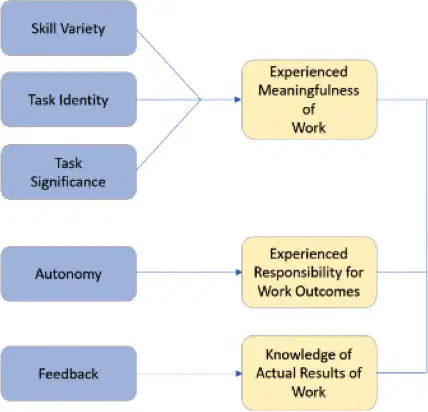
Which of the following is NOT a component of the Job Characteristics Model?
Skill Variety
Task Identity
Autonomy
Employee Salary
What is "Skill Variety" in the context of job design?
The extent to which a job requires a worker to use a wide range of different skills and abilities.
The extent to which the job requires the worker to perform all the tasks needed to fully complete the task.
The extent to which the job affects the lives of other people.
The extent to which the employee is allowed to make choices about scheduling and how best to perform tasks.
What does "Task Identity" refer to in job design?
The extent to which a job requires a worker to use a wide range of different skills and abilities.
The extent to which the job requires the worker to perform all the tasks needed to fully complete the task.
The extent to which the job affects the lives of other people.
The extent to which the employee receives clear and direct information on how well they are performing the task.
How is "Task Significance" defined in the document?
The extent to which a job requires a worker to use a wide range of different skills and abilities.
The extent to which the job requires the worker to perform all the tasks needed to fully complete the task.
The extent to which the job affects the lives of other people.
The extent to which the employee is allowed to make choices about scheduling and how best to perform tasks.
What does "Autonomy" mean in the context of job characteristics?
The extent to which a job requires a worker to use a wide range of different skills and abilities.
The extent to which the job requires the worker to perform all the tasks needed to fully complete the task.
The extent to which the job affects the lives of other people.
The extent to which the employee is allowed to make choices about scheduling and how best to perform tasks.
What is the role of "Feedback" in job design?
The extent to which a job requires a worker to use a wide range of different skills and abilities.
The extent to which the job requires the worker to perform all the tasks needed to fully complete the task.
The extent to which the job affects the lives of other people.
The extent to which the employee receives clear and direct information on how well they are performing the task.
What is the main purpose of clustering jobs into work groups?
To increase individual workload
To make it easier for individuals to collaborate and perform tasks
To reduce accountability
To eliminate the need for supervision
Which of the following is NOT a common organizational structure?
Functional Structure
Divisional Structure
Matrix Structure
Hierarchical Structure
What does a Functional Structure group together?
Jobs that require different skills and experience
Jobs that require similar skills and experience
Jobs that are unrelated
Jobs that are temporary
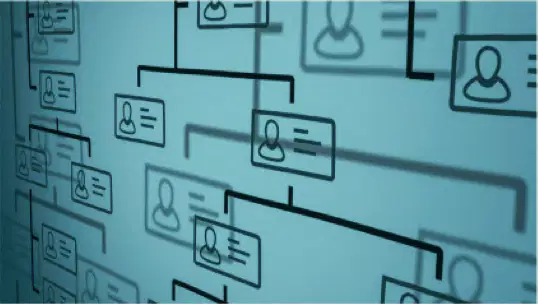
What does Organizational Structure describe?
The individual tasks of employees
The grouping of jobs into work groups and delegation of authority
The personal goals of employees
The financial status of the organization
What is a Divisional Structure?
A structure that groups jobs with people of diverse skills to focus on specific products or customers.
A structure that organizes jobs based on geographical location.
A structure that focuses on individual performance.
A structure that groups jobs based on employee preferences.
Which of the following is an example of a Divisional Product Structure?
Medical Products Division
Vice President Finance
National Retail Stores Division
Vice President Operations
What is the main focus of a Divisional Market (Customer) Structure?
Serving specific geographical areas
Providing specific products
Serving specific groups of customers
Organizing based on employee skills
What is a Matrix Structure in organizational design?
Groups jobs by function only
Groups jobs by division only
Groups jobs together simultaneously by function and by division
Groups jobs randomly
In a Matrix Structure, what is a unique feature regarding employee reporting?
Employees report to one boss
Employees have no reporting structure
Employees have dual reporting relationships (two bosses)
Employees report to the president only
What does the Delegation of Authority involve in an organizational structure?
Only the creation of organization charts
Delegation of authority, span of control, and levels of hierarchy
Only the span of control
Only the levels of hierarchy
What is the main expectation of a "delegate" in the context of organizational authority?
To act in the best interest of the shareholders
To make independent decisions without oversight
To prioritize personal gain over company goals
To avoid using control mechanisms
In a Centralized Organizational Structure, where are most decisions made?
At the top of the organization
At the middle management level
At the lower levels of management
By external consultants
What does "Span of Control" refer to in an organizational context?
The number of direct reports assigned to a manager
The number of hierarchical levels in an organization
The total number of employees in a company
The geographical reach of a company
What is the trend in modern organizations regarding levels of hierarchy?
Towards creating flatter organizational structures
Towards increasing the number of hierarchical levels
Towards maintaining the current levels of hierarchy
Towards eliminating all hierarchical levels
What is a key element of Organization Design mentioned in the text?
Integrating and Coordinating Workflows
Increasing Profit Margins
Expanding Market Reach
Reducing Employee Turnover
Which of the following is NOT one of the five common approaches used by organizations for integration and coordination of workflows?
Organizational Structure
Liaisons
Task Forces
Financial Audits
How does an Organizational Structure help with coordination and integration?
By increasing the number of employees
By grouping jobs of employees who need to work together
By reducing the number of meetings
By outsourcing tasks to other companies

What role do liaisons play in coordinating work activities?
They manage financial resources
They coordinate activities of their group with other groups
They design marketing strategies
They hire new employees
What is the primary purpose of a Task Force in an organization?
To handle ongoing responsibilities for managing key activities
To address a specific need for coordination
To work solely within a single department
To provide long-term strategic planning
How do Cross Functional Teams differ from Task Forces?
They focus on a single project
They have ongoing responsibility for coordinating activities
They are temporary and disband after a project
They work within a single department
What is a characteristic of someone in an Integrating Role?
They only coordinate activities with other groups
They have no other responsibilities besides coordination
They have other responsibilities in addition to coordination
They work exclusively in the Human Resources department
What are the set of norms, beliefs, values, and attitudes shared by a group of individuals within an organization called?
Organizational Strategy
Organizational Culture
Organizational Design
Organizational Goals
Which scholar suggests a framework for understanding an organization's culture by describing Dimensions and Levels of Organization Culture?
Peter Drucker
Edgar Schein
Michael Porter
Henry Mintzberg
What does the 'Content' dimension of culture include?
Dress code and physical layout
Teamwork, accountability, and innovation
Norms and values
Leadership styles
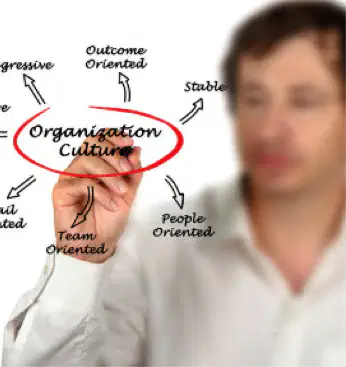
What is the most easily observable level of Organization Culture?
Values
Norms
Artifacts
Beliefs
What is necessary to truly identify the values of an organization?
Observing only the documented norms
Understanding how people think and feel
Relying on annual reports
Focusing on the smell and feel of the place
What are assumptions in the context of organizational culture?
Documented norms and ideologies
Underlying, unconscious thoughts
Annual reports and statements
Physical artifacts and products
What is a weak culture in an organization characterized by?
Strong alignment with core values
Lack of uniformity in key aspects of culture
High employee motivation
Consistent personal conflicts
How can successful organizations align employees with core values?
By ignoring cultural differences
By encouraging broader cultural understanding
By focusing solely on identity differences
By enforcing strict uniformity
What is a Strong Organization Culture?
A culture where employees share the same norms, beliefs, values, and attitudes
A culture where employees work independently without shared values
A culture that encourages individualism over collaboration
A culture that focuses solely on external processes
According to the BCG model, what is the focus when changing an organization's culture?
Identifying strategy-specific behaviors critical to aligning culture with strategy
Increasing the number of employees
Reducing the number of organizational goals
Focusing solely on external market trends
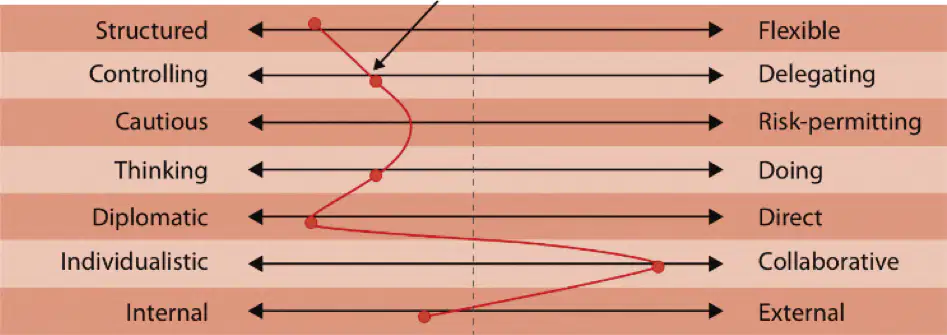
Which of the following is NOT one of the BCG 7 dimensions of culture?
Structured vs Flexible
Controlling vs Delegating
Profit vs Loss
Diplomatic vs Direct
What does the dimension 'Individualistic vs Collaborative' refer to in the BCG model?
The extent to which employees focus on their own performance versus shared goals
The degree of risk-taking supported by the organization
The transparency of interactions between workers and managers
The concentration of power at the top of the organization
What does BCG recommend organizations do to establish targets?
Conduct workshops with management employees
Hire external consultants
Implement new technology
Increase marketing efforts
Why might an organization need multiple sub-cultures?
To increase profits
To accommodate different departments
To reduce employee turnover
To enhance customer satisfaction
What is the purpose of the "Critical Levers" suggested by Boston Consulting Group?
To increase sales
To influence employee behavior and shape organizational culture
To improve product quality
To expand market reach
What is a key aspect of Organization Design according to the document?
Leadership
Organization Culture
Informal Interactions
Resources and Tools
Which model is mentioned as a tool for understanding Organization Culture?
Edgar Schein's model
Boston Consulting Group's model
Harvard Business Review model
McKinsey's 7S model
What does the organization need to align its culture with to be successful?
Market Trends
Core Values, Goals, and Strategy
Employee Preferences
Technological Advancements
What is the purpose of using frameworks like BCG’s “Critical Levers”?
To increase profits
To change Organization Culture
To improve customer satisfaction
To enhance product quality
What is the primary focus of an Agile Organization according to McKinsey?
Strict hierarchical structure
Rapid learning and decision cycles
Individual success over team success
Centralized management
Which of the following is NOT one of the "Five Trademarks" of successful organizations adopting the Agile model?
North Star embodied across the organization
Network of empowered teams
Centralized decision-making
Next-generation enabling technology
What role does a manager play in an Agile Organization?
Dictator
Coach
Sole decision-maker
Enforcer
How does McKinsey describe the structure of an Agile Organization?
Rigid and hierarchical
Made up of a network of teams with a people-centered culture
Focused on individual achievements
Centralized with strict protocols
What is emphasized in the dynamic people model of an Agile Organization?
Monetary rewards
Intrinsic motivation
Strict supervision
Individual competition
According to a McKinsey survey, what percentage of executives said their redesign efforts were successful?
23%
40%
50%
83%
What is one of the benefits of adopting an "Agile" organization structure according to the Boston Consulting Group?
Lower customer satisfaction
Higher development costs
Three to four times higher customer satisfaction
Reduced employee engagement
What percentage of business leaders are currently conducting an organizational-agility transformation according to a recent McKinsey survey?
23%
40%
60%
83%
What is the reduction range in development costs for companies that get "Agile" right?
5% - 10%
10% - 15%
15% - 25%
25% - 35%
What are the four key elements of Organization Design?
Structure, Culture, Agency, Workflow
Design, Culture, Workflow, Agency
Structure, Design, Culture, Workflow
Design, Structure, Culture, Agency
How do organizations create productive and meaningful jobs?
By increasing salaries
By improving working conditions
By designing effective job roles
By reducing working hours
What is the concept of "Agency" in an organization?
The ability to hire external consultants
The delegation and management of authority
The creation of new job roles
The restructuring of organizational hierarchy
What is an "Agile Organization"?
An organization with a rigid structure
An organization that adapts quickly to changes
An organization with a large workforce
An organization that focuses on cost-cutting
You and a friend want to start a pizza business on campus. What should you do to attract and retain a talented pizza chef?
Offer a competitive salary and benefits
Provide free pizza to the chef
Allow the chef to work from home
Hire multiple chefs to share the workload
In starting a car ride service, what organizational structure should you choose to coordinate between full-time employees and contract drivers?
Hierarchical structure
Flat structure
Matrix structure
Network structure
How can you change the culture in your organization to align with a strategy of providing safe, prompt, and affordable rides?
Ignore employee feedback
Implement the BCG 7 dimensions of culture model
Focus solely on cost-cutting measures
Increase the number of drivers

