
 Worksheets
Evidence of Evolution and Natural Selection Practice Quiz #2
Total questions: 33
Worksheet time: 32mins
How do you "win" at natural selection?
survive
go extinct
survive & reproduce
What word describes a trait that helps an organism survive in its environment?
natural selection
mutation
camouflage
adaptation
Which organisms are most likely to survive?
the best adapted
the fastest
the strongest
the most domesticated (tamed)
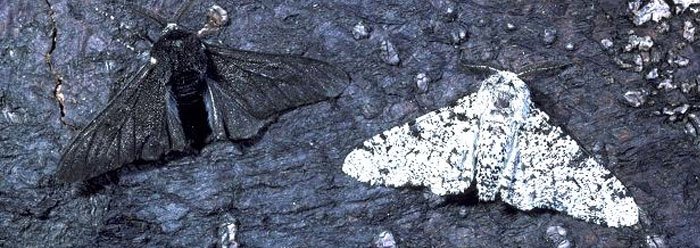
The trees these moths used to live on were white but have been covered in soot from coal factories. Which moth will be more successful in this environment?
Dark moth
Light moth
Both will be equally successful
Neither will be successful
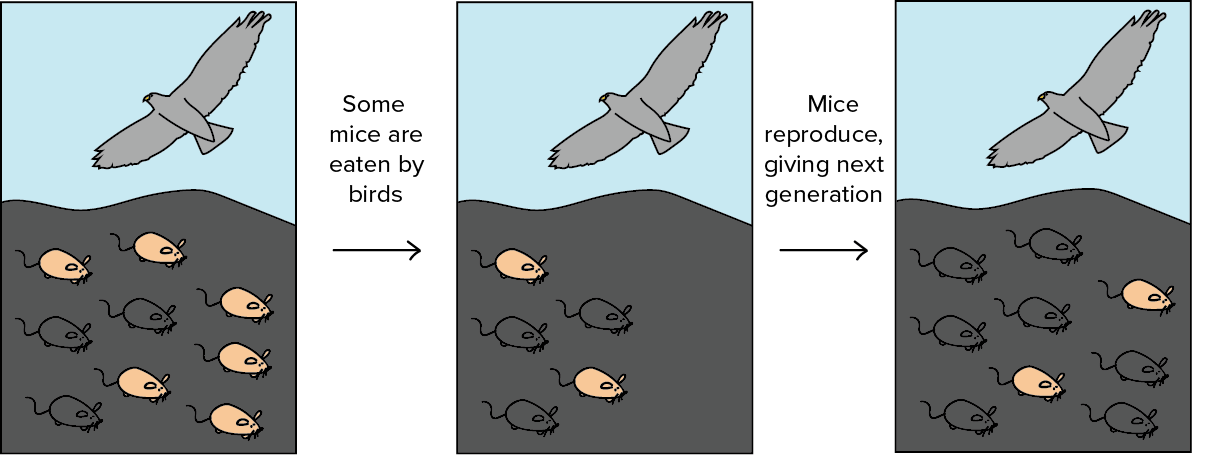
Why is the mouse population changing over time?
The light mice can reproduce more successfully than the dark mice.
The hawks eat more dark mice than light mice because the dark mice taste better.
The hawks eat more light mice than dark mice because they can see the light mice more easily.
The hawks eat more dark mice than light mice because they can see the dark mice more easily.
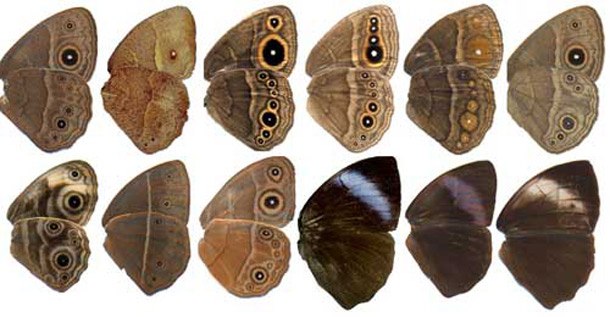
These moths are all the same species. The differences between their wings are an example of ________________.
Natural Selection
Variation
Homeostasis
Extinction
When an organism of a species has an adaptation, it will compete for resources better, survive longer, and pass that adaptation on to its offspring. This process is called
evolution by natural selection
artificial selection
inbreeding
outbreeding
Which of the following explains adaptation?
An individual organism changes to meet its needs in the environment. These changes pass down to their offspring.
The species as a whole changes its characteristics.
Beneficial traits allow organisms to survive and pass on those traits.
New characteristics arise in a species as needed. If these traits are helpful, they are passed down.
Evolution works by
individuals changing to suit their environment
individuals learning new traits and passing them on
no change in the environment causing a species change
small changes passed down through many generations
What is another name for natural selection?
survival of the smartest
survival of the fastest
survival of the biggest
survival of the fittest
The ability of an organism to survive and reproduce in its specific environment
diversity
evolution
mutation
fitness
Charles Darwin observed that finches of different species on the Galápagos Islands have many similar physical characteristics. This supports the hypothesis that these finches
are twins.
acquired traits through use and disuse.
all eat the same type of food.
descended from a common ancestor.
What is the advantage of having differently shaped beaks?
To look different from other species.
To be able to eat the food readily available in the environment.
To protect themselves against predators.
To protect themselves against prey.
Why are advantageous traits more likely to be passed on to offspring?
Because they are more likely to survive and reproduce.
Because they come from dominant alleles.
Because they come from recessive alleles.
Because the trait is an acquired phenotype.
When every organism of a species has died.
Evolution
Natural Selection
Extinction
Artificial Selection
Survival of the Fittest and Evolution were proposed by what scientist?
Charles Darwin
Albert Einstein
Steven Hawking
Isaac Newton

What do you call similar structures that related species have inherited from a common ancestor?
Natural Selection
Analogous Structures
Vestigial Structures
Homologous Structures

What do we call structures that no longer perform their original function?
Natural Selection
Analogous Structure
Vestigial Structure
Homologous Structure
The process of choosing parent organisms for desired characteristics is called:
Natural selection
Artificial selection
Random selection
Genetic manipulation
What is an example of artificial selection?
Letting dogs choose their own mates
Letting plants pollinate on their own
Crossing a Labrador and a Poodle to create a Labradoodle
Which statement is true when comparing natural selection and artificial selection?
In natural selection, traits benefit humans and in artificial selection, the traits benefit the species.
In natural selection, traits benefit the species and in artificial selection, the traits benefit humans.
In both natural and artificial selection, the process takes hundreds of years to occur.
In both natural and artificial selection, nature determines what traits will be passed down to offspring.
Artificial selection has been a significant factor in the evolution of:
Dogs
Panda bears
Snakes
Jellyfish

When a farmer breeds only his or her best livestock, the process involved is...
natural selection
artificial variation
artificial selection
survival of the fittest
What is a good argument for genetically modifying animals?
Produce more meat
Figure out how to make Spiderman
Modifying your kids to make them more awesome
New genes are needed to create new species

Ancient farmers in Mexico took the first steps in domesticating maize when they chose which kernels (seeds) to plant. These farmers noticed that not all plants were the same. Some plants may have grown larger than others, or some kernels tasted better or were easier to grind. The farmers saved the kernels from plants with desirable traits and planted them for the next season's harvest.
This is an example of:
natural selection
artificial selection
evolution
genetic engineering

What is inbreeding?
When two closely related animals are bred together.
When two unrelated animals are bred together.
When animals are allowed to choose their own mates.
When humans choose which animals will mate together.

A family visited a dog breeder and requested a puppy that would respond well to training. They also wanted the puppy to have short fur and a friendly nature.
Two-Part Question
Part One: Which variants should be selected to be the puppy’s parents?
Part Two: What kind of selective breeding process is this?
Part One: Select dog breed 3 and dog breed 4.
Part Two: This artificial selection process is called linebreeding.
Part One: Select dog breed 1 and dog breed 4.
Part Two: This artificial selection process is called outcrossing.
Part One: Select dog breed 1 and dog breed 2.
Part Two: This artificial selection process is called inducing mutations.
Part One: Select dog breed 2 and dog breed 3.
Part Two: This artificial selection process is called crossbreeding.
Humans, birds, whales, and lizards all have similar arm bones. What is the reason for this?
The function of these bones is the same in all animals.
They live in similar environments.
They have a common ancestor.
All organisms resemble humans.
Analogous Structure
Same function different structure
Homologous Structure
Same structure different function
Comparative Embryology
Comparing embryological development of different species
DNA Evidence
Comparing DNA and amino acid sequences of different species
Vestigial Structures
Structures in the body of an organism that no longer work.

What type of evidence is shown in the diagram above?
Molecular
Anatomical
Embryological
Fossil
Which of the following is an example of artificial selection?
Wolves evolving into different species over time.
Farmers breeding cows to produce more milk.
Birds developing different beak shapes due to food availability.
Fish adapting to warmer water temperatures.
What is the primary mechanism by which evolution occurs?
Natural selection
Mutation
Genetic drift
Artificial selection
Which of the following best describes the concept of 'fitness' in evolutionary terms?
The ability to adapt to any environment.
The ability to survive and reproduce in a specific environment.
The ability to run faster than predators.
The ability to live longer than other organisms.

