Worksheets
Spring Final Exam Review
Total questions: 60
Worksheet time: 3600secs


What would happen if the grizzly bear decreased in this food web?
There would be less red tail hawks.
There would be more deer.
There would be a decrease in chipmunks.
There would be increase in butterflys.

High biodiversity makes the food web more complex and better able to support the most species, even if some populations decrease.
True
False

Students in a science class visited four local ecosystems. The students observed the species present in each ecosystem and recorded their observations in the table.
Based on these observations, which ecosystem is likely to be the LEAST sustainable?
A. Ecosystem 1, because it has the fewest species.
B. Ecosystem 2, because it includes both aquatic and terrestrial species.
C. Ecosystem 3, because it has few predators.
D. Ecosystem 4, because it supports many animals.

The sharp teeth of lions are what type of adaptation?
Structural
Physilogical
Behavioral

Some kinds of birds migrate to the warmer places in the winter
Structural
Physilogical
Behavioral

Some animals pretend to be dead to protect themselves from predators
Structural
Behavioral
Physiological

Snake produces venom
Structural Adaptation
Behavioral Adaptation
Physiological Adaptation
Mimicry
Which of the following is an example of a structural adaptation?
A bear hibernating during the winter.
A bird with a long beak for catching insects.
A dolphin using clicks to communicate.
A monkey learning to use tools.
What is the role of variation in a population?
It makes all organisms identical.
It allows some individuals to survive better than others.
It prevents evolution from occurring.
It makes organisms more dependent on humans.
A brown mouse lives in the mountains. It blends with the soil. Predators cannot see it. Some of its babies are born with grey fur. Predators easily see the grey mice and eat them.
Then, a volcano erupts and changes the environment. The ground is now a black or gray color.
After natural selection, which mouse will there be more of? Why?
A mouse with grey fur because it would blend in better to the environment
A mouse with brown fur because it would blend in better to the environment


Describe what would happen to the zebra population and the plant population if the cheetah and hyena both left the ecosystem.
The zebra population would decrease with the absence of predators; the plant population would stay the same.
The zebra population would greatly increase, causing the plant population to decrease.
The zebra population would decrease, causing the plant population to increase.
The zebra population would greatly increase, causing the plant population to also increase.
As you work your way up the energy pyramid, what happens to the energy?
It increases
It decreases
It stays the same
Nothing

The extinction of which organism would likely have the MOST impact on this food web?
Plankton
Krill
Seagull
Blue whale

What might happen to the organisms in the food web below if the number of phytoplankton and vegetation drastically decreased?
The small fish and wading birds would be affected.
Only the small fish would be affected.
The small fish, bivalves, and invertebrates would be affected.
The entire food web would be affected.



One of the major ways oceans contribute to weather systems is that the oceans -
provide a diverse habitat for many organisms.
store and transport the Sun’s heat energy.
experience changes in amounts of dissolved salt.
reach depths that can be as much as 12,000 meters.
Most of the water vapor in the atmosphere comes from evaporation of water from oceans. Most of this evaporation occurs where there is the greatest solar radiation, which is -
along the coast of Europe.
around islands in the Pacific.
near the Equator.
at both of the poles.
Which of the following is a major way in which oceans contribute to weather systems?
Ocean water has high salinity.
Oceans transfer energy from the Sun.
Most volcanic activity occurs in the ocean.
Oceans have high levels of biodiversity.

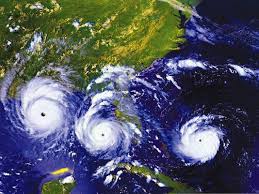
The ____ of tropical oceans make hurricanes stronger.
cold water
warm water
ocean life

Which location has an ocean surface temperature that will make hurricanes more likely to form?
A
B
C
D

Which of the following statements are supported by the map of ocean currents?
The west coast of the United States recieves more rain because there is a cold ocean current next to it.
The west coast of the United States recieves less rain because there is a cold ocean current next to it.
The west coast of the United States recieves more tain because there is a warm current next to it.
The west coast of the United States recieves less rain because there is a warm current next to it.
The name of the system that causes the winds to spin in a hurricane
The Circular Wind Phenomenon
The Coriolis Effect
The Corleone Affect
The East-West Effect
Which condition is critical for the formation of a hurricane?
lower latitudes between 8 and 20 degrees of the equator
80 degrees or warmer water
low pressure
All of the above
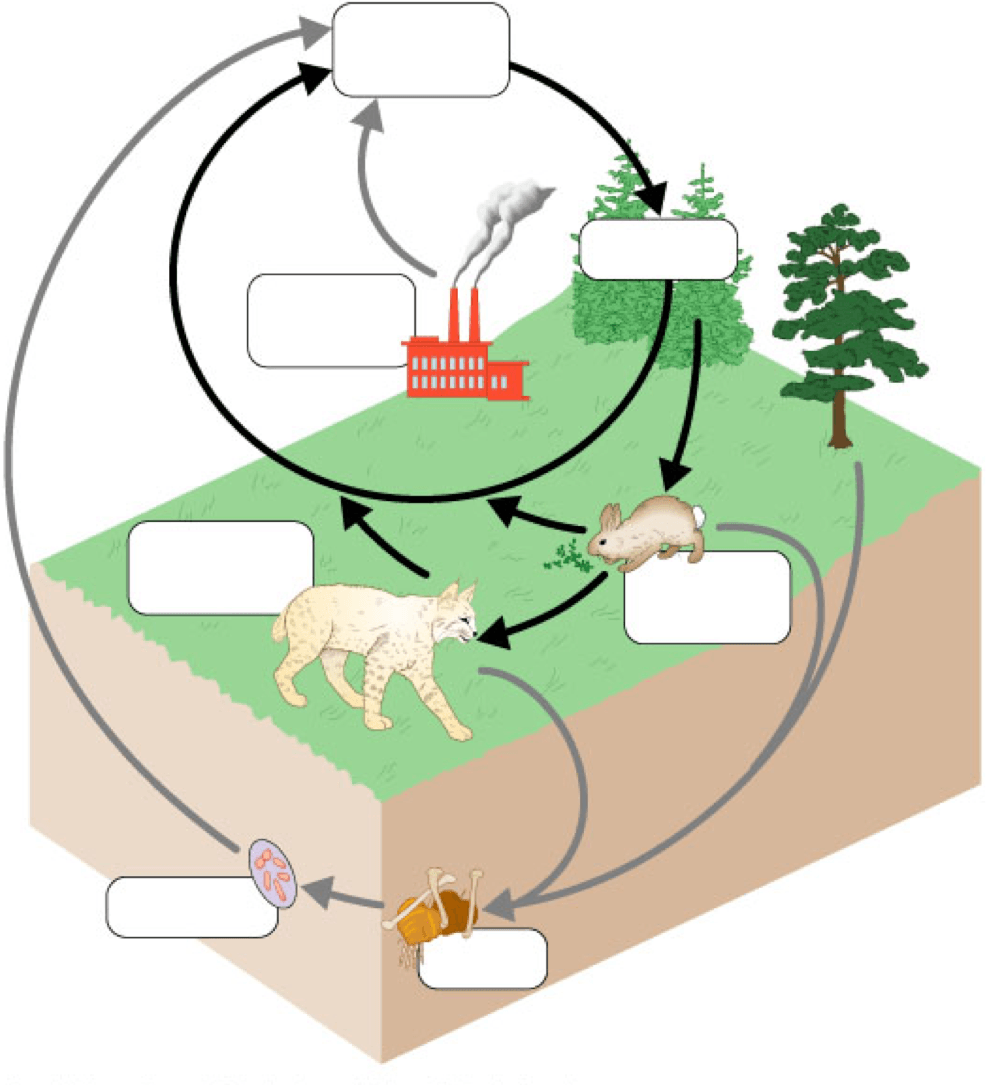
All of the carbon in existence is continually recycled in the carbon cycle.
How is the carbon cycle similar to the water cycle?
Both involve liquid substances falling to the Earth from the atmosphere?
Neither process works at low temperature.
Both involve the transfer of substances between animals, plants, and the Earth.
Both involve the transfer of substances between the earth and outer space.
This reservoir of carbon is made up of the ground and contains soil, rocks, fossil fuels, and other geological formations.
Atmosphere
Biosphere
Hydrosphere
Lithosphere
This reservoir of carbon is the air and gasses that surround the Earth.
Atmosphere
Biosphere
Hydrosphere
Lithosphere
This reservoir of carbon is all the water on Earth including in the clouds, oceans, rivers, streams, and underground water supplies.
Atmosphere
Biosphere
Hydrosphere
Lithosphere
This reservoir of carbon contains all life on Earth.
Atmosphere
Biosphere
Hydrosphere
Lithosphere
Which gas do animals release, that plants depend on for survival?
Carbon dioxide
Oxygen
Sunlight
Water
Which of the following processes does NOT move carbon to the atmosphere?
Animal respiration (Breathing)
Volcanic eruption
Photosynthesis
Burning fossil fuels
Organisms that do not decompose can be buried and become what part of the lithosphere?
water
nutrients
air
fossil fuels
What is a way that carbon can move?
From hydrosphere to the biosphere through drinking water
From lithosphere to hydrosphere through weathering and erosion
From the atmosphere to lithosphere through diffusion
From the atmosphere to the biosphere through respiration (breathing)
How do plants affect the air that animals and people breathe?
Plants use oxygen from the air to make their own food
Plants release pollution into the air
Plants take in carbon dioxide and release oxygen
Plants take in oxygen and release carbon dioxide
Why does cutting down trees increase global warming?
trees soak up carbon dioxide and removing them causes more carbon to stay in the atmosphere
trees provide shade which counteracts global warming
trees absorbs the sun's energy without radiating back into the atmosphere
trees drain greenhouse gases like methane from soil
Why is burning fossil fuels harmful?
they cause cancer
They can get extremely hot
it increases the amount of carbon dioxide in the atmosphere
this would destroy fossils