
Font size
 Worksheets
Test Review - Physical Science Unit 6
Total questions: 36
Worksheet time: 2hrs 57mins
What element is in period 2 and group 17?
Fluorine
Neon
Sulfur
Sodium
What element is in period 3 and group 2?
Magnesium
Lithium
Carbon
Argon
Vertical columns on the periodic table are called ___?
groups
periods
rows
families
Horizontal rows on the periodic table are called ___?
groups
periods
rows
families
Which family of elements does not combine with other elements unless under special conditions in a laboratory?
Noble gases
Halogens
Metalloids
Alkaline earth metals
Actinides
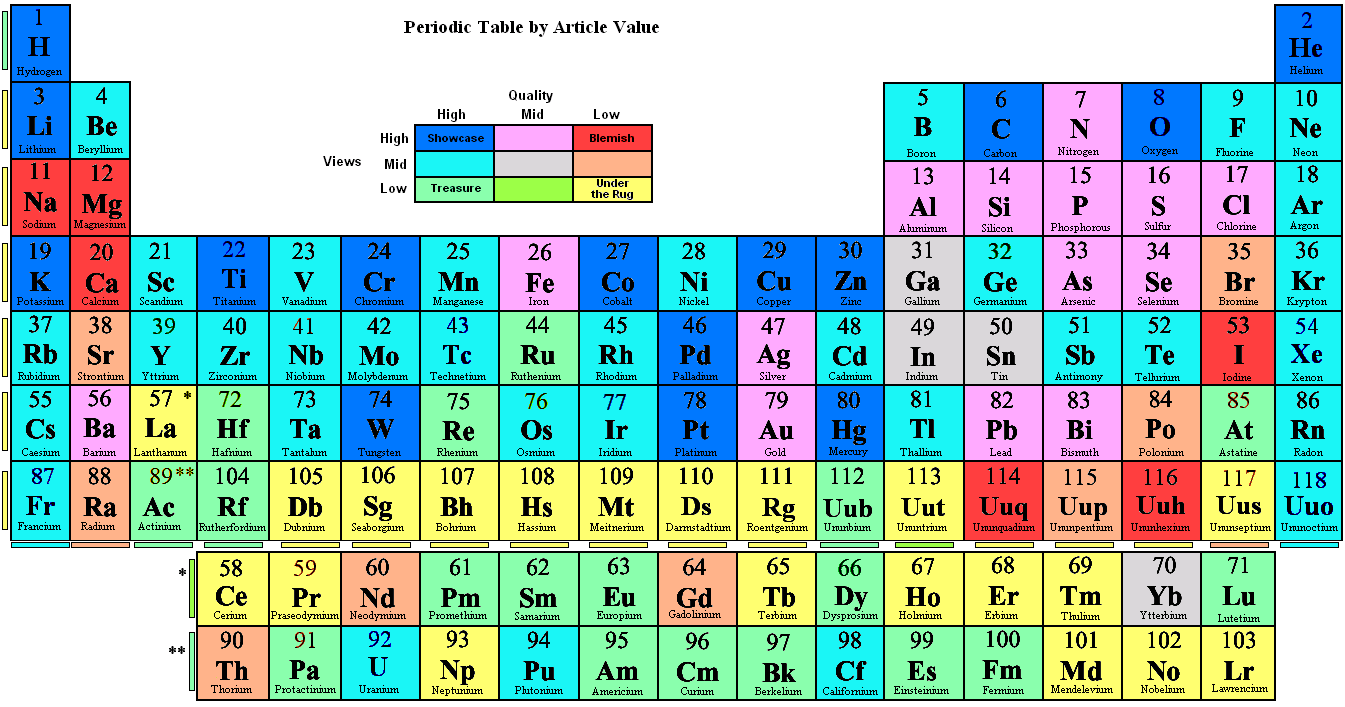

What period is Lead (Pb) in?
6
4
Metals
4A
What are valence electrons?
Any of an atom's electrons
Electrons located on the first energy level
Electrons not attached to any atom
electrons located on the outer energy level

What Element is in period 4, group 5A?
Antimony
Arsenic
Tin
Germanium

All the elements that are blue and to the left of the staircase are called...
metals
nonmetals
metalloids
noble gases
All the elements that are yellow and to the right of the staircase are called...
metals
nonmetals
metalloids
noble gases

All the elements that are in red and that make up the staircase are called...
metals
nonmetals
metalloids
noble gases

Which of the following elements is in group or family 2?
K
Cs
O
Ca

How many valence electrons do all of the Group 1 Alkali Metals have?
1
2
5
7
8

How many valence electrons do all of the Group 2 Alkaline Earth Metals have?
1
2
5
7
8
________________ have a positive charge, ___________________ have NO charge, and _____________________ have a negative charge.
Protons, Electrons, Neutrons
Neutrons, Electrons, Protons
Protons, Neutrons, Electrons
Electrons, Neutrons, Protons
alphabetical order
number of neutrons
color

What is the center of an atom called?
nucleus
electron cloud
first energy level
second energy level
A cation has
more electrons than protons
a negative charge
a positive charge
a neutral charge
An anion has
a negative charge
a positive charge
no charge
more protons than electrons
A cation is formed when
an atom gains electrons
an atom gains protons
an atom loses electrons
an atom loses protons
Each energy level, or orbital, of an atom has a maximum number of _____ it can hold.
Electrons
Neutrons
Protons
Quarks

How many neutrons are in Magnesium?
36
12
24
6

How many neutrons are in Argon?
18
40
58
22

Arsenic has a mass of _______
33
79
75
47

Oxygen has a mass of...
8
16
15
6
Give the atomic number of the element found in period 5, group 15.
43
25
46
51

What atom does this Bohr Model represent?
(a)

What atom does this Bohr Model represent?
(a)

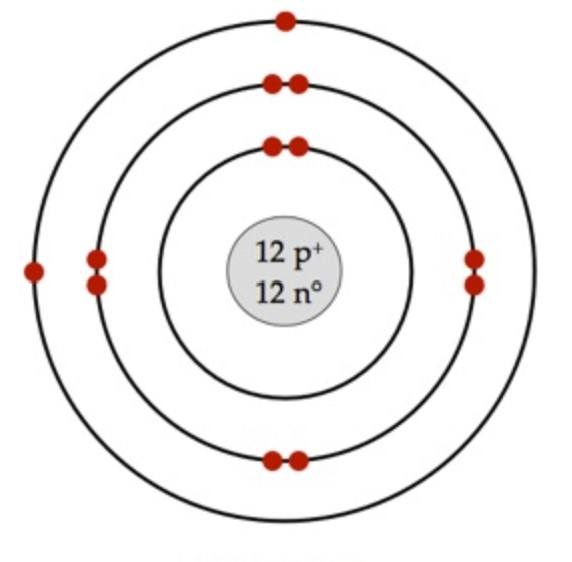
What element does this Bohr model represent?
Chromium
Magnesium
Carbon
Krypton

