wayground logo

Free Printable Worksheets

Font size

S
M
L
XL
Worksheets

Heating Curve Practice

Total questions: 20

Worksheet time: 2hrs 41mins
Name
Class
Date
1.
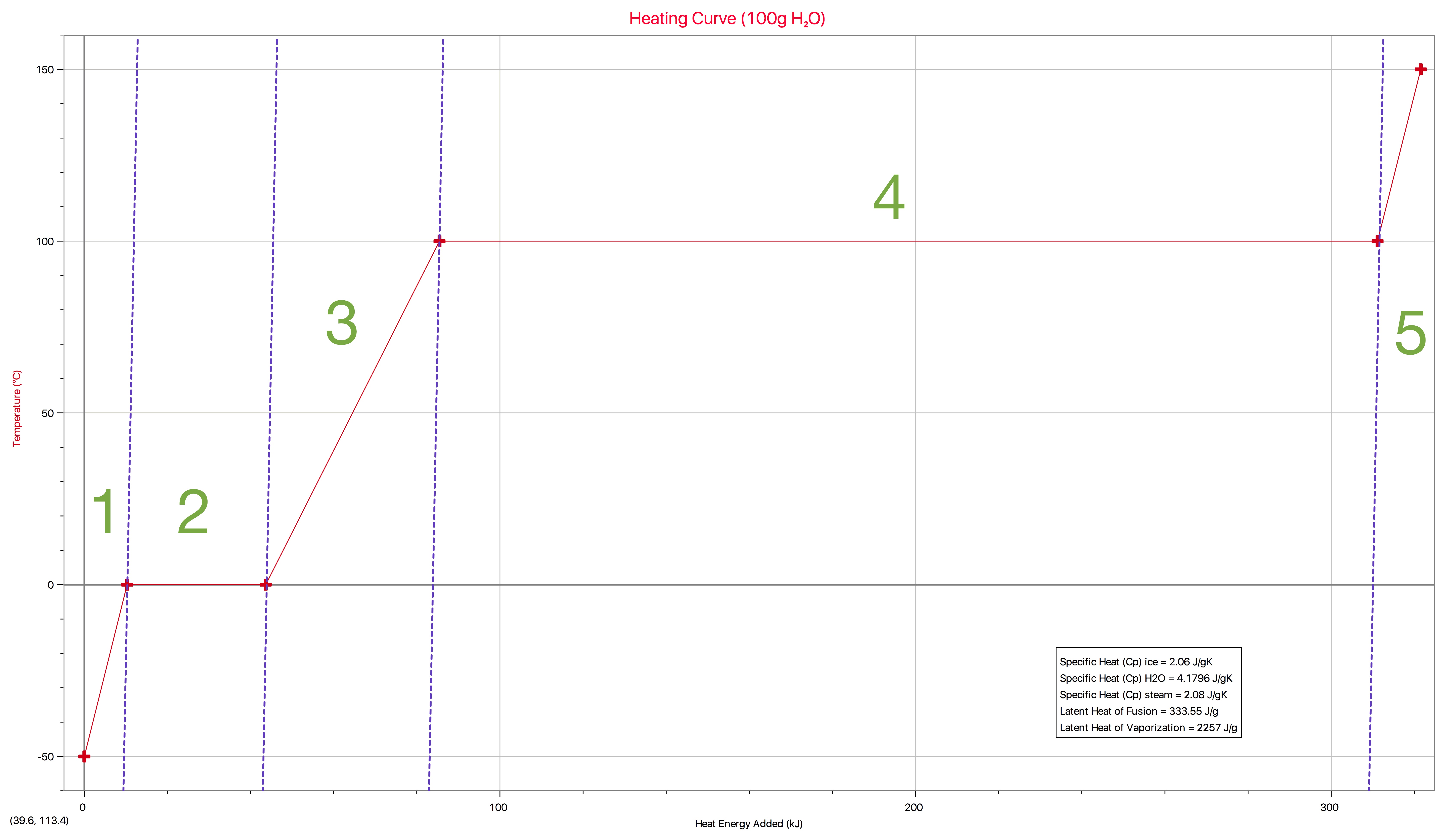
In which region(s) does temperature remain constant?
a)
Region 1, 3, & 5
b)
Region 2 & 4
c)
Region 1 only
d)
Region 1 & 2
2.
In which region(s) does temperature increase?
a)
Region 1, 3, & 5
b)
Region 2 & 4
c)
Region 1 only
d)
Region 1 & 2
3.
In which region(s) does temperature increase?
a)
Region 1, 3, & 5
b)
Region 2 & 4
c)
Region 1 only
d)
Region 1 & 2
4.
In which region(s) of the graph does a phase change occur?
a)
Region 1, 3, & 5
b)
Region 2 & 4
c)
Region 1 only
d)
Region 1 & 2
5.
In which region(s) of the graph would the substance be a solid and a liquid?
a)
Region 1
b)
Region 2
c)
Region 3
d)
Region 4
6.
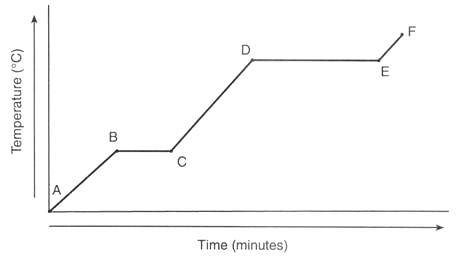
Between which points is the temperature of the substance increasing?
a)
A-B only. 
b)
A-B, C-D, E-F
c)
B-C only. 
d)
B-C, D-E
7.
When does evaporation happen?
a)
gas to liquid
b)
liquid to solid
c)
solid to liquid
d)
liquid to gas
8.

The melting point of the sample is

a)

-60 ºC

b)

-100 ºC

c)

60 ºC

d)

100 ºC

9.
Describe the substance between letters E and F. 
a)
Gas
b)
Liquid
c)
Melting
d)
Evaporating
10.
Describe the substance between letters A and B. 
a)
Solid
b)
Liquid
c)
Melting
d)
Evaporating
11.
Describe the substance between letters C and D. 
a)
Gas
b)
Liquid
c)
Melting
d)
Evaporating
12.

What is holding molecules in a solid close to each other?

a)

Intermolecular forces

b)

Chemical Bonds

c)

Heat

d)

Cold

13.

What is true about intermolecular forces in gases

a)

they have been broken by heat

b)

They are very strong

c)

They cannot be put back together

d)

they represent a chemical change

14.
In which region of the graph would be used to find the boiling point of the substance?
a)
Region 2
b)
Region 3
c)
Region 4
d)
Region 5
15.
What kind of reaction has a negative heat of reaction (ΔHr)?
a)
endothermic
b)
exothermic
16.
What is the freezing point for this substance?
a)
60 °C
b)
40 °C
c)
80 °C
d)
100 °C
17.
What is the boiling point for this substance?
a)
60 °C
b)
40 °C
c)
120 °C
d)
100 °C
18.

What is the relationship between heat added and temperature change in a heating curve?

a)

Heat added is inversely proportional to temperature change.

b)

Heat added is directly proportional to temperature change in regions of temperature increase; during phase changes, heat is added without a temperature change.

c)

There is no relationship between heat added and temperature change.

d)

Heat added only affects the temperature during phase changes.

19.

The heating curve below represents a sample of a substance starting as a solid below its melting point and being heated over a period of time. Which statement describes the energy of the particles in this sample during interval DE?

a)

Both potential energy and average kinetic energy increase.

b)

Both potential energy and average kinetic energy decrease.

c)

Potential energy increases and average kinetic energy remains the same.

d)

Potential energy remains the same and average kinetic energy increases.

20.

Calculate ΔT\Delta T  when a substance goes from 10°C to 75°C

a)

-65°C

b)

75°C

c)

10°C

d)

65°C