
 Worksheets
4.1 - 4.4 Review
Total questions: 20
Worksheet time: 10mins
What are the two main parts of the nervous system?
Central nervous system and peripheral nervous system
Autonomic nervous system and somatic nervous system
Sympathetic nervous system and parasympathetic nervous system
Sensory nervous system and motor nervous system
Which part of the Peripheral Nervous System is responsible for voluntary movements?
Autonomic
Somatic
Sympathetic
Parasympathetic
What is the function of the Autonomic Nervous System?
Controls voluntary movements
Manages unconscious activities
Processes sensory information
Coordinates motor skills
Which of the following is a subdivision of the Autonomic Nervous System?
Sensory
Motor
Sympathetic
Aware
How do K⁺ channels contribute to the resting potential of a neuron?
They allow K⁺ ions to enter the cell, making the inside more positive.
They allow K⁺ ions to leak out of the cell, resulting in a negative resting potential.
They prevent K⁺ ions from moving, maintaining a neutral charge.
They allow K⁺ ions to move in and out equally, maintaining balance.
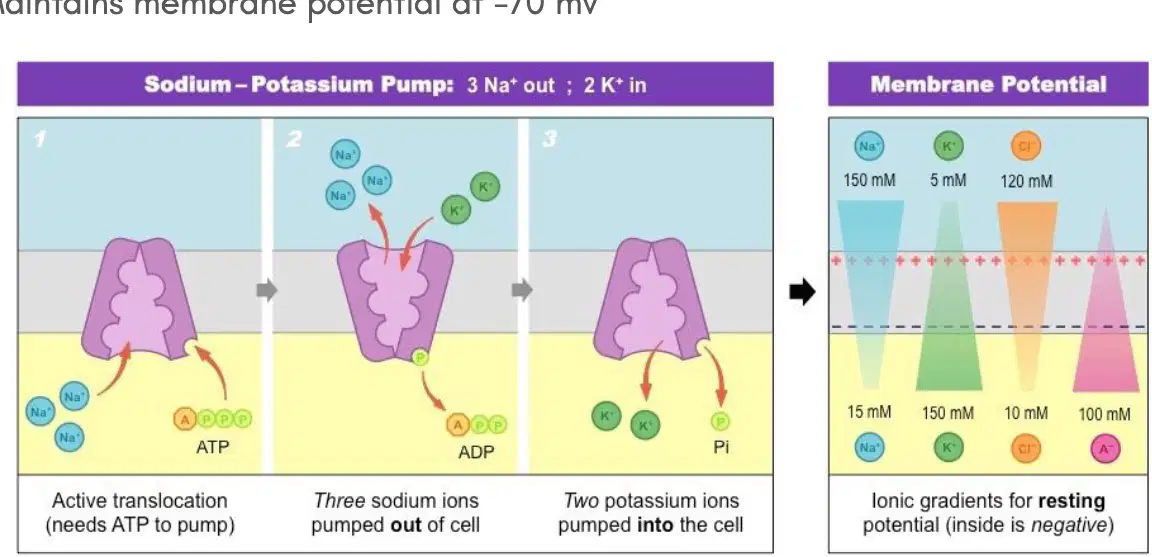
What is the primary function of the sodium-potassium pump?
To maintain membrane potential at -70 mV
To increase membrane potential to +70 mV
To decrease membrane potential to -90 mV
To maintain membrane potential at 0 mV
How many sodium ions are pumped out of the cell by the sodium-potassium pump?
Two
Three
Four
Five
How many potassium ions are pumped into the cell by the sodium-potassium pump?
One
Two
Three
Four
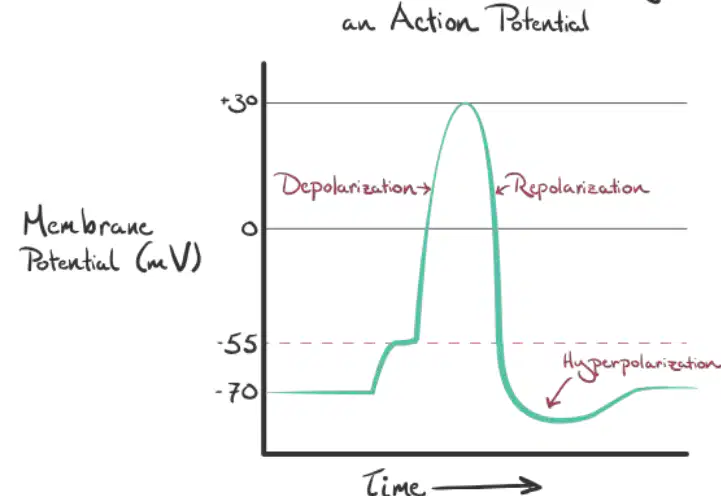
What is the phase called when the membrane potential becomes more positive during an action potential?
Depolarization
Repolarization
Hyperpolarization
Resting potential
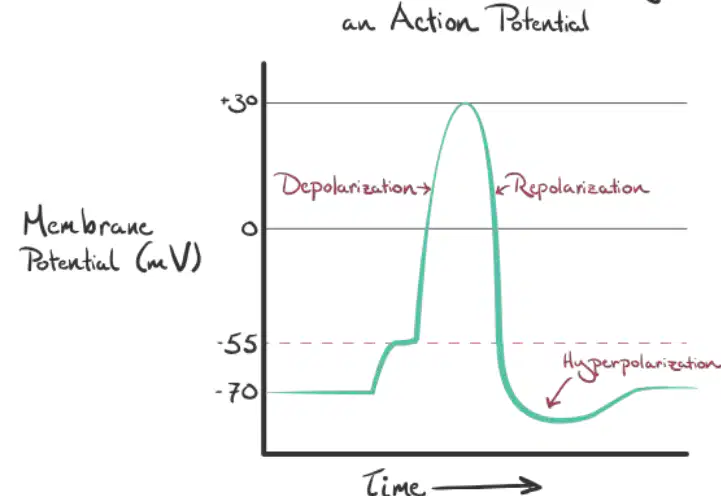
During which phase does the membrane potential return to a negative value after reaching a peak?
Depolarization
Repolarization
Hyperpolarization
Resting potential
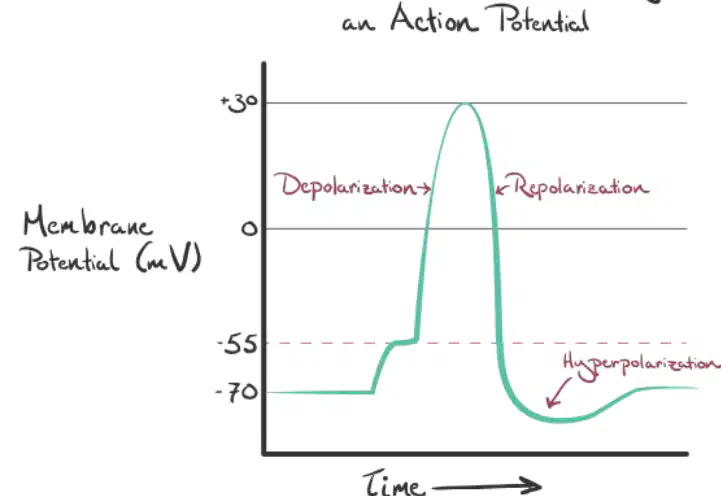
What is the term for the phase where the membrane potential becomes more negative than the resting potential?
Depolarization
Repolarization
Hyperpolarization
Resting potential
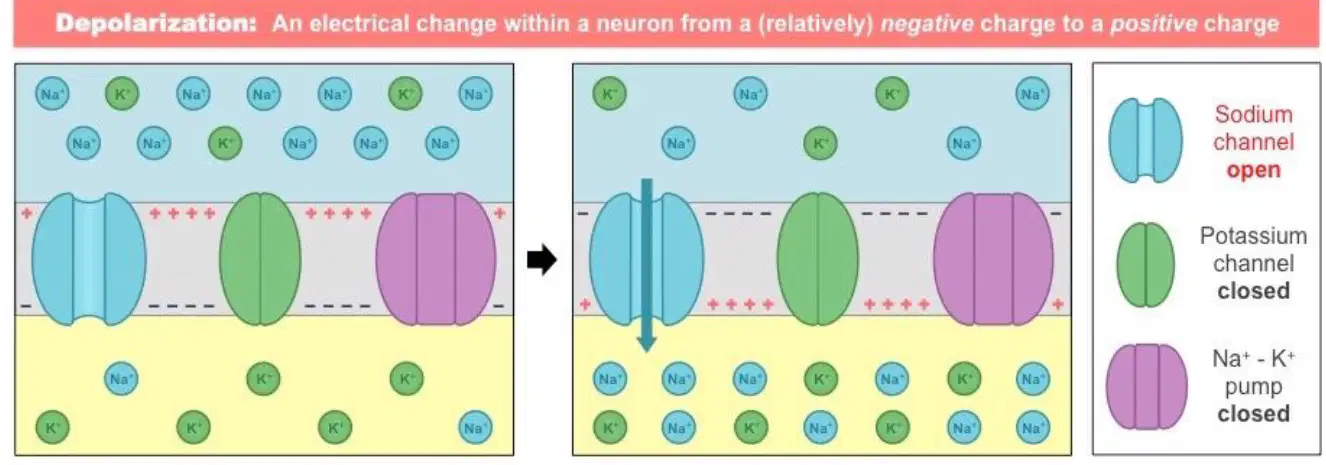
What is depolarization in the context of neuron activity?
A change from a positive charge to a negative charge within a neuron
An electrical change within a neuron from a negative charge to a positive charge
The process of maintaining a constant charge within a neuron
The movement of K+ ions out of the neuron
What is the state of the sodium channel during depolarization?
Closed
Open
Partially open
Inactive
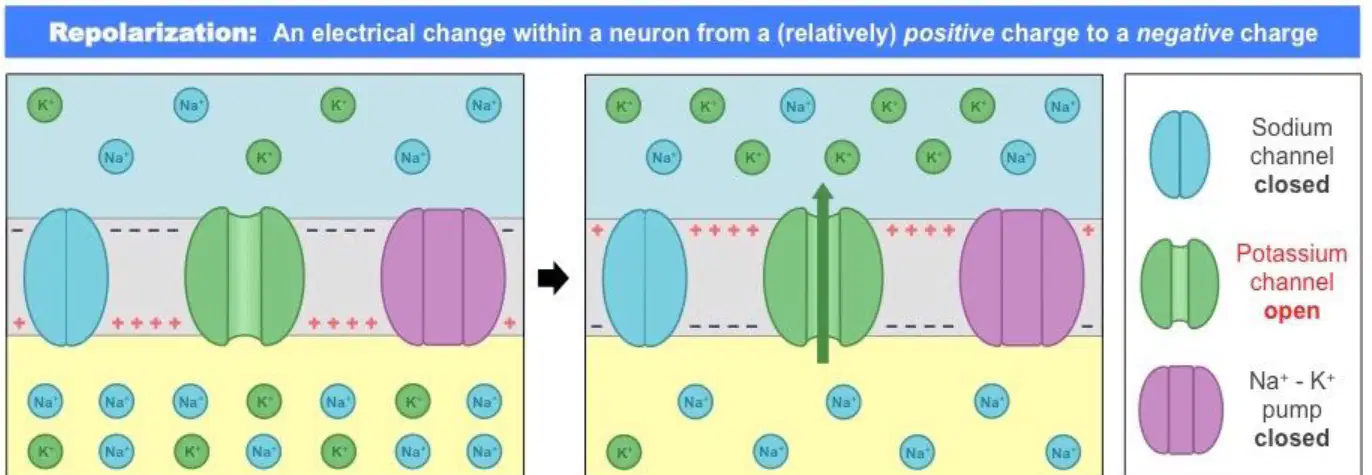
What is the membrane potential inside the neuron after repolarization?
+30 mV
0 mV
-80 mV
+70 mV
During the refractory period, what happens to the sodium (Na+) and potassium (K+) channels?
Both sodium and potassium channels are open.
Sodium channels are open, potassium channels are closed.
Both sodium and potassium channels are closed.
Sodium channels are closed, potassium channels are open.
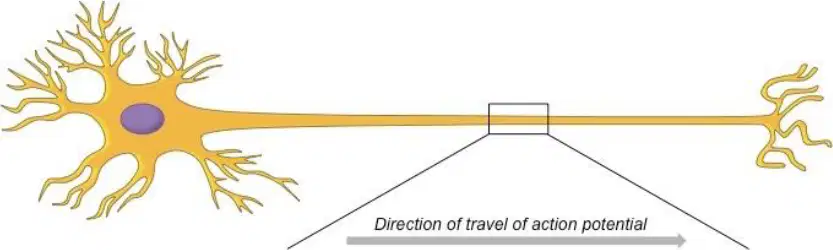
What type of ion channels are present in the axon?
Voltage-gated
Ligand-gated
Mechanically-gated
Light-gated
What triggers the opening of ion channels in the next segment of an axon?
Depolarization at one axon segment
Repolarization at one axon segment
Resting potential at one axon segment
Hyperpolarization at one axon segment
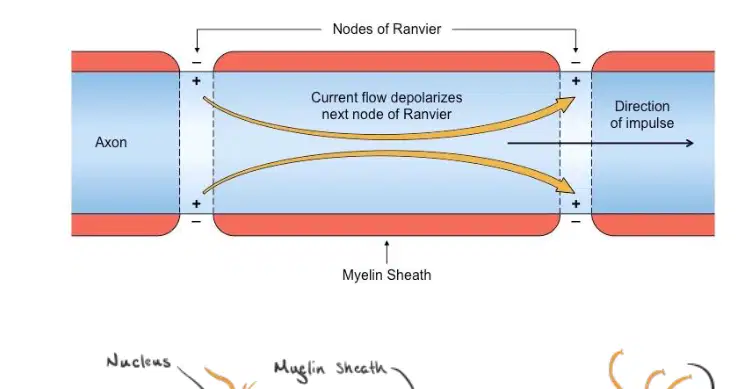
What is the function of the myelin sheath in nerve impulses?
To slow down nerve impulses
To insulate the axon and speed up nerve impulses
To generate nerve impulses
To connect neurons together
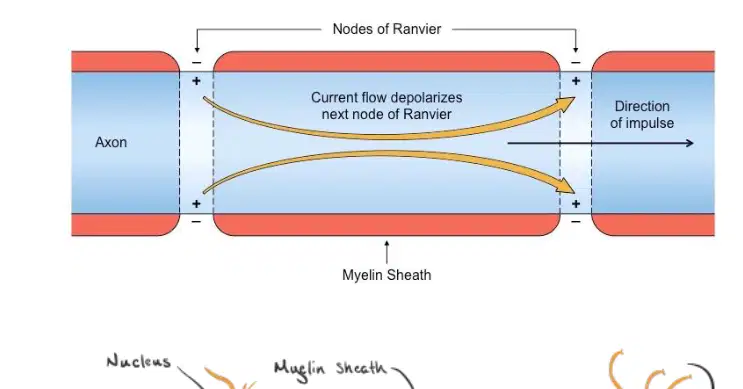
What are the gaps between myelin sheath segments called?
Synapses
Axon terminals
Nodes of Ranvier
Dendrites
Which part of the neuron receives incoming signals?
Axon
Soma
Dendrites
Myelin sheath

