
 Worksheets
Ecology Ch 2 - Energy
Total questions: 26
Worksheet time: 13mins
What is the original source of almost all the energy in most ecosystems?
The process by which an organism uses energy from chemical compounds to produce its own food is called ____.
Each step in the food chain above is called a(n) ____.
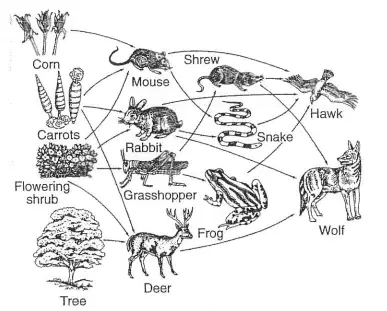
The complex diagram shown in the figure below is an example of a ____, which is all of the interconnected feeding relationships within an ecosystem.
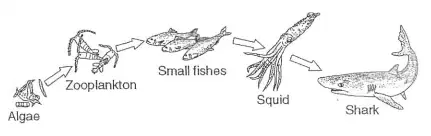
The algae in the figure below is a ____.
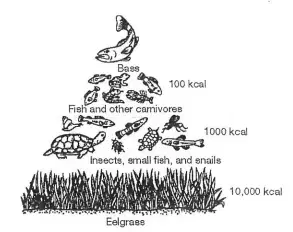
Looking at the figure below, how much energy does the bass receive by eating the smaller fish from the level directly below it?
What animals eat both producers and consumers?
A frog that has eaten an insect that fed on a plant is a ____.
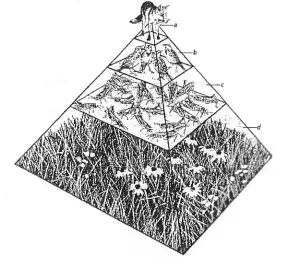
In the ecological pyramid shown below, which level has the highest amount of energy?
As you move upward from level to level in an energy pyramid, the amount of energy ____.
Each of the following is an abiotic factor in an ecosystem EXCEPT ____.
Which of the following is the most abundant gas in Earth's atmosphere?
During photosynthesis, plants take in which gas?
Which of the following is a biotic factor that affects the size of a population within an ecosystem?
Which of the following is a climate zone found on Earth?
Decaying remains of dead organisms found in the soil is called ____.
What is the reason for earth having different seasons?
A(n) ____ is a large geographic area characterized by its particular climate, wildlife, and soil type.
Which biome is known for being hot and dry, and would contain cacti, snakes, camels, and scorpions?
An area where a river runs into an ocean and freshwater and saltwater mix is a(n) ____.
Which of the following is an example of a freshwater wetland?
Which biome is characterized by very low temperatures, little precipitation, and permafrost?
Which of the following would you expect to be pioneer species, or the first organisms to move into and inhabit an area?
The series of normal, gradual changes that occur in the types of species that live in an area is termed ____.
Primary succession can begin after ____.
The final and most stable stage of an ecosystem that develops due to succession is called a ____.

